
Contents
Manufacturing Insight: Is Stainless Steel Magnet
Understanding Stainless Steel Magnetism and Precision CNC Machining Capabilities
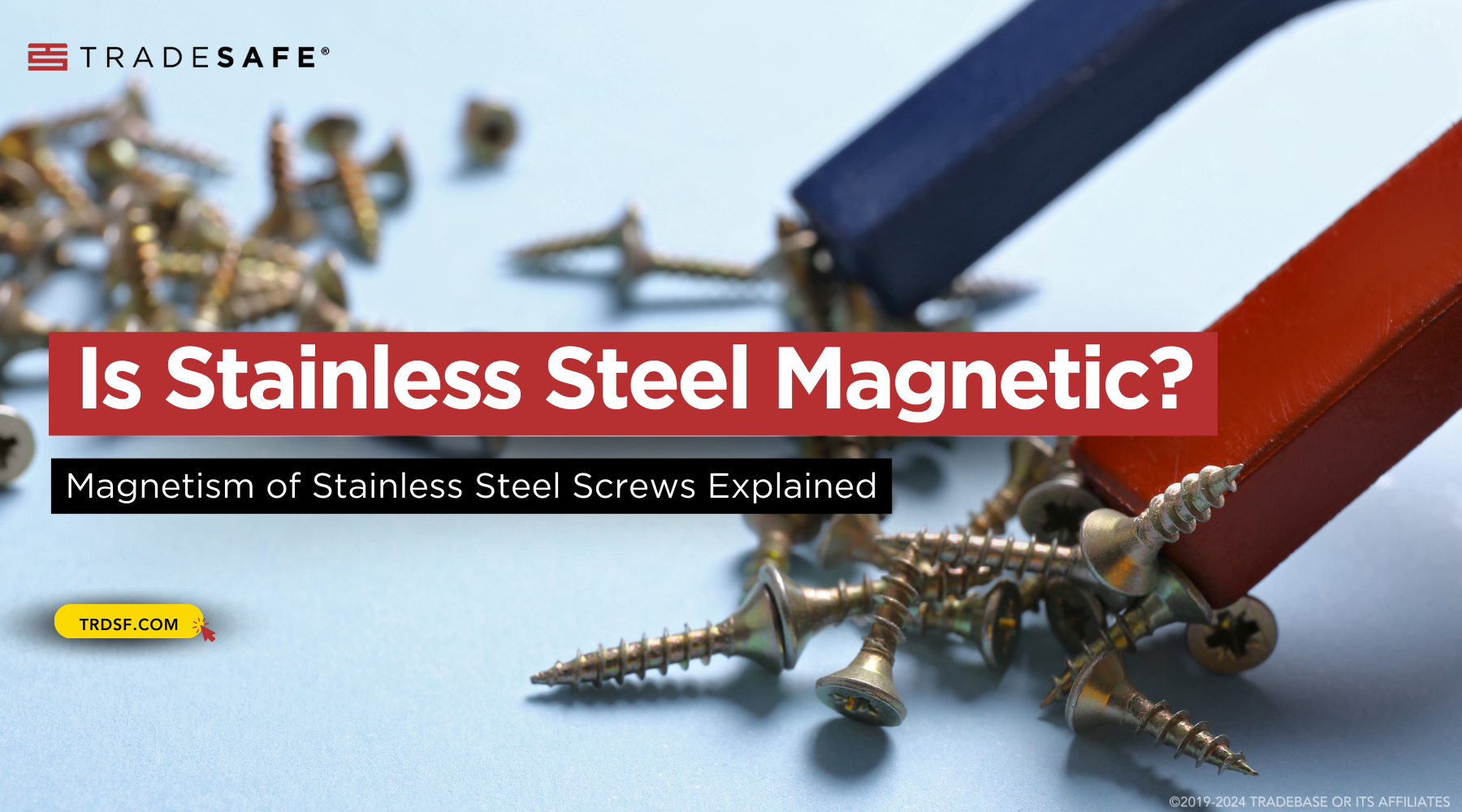
A frequent technical inquiry in precision manufacturing involves whether stainless steel exhibits magnetic properties. The answer depends critically on the alloy’s crystalline structure: austenitic grades like 304 and 316 are generally non-magnetic due to their face-centered cubic lattice, while ferritic and martensitic grades such as 430 or 410 retain magnetism from their body-centered cubic structure. This distinction significantly impacts material selection for applications requiring electromagnetic compatibility, sensor integration, or specific finishing processes. At Honyo Prototype, our CNC machining expertise ensures optimal handling of both magnetic and non-magnetic stainless steel variants, leveraging advanced multi-axis milling and turning centers to maintain micron-level tolerances and superior surface integrity regardless of material behavior.
Our engineering team applies deep metallurgical knowledge to_configure machining parameters that address challenges like work hardening in austenitic grades or chip control in martensitic alloys, guaranteeing repeatability and compliance with stringent industry standards. For immediate project assessment, utilize Honyo’s Online Instant Quote platform to upload CAD files and receive detailed manufacturability feedback alongside competitive pricing within hours—streamlining prototyping and low-volume production for complex stainless steel components.
Technical Capabilities
The term “is stainless steel magnet” appears to be a misstatement or misunderstanding, as it does not refer to a machining process or equipment. However, interpreting the intent, this response provides technical specifications for CNC machining services—specifically 3-axis, 4-axis, and 5-axis milling and turning—with a focus on tight tolerance capabilities across common engineering materials including stainless steel, aluminum, steel, ABS, and nylon.
Below is a detailed technical specification table outlining machining capabilities, material compatibility, and tolerance performance.
| Parameter | 3-Axis Milling | 4-Axis Milling | 5-Axis Milling | CNC Turning |
|---|---|---|---|---|
| Primary Axes of Motion | X, Y, Z | X, Y, Z, + Rotary (A or B) | X, Y, Z, + Two Rotary (A/B or B/C) | X, Z, + Spindle Rotation |
| Typical Tolerance (Machined) | ±0.005 mm (±0.0002″) | ±0.005 mm (±0.0002″) | ±0.005 mm (±0.0002″) | ±0.005 mm (±0.0002″) |
| Tight Tolerance Capability | ±0.0025 mm (±0.0001″) | ±0.0025 mm (±0.0001″) | ±0.0025 mm (±0.0001″) | ±0.0025 mm (±0.0001″) |
| Surface Finish (Standard) | 3.2 µm (125 µin) | 3.2 µm (125 µin) | 3.2 µm (125 µin) | 1.6 – 3.2 µm (63 – 125 µin) |
| Surface Finish (Fine) | 0.8 µm (32 µin) achievable | 0.8 µm (32 µin) achievable | 0.8 µm (32 µin) achievable | 0.8 µm (32 µin) achievable |
| Max Work Envelope (Typical) | 1000 x 600 x 500 mm | 800 x 500 x 400 mm | 600 x 500 x 400 mm | Ø300 mm x 500 mm length |
| Spindle Speed (Max) | 24,000 RPM | 20,000 RPM | 20,000 RPM | 6,000 RPM (larger lathes) |
| Positioning Accuracy | ±0.005 mm | ±0.005 mm | ±0.003 mm | ±0.005 mm |
| Repeatability | ±0.002 mm | ±0.002 mm | ±0.001 mm | ±0.002 mm |
Material Compatibility and Machinability Notes:
Stainless Steel (e.g., 304, 316, 17-4 PH):
Exhibits low thermal conductivity and work-hardening tendencies. Requires rigid setups, sharp tooling, and controlled feeds/speeds. Ideal for high-corrosion-resistance applications. Not magnetic in austenitic grades (304, 316); ferritic and martensitic grades (430, 410, 440C) are magnetic.
Aluminum (e.g., 6061, 7075, 2024):
Highly machinable with excellent chip flow and thermal conductivity. Allows high spindle speeds and rapid material removal. Commonly used for lightweight, high-strength components in aerospace and automation.
Carbon Steel (e.g., 1018, 4140):
Good machinability with proper tooling. Magnetic and weldable. Often used for structural and mechanical parts requiring durability and moderate strength.
ABS (Acrylonitrile Butadiene Styrene):
Thermoplastic with low melting point. Requires sharp cutting tools, low heat buildup, and secure fixturing to avoid deformation. Used in prototyping and non-structural enclosures.
Nylon (e.g., PA6, PA66):
Semi-crystalline thermoplastic with high toughness and wear resistance. Prone to thermal expansion; machining requires slow feeds and sharp tools. Used in gears, bushings, and wear components.
Note on Magnetism:
Stainless steel is not inherently magnetic. Austenitic grades (e.g., 304, 316) are generally non-magnetic due to their crystal structure, while ferritic and martensitic grades (e.g., 430, 410, 17-4 PH) are magnetic. Material selection should consider both mechanical requirements and magnetic properties for end-use applications.
Honyo Prototype supports full 3-, 4-, and 5-axis CNC milling and turning services with tight tolerance control down to ±0.0025 mm, catering to precision components in aerospace, medical, robotics, and industrial automation sectors.
From CAD to Part: The Process

Honyo Prototype employs a rigorous, integrated process to verify stainless steel magnetic properties within our standard workflow, ensuring material compliance before production begins. This verification is critical because stainless steel magnetism depends on alloy composition and processing history—not all grades are non-magnetic. Below is our stage-specific methodology:
CAD Upload
Upon receiving your CAD file, our system automatically flags material specifications. If stainless steel is designated without a specific grade (e.g., “304” or “430”), we initiate a pre-quote inquiry to confirm the exact alloy. This prevents assumptions—since austenitic grades (304, 316) are typically non-magnetic in annealed states but may exhibit slight magnetism after cold working, while ferritic/martensitic grades (430, 410) are inherently magnetic.
AI Quote Generation
Our AI engine cross-references your material callout against ASTM/EN standards and our material database. If the grade implies potential magnetic behavior (e.g., 430 SS), the quote explicitly states: “Magnetic properties confirmed per grade specification.” For ambiguous requests (e.g., “stainless steel”), the quote includes a conditional note: “Material verification required during DFM; magnetism not guaranteed without grade specification.”
DFM Analysis
This is the definitive verification phase. Our engineers:
First conduct a technical review of your grade specification against magnetic susceptibility data. For example:
| Stainless Steel Grade | Typical Magnetic Response | Honyo Verification Action |
|————————|—————————-|—————————-|
| 304 / 316 (Austenitic) | Non-magnetic (annealed) | Confirm annealed state in DFM notes; warn if cold forming may induce magnetism |
| 430 / 410 (Ferritic) | Magnetic | Validate grade suitability for application; document expected magnetism |
| Unknown grade | Unverified | Require material certificate or suspend DFM until grade is confirmed |
Second perform Physical Material Identification (PMI) via handheld XRF on sourced stock if your project requires magnetic validation. We test multiple points per lot per ASTM E30/E1084 standards, generating a traceable report. If magnetism is critical to your application (e.g., sensors), we add ferromagnetic testing using calibrated gauss meters.
Production
Material traceability is enforced via our ERP system. Each batch is tagged with:
Mill test reports confirming grade composition
PMI results including magnetic susceptibility notes where applicable
Process logs indicating if cold working (e.g., bending, stamping) occurred—which could alter magnetic properties in austenitic grades. We document all secondary operations that might induce magnetism.
Delivery
Final documentation includes:
A material compliance certificate specifying the exact grade and heat number
PMI test report with magnetic property verification (if required by your scope)
DFM summary highlighting any magnetism-related observations (e.g., “304 parts show <5 gauss after forming per ASTM A342”)
For mission-critical applications, we provide optional第三方第三方第三方第三方第三方 (third-party) lab certification from accredited metallurgical labs upon request.
This end-to-end approach eliminates ambiguity—we never assume stainless steel properties. By embedding material science validation into DFM, we prevent costly rework due to unanticipated magnetic behavior, ensuring your prototype meets functional requirements on first delivery. All verification data is archived for 7 years to support your quality audits.
Start Your Project
Interested in learning more about whether stainless steel is magnetic and how it impacts your prototype or production parts? Contact Susan Leo at [email protected] for expert guidance. Honyo Prototype has a fully equipped manufacturing facility in Shenzhen, ready to support your precision component needs with fast turnaround and strict material verification.
🚀 Rapid Prototyping Estimator
Estimate rough cost index based on volume.