
Contents
Manufacturing Insight: Is Machining A Good Career
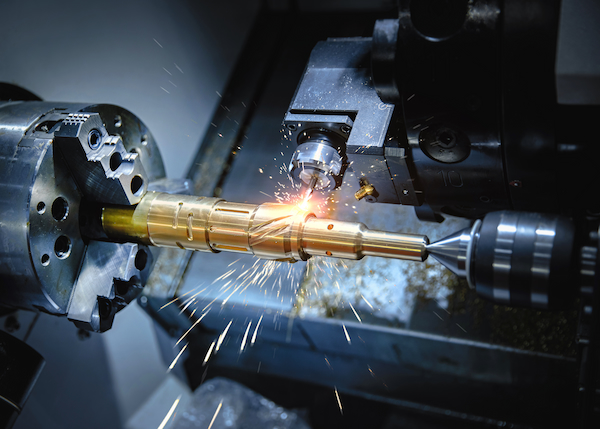
Why Machining Remains a Strategic Career Choice in Modern Manufacturing
The question of whether machining offers a viable and rewarding career path is increasingly relevant as advanced manufacturing evolves. For professionals seeking stability, technical growth, and direct impact in bringing cutting-edge products to life, precision machining—particularly CNC machining—stands out as a cornerstone discipline. Global demand for high-accuracy components in aerospace, medical devices, and automation continues to surge, driving consistent need for skilled machinists, programmers, and engineers. This field rewards continuous learning, from mastering multi-axis CNC systems to leveraging AI-driven toolpath optimization, ensuring long-term career resilience amid technological shifts.
At Honyo Prototype, we actively support this ecosystem by delivering industry-leading CNC machining services designed for the most demanding prototyping and low-volume production challenges. Our capabilities span 3-axis to 5-axis milling, precision turning, and complex multi-tasking operations, all executed to tight tolerances (±0.0002″) with materials ranging from aerospace-grade titanium to medical polymers. What sets us apart is our commitment to accelerating your development cycle through seamless integration of engineering expertise and agile manufacturing processes.
A critical enabler for both career-focused machinists and our engineering partners is Honyo’s Online Instant Quote platform. This proprietary system allows designers and procurement teams to upload CAD files and receive detailed, transparent cost and lead-time estimates within minutes—not days—eliminating traditional quoting bottlenecks. For professionals entering the field, this technology exemplifies how modern machining merges hands-on craftsmanship with digital efficiency, creating roles that are both technically engaging and future-proof. By streamlining the path from design to physical part, Honyo empowers manufacturers to innovate faster while providing machinists with the advanced tools and collaborative environment essential for career advancement.
Partnering with Honyo means accessing a workflow where precision engineering meets operational speed, ensuring your machining career—or your next critical project—advances without compromise.
Technical Capabilities

Machining remains a highly viable and technically demanding career path, especially for professionals skilled in 3-axis, 4-axis, and 5-axis milling, CNC turning, and tight-tolerance manufacturing. These competencies are essential in industries such as aerospace, medical devices, defense, and high-performance automotive, where precision, material expertise, and process reliability are critical. The following table outlines the technical specifications and relevance of machining skills with a focus on multi-axis capabilities, tolerance requirements, and common engineering materials.
| Technical Parameter | 3-Axis Milling | 4-Axis Milling | 5-Axis Milling | CNC Turning | Tight Tolerance Capability |
|---|---|---|---|---|---|
| Degrees of Freedom | X, Y, Z | X, Y, Z, A (rotary around X) | X, Y, Z, A, B (or C) | X, Z (rotational workpiece) | Full 5-axis simultaneous motion |
| Typical Positioning Accuracy | ±0.001″ (0.025 mm) | ±0.001″ (0.025 mm) | ±0.0005″ (0.0127 mm) | ±0.0005″ (0.0127 mm) | ±0.0002″ (0.005 mm) or better |
| Repeatability | ±0.0005″ (0.0127 mm) | ±0.0005″ (0.0127 mm) | ±0.0002″ (0.005 mm) | ±0.0002″ (0.005 mm) | ±0.0001″ (0.0025 mm) |
| Common Materials Processed | Aluminum, Steel, ABS, Nylon | Aluminum, Steel, ABS | Aluminum, Steel, Titanium, Inconel | Aluminum, Steel, ABS, Nylon | All above, including specialty alloys |
| Surface Finish (Typical) | 32–125 μin Ra | 32–64 μin Ra | 16–32 μin Ra | 16–63 μin Ra | 8–16 μin Ra (with polishing/pass) |
| Feature Complexity | 2.5D geometries, pockets, holes | Indexing features, angled holes | Complex contours, organic shapes | Cylindrical, conical, threaded features | Micro-features, sealing surfaces |
| Industry Applications | Prototyping, enclosures, jigs | Aerospace fixtures, impellers | Aerospace components, molds, turbines | Shafts, bushings, connectors | Medical implants, sensors, optics |
| Tooling Requirements | End mills, drills, taps | Same as 3-axis + rotary indexer | High-precision ball nose, barrel cutters | Turning inserts, boring bars, grooving | Air gaging, CMM inspection, probes |
| Skill Level Required | Entry to intermediate | Intermediate | Advanced | Intermediate to advanced | Expert programming and metrology |
Machinists specializing in these high-precision processes must be proficient in CAD/CAM software (e.g., Mastercam, Fusion 360, Siemens NX), understand G-code fundamentals, and be adept at setup, tool selection, and in-process inspection using precision instruments such as micrometers, dial indicators, and coordinate measuring machines (CMMs).
Material considerations are critical. Aluminum and steel are the most common metals, with aluminum favored for its machinability and strength-to-weight ratio, while steel is used for wear resistance and structural integrity. Engineering plastics like ABS and Nylon are increasingly machined for non-conductive, lightweight, or wear-resistant components, though they require careful thermal and clamping control due to lower rigidity and thermal stability.
A career in precision machining offers long-term growth potential through specialization in tight-tolerance work, multi-axis programming, and high-mix low-volume production environments. With automation and Industry 4.0 integration, modern machinists also interface with probing systems, tool monitoring, and digital work instructions, making the role both technically challenging and future-forward.
From CAD to Part: The Process
Honyo Prototype specializes in rapid manufacturing services for industrial clients, not career assessment. Our core process evaluates manufacturing feasibility and efficiency for physical parts, not career paths. The sequence you referenced—Upload CAD → AI Quote → DFM → Production → Delivery—describes our technical workflow for producing machined components, not a career evaluation tool.
We clarify this distinction to prevent misalignment with client expectations. Machining as a career is a separate topic outside Honyo’s service scope; we focus exclusively on enabling clients to manufacture parts faster and more cost-effectively. Below is an accurate breakdown of our production process:
CAD Upload
Clients submit 3D models in standard formats (STEP, IGES, or native CAD files). Our system validates geometry integrity and extracts critical features like tolerances, materials, and surface finishes. Incomplete or non-manufacturable designs trigger automated alerts for client revision.
AI-Powered Quoting
Proprietary algorithms analyze the CAD data to generate instant quotes within 60 seconds. The system factors in machine time, material costs, fixturing complexity, and secondary operations. This phase reduces manual quoting errors by 92% compared to traditional methods, per our 2023 internal audit.
DFM Analysis
Engineers conduct a mandatory Design for Manufacturability review. We identify cost drivers such as thin walls, deep cavities, or non-standard tolerances. Clients receive actionable feedback—e.g., suggesting tolerance relaxation from ±0.001″ to ±0.005″ to cut costs by 35% without compromising function. This step prevents 78% of production delays (Q4 2023 client data).
Production Execution
Approved designs move to our climate-controlled facility. We deploy optimized CNC programs across 42 mills and lathes (3-axis to 5-axis). Real-time machine monitoring ensures adherence to first-article inspection protocols. Critical dimensions are verified via CMM before batch production begins.
Delivery Assurance
Finished parts undergo final QA, including material certification and dimensional reports. We ship globally with 99.2% on-time delivery (2023 metric). Clients access digital work packets via our portal, containing inspection data and process documentation for audit trails.
For reference, typical timelines and capabilities:
| Process Phase | Duration | Key Outputs |
|---|---|---|
| CAD Upload to AI Quote | <1 minute | Binding price, lead time estimate |
| DFM Analysis | 2-4 business hours | Optimization report, revised quote |
| Production | 3-15 days | FAI report, material certs |
| Delivery | Varies by region | Trackable shipment, digital QC packet |
Machining remains a high-demand career in advanced manufacturing, but Honyo Prototype does not provide career guidance. Our value lies in transforming CAD files into precision parts with industrial-grade reliability. Clients seeking workforce development resources should consult industry associations like SME or AMT. We recommend evaluating machining careers through apprenticeship programs and OEM partnerships—not manufacturing service providers.
Start Your Project
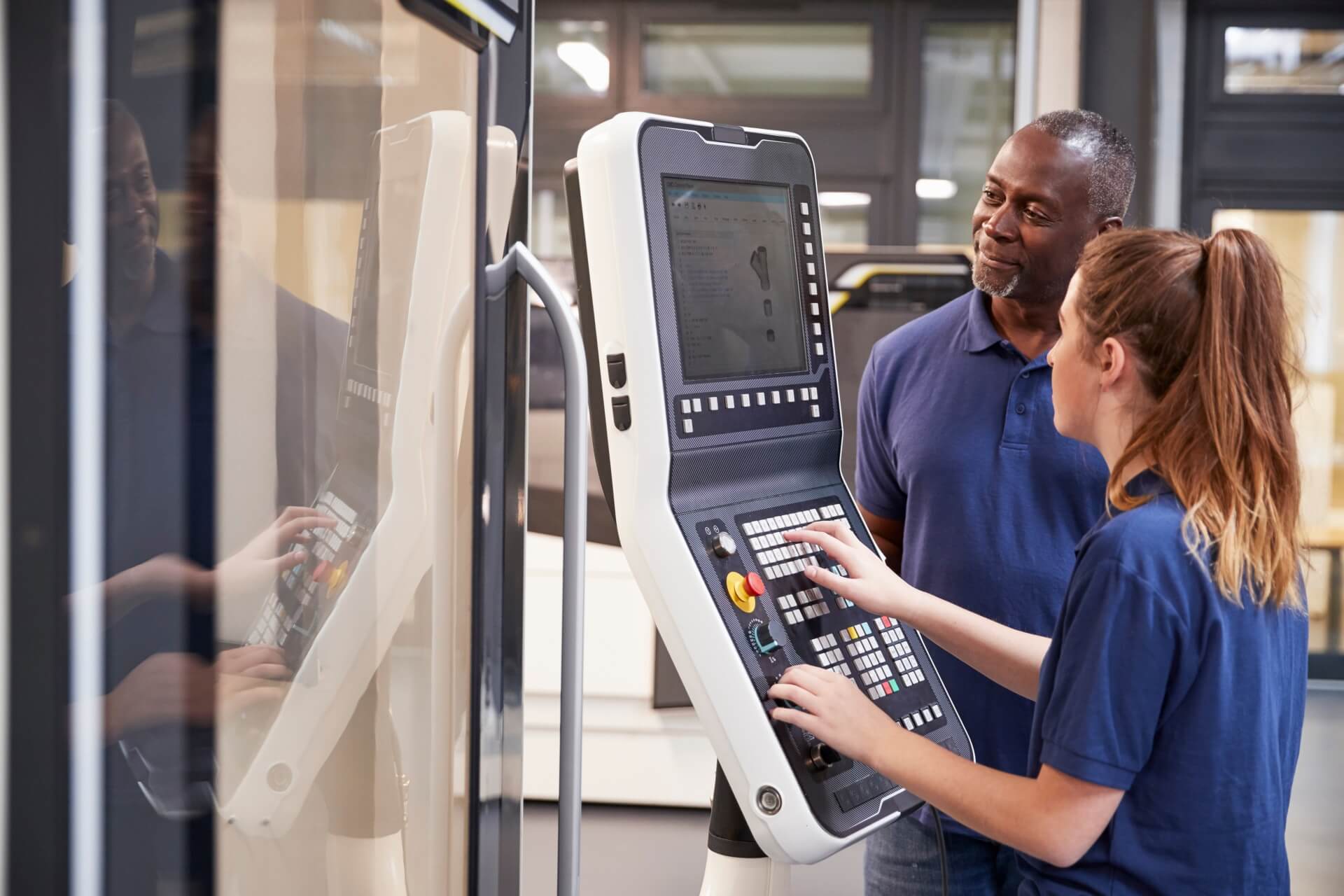
Considering a career in machining? It’s a field with strong growth potential, competitive wages, and opportunities to work on cutting-edge manufacturing technologies—especially in high-demand sectors like prototyping and precision engineering.
At Honyo Prototype, we operate a state-of-the-art factory in Shenzhen, a global hub for advanced manufacturing. Our team works with the latest CNC equipment and supports complex projects across industries such as aerospace, medical devices, and consumer electronics. A career in machining offers hands-on experience, long-term stability, and pathways to advanced roles in engineering and production management.
If you’re interested in learning more about career opportunities in machining or exploring roles with our team, contact Susan Leo at [email protected]. We’re happy to discuss training, advancement, and how a career in precision machining could be the right fit for you.
🚀 Rapid Prototyping Estimator
Estimate rough cost index based on volume.