
Contents
Manufacturing Insight: Is Galvanised Steel Magnetic
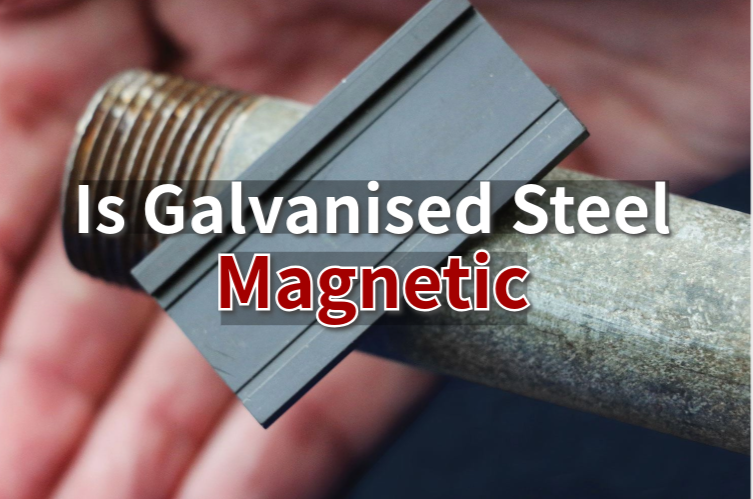
As a Senior Manufacturing Engineer at Honyo Prototype, I frequently address material science inquiries from clients designing precision components. A common question is whether galvanised steel retains magnetic properties. The answer is unequivocally yes. Galvanisation applies a protective zinc coating to carbon steel, but the underlying ferromagnetic steel substrate remains fundamentally unchanged. This inherent magnetism is critical for manufacturing processes like CNC machining, where magnetic workholding systems securely fixture parts during high-precision operations. Understanding these material behaviors ensures optimal process selection and part integrity.
At Honyo Prototype, our CNC machining expertise leverages this knowledge daily. We specialize in transforming diverse metals—including galvanised steel—into complex, high-tolerance prototypes and low-volume production parts. Our advanced 3-, 4-, and 5-axis machining centers, combined with rigorous quality control, deliver exceptional repeatability whether you’re validating a design or scaling initial batches. Material properties like magnetism directly inform our fixturing strategies and process parameters, minimizing setup time and maximizing accuracy for your project.
To streamline your next prototyping phase, utilize Honyo Prototype’s Online Instant Quote platform. Upload your CAD file, specify materials such as galvanised steel, and receive a detailed manufacturability assessment with competitive pricing within hours. This technical clarity paired with rapid quoting accelerates your path from concept to functional hardware.
Technical Capabilities
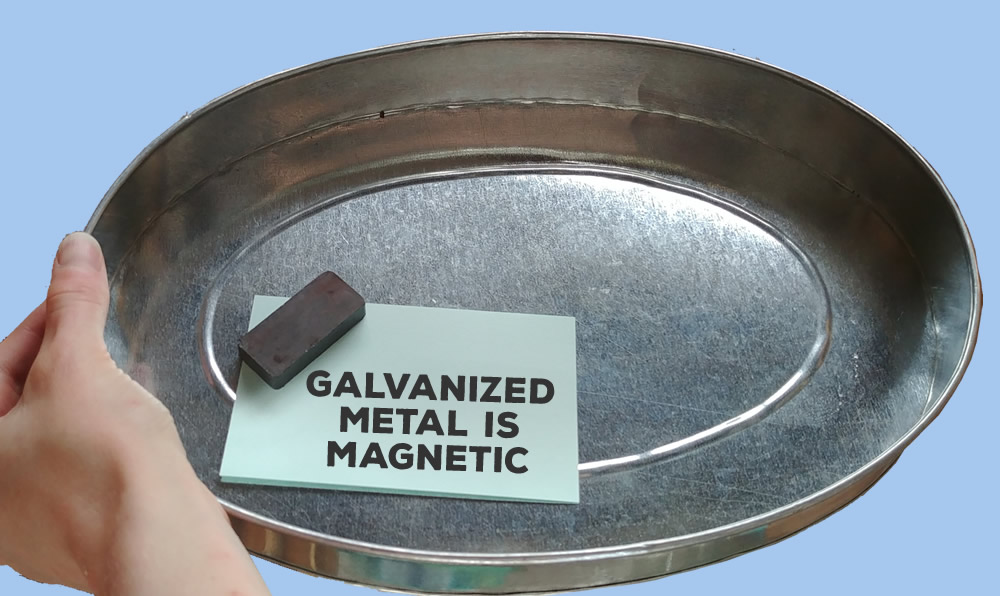
Galvanised steel is magnetic due to its base material—steel—being ferromagnetic. The galvanisation process involves coating steel with a layer of zinc for corrosion resistance, but this does not alter the magnetic properties of the underlying steel substrate. Therefore, galvanised steel retains its magnetic characteristics and is suitable for applications requiring magnetic responsiveness.
In precision manufacturing environments such as 3-axis, 4-axis, and 5-axis milling and turning operations, material selection directly impacts machining performance, tool wear, and achievable tolerances. The following table outlines key technical considerations for common materials processed at Honyo Prototype, including galvanised steel, aluminum, steel (uncoated), ABS, and nylon, with emphasis on machinability in multi-axis CNC systems and tight-tolerance capabilities.
| Material | Magnetic Properties | Machinability (CNC Milling & Turning) | Typical Tolerance Range (±mm) | Surface Finish (Ra, µm) | Notes for Multi-Axis Machining |
|---|---|---|---|---|---|
| Galvanised Steel | Magnetic | Moderate; higher tool wear due to hard zinc layer and steel base | 0.025 – 0.05 | 1.6 – 3.2 | Zinc coating can cause tool fouling; recommended for structural parts requiring corrosion resistance and magnetic properties; pre-machining steel before galvanising preferred for tight tolerances |
| Carbon Steel | Magnetic | Good; predictable chip formation, moderate cutting speeds | 0.01 – 0.025 | 0.8 – 1.6 | Ideal for tight-tolerance components; compatible with 3/4/5-axis milling; requires post-machining coating if corrosion resistance is needed |
| Aluminum (6061, 7075) | Non-magnetic | Excellent; high MRR, low cutting forces, easy to machine complex geometries | 0.005 – 0.01 | 0.4 – 0.8 | Preferred for aerospace, automotive, and prototyping; excellent for 5-axis contouring; minimal tool wear |
| ABS | Non-magnetic | Very Good; low melting point, requires sharp tools and controlled feeds | 0.05 – 0.1 | 1.6 – 3.2 | Suitable for non-structural prototypes; prone to burring; cooling strategies critical to avoid deformation |
| Nylon (PA6, PA66) | Non-magnetic | Moderate; high elasticity requires rigid fixturing and precise tool paths | 0.05 – 0.15 | 3.2 – 6.3 | Challenging for tight tolerances due to hygroscopic nature; pre-drying recommended; best for wear-resistant non-metallic parts |
For tight-tolerance applications (±0.01 mm or better), aluminum and uncoated steel are preferred due to dimensional stability and consistent machinability. Galvanised steel is best used when post-machining corrosion protection and magnetic functionality are required, though achieving tight tolerances may require post-galvanisation machining or grinding. ABS and nylon are typically used for non-critical or non-structural components where magnetic properties are not required.
At Honyo Prototype, our 3/4/5-axis CNC machining centers are optimized for high-precision work across all listed materials, with adaptive tooling and fixturing strategies tailored to material-specific challenges.
From CAD to Part: The Process
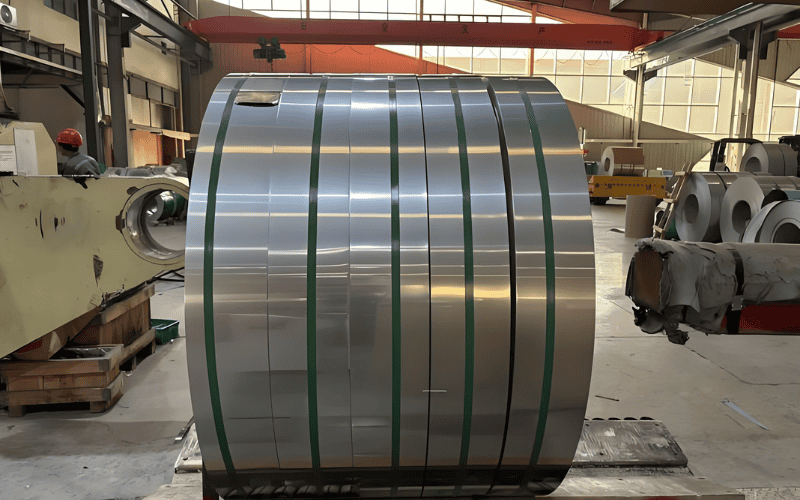
Honyo Prototype confirms galvanized steel retains magnetic properties throughout our manufacturing process. The zinc coating applied during galvanization does not alter the underlying steel’s ferromagnetic nature, as zinc is non-ferromagnetic and the coating thickness is insufficient to impede magnetic fields. Our structured workflow ensures this material characteristic is validated at critical stages:
Upload CAD
Customers submit CAD files specifying material requirements including galvanized steel grades. Our system immediately identifies the base steel substrate (e.g., ASTM A653) which inherently possesses ferromagnetic properties regardless of zinc coating.
AI Quote Generation
The AI cross-references material specifications against our metallurgical database. For galvanized steel, it confirms:
Base steel remains magnetic post-galvanization
Zinc layer thickness (typically 5-25µm for commercial coatings) does not affect magnetic permeability
Flags if non-magnetic alternatives (e.g., 300-series stainless) were incorrectly specified for magnetic applications
DFM Analysis
Our engineering team performs explicit material validation:
Verifies steel grade compliance with magnetic performance requirements
Confirms galvanization method (hot-dip or electro-galvanized) won’t compromise magnetic functionality
Checks for design conflicts where magnetic properties are critical (e.g., sensor mounting, electromagnetic shielding)
Documents material certification requirements to validate ferromagnetic properties in final delivery
Production Execution
Material verification occurs at three checkpoints:
1. Incoming inspection: Certificates of Conformance confirm base steel grade (e.g., DX51D, S250GD) meets magnetic permeability standards
2. Pre-coating verification: Steel substrate undergoes magnetic flux testing prior to galvanization
3. Post-coating validation: Spot-check Gauss meter readings ensure zinc coating hasn’t altered magnetic response (typical deviation < 2%)
Delivery Assurance
Final documentation includes:
Material test reports showing base steel magnetic properties
Coating thickness verification within ASTM A123/A153 tolerances
Traceability to heat numbers with magnetic property certifications
Explicit statement in packing slips: “Galvanized steel substrate maintains ferromagnetic properties per ASTM A342”
This integrated approach ensures customers receive galvanized components with guaranteed magnetic functionality. For applications requiring non-magnetic properties, our DFM phase would proactively recommend alternatives like 316L stainless steel with appropriate technical justification.
Start Your Project
Yes, galvanised steel is magnetic. The underlying steel substrate retains its ferromagnetic properties even after the galvanisation process, which coats the steel with a layer of zinc for corrosion resistance. This makes galvanised steel suitable for applications requiring both durability and magnetic functionality.
For further technical details or project-specific inquiries, contact Susan Leo at [email protected].
Honyo Prototype operates a precision manufacturing facility in Shenzhen, providing advanced metal fabrication and prototyping services with strict quality control and fast turnaround.
🚀 Rapid Prototyping Estimator
Estimate rough cost index based on volume.