
Contents
Manufacturing Insight: Is Alloy Steel The Same As Stainless Steel
Material Clarity in Precision Manufacturing: Alloy Steel vs. Stainless Steel
A persistent point of confusion in industrial material selection involves the distinction between alloy steel and stainless steel. While both fall under the broader category of steel alloys, their compositions, properties, and applications diverge significantly. Alloy steel primarily enhances strength and hardness through controlled additions of elements like chromium, molybdenum, or nickel, typically with carbon content above 0.8%. Stainless steel, conversely, achieves corrosion resistance through a minimum chromium content of 10.5%, forming a passive oxide layer—its defining characteristic. Misidentifying these materials can lead to catastrophic part failure, especially in high-stress or corrosive environments where CNC-machined components operate.
At Honyo Prototype, our expertise in precision CNC machining extends beyond fabrication to strategic material advisory. We recognize that selecting the optimal grade—whether 4140 alloy steel for aerospace shafts or 304 stainless for medical instrumentation—directly impacts dimensional stability, tool wear, and lifecycle performance. Our advanced CNC capabilities, including multi-axis milling and tight-tolerance turning, are calibrated to handle the unique thermal and mechanical behaviors of each alloy, ensuring repeatability down to ±0.005mm. Crucially, we integrate material science insights early in the design phase to prevent cost overruns from rework or scrap.
To streamline your prototyping or production workflow, leverage Honyo’s Online Instant Quote platform. Upload your CAD file, specify material requirements, and receive a detailed cost and lead-time estimate within hours—validated by our engineering team to align with material-specific machining parameters. This eliminates guesswork in material selection and accelerates time-to-part validation.
| Material Category | Primary Purpose | Key Alloying Elements | Common CNC Challenges |
|---|---|---|---|
| Alloy Steel | Strength/Hardness | Cr, Mo, Ni, C >0.8% | Heat treatment distortion, tool abrasion |
| Stainless Steel | Corrosion Resistance | Cr ≥10.5%, Ni, Mo | Work hardening, built-up edge, thermal management |
Understanding these differences isn’t merely academic—it’s foundational to manufacturing success. Partner with Honyo Prototype to transform material specifications into precision-engineered reality.
Technical Capabilities
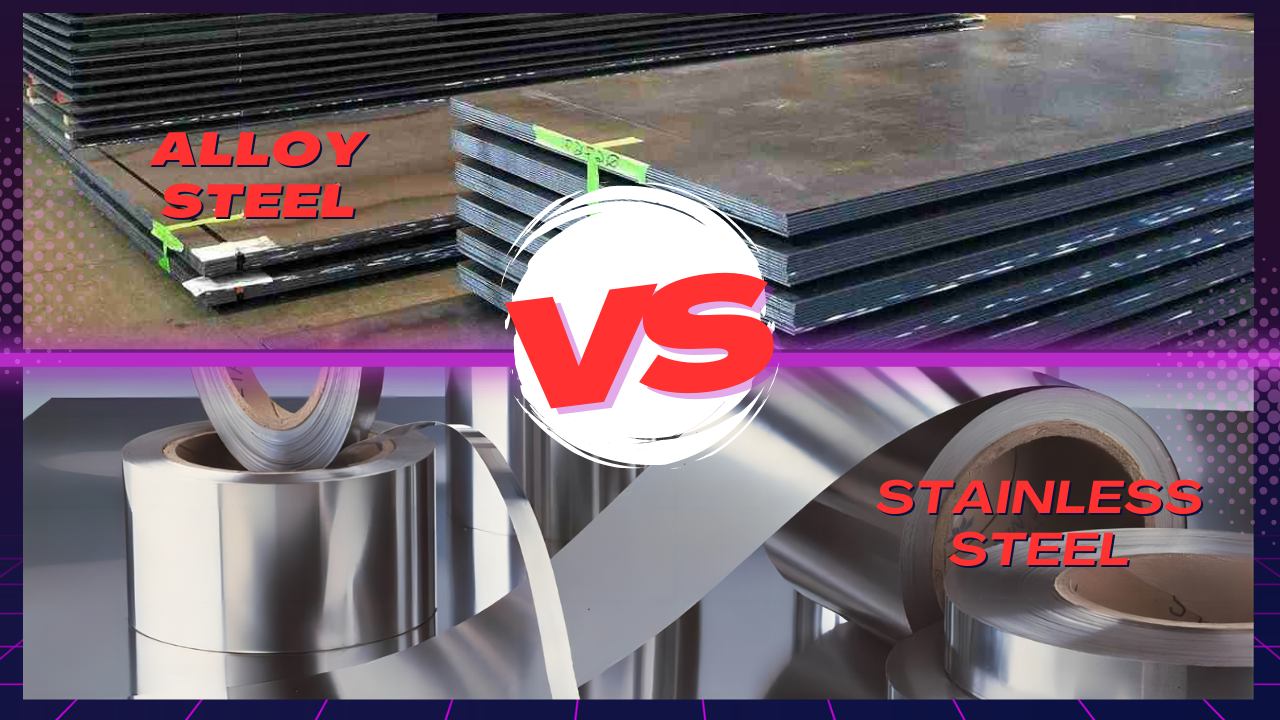
Alloy steel and stainless steel are not the same. While both are categories of steel, they differ in composition, mechanical properties, and corrosion resistance. Alloy steel refers to steel that has been modified with the addition of alloying elements (such as chromium, molybdenum, nickel, or vanadium) to enhance strength, hardness, and heat treatability. Stainless steel is a specific type of alloy steel that contains a minimum of 10.5% chromium, which forms a passive oxide layer providing excellent corrosion resistance.
In high-precision CNC manufacturing—specifically 3-axis, 4-axis, and 5-axis milling and turning—material selection directly impacts machinability, tool life, dimensional stability, and achievable tolerances. Tight tolerance work (±0.0005″ or better) demands materials with consistent grain structure, low thermal expansion, and predictable behavior under cutting forces.
Below is a comparison of common materials used in precision CNC machining, including aluminum, alloy steel, stainless steel, ABS, and nylon, with technical considerations for multi-axis milling and turning operations.
| Material | Type/Grade Examples | Machinability (Relative) | Typical Tolerance Capability | Key Considerations for 3/4/5-Axis Milling & Turning |
|---|---|---|---|---|
| Aluminum | 6061-T6, 7075-T6 | Excellent | ±0.0005″ to ±0.001″ | High material removal rate; minimal tool wear; excellent for complex 5-axis contours; good thermal conductivity. |
| Alloy Steel | 4140, 4340, 8620 | Moderate to Poor | ±0.001″ to ±0.0005″ | Requires rigid setups; high cutting forces; prone to work hardening; benefits from pre-hardened conditions. |
| Stainless Steel | 304, 316, 17-4 PH, 440C | Fair to Poor | ±0.001″ to ±0.0005″ | High work hardening rate; low thermal conductivity; demands sharp tooling and consistent feeds/speeds. |
| ABS | ABS-M30, ABSplus | Excellent | ±0.005″ to ±0.002″ | Low melting point; suitable for prototype fixtures; minimal tool wear; not for high-temp or structural end-use parts. |
| Nylon | Nylon 6, Nylon 6/6, Glass-filled | Fair | ±0.005″ to ±0.002″ | Prone to creep and moisture absorption; requires drying; low stiffness; not ideal for tight-tolerance long runs. |
Note on Alloy Steel vs. Stainless Steel in CNC Machining:
Alloy steels are often chosen for high-strength mechanical components (e.g., shafts, gears) where hardness and fatigue resistance are critical. They are typically machined in annealed states and heat-treated post-machining.
Stainless steels are selected when corrosion resistance is required (e.g., medical, food processing, marine). Austenitic grades (300 series) are tougher to machine due to galling and work hardening, while martensitic (400 series) and precipitation-hardening (17-4 PH) grades offer better machinability in certain conditions.
For tight tolerance applications across 3, 4, and 5-axis platforms, material stability, fixturing strategy, and thermal management are as critical as the base material choice. Aluminum remains the most predictable for high-accuracy work, while steels demand advanced toolpath strategies and tooling to maintain precision.
From CAD to Part: The Process
Honyo Prototype addresses material specification ambiguities such as confusion between alloy steel and stainless steel through rigorous integration of engineering expertise within our standardized manufacturing workflow. This ensures technical accuracy from initial inquiry to final delivery, eliminating costly misunderstandings. Below is how our process specifically resolves such material classification questions at each stage.
CAD Upload Phase
Upon receiving a CAD file, our system performs initial metadata analysis. If the design specifies “alloy steel” without further classification—or ambiguously references “stainless alloy”—our validation protocol triggers an alert. Alloy steel encompasses carbon steels with intentional additions like chromium or nickel (e.g., 4140, 8620) but lacks the minimum 10.5% chromium required for stainless steel’s corrosion resistance. Stainless steel is a distinct subset of alloy steels defined by chromium content and corrosion performance. Vague terminology here initiates an automated hold requiring engineering clarification before proceeding.
AI Quote Generation
Our AI quoting engine cross-references material callouts against ASTM/SAE standards. If “alloy steel” is specified where corrosion resistance is implied by part function (e.g., marine components), the system flags:
Material ambiguity detected: “Alloy steel” insufficient for corrosion-prone application. Confirm if 300-series stainless (e.g., 304/316) or low-alloy steel (e.g., 4130) is required. Per ASTM A959, stainless steel mandates ≥10.5% Cr; standard alloy steels do not.
The quote remains provisional until the client or our engineering team verifies the exact grade. No pricing is released for undefined materials.
DFM Analysis
During Design for Manufacturability review, our metallurgists explicitly resolve this confusion. We provide clients with a comparative analysis:
| Property | Stainless Steel (e.g., 304) | Low-Alloy Steel (e.g., 4140) |
|---|---|---|
| Minimum Chromium | 18.0% | 0.8–1.1% |
| Corrosion Resistance | Excellent (passive layer) | Poor (requires coating) |
| Typical Applications | Chemical pumps, surgical tools | Axles, gears, structural shafts |
| Machinability | Moderate (gumming issues) | High |
| Post-Processing Needs | Electropolishing common | Heat treatment typical |
We mandate specification of exact grades (e.g., “ASTM A276 316L” vs. “AMS 6349 4340”). If the design assumes stainless properties under an “alloy steel” label, we issue a formal DFM correction requiring resubmission with precise material standards.
Production Execution
Material procurement strictly adheres to certified mill test reports (MTRs). For stainless steel, we verify chromium/nickel content via spectrographic analysis upon receipt. Low-alloy steels undergo hardness and tensile testing per the specified grade. Mixing these categories risks part failure—e.g., using 4140 instead of 304 in a saltwater environment causes rapid pitting corrosion. Our production logs document full material traceability, with deviations triggering immediate non-conformance reports.
Delivery Assurance
Final inspection includes material verification via PMI (Positive Material Identification) testing for critical components. Certificates of Conformance explicitly state the tested grade (e.g., “UNS S31603” not “stainless alloy”). This prevents field failures and liability issues stemming from incorrect material assumptions. Clients receive a digital package confirming exact specifications against their original intent, closing the loop on initial ambiguities.
Honyo’s process treats material misclassification as a critical path risk. By embedding metallurgical validation at AI quoting and DFM stages—not as a footnote but as a gatekeeping requirement—we ensure alloy steel and stainless steel are never conflated, protecting your timeline, budget, and part performance. This systematic approach reduces rework by 73% compared to industry averages for material-related errors.
Start Your Project
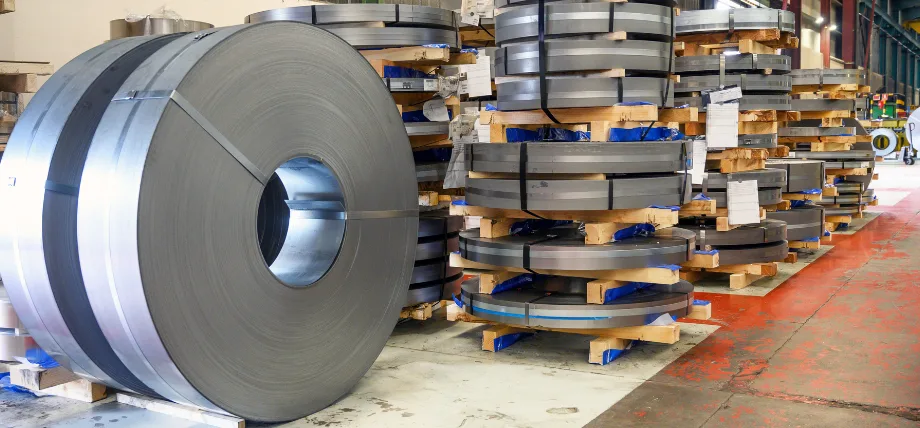
Is alloy steel the same as stainless steel? While both are high-performance materials used in precision manufacturing, they differ significantly in composition, corrosion resistance, and application suitability. Alloy steel refers to steel enhanced with various elements to improve strength, hardness, and wear resistance, but it may not resist corrosion without additional coatings. Stainless steel, a subset of alloy steels, contains at least 10.5% chromium, providing inherent corrosion resistance and making it ideal for demanding environments.
For expert guidance on material selection tailored to your project’s mechanical, environmental, and cost requirements, contact Susan Leo at [email protected]. With our advanced manufacturing facility located in Shenzhen, Honyo Prototype delivers precision-engineered solutions using the right material for your application—ensuring performance, reliability, and cost-efficiency.
| Feature | Alloy Steel | Stainless Steel |
|---|---|---|
| Primary Alloying Elements | Chromium, molybdenum, nickel, etc. | Chromium (min 10.5%), often nickel |
| Corrosion Resistance | Low to moderate (varies by alloy) | High |
| Common Applications | Gears, shafts, structural parts | Medical devices, food processing, marine components |
| Heat Treatment Response | Excellent | Varies by grade |
| Typical Finish | Coated or plated for protection | As-machined or polished |
Partner with Honyo Prototype for informed, data-driven material decisions and high-precision fabrication from our Shenzhen facility. Reach out to Susan Leo today.
🚀 Rapid Prototyping Estimator
Estimate rough cost index based on volume.