
Contents
Manufacturing Insight: Investment Cast Steel
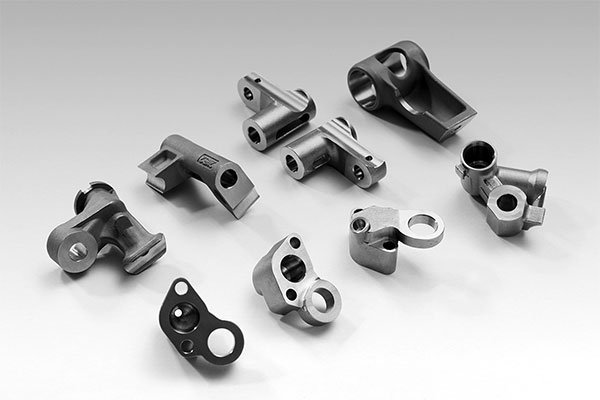
Precision Integration of Investment Cast Steel Components Through Honyo Prototype’s Advanced CNC Machining
Investment cast steel delivers exceptional geometric complexity and material integrity for mission-critical components across aerospace, energy, and industrial sectors. However, achieving final dimensional tolerances and critical surface finishes often requires precision post-casting machining. At Honyo Prototype, we bridge this gap with seamlessly integrated CNC machining services engineered specifically for investment cast substrates. Our multi-axis milling and turning centers—calibrated to ±0.0002″ tolerances—refine cast steel parts while preserving the metallurgical advantages of the investment casting process, ensuring optimal mechanical properties and fatigue resistance.
Honyo Prototype’s technical team collaborates directly with your engineering staff to optimize machining sequences, minimizing stress on thin-walled or intricate cast geometries. We specialize in finishing challenging alloys like 4140, 17-4PH, and 316L stainless steel investment castings, transforming near-net shapes into production-ready components with certified surface finishes down to Ra 0.8 μm. This end-to-end capability eliminates supply chain fragmentation, reducing lead times by up to 40% compared to outsourcing casting and machining separately.
Accelerate your project timeline with Honyo’s Online Instant Quote platform. Upload CAD files for investment cast steel components requiring CNC finishing, and receive a detailed manufacturability analysis with pricing and lead time within hours—not days. Our system evaluates dimensional complexity, material allowances, and finishing requirements against real-time machine capacity, providing transparent, actionable data for procurement decisions.
Visit our Online Instant Quote portal to experience precision-engineered integration of investment casting and CNC machining, engineered for your operational success.
Technical Capabilities
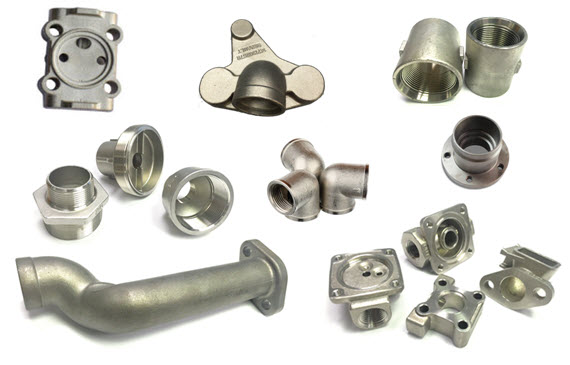
Investment cast steel components are widely used in precision manufacturing due to their excellent dimensional accuracy, fine surface finish, and ability to form complex geometries. When integrating these castings into high-precision machining workflows—particularly 3, 4, and 5-axis milling and turning operations—tight tolerance capabilities become critical. Below is a technical comparison of investment cast steel against other commonly used materials in the context of CNC machining for tight tolerance applications.
| Material | Process Compatibility | Typical Tolerance Range (mm) | Surface Finish (Ra, µm) | Machinability Rating | Notes on Use in Precision Machining |
|---|---|---|---|---|---|
| Investment Cast Steel | 3/4/5-axis milling, CNC turning | ±0.025 to ±0.075 | 1.6 – 3.2 | Moderate | Excellent for complex, high-strength components; minimal material waste; near-net shape reduces machining time; suitable for tight tolerance finishing after casting |
| Aluminum (e.g., 6061, 7075) | 3/4/5-axis milling, CNC turning | ±0.012 to ±0.050 | 0.8 – 1.6 | High | Superior machinability and faster cycle times; commonly used for lightweight, high-precision parts; excellent for tight tolerance applications |
| Steel (Machinable, e.g., 4140, 1018) | 3/4/5-axis milling, CNC turning | ±0.015 to ±0.050 | 1.6 – 2.4 | Moderate to Low | Higher tool wear than aluminum; requires rigid setups; ideal for high-strength, tight tolerance components |
| ABS (Plastic) | 3/4/5-axis milling, turning | ±0.050 to ±0.100 | 1.6 – 3.2 | High | Low melting point limits cutting speeds; used for prototypes and non-structural parts; tight tolerances possible with stable thermal conditions |
| Nylon (Polyamide) | 3/4/5-axis milling, turning | ±0.050 to ±0.125 | 3.2 – 6.3 | Moderate | Prone to moisture absorption and dimensional instability; requires pre-drying; limited use in high-precision tight tolerance applications |
Investment cast steel provides a strong starting point for high-precision machining due to its near-net shape, reducing the need for extensive stock removal. When followed by 3, 4, or 5-axis CNC milling or turning, final tolerances within ±0.025 mm can be consistently achieved with proper fixturing, tooling, and process control. This makes it ideal for aerospace, defense, and medical applications where both geometry complexity and dimensional accuracy are critical.
For the tightest tolerances, post-casting machining in controlled environments with temperature-stabilized equipment is recommended, especially when interfacing with aluminum or steel components in precision assemblies.
From CAD to Part: The Process
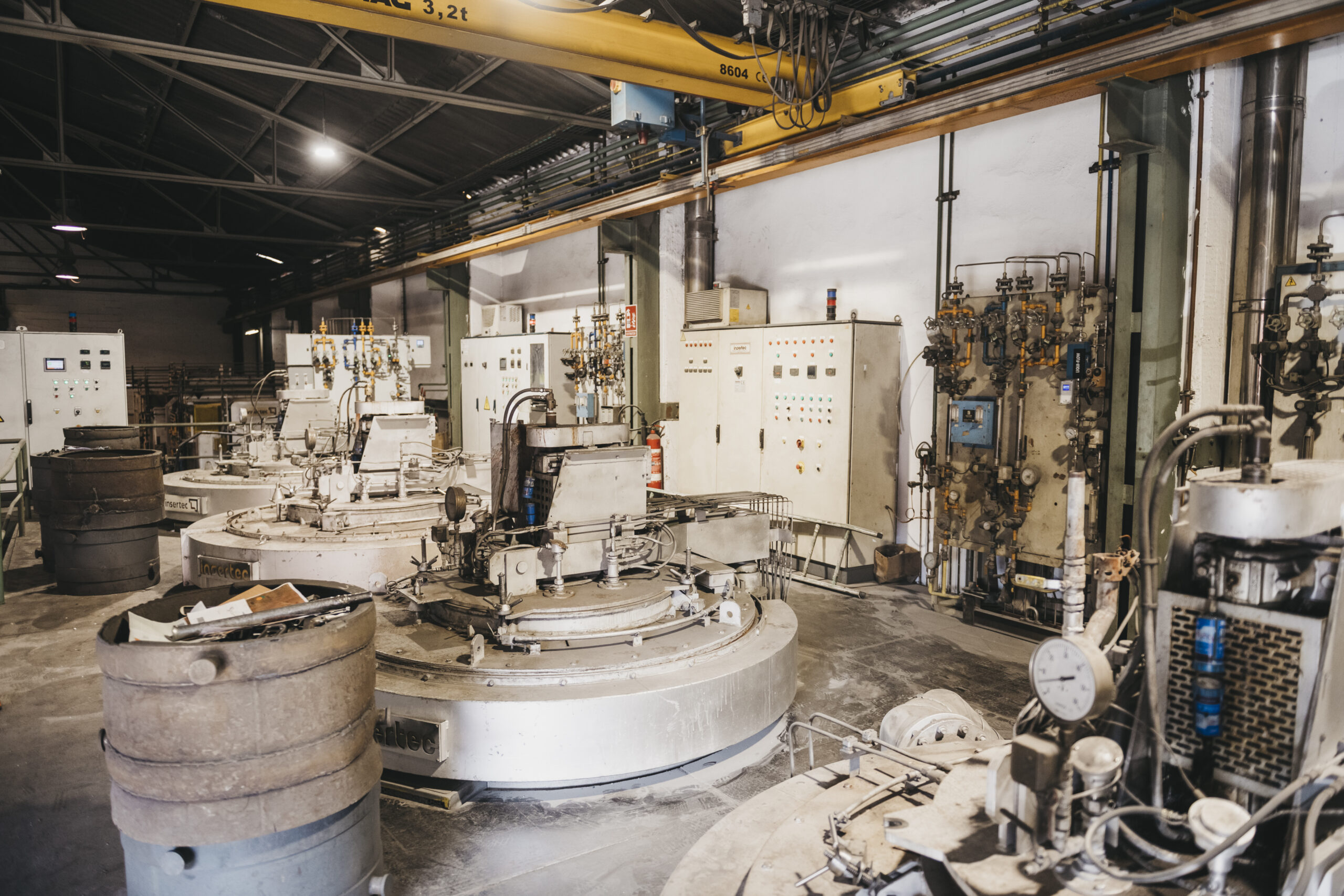
Honyo Prototype Investment Casting Process for Steel Components
Honyo Prototype utilizes a refined investment casting process specifically optimized for steel alloys, including carbon steels, stainless steels, and tool steels. Our workflow ensures precision, cost efficiency, and rapid turnaround while adhering to stringent quality standards. The process begins with CAD submission and progresses through integrated digital and physical stages to final delivery.
CAD Upload and Initial Assessment
Clients submit 3D CAD models via our secure online portal. Our system validates file format compatibility (STEP, IGES, Parasolid) and performs an initial geometry check for basic manufacturability. At this stage, we confirm material specifications, required tolerances per ASTM or customer-specific standards, and critical features requiring special attention in the casting process.
AI-Powered Preliminary Quoting
Honyo’s proprietary AI quoting engine analyzes the CAD geometry, material selection, and declared requirements to generate a rapid cost and lead time estimate. This system leverages historical production data from thousands of steel castings, accounting for alloy density, surface area-to-volume ratios, and complexity factors such as undercuts or thin walls. The AI output includes a preliminary cost breakdown for tooling, wax pattern production, shell building, melting, and finishing. Note that this is an automated estimate; final pricing requires DFM validation.
Design for Manufacturability (DFM) Engineering Review
All steel casting projects undergo mandatory DFM analysis by our engineering team before formal quotation. This phase identifies potential defects unique to steel investment casting, such as hot tears, shrinkage porosity, or distortion during solidification. Key adjustments include:
| DFM Parameter | Typical Steel-Specific Adjustment | Purpose |
|---|---|---|
| Wall Thickness | Minimum 3.0 mm for carbon steel; 4.0 mm for stainless steel | Prevents cold shuts and shrinkage |
| Draft Angles | 1.5°–3.0° on vertical surfaces | Facilitates wax pattern removal |
| Fillet Radii | ≥1.5x wall thickness at internal corners | Reduces stress concentration and cracking |
| Gating System Design | Optimized runner/riser geometry via solidification simulation | Ensures directional solidification |
The DFM report details actionable recommendations, cost-saving opportunities, and technical constraints. Client approval of DFM insights is required before proceeding.
Production Execution
Upon DFM sign-off and purchase order confirmation, production commences:
Pattern production uses rapid-injection tooling for wax patterns, with steel-specific thermal expansion coefficients applied. Shell building employs multiple slurry-coating and stuccoing cycles using zircon-based refractory for high-temperature steel compatibility. Melting occurs in vacuum or argon-shielded induction furnaces to control carbon content and prevent oxidation, with spectrographic analysis for alloy verification. Castings undergo controlled cooling to minimize residual stresses, followed by cutoff, heat treatment (e.g., annealing, solution treating), and precision grinding per ASME B16.34 or customer specifications. Non-destructive testing (NDT) includes MPI for surface cracks and X-ray for internal porosity on critical components.
Delivery and Documentation
Final inspection validates dimensional conformance to print using CMM and optical comparators. All steel castings ship with full traceability documentation: material test reports (MTRs) per ASTM A752, heat treatment records, NDT results, and dimensional inspection reports. Standard lead time from CAD approval to delivery is 15–25 business days, varying by complexity and order volume:
| Complexity Tier | Description | Typical Lead Time |
|---|---|---|
| Tier 1 | Simple geometry, ≤5 kg, standard alloy | 15 business days |
| Tier 2 | Moderate features, 5–20 kg | 20 business days |
| Tier 3 | Complex cores, tight tolerances, >20 kg | 25 business days |
Honyo’s integrated digital-to-physical workflow eliminates traditional quoting delays while ensuring steel castings meet aerospace, medical, and industrial performance requirements. This process reduces client time-to-market by up to 40% compared to conventional foundry approaches.
Start Your Project
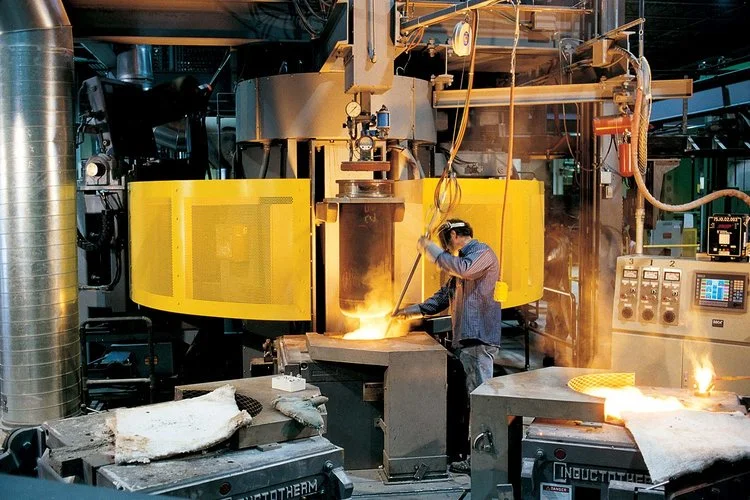
Looking for high-quality investment cast steel components? Partner with Honyo Prototype for precision-engineered solutions manufactured at our Shenzhen facility. With advanced casting technology and strict quality control, we deliver durable, dimensionally accurate steel parts tailored to your specifications.
Contact Susan Leo today to discuss your project requirements.
Email: [email protected]
Leverage our expertise in investment casting to reduce lead times and improve component performance. Your trusted manufacturing partner in China.
🚀 Rapid Prototyping Estimator
Estimate rough cost index based on volume.