
Contents
Manufacturing Insight: Investment Cast Stainless Steel
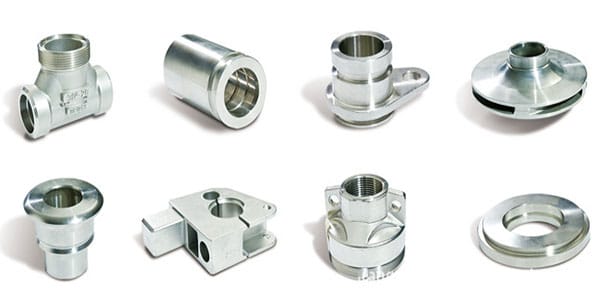
Precision Investment Cast Stainless Steel Components Enhanced by Honyo’s CNC Machining Expertise
Investment casting delivers exceptional geometric complexity and material integrity for stainless steel components, making it ideal for demanding aerospace, medical, and industrial applications where corrosion resistance and structural reliability are non-negotiable. However, as-cast surfaces often require precision machining to achieve critical tolerances, tight dimensional control, and optimal functional finishes. At Honyo Prototype, we bridge this gap seamlessly by integrating advanced CNC machining directly into our investment casting workflow, transforming near-net-shape castings into fully mission-ready parts.
Our AS9100-certified facility leverages state-of-the-art 3-, 4-, and 5-axis CNC machining centers to address the inherent challenges of post-cast processing. We consistently achieve ±0.005mm tolerances on features like sealing surfaces, bearing bores, and interface geometries—critical for assemblies where leakage or misalignment risks system failure. Our engineers optimize fixturing and toolpaths specifically for investment cast stainless steel alloys (e.g., 316L, 17-4PH), minimizing distortion while enhancing surface integrity through controlled material removal rates and specialized tooling. This integrated approach eliminates supply chain handoffs, reduces lead times by up to 40%, and ensures traceability from raw casting to final inspected component.
Accelerate your stainless steel prototyping or low-volume production with Honyo’s Online Instant Quote system. Simply upload your STEP or Parasolid CAD file with casting-ready geometry, and our platform generates a detailed machining quotation—including DFM feedback—in under 15 minutes. This precision-engineered solution ensures your investment cast parts meet exacting functional requirements without compromising speed-to-market.
Experience the Honyo advantage: Where casting precision meets machining perfection.
[Access the Online Instant Quote Tool →]
Technical Capabilities
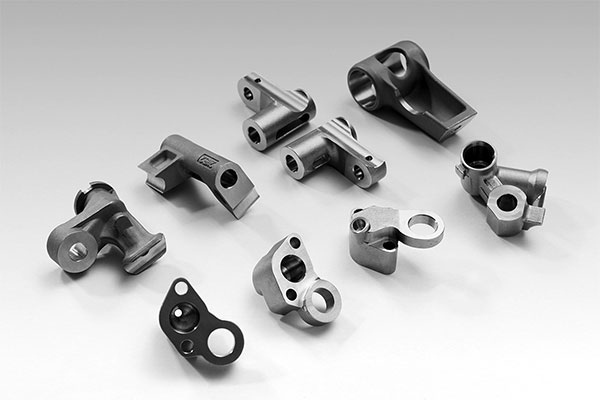
Investment cast stainless steel components are manufactured using the precision investment casting process, which produces near-net-shape parts with excellent surface finish and dimensional accuracy. These castings are ideal for subsequent high-precision CNC machining operations such as 3-axis, 4-axis, and 5-axis milling, as well as CNC turning, especially when tight tolerances are required for aerospace, medical, and industrial applications.
The investment casting process begins with a wax pattern that is coated with ceramic slurry to form a mold. After dewaxing and firing, molten stainless steel is poured into the mold. Once cooled, the ceramic shell is removed, revealing the casting. This method allows complex geometries to be produced with minimal post-processing, though final machining is often necessary to achieve tight tolerances and critical surface finishes.
After casting, parts are typically stress-relieved and heat-treated to improve dimensional stability and machinability. CNC machining centers then perform precision milling and turning operations. 5-axis machining enables access to complex contours and undercuts without multiple setups, improving accuracy and reducing cycle time.
Tight tolerance machining of investment cast stainless steel typically achieves ±0.0005″ (±0.013 mm) on critical features, depending on part geometry, size, and machine capability. Surface finishes down to 16 µin (0.4 µm) Ra are attainable with fine milling or turning, and tighter finishes can be achieved with additional finishing processes.
While stainless steel is the base material in investment casting, the machining capabilities described also apply to other materials commonly used in prototyping and low-volume production, including aluminum, carbon steel, ABS, and nylon. Each material has distinct machinability characteristics and is selected based on mechanical, thermal, and environmental requirements.
Below is a comparison of technical specifications and machining characteristics across materials:
| Material | Typical Grades | Machinability Rating | Max Tolerance (Milling/Turning) | Surface Finish (Ra) | Common Applications | Suitability for 5-Axis Machining |
|---|---|---|---|---|---|---|
| Stainless Steel (Investment Cast) | 304, 316, 17-4 PH, 410 | Moderate | ±0.0005″ (±0.013 mm) | 16–32 µin (0.4–0.8 µm) | Aerospace, medical, fluid systems | High – excellent for complex contours |
| Aluminum | 6061-T6, 7075-T6 | Excellent | ±0.0005″ (±0.013 mm) | 8–16 µin (0.2–0.4 µm) | Prototypes, enclosures, structural parts | Very High – ideal for high-speed 5-axis |
| Carbon Steel | 1018, 4140, 4340 | Good | ±0.0005″ (±0.013 mm) | 16–32 µin (0.4–0.8 µm) | Industrial machinery, tooling | High – moderate tool wear |
| ABS | Standard, Flame Retardant | Excellent | ±0.002″ (±0.05 mm) | 32–64 µin (0.8–1.6 µm) | Prototypes, housings, jigs | Moderate – low heat resistance |
| Nylon (PA6, PA66) | Unfilled, Glass-Filled | Good | ±0.003″ (±0.076 mm) | 32–125 µin (0.8–3.2 µm) | Wear components, gears, insulators | Moderate – prone to deformation |
Note: Tolerances are achievable under stable machining conditions with proper fixturing, tooling, and thermal control. Stainless steel and aluminum are best suited for tight-tolerance, multi-axis operations due to dimensional stability and predictable cutting behavior. ABS and nylon are typically used for non-structural prototypes and require careful handling during machining to avoid melting or burring.
At Honyo Prototype, we integrate investment casting with advanced 3/4/5-axis CNC milling and turning to deliver fully finished stainless steel components with tight tolerances, complex geometries, and repeatable quality for mission-critical applications.
From CAD to Part: The Process
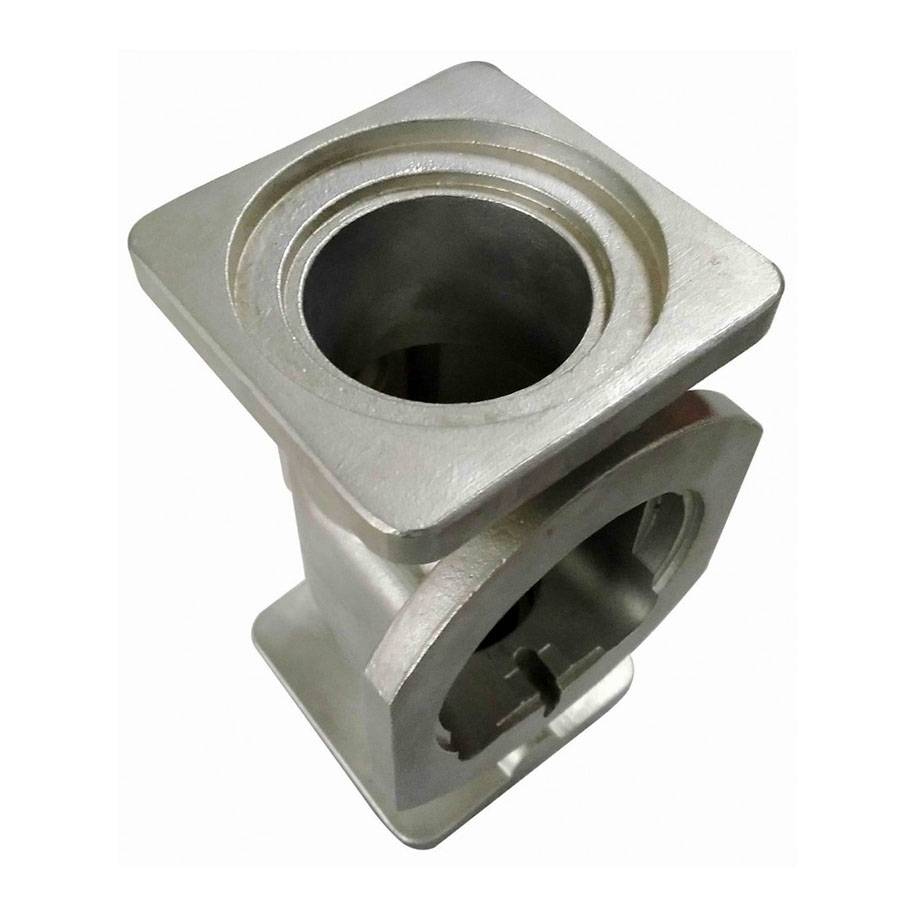
Honyo Prototype Investment Casting Process for Stainless Steel
Our end-to-end investment casting process for stainless steel components begins with secure digital collaboration and concludes with certified delivery, ensuring precision and traceability. Clients initiate the workflow by uploading a 3D CAD model (STEP, IGES, or native formats) via our encrypted customer portal. This triggers immediate geometric analysis for manufacturability against investment casting constraints, including minimum wall thickness, draft angles, and feature complexity.
AI-Assisted Quoting System
The uploaded CAD model enters our proprietary quoting engine, which combines AI-driven geometry analysis with real-time material cost data and historical production metrics. The system evaluates alloy-specific factors such as stainless steel grade (typically ASTM A743/A351 CF8M/CF3M for 316L or CF8/CF3 for 304), shrinkage allowances, and post-processing requirements. Within 4 business hours, clients receive a detailed quotation including NRE costs, unit pricing at specified volumes, lead time estimates, and preliminary material certification options. This phase includes metallurgical validation by our engineering team to confirm feasibility before formal quoting.
Engineering-Driven DFM Review
Following quote acceptance, our manufacturing engineers conduct a rigorous Design for Manufacturing (DFM) assessment. This is not an automated step but a collaborative engineering review focused on stainless steel-specific challenges: optimizing gating systems to prevent hot tears in austenitic alloys, validating pattern design for thermal stability, and addressing corrosion resistance requirements through surface finish specifications. We provide actionable feedback within 72 hours, including suggested modifications to reduce porosity risks or improve yield. Client approval of the DFM report is mandatory before tooling commencement, ensuring alignment on critical dimensions per ASME Y14.5.
Precision Production Execution
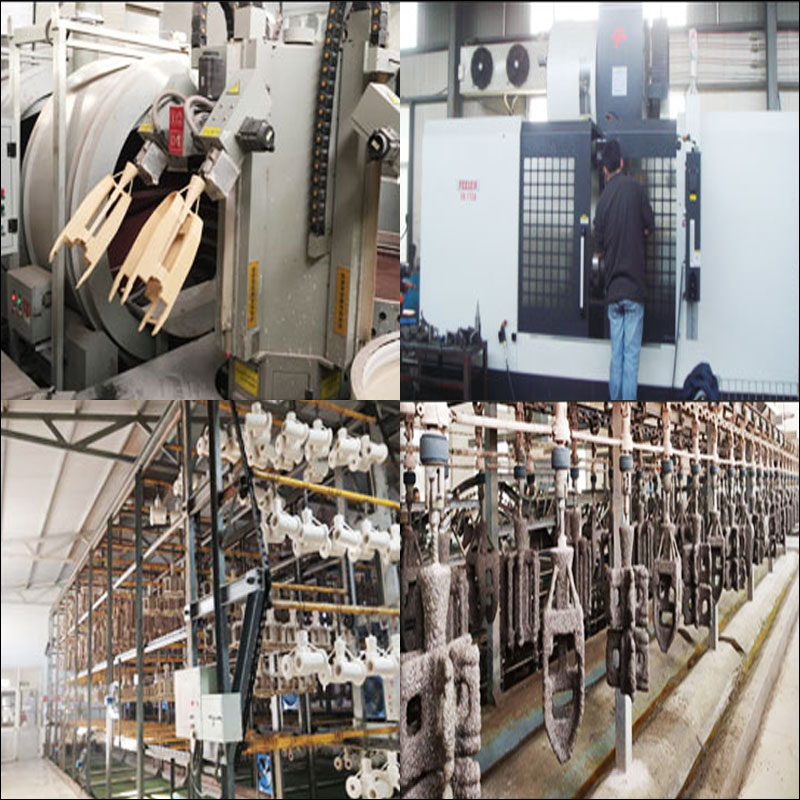
Production leverages our in-house ceramic shell foundry with strict process controls for stainless steel:
Wax pattern injection using temperature-stabilized tooling to maintain dimensional accuracy
Multi-layer ceramic shell application with controlled humidity drying
Autoclave dewaxing followed by furnace burnout at 1000°C
Vacuum induction melting under argon atmosphere for 304/316 alloys to minimize carbon pickup
Precision casting with controlled solidification rates to prevent interdendritic segregation
Post-cast processes include thermal stress relief, gate removal via band sawing, and optional HIP treatment for critical aerospace components
All stainless steel castings undergo mandatory PMI verification (positive material identification) via handheld XRF and 100% visual inspection per ASTM E165. Dimensional validation uses CMM reports against the original CAD model, with tolerances held to ±0.005 in/in (±0.127 mm/mm) as standard.
Certified Delivery
Final delivery includes comprehensive traceability documentation: material test reports (MTRs) with chemical composition and mechanical properties, CMM inspection reports, process control records, and a Certificate of Conformance. Parts ship in anti-corrosion packaging with humidity indicators, with options for expedited global logistics partners. Typical lead time from DFM sign-off to delivery is 18-25 business days for first articles, with ongoing production runs maintained under our ISO 9001:2015 and AS9100D certified quality management system. We provide full batch traceability via serialized heat numbers and digital quality records accessible through our client portal.
Start Your Project
Looking for high-precision investment cast stainless steel components? Partner with Honyo Prototype for superior quality and repeatable accuracy. Our Shenzhen-based factory specializes in low to medium volume production, ideal for aerospace, medical, and industrial applications.
Contact Susan Leo today at [email protected] to request a quote or discuss your project requirements. Leverage our expertise in investment casting to reduce lead times and achieve net-shape complexity with excellent surface finish.
🚀 Rapid Prototyping Estimator
Estimate rough cost index based on volume.