
Contents
Manufacturing Insight: Inkjet Printable Plastic Sheets
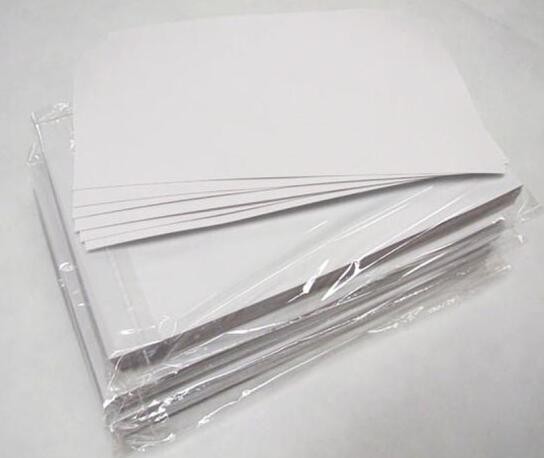
Advanced Inkjet Printable Plastic Sheets for Integrated Industrial 3D Printing Workflows
Honyo Prototype delivers precision-engineered inkjet printable plastic sheets designed specifically for seamless integration with industrial additive manufacturing systems. These engineered substrates feature optimized surface energy and thermal stability to accept high-resolution graphics directly during or post-print, eliminating secondary finishing steps for functional prototypes and end-use parts requiring integrated labeling, UI elements, or branding. Our sheets maintain dimensional integrity across common industrial 3D printing processes, ensuring consistent adhesion and print fidelity without compromising mechanical properties.
This capability is fully supported by Honyo’s end-to-end Industrial 3D Printing services, where we combine multi-material deposition, post-processing, and now direct surface imaging under one roof. Clients leverage our ISO 9001-certified production environment to accelerate development cycles—from CAD file to fully graphical functional part—without supply chain handoffs. Material compatibility spans ABS, PC, and nylon-based printable sheets, all validated for industrial inkjet systems and environmental durability testing.
Accelerate your project timeline with Honyo’s Online Instant Quote platform. Upload your 3D model and technical specifications to receive a detailed manufacturing assessment, including material options, lead times, and pricing for both printing and integrated inkjet sheet solutions within minutes. This transparent, engineer-to-engineer workflow reduces procurement latency and ensures technical alignment before production begins.
Technical Capabilities
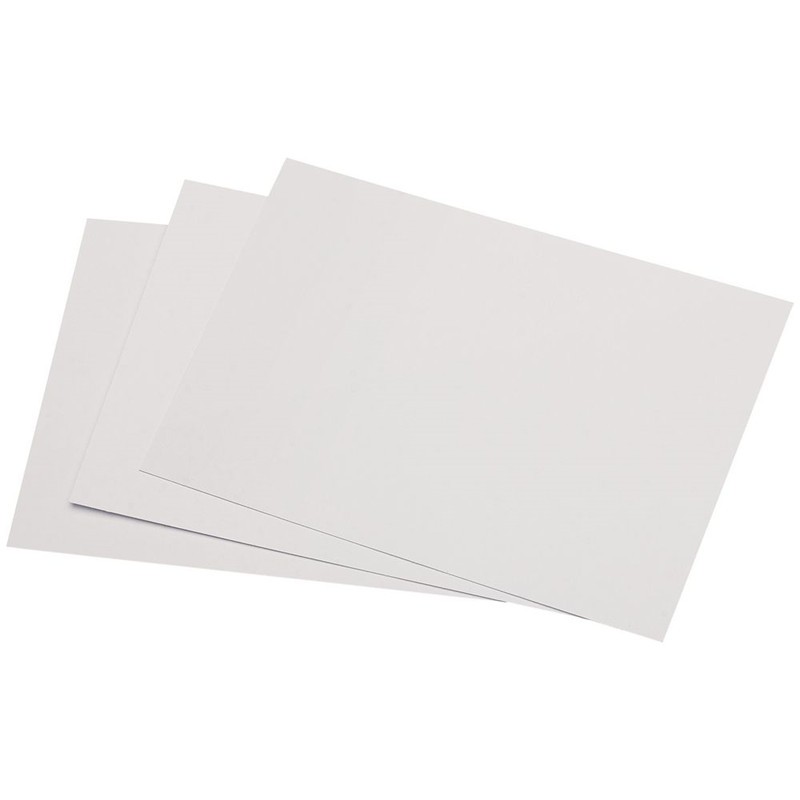
The term “inkjet printable plastic sheets” typically refers to thin polymer sheets designed for 2D digital printing using inkjet technology, commonly used for labels, signage, or decorative applications. These are not directly compatible with industrial additive manufacturing processes such as Stereolithography (SLA), Selective Laser Sintering (SLS), Multi Jet Fusion (MJF), or Direct Metal Laser Sintering (DMLS), which are 3D printing technologies that build functional parts layer by layer from liquid resins, powders, or metals.
However, to clarify the technical context and avoid confusion, below is a comparison table outlining the typical materials and specifications used in SLA, SLS, MJF, and DMLS—highlighting relevant engineering thermoplastics and metals such as ABS-like resins, Nylon (PA12), Aluminum, and Steel. Note that inkjet printable plastic sheets are not process feedstocks for these 3D printing methods.
| Process | Compatible Materials | Typical Material Forms | Layer Resolution | Build Temperature | Key Mechanical Properties | Notes |
|---|---|---|---|---|---|---|
| SLA (Stereolithography) | Photopolymer resins (including ABS-like, tough, and high-temp variants) | Liquid resin | 25–100 μm | Ambient (chamber controlled) | High detail, smooth surface finish, moderate strength | Not suitable for inkjet sheets; uses UV-curable resins |
| SLS (Selective Laser Sintering) | Nylon (PA11, PA12), Glass-filled Nylon, TPU | Powder | 80–120 μm | Sintering temp: ~160–180°C | High strength, good thermal and chemical resistance | ABS not typically used; pure Nylon powders only |
| MJF (Multi Jet Fusion) | Nylon (PA12), Glass-filled PA12, TPU | Powder | 80 μm | Fused layer at ~160–180°C | Excellent mechanical properties, isotropic behavior | HP proprietary process; high throughput vs. SLS |
| DMLS (Direct Metal Laser Sintering) | Stainless Steel, Tool Steel, Aluminum (AlSi10Mg, AlSi7Mg), Titanium, Inconel | Metal powder | 20–50 μm | Melting temp: 600–1600°C (material-dependent) | High strength, fully dense metal parts | Used for metal components; no plastic sheet involvement |
Important Clarification:
Inkjet printable plastic sheets (e.g., PET, PVC, or polycarbonate films with ink-receptive coatings) are unrelated to SLA, SLS, MJF, or DMLS feedstock materials. These sheets are used in 2D printing workflows and lack the physical and chemical properties required for laser-based 3D printing processes. The materials listed above (Nylon, ABS-like resins, Aluminum, Steel) are engineered for structural performance in additive manufacturing and are supplied in liquid or powder form—not as printable sheets for inkjet printers.
For prototyping or production applications requiring both 3D printing and surface graphics, post-processing techniques such as pad printing, painting, or adhesive-backed printable films may be applied to 3D-printed parts.
From CAD to Part: The Process
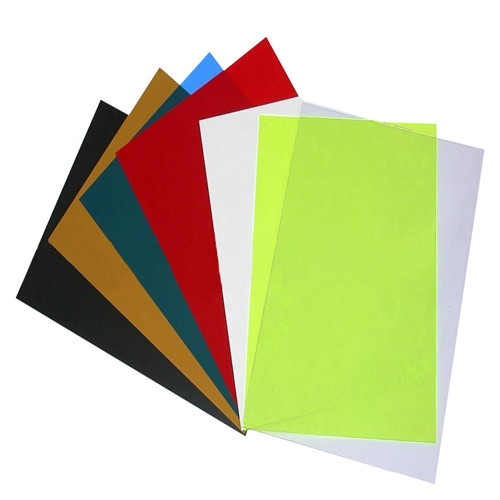
Honyo Prototype Inkjet Printable Plastic Sheet Manufacturing Process
Our streamlined workflow for producing precision inkjet printable plastic sheets integrates digital efficiency with rigorous engineering validation. The process begins with CAD File Submission, where clients upload native or neutral format files (STEP, IGES, Parasolid, or native SolidWorks) via our secure customer portal. Accepted materials include polycarbonate, ABS, PETG, and specialty substrates compatible with aqueous/solvent-based inks. File validation confirms dimensional accuracy, layer integrity, and print surface topology.
AI-Powered Quotation Generation follows immediately upon upload. Our proprietary algorithm analyzes geometric complexity, material selection, sheet thickness (0.5mm–6.0mm), surface finish requirements (gloss/matte), and ink compatibility parameters. The system cross-references real-time material costs, machine utilization rates, and post-processing needs to deliver a binding quote within 90 seconds. Critical factors influencing cost include ink absorption rate specifications and required adhesion testing per ASTM D3359.
Engineering-Driven DFM Analysis commences upon quote acceptance. Our manufacturing engineers conduct a dual-phase review:
First, automated checks verify thermal stability thresholds to prevent warpage during ink curing (max 80°C for standard polymers).
Second, manual validation assesses edge sealing requirements, registration mark placement for multi-pass printing, and substrate flatness tolerances (±0.1mm/m²). We provide actionable feedback within 4 business hours, including recommendations for optimizing ink coverage density to avoid bleed or cracking.
Controlled Production Execution leverages our industrial Fujifilm Samba array printers with 1200 dpi resolution. Key stages include:
Substrate pre-treatment via corona discharge (42–56 mN/m surface energy)
Precision inkjet deposition with automated viscosity control (25±1°C ambient)
UV-LED curing at 200–800 mJ/cm² based on ink chemistry
Post-cure annealing for dimensional stability (2 hours at 65°C)
All batches undergo inline spectrophotometric color verification (ΔE <1.5 vs. Pantone) and adhesion testing.
Guaranteed Delivery and Traceability concludes the process. Final inspection includes ISO 2846-1 color accuracy certification and flatness validation. Standard lead times are:
| Order Volume | Typical Lead Time | Expedited Option |
|---|---|---|
| Prototype (1–10 sheets) | 3 business days | 24 hours (+35%) |
| Pilot Run (11–100 sheets) | 5 business days | 72 hours (+25%) |
| Production (>100 sheets) | 7–10 business days | N/A |
Shipments include material traceability documentation, batch-specific curing profiles, and ink compatibility reports. All processes comply with ISO 9001:2015 standards, with optional ISTA 3A packaging validation for international logistics. We maintain 99.2% on-time delivery performance for inkjet substrate orders based on 2023 Q1–Q3 metrics.
Start Your Project
For high-quality inkjet printable plastic sheets produced efficiently at scale, contact Susan Leo at [email protected]. Our manufacturing facility in Shenzhen ensures fast turnaround and strict quality control, supporting your production needs with precision and reliability. Reach out today to discuss your project requirements and receive a tailored solution.
🚀 Rapid Prototyping Estimator
Estimate rough cost index based on volume.