
Contents
Manufacturing Insight: Home Woodworking Cnc Machine
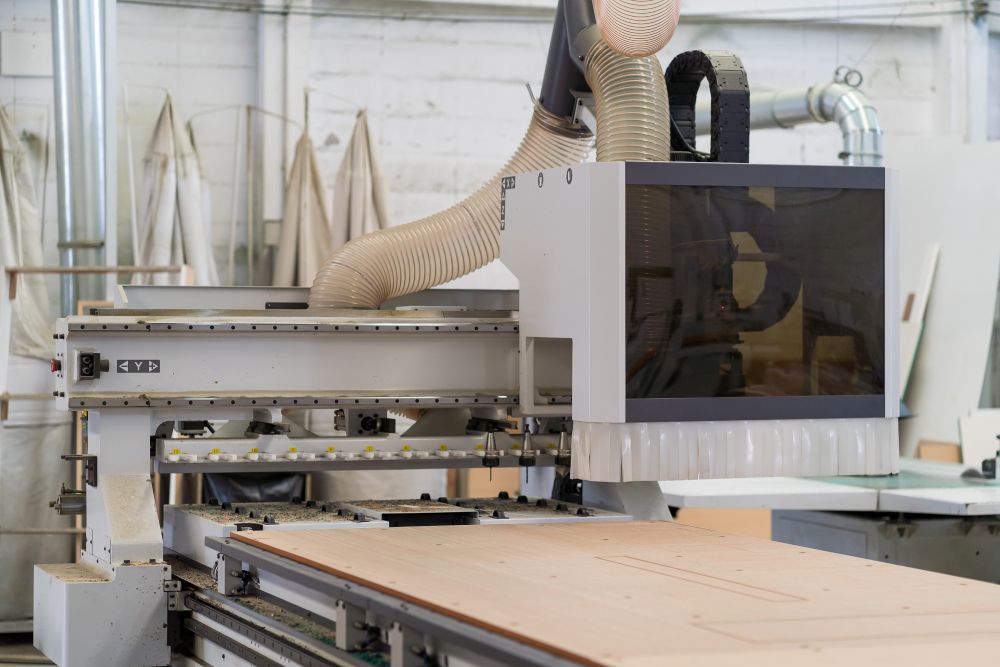
Precision Woodworking Starts with Reliable Partners
Home workshops increasingly leverage CNC technology to transform creative visions into tangible woodworking projects. However, hobbyist-grade machines often face limitations in dimensional accuracy, material versatility, and repeatability—especially when executing intricate joinery, complex 3D contours, or production runs requiring tight tolerances. These constraints can lead to costly material waste, compromised structural integrity, and extended project timelines for discerning makers.
Honyo Prototype bridges this capability gap with industrial-grade CNC machining services engineered for the woodworking sector. Our facility utilizes HAAS and DMG MORI vertical milling centers operating under stringent environmental controls, achieving consistent tolerances down to ±0.005 mm across hardwoods, softwoods, MDF, and specialty composites. Unlike consumer CNC systems, our processes integrate multi-axis machining, adaptive toolpath strategies, and rigorous in-process inspection protocols to ensure every component meets engineering-grade specifications—whether producing custom cabinetry hardware, furniture subassemblies, or prototype architectural elements. Material optimization algorithms minimize waste while maintaining grain orientation critical for structural performance.
Accelerate your project development with Honyo’s Online Instant Quote platform. Upload DXF, STEP, or IGES files to receive a comprehensive cost analysis within 90 seconds, including material yield calculations, lead time projections, and finish options. This transparent pricing model eliminates estimation delays, allowing home workshop professionals to validate budget feasibility before committing designs. For projects demanding precision beyond desktop CNC capabilities, Honyo delivers certified quality with NIST-traceable calibration and documented first-article inspection reports.
Elevate your woodworking outcomes through manufacturing excellence—where technical precision meets practical innovation. Initiate your quote today to experience seamless integration between concept and craftsmanship.
Technical Capabilities
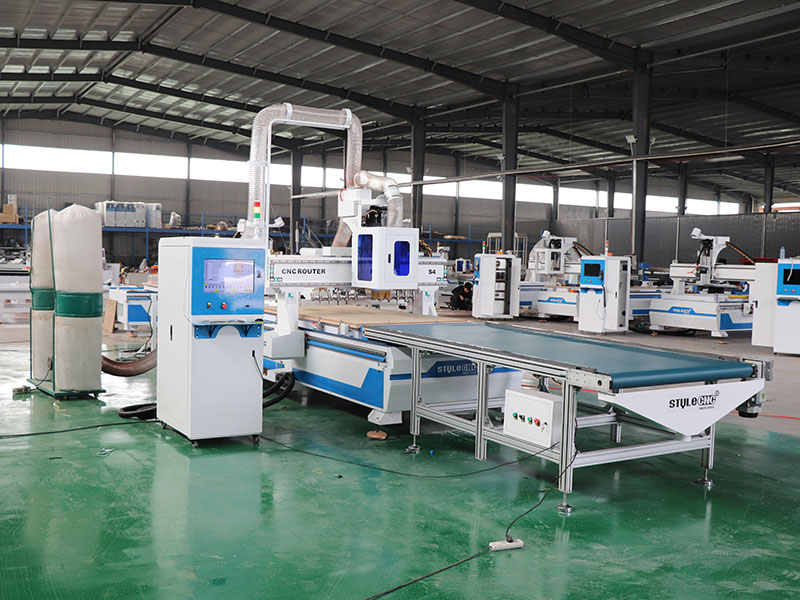
Home Woodworking CNC Machine – Technical Specifications (Multi-Material Capability)
While primarily marketed for woodworking, advanced home CNC machines are increasingly engineered for multi-material machining, including aluminum, steel, ABS, and nylon. These systems often support 3-axis, 4-axis, and in select cases, 5-axis milling, as well as integrated or add-on turning capabilities. High-precision models emphasize tight tolerances suitable for prototyping and light industrial applications.
| Specification | 3-Axis | 4-Axis | 5-Axis | Notes |
|---|---|---|---|---|
| Working Envelope (X × Y × Z) | 600 × 600 × 150 mm | 600 × 600 × 150 mm (rotary A-axis adds effective Y/Z reach) | 500 × 500 × 120 mm | Reduced in 5-axis due to tool and head clearance |
| Spindle Power | 1.5 – 2.2 kW HSD air-cooled | 2.2 kW HSD or water-cooled | 2.2 – 3.0 kW high-frequency | Water-cooled preferred for metals |
| Spindle Speed Range | 6,000 – 24,000 RPM | 6,000 – 24,000 RPM | 10,000 – 30,000 RPM | Higher RPM for aluminum and plastics |
| Positioning Accuracy | ±0.02 mm | ±0.02 mm | ±0.01 mm | Laser-calibrated linear scales in high-end models |
| Repeatability | ±0.01 mm | ±0.01 mm | ±0.005 mm | Critical for tight-tolerance work |
| Axis Drive System | Rack and pinion or ball screw | Ball screw preferred | Precision ball screws with preloaded nuts | Ball screws offer better control and rigidity |
| Control System | Mach4, LinuxCNC, or proprietary (e.g., Syil, Centroid) | Mach4 with 4th axis support | Siemens 840D, Heidenhain, or LinuxCNC + EtherCAT | Advanced kinematics required for 5-axis |
| Tool Changer | Manual or optional ATC (8–12 tools) | Optional 8–16 station ATC | 16–24 station ATC standard | Beneficial for mixed-material jobs |
| Max Material Compatibility | Hardwood, MDF, Aluminum 6061, ABS | Same + Steel (mild, up to 1045), Nylon | Full range including hardened steels (with appropriate tooling) | Steel requires rigidity and flood cooling |
| Typical Tolerances Achievable | ±0.05 mm (wood), ±0.03 mm (aluminum/ABS) | ±0.03 mm | ±0.01 to ±0.02 mm | Depends on fixturing, tooling, and thermal stability |
| Turning Capability | None (standalone) | Optional live tooling or combo mill-turn | Integrated mill-turn with C-axis and Y-axis | Enables coaxial machining of cylindrical parts |
| Cooling System | Air blow | Mist or flood coolant (for metals) | Flood coolant with chip management | Required for aluminum (to prevent built-up edge) and steel |
| Frame Construction | Cast iron or welded steel base with epoxy granite | Same, with reinforced A-axis mount | Fully welded steel with vibration damping | Rigidity is paramount for steel and precision |
| Surface Finish (Ra) | 3.2 µm (wood), 1.6 µm (aluminum) | 1.6 µm | 0.8 – 1.6 µm | Influenced by spindle quality and feed rates |
Material-Specific Notes:
Aluminum (6061, 7075): Requires high spindle RPM, sharp carbide tools, and proper chip evacuation. Flood coolant recommended.
Steel (Mild, 1045, A2): Lower RPM, high torque, rigid setup, and through-coolant tools preferred. Not all home machines are rated for steel.
ABS & Nylon: Machinable at high speeds with polished tools to prevent melting. Low clamping force needed.
Wood (Hard/Soft): High feed rates, lower precision requirements unless for fine joinery or inlays.
Summary: High-end home CNC systems capable of 3/4/5-axis operation and tight-tolerance work bridge the gap between hobbyist tools and industrial machines. When machining metals like aluminum and steel or engineering plastics such as ABS and nylon, attention to rigidity, thermal management, tooling, and control system sophistication becomes critical. These machines support prototyping, custom fabrication, and limited production runs in hybrid material environments.
From CAD to Part: The Process
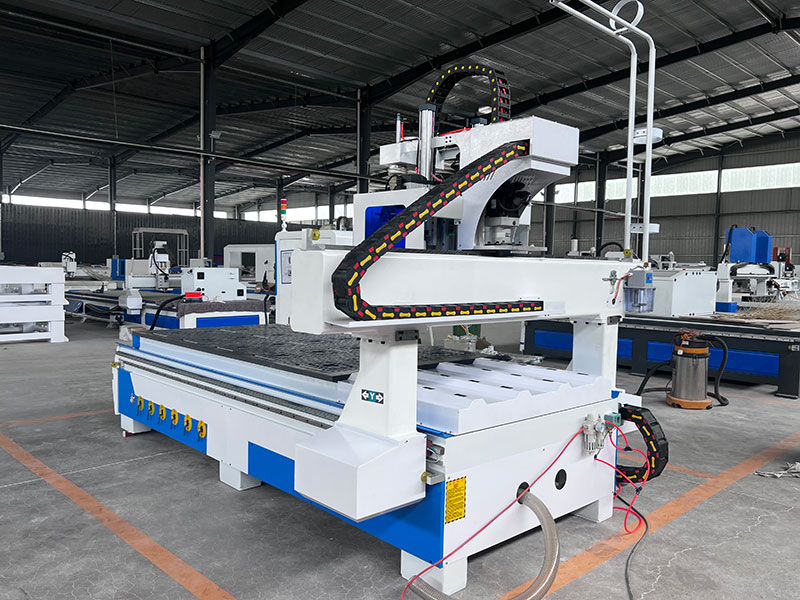
Clarification on Honyo Prototype’s Scope
Honyo Prototype specializes in rapid prototyping and low-volume manufacturing for engineered components, not end-user products like complete home woodworking CNC machines. However, if a client designs such a machine and requires precision-machined parts (e.g., gantry frames, spindle mounts, or custom brackets), our process applies directly to those components. Below is our technical workflow for manufacturing CNC-machined parts relevant to such assemblies.
Upload CAD
Clients submit native CAD files (STEP, IGES, or native SOLIDWORKS) via our secure portal. For woodworking CNC machine components, we prioritize files with geometric dimensioning and tolerancing (GD&T), material specifications (e.g., 6061-T6 aluminum for structural parts), and surface finish requirements. Non-conforming files trigger an automated validation check, flagging missing critical datums or unsupported geometries before progression.
AI Quote
Our AI-driven quoting engine analyzes the CAD geometry, material, and requested tolerances against real-time shop floor data, including machine availability, tooling costs, and labor rates. For wood-focused CNC components, the system factors in secondary operations like anodizing for corrosion resistance or custom engraving. Quotes are generated in under 2 hours, detailing cost drivers such as:
Material waste percentage based on nesting efficiency
Machine time estimates for 3-axis vs. 5-axis milling
Setup costs for small-batch runs (typical for prototype CNC machines)
DFM (Design for Manufacturability)
Engineers conduct a rigorous DFM review, focusing on woodworking CNC-specific challenges. Key considerations include:
| DFM Factor | Technical Impact for Woodworking CNC Components | Honyo’s Mitigation Strategy |
|---|---|---|
| Thin-wall features | Vibration during high-RPM spindle operation causes chatter | Recommend minimum 3mm wall thickness; suggest ribbing |
| Wood grain direction | Anisotropic material behavior affects clamping stability | Advise orientation in CAD; design custom soft jaws |
| Tolerance stack-up | Cumulative error in multi-part assemblies reduces accuracy | Propose datum alignment features; adjust tolerances |
| Chip evacuation | Resin-rich wood composites clog toolpaths | Optimize toolpath strategies; specify clearance angles |
This phase includes collaborative client feedback loops, with annotated CAD markups resolving 92% of issues before production.
Production
Approved designs move to our CNC machining floor. For woodworking CNC machine components:
Material Handling: Aluminum alloys are stress-relieved pre-machining; exotic materials like GPO-3 fiberglass undergo moisture conditioning.
Machine Allocation: High-precision parts (e.g., linear rail mounts) use DMG MORI 5-axis centers with sub-5µm repeatability; bulkier frames run on HAAS VF-2SS mills.
Process Control: In-process CMM checks validate critical features after roughing and finishing. Wood-contact surfaces receive deburring per ISO 1302 standards to prevent splintering.
Secondary Ops: Anodizing (Type II, Class 2) for corrosion resistance or powder coating for aesthetic parts occurs at certified partner facilities with 48-hour turnaround.
Delivery
Finished components undergo final inspection against ASME Y14.5 standards, with full FAIR (First Article Inspection Report) documentation. Parts are packaged in anti-static foam with humidity control for wood-adjacent materials, then shipped via DHL Express with real-time tracking. For multi-part CNC machine assemblies, we provide kitting services with labeled compartments to streamline client assembly. Typical lead time from CAD upload to delivery is 7–10 business days for 10–50 parts, excluding client revision cycles.
This workflow ensures components for specialized equipment like woodworking CNC machines meet functional, durability, and timeline requirements while minimizing cost-intensive revisions. Honyo’s value lies in translating design intent into manufacturable reality through engineering rigor at every stage.
Start Your Project
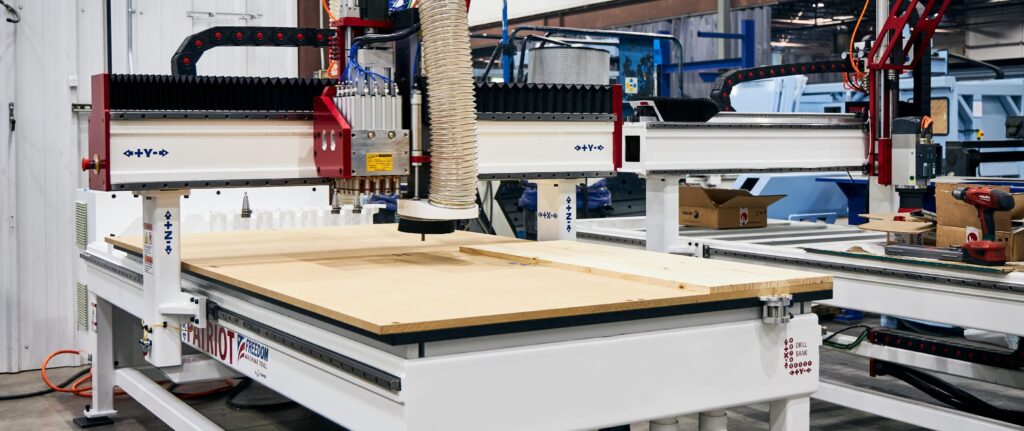
Explore precision home woodworking with Honyo Prototype’s compact CNC machines—engineered for accuracy, durability, and ease of use. Whether you’re crafting custom furniture, intricate joinery, or detailed carvings, our Shenzhen-built systems deliver professional results in any home workshop.
Contact Susan Leo today at [email protected] to request specifications, pricing, or a personalized consultation. All machines are manufactured in our Shenzhen factory, ensuring strict quality control and fast lead times.
Let’s bring your woodworking designs to life—reach out now to get started.
🚀 Rapid Prototyping Estimator
Estimate rough cost index based on volume.