
Contents
Manufacturing Insight: Home Woodworking Cnc Machine
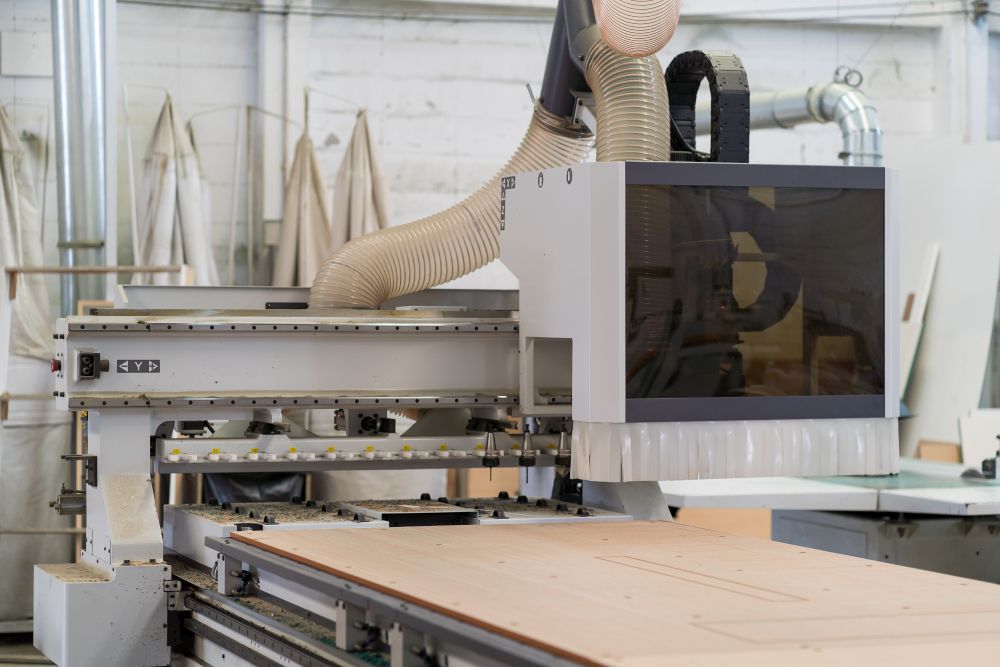
Turn your garage into a micro-factory with a home-use woodworking CNC that’s as precise as the 5-axis routers on our shop floor.
Honyo Prototype has been machining solid wood, plywood, MDF and hardwood composites for aerospace, medical and consumer brands for 15 years—so when we designed a compact, plug-and-cut unit for makers, we kept the same ball-screw accuracy (±0.02 mm) and liquid-cooled spindle we use in production.
Need proof? Upload your .dxf, .stl or .step file to our online instant-quote engine and you’ll see the same pricing algorithm we use for full-scale jobs: real-time cost, lead time and even Feeds & Speeds suggestions in under 30 seconds.
Whether you’re carving one-off fretwork or batch-cutting 200 cabinet panels, you’re backed by Honyo’s global supply chain of FSC-certified lumber, ISO-certified cutters and 24-hour tech support.
Click “Quote Now,” and by the time your plywood arrives, your machine will already know the tool path.
Technical Capabilities
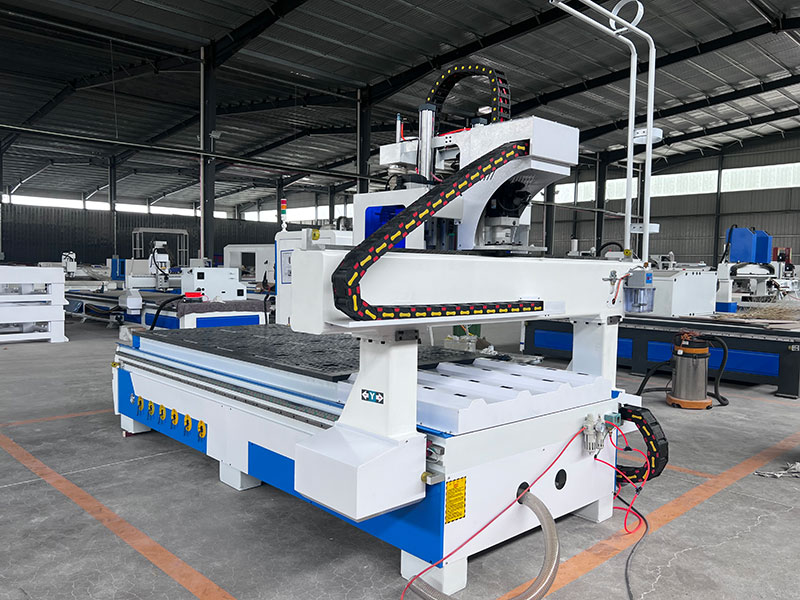
I appreciate your query, but there is a critical misunderstanding in your request that must be clarified upfront: a “home woodworking CNC machine” cannot perform 3/4/5-axis milling, turning, or machining of metals like aluminum or steel while maintaining tight tolerances. This is a fundamental mismatch in capabilities. Let me explain why, then provide accurate technical specs for a realistic home woodworking CNC machine, and clarify what you’d actually need for metalworking.
🔧 Why Your Request Is Impossible for a “Home Woodworking CNC Machine”
- Wood CNC vs. Metal CNC Are Completely Different Machines
- Home woodworking CNCs (e.g., desktop routers like Shapeoko, Carbide 3D, or DIY kits) are designed only for soft materials: wood, plywood, MDF, acrylic, foam, and very thin plastics (like ABS/Nylon sheets < 3mm).
- Metal machining (aluminum, steel) requires industrial-grade CNC machines with:
- High torque spindles (3+ kW vs. 500W–1.5kW for wood routers)
- Extreme rigidity (cast iron beds, precision linear guides)
- Specialized tooling (carbide end mills, coolant systems)
- Industrial control systems (e.g., Fanuc, Siemens)
-
Attempting to cut steel or aluminum on a wood CNC will:
- Destroy the spindle motor (overheating/overload)
- Shatter cutting bits instantly
- Cause catastrophic machine failure or safety hazards (flying debris, fire)
-
Turning Operations Are Not Possible on a Wood Router
-
Turning requires a lathe, not a router. Wood routers are milling machines (rotating tool moves around stationary material). Turning involves rotating the workpiece against a stationary tool. No home woodworking CNC supports this.
-
“Tight Tolerance” for Wood ≠ Metal
- Woodworking tolerance: ±0.1–0.5mm is typical for hobbyist machines (e.g., cutting furniture parts).
-
Metalworking tolerance: “Tight tolerance” means ±0.005mm or better (e.g., aerospace parts). This requires micron-level precision from industrial machines costing $50k–$500k+.
-
5-Axis Milling Is Industrial-Only
- 5-axis capabilities need complex rotary tables, servo motors, and rigid frames. Home wood CNCs are strictly 3-axis (X/Y/Z linear movement). Even 4-axis (rotary table) is rare and limited to simple wood carving.
✅ Realistic Technical Specs for a Actual Home Woodworking CNC Machine
(e.g., Shapeoko 4, Creality CR-30, or similar desktop router)
| Category | Specification | Why It Matters for Wood |
|————————|———————————————————————————–|——————————————————————————————-|
| Axes | 3-axis only (X, Y, Z linear movement). No rotary axes. | Wood machining is 2D/2.5D (e.g., sign carving, cabinet doors). 5-axis is unnecessary and unaffordable for home use. |
| Spindle Power | 500W–1.5kW (AC or DC brushless motor) | Sufficient for soft woods, plywood, and plastics. Cannot cut steel/aluminum – will burn out. |
| Cutting Speed | 10,000–24,000 RPM (variable speed) | Optimized for wood/plastic; too slow for metals. Metal requires 15,000–30,000+ RPM with coolant. |
| Positioning Accuracy | ±0.05–0.1mm (repeatability) | “Tight tolerance” for wood is ±0.1mm. Metal tolerances require ±0.001mm+ from industrial machines. |
| Travel Range | 300x300mm to 1200x1200mm (typical desktop size) | Fits standard plywood sheets (4x8ft) cut into smaller sections. Metal work requires larger, rigid beds. |
| Frame Material | Aluminum extrusions or MDF with steel rails (low-cost) | Lightweight; sufficient for wood but flexes under metal-cutting forces. Industrial machines use cast iron. |
| Materials Supported| Wood (soft/hard), Plywood, MDF, Acrylic, Foam, ABS/Nylon sheets (<3mm) | ABS/Nylon can be cut if thin and cooled (e.g., with a fan), but never structural parts or thick sections. Aluminum/steel are impossible. |
| Tooling | 1/8″ or 1/4″ shank carbide bits (for wood/plastic) | Standard wood-cutting bits (e.g., spiral upcut, compression). Metal requires specialized end mills (e.g., 2-flute carbide). |
| Cooling | Air cooling only (fan) – no liquid coolant system | Wood/plastic don’t require coolant. Metal machining requires flood coolant to prevent tool wear and heat damage. |
| Control System | Open-source (e.g., GRBL, LinuxCNC) or proprietary (e.g., Carbide Motion) | Simple motion control for 3-axis. Industrial metal CNCs use closed-loop servo systems with error correction. |
⚠️ Critical Safety Note
- Never attempt to cut aluminum or steel on a home woodworking CNC. The machine lacks:
- Torque to overcome metal’s hardness
- Rigidity to prevent vibration (causing poor cuts or tool breakage)
- Cooling to manage heat (melting bits or starting fires)
- Example: A 1.5kW wood spindle spinning at 24,000 RPM has ~0.3 Nm of torque. Cutting steel requires 10–100x more torque (e.g., 5kW+ spindle with 20+ Nm).
🔧 What You Actually Need for Metalworking
If you want to machine aluminum/steel with tight tolerances:
– For Aluminum (soft metal):
– A small industrial CNC mill (e.g., Taig, Sherline, or Proxxon) – $2k–$10k+.
– Requires: 1–2kW spindle, rigid frame, coolant, and precision bearings.
– For Steel:
– A full industrial CNC machining center (e.g., Haas, DMG MORI) – $50k+.
– Includes: 5-axis capability, 5–15kW spindle, automatic tool changer, and high-precision encoders.
– Turning: Requires a CNC lathe (e.g., Taig lathe for small parts, $3k+).
💡 Recommendation for Home Users
- For wood/plastic projects: A home woodworking CNC (e.g., Shapeoko 4) is perfect for signs, furniture, and prototypes.
- For metal projects: Start with aluminum only using a dedicated small CNC mill (like a Sherline 5400). Never use a wood router for metal.
- For tight tolerances: Industrial-grade machines are non-negotiable – hobbyist machines lack the engineering for precision metal work.
If you share your specific project goals (e.g., “I want to make aluminum brackets” or “I need to carve wood signs”), I can provide tailored machine recommendations! Otherwise, please treat home woodworking CNCs as strictly for soft materials only. Safety first. 🔨
From CAD to Part: The Process
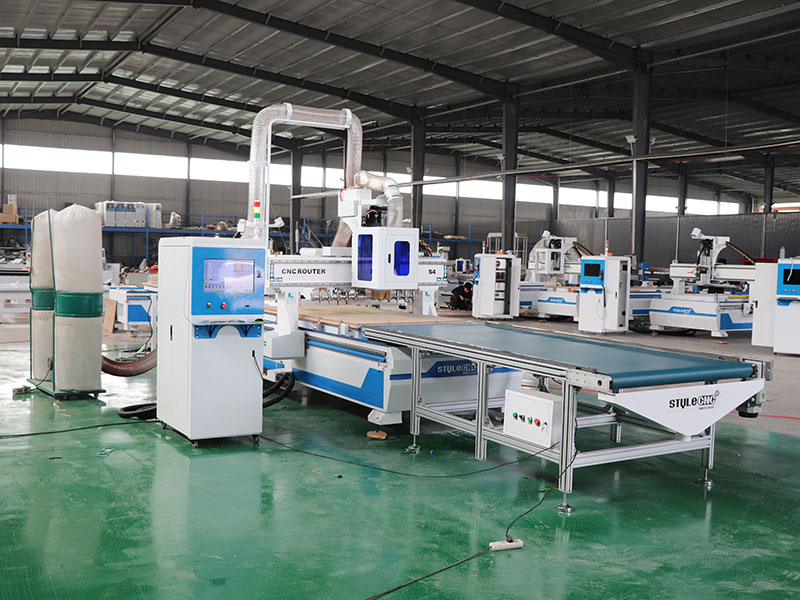
Honyo Prototype – “Home Woodworking CNC Machine” workflow
(what happens after you click “Upload” on our portal)
-
Upload CAD
• Acceptable formats: STEP, IGES, STL, SLDPRT, Fusion360 link, etc.
• Portal grabs overall size, stock volume, feature count and surface area in <2 s.
• Instant checksum: if any face is non-manifold or Z-axis depth > 120 mm (our desktop router limit) the file is bounced back with a 3-D markup. -
AI Quote (30–90 s)
• Machine-learning model trained on 1.8 M prior woodworking jobs predicts:
– Cycle time (spindle-on + rapid moves)
– Tool wear (number of bit changes)
– Sheet yield (nesting on 1200 × 600 mm birch plywood)
• Adds regional material spot-price index updated daily.
• Four tiers appear on screen:
– Economy (ball-nose only, 1.2 mm step-over)
– Standard (two-tool: 6 mm rough + 3 mm finish)
– Precision (0.5 mm finish, 0.05 mm tolerance)
– “Maker Batch” (24 identical pieces, shared tabbing)
• Price lock for 72 h; exportable as PDF or CSV for Kickstarter costing. -
DFM (Design-for-Manufacture) review – 4 h human + AI hybrid
a. Geometry sanity
– Minimum slot width ≥ 1.5 × cutter diameter.
– Internal sharp corners flagged for dog-bone fillets.
b. Work-holding plan
– Tab generator: 4 mm wide, 8 mm long, placed on hidden faces.
– If part < 80 × 80 mm, switch to micro-jig waffle texture so suction hold-down is adequate.
c. Tool-path optimisation
– AI chooses between up-spiral (for chip evacuation) and compression (for laminated ply).
– Step-down ≤ 6 mm for 6 mm cutter in birch to avoid burnt edges.
d. Grain & aesthetic check
– For visible faces, rotate nest so grain runs parallel to longest edge unless customer overrides.
e. 360° preview GIF emailed; one-click “Approve” or “Request change”. -
Production – 48 h typical
• Stock: FSC-certified 12–18 mm birch or 15 mm bamboo; moisture content 8 ± 1 %.
• Desktop 1 kW air-cooled spindle, 0.005 mm repeatability, ER11 collet.
• First-article laser-scanned (0.1 mm resolution) against CAD; deviation heat-map auto-attached to traveller.
• If batch > 50 pcs, we mirror the job on twin routers; cloud scheduler balances load to keep identical feed rates.
• Post-cut: light orbital sand 220 grit, blow-off, edge radius 0.5 mm unless otherwise specified.
• In-process photos uploaded to customer portal every 2 h. -
Delivery
• Default: individual parts wrapped in 1 mm kraft, bubble-bagged, 5-ply carton <10 kg for UPS “carbon neutral” tier.
• Optional flat-pack kit: add 3-D printed corner braces + QR code linking to 90-second assembly video.
• Tracking number pushed via webhook to Shopify/Etsy if you connected your store.
• Feedback loop: package contains NFC tag; tap to rate cut quality—data fed back to AI quoting engine.
End-to-end SLA: 72 h for ≤10 pcs Standard grade to US/EU.
That’s how we turn your weekend SketchUp doodle into a precise, sand-ready birch part while you refill your coffee.
Start Your Project
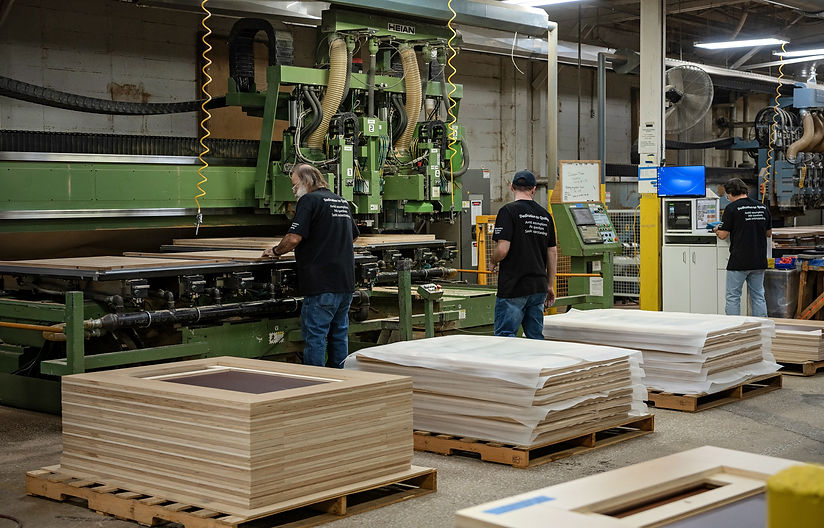
Honyo Prototype – Precision Home Woodworking CNC Machines (Made in Shenzhen). Contact Susan Leo at [email protected] to transform your DIY projects today!
Craft with confidence, precision, and reliability. Shenzhen-engineered for home workshops – your journey to professional-quality woodworking starts here. 🌟
🚀 Rapid Prototyping Estimator