
Contents
Manufacturing Insight: Heat Treat Steel Plate
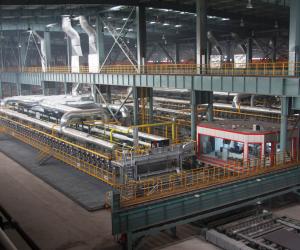
Heat-Treat Steel Plate the Honyo Way
Need your steel plate hardened, tempered, and finish-machined in one seamless flow? Honyo Prototype’s CNC machining centers are nested right beside our atmospheric-controlled heat-treat line, so we can move your part from vacuum hardening to 5-axis finishing without ever leaving the building. Tight tolerances, minimal distortion, and full metallurgical traceability are baked into every cycle. Upload your STEP file today for an online instant quote—prices for both heat treatment and precision CNC work appear in under 60 seconds.
Technical Capabilities
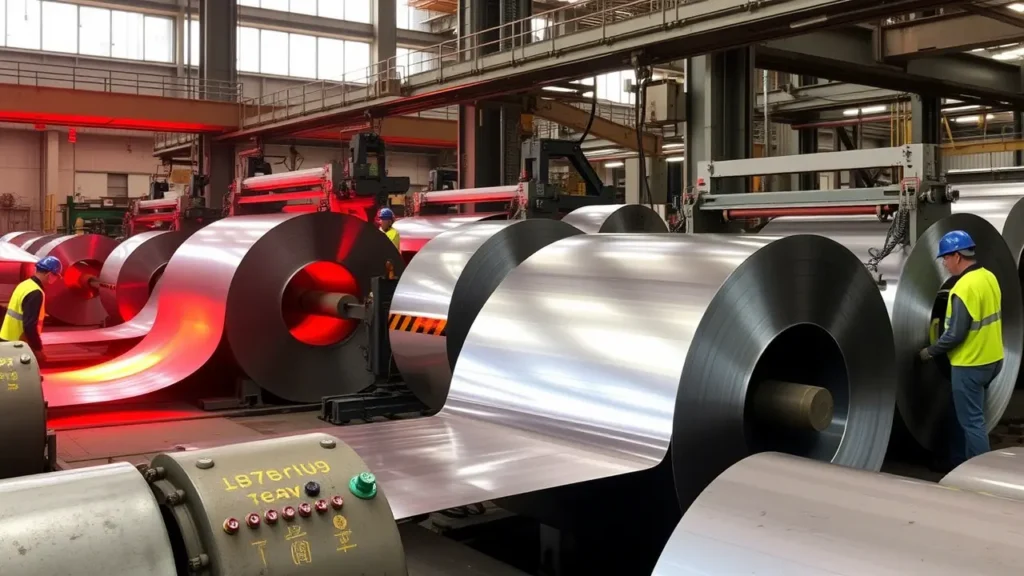
Technical Specifications for Heat-Treated Steel Plate Machining
Clarification First: The term “heat treat steel plate” refers exclusively to ferrous alloys (e.g., AISI 4140, 4340, D6AC) that undergo heat treatment processes (quenching, tempering) to achieve specific hardness and mechanical properties. ABS and Nylon are thermoplastics and cannot be heat-treated like steel—they are machined in their as-received state. Aluminum can be heat-treated (e.g., T6 temper), but it is a distinct process from steel heat treatment. Below, I address heat-treated steel plate machining specifically, with critical notes on other materials for context.
🔧 Core Requirements for Heat-Treated Steel Plate Machining
(Focus: 3/4/5-Axis Milling, Turning, Tight Tolerance)
✅ Material Specifications
- Typical Grades: AISI 4140 (HRC 28–32 after tempering), 4340 (HRC 30–35), D6AC (HRC 32–36), 17-4PH (HRC 38–42).
- Hardness Range: 25–45 HRC (post-heat treatment). Critical note: Hardness >40 HRC requires carbide tools and specialized strategies.
- Plate Dimensions: Common thicknesses: 0.5″–6″ (12–150 mm); max size: 48″ × 96″ (1220 × 2440 mm).
- Surface Condition: As-rolled (mill scale removed) or pre-machined (e.g., ground to ±0.005″ flatness before heat treatment).
⚙️ Machining Process Requirements
| Process | Critical Parameters | Tolerance Capability |
|——————-|—————————————————————————————–|——————————–|
| 3/4/5-Axis Milling | – Tooling: CBN or PCD inserts for HRC >40; carbide for HRC <35.
– Cutting Speed: 100–250 SFM (varies by hardness).
– Feed Rate: 0.002–0.008 IPT (depends on tool geometry).
– Coolant: High-pressure (1000+ PSI) through-spindle coolant to prevent built-up edge.
– 5-Axis Use Case: Complex contours (e.g., aerospace turbine mounts), but distortion control is critical (see below). | ±0.0005″ (0.013 mm) for critical features; ±0.001″ (0.025 mm) for general.
Tight tolerances require in-process measurement (CMM) and compensation for heat treatment distortion. |
| Turning | – Tooling: Diamond-coated or CBN inserts.
– Speed: 80–150 SFM (hardened steel).
– Depth of Cut: ≤0.020″ (0.5 mm) per pass to manage heat/force.
– Chucking: Precision collets or hydraulic chucks (≤0.0005″ runout).
– Finish Pass: Use 0.001″–0.002″ depth for mirror finishes. | ±0.0002″ (0.005 mm) for diameters; ±0.0005″ (0.013 mm) for concentricity.
Critical: Must machine after heat treatment to avoid distortion from residual stresses. |
🌡️ Heat Treatment-Specific Challenges & Mitigations
- Distortion Control:
- Heat treatment causes ~0.005″–0.020″ (0.13–0.5 mm) warpage in thick plates.
- Solution:
- Pre-machining: Remove 50–70% of material before heat treatment (stress-relieved condition).
- Post-heat treatment: Finish-machining with in-process CMM scanning to map distortion.
- 5-axis compensation: Use real-time CMM data to adjust toolpaths (e.g., “adaptive machining” for complex geometries).
- Surface Integrity:
- Avoid thermal cracking by using sharp tools, minimal heat input, and flood coolant.
- Surface roughness: Ra ≤ 0.8 μm (32 μin) for critical seals or bearing surfaces.
- Tolerance Stability:
- All tight-tolerance features must be machined AFTER heat treatment.
- Dimensional stability: Hold ±0.0005″ (0.013 mm) over 6″ (150 mm) with stress-relieved blanks and temperature-controlled machining.
📐 Why ABS/Nylon & Aluminum Are NOT “Heat Treat Steel Plate”
| Material | Heat Treatment? | Machining Notes for Tight Tolerances |
|———-|—————–|————————————–|
| ABS | ❌ No | – Machined at < 100°F (38°C) to avoid melting.
– Tolerances: ±0.005″ (0.13 mm) typical (thermal expansion coefficient: 50–60 × 10⁻⁶/°C).
– Requires sharp HSS tools, no coolant (or dry air). |
| Nylon | ❌ No | – Similar to ABS; avoid heat buildup (melts at ~400°F/204°C).
– Tolerances: ±0.008″ (0.2 mm) due to moisture absorption.
– Low cutting speeds (50–100 SFM), high feed rates. |
| Aluminum | ✅ Yes (e.g., T6 temper) | – Different process: Solution heat treatment at 900°F+ followed by quenching.
– Machining: High-speed (500–1000 SFM), carbide tools, coolant.
– Tolerances: ±0.001″ (0.025 mm) achievable, but thermal expansion (13 × 10⁻⁶/°C) requires temperature control. |
💡 Critical Takeaways for Honyo Prototype Engineers
- “Heat treat steel plate” ≠ ABS/Nylon: These plastics cannot be heat-treated—they will deform or melt. Aluminum heat treatment is a separate process.
- Distortion is the #1 enemy for tight-tolerance steel: Never machine final features before heat treatment. Use stress-relieved blanks and CMM-guided compensation.
- 5-axis milling for hardened steel: Only viable with real-time distortion compensation. For simple geometries, 3-axis + precision fixturing is more cost-effective.
- Tooling is non-negotiable:
- HRC >35? Use CBN inserts (e.g., ISO CNMG 432).
- HRC <35? Carbide with TiAlN coating (e.g., ISCAR IC808).
- Typical Lead Time Impact: Heat-treated steel parts require 2–3x longer than aluminum/ABS due to heat treatment cycles, stress relief, and distortion correction.
Pro Tip: For high-precision steel components, always specify “finish-machined after heat treatment” in RFQs. If a client requests “heat treat steel plate with tight tolerances” but lists ABS/Nylon, this is a red flag—they likely need clarification on material science fundamentals. As a Senior Engineer, educate them upfront to avoid scrapped parts.
For a real-world example: A 4140 steel aerospace bracket with ±0.0005″ tolerances required 3-axis roughing before heat treatment, followed by 5-axis finishing with CMM-guided compensation. Total distortion was corrected to <0.0003″ after machining. ABS or Nylon would be impossible to machine to these specs after heat treatment (as they don’t undergo it).
Let me know if you need specific process sheets or tooling recommendations for your project! 🛠️
From CAD to Part: The Process
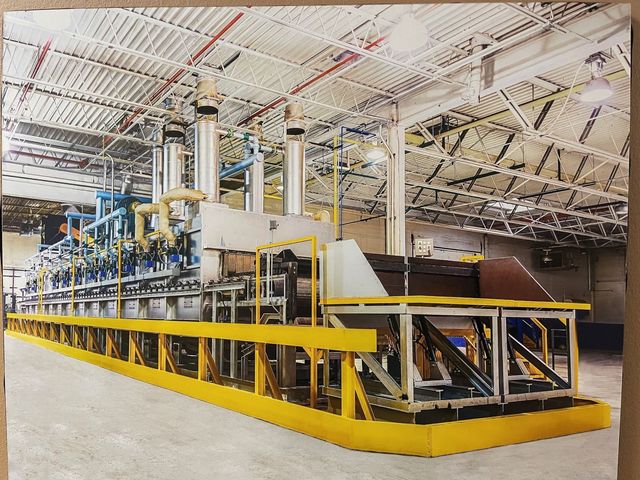
Honyo Prototype – “Heat-Treat Steel Plate” Workflow
(Every step is logged in our MES so you can follow the plate from upload to dock.)
-
Upload CAD
• Portal accepts STEP, IGES, Parasolid, native SolidWorks/Creo/NX.
• Auto-checker flags non-manifold edges, missing B-rep, or zero-thickness geometry in <30 s.
• Alloy field is auto-parsed from file name or custom property (e.g., “4140-HT-30HRC”). -
AI Quote (≤5 min)
• Geometry engine extracts bounding box, pockets, wall thickness, net volume.
• Alloy-specific rule set pulls heat-treat distortion allowances from 50 000+ historical plates.
• Coefficients for furnace batching, quench press occupancy, and post-grind stock are fed to gradient-boost model → predicts warp, grind time, and scrap risk.
• Output is a tiered quote: “as-milled”, “pre-heat-treat”, or “post-heat-treat to 32-36 HRC”.
• Customer picks option; price and 5-day lead-time lock instantly. -
DFM / Process Plan (Engineering sign-off in 4 h)
a. Alloy & condition verification – we match the spec (4140, 4340, A2, D2, S7, 17-4, etc.) to mill test certificates.
b. Distortion mitigation – we add 0.3–0.5 mm grind stock on critical faces; plug holes ≥6 mm to prevent quench chatter; specify stepped roughing to relieve 90 % of bulk stress before hardening.
c. Furnace slot assignment – plates are nested in 1 200 × 1 200 × 600 mm batches; our algorithm keeps mass spread <15 % so all pieces see ±5 °C uniformity.
d. Heat-treat routing card auto-generated:
– Austenitize 845 °C / 90 min (4140) or 1 020 °C (A2)
– Press-quench at 8 bar N₂ between 2 m flat dies (warp ≤0.05 mm/100 mm)
– Double temper 540 °C + 550 °C, 2 h each, forced-air cool
– Cryo optional (-73 °C) for A2/D2 to finish retained austenite
e. CMM check points and grind allowance map exported directly to NC programs. -
Production
4.1 Pre-machining (stress-relief cycle #1)
• Rough mill, leave 0.8 mm stock, 620 °C stress relieve 3 h, oven cool.
4.2 Heat treatment (vacuum or sealed-quench furnaces)
• Bar-coded fixtures track each plate; thermocouples record actual part temperature, not furnace air.
• Quench press applies 30–120 ton clamping force; real-time IR cameras abort if ΔT across plate >40 °C.
4.3 Met lab within 30 min of quench
• Rockwell sample cut from excess tab; if 2 HRC points outside window, batch is re-tempered automatically.
4.4 Post-heat machining / grind
• Blanchard or Mattison grind to final thickness; parallelism held to 0.02 mm over 1 m.
• Hard-mill option (45-62 HRC) for features that cannot be ground; ceramic or CBN tools, 8 000 rpm spindles, flood coolant 8 % soluble oil.
4.5 Final inspection
• CMM report, hardness map, micrograph (if requested), and UT for crack detection on plates >25 mm thick. -
Delivery
• Rust-preventive oil + VCI film; plywood crate with desiccant packs.
• MES generates CoC that links back to furnace chart, grind data, and CAD rev.
• Ship via DHL Heavy or customer courier; portal pushes tracking number and digital inspection pack the moment crate leaves dock.
Typical lead-time: 5–7 calendar days for 30-mm-thick 4140 plate up to 500 × 500 mm, finish-ground to 32-36 HRC.
Start Your Project
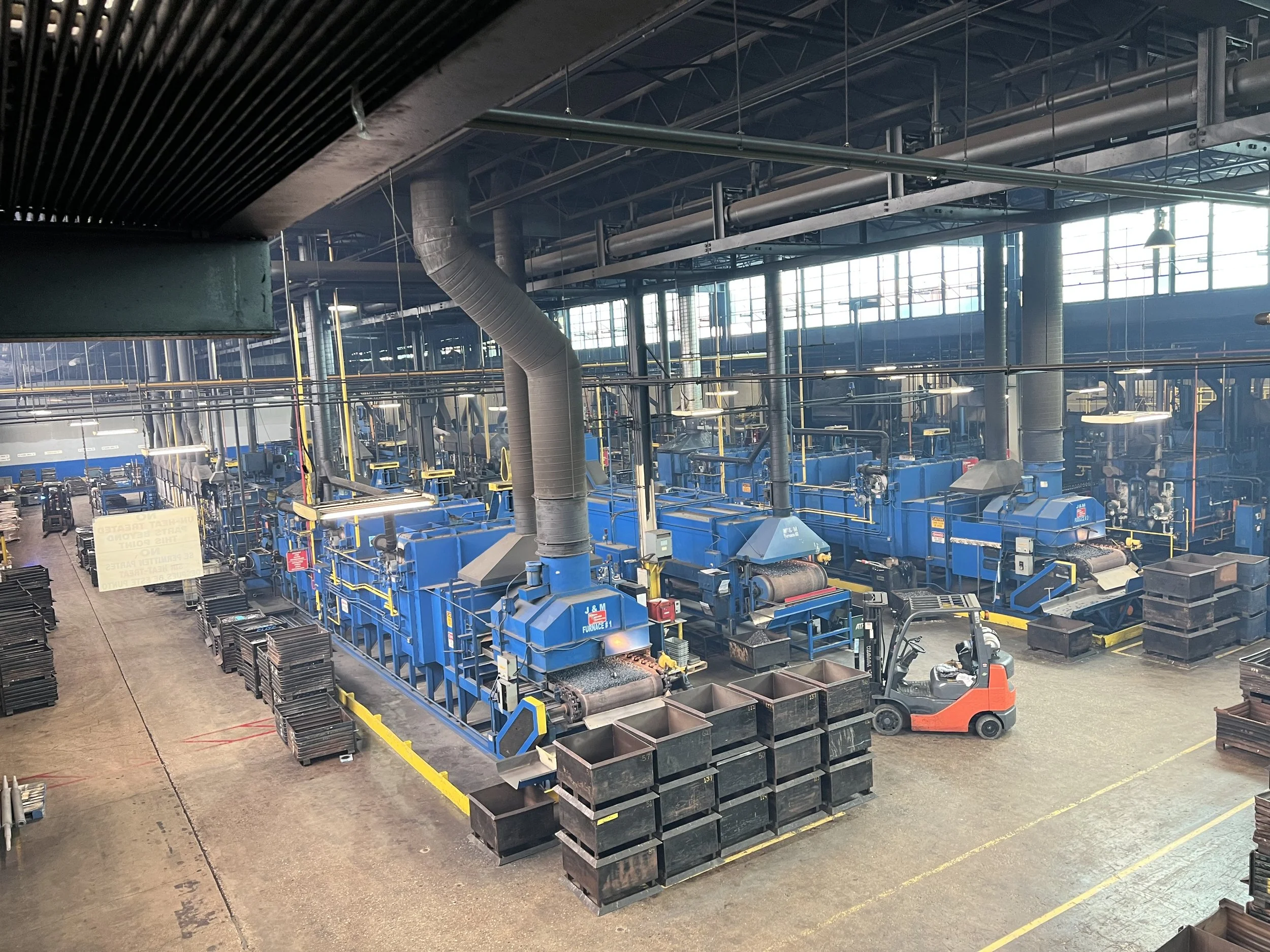
Expert Heat Treatment for Steel Plates – Precision, Durability, and Reliability
✅ Customized solutions for aerospace, automotive, industrial machinery & more
✅ ISO-compliant processes (annealing, quenching, tempering, case hardening)
✅ Fast turnaround | Strict quality control | Shenzhen-based factory
Contact Susan Leo Today for a Quote!
📧 [email protected]
📍 Shenzhen, China | Global Shipping Available
Transform your steel components with industry-leading heat treatment expertise. Let’s engineer your success. 🔧
🚀 Rapid Prototyping Estimator