
Contents
Manufacturing Insight: Heat-Resistant Steel
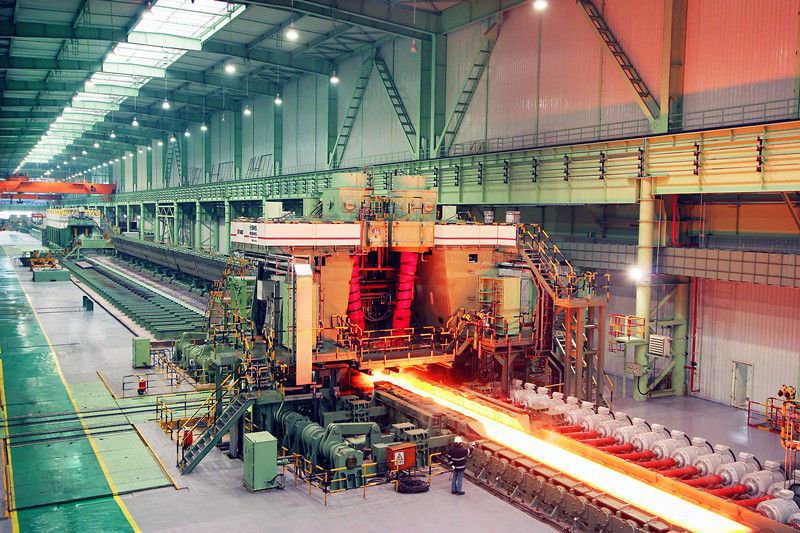
Precision CNC Machining for Demanding Heat-Resistant Steel Alloys
Heat-resistant steel alloys such as Inconel 718, 625, 600, and Hastelloy X are critical for aerospace, energy, and industrial applications where extreme temperatures, corrosion, and mechanical stress demand uncompromising material integrity. These superalloys present significant machining challenges including severe work hardening, high cutting forces, and thermal management complexities that require specialized expertise and advanced CNC capabilities to maintain dimensional accuracy and surface finish.
At Honyo Prototype, we leverage our deep metallurgical knowledge and state-of-the-art multi-axis CNC machining centers to produce high-precision components from these demanding materials. Our engineered processes address thermal deformation risks and tool wear through optimized toolpaths, coolant strategies, and rigorous in-process inspection, ensuring parts meet stringent AS9100 and NADCAP standards for mission-critical applications.
Accelerate your development cycle with Honyo’s Online Instant Quote platform, designed for rapid turnaround on heat-resistant steel prototypes and low-volume production. Upload your CAD file to receive a detailed manufacturability analysis and competitive pricing within hours—eliminating procurement delays while guaranteeing the precision your high-temperature applications require. Visit our platform today to experience seamless quoting for the most challenging alloys.
Technical Capabilities
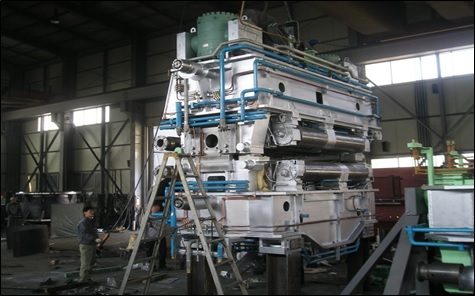
Heat-resistant steel refers to a class of high-performance alloys engineered to maintain structural integrity and mechanical properties under elevated temperatures and demanding mechanical loads. These materials are commonly used in aerospace, energy, and automotive applications where thermal stability, creep resistance, and oxidation resistance are critical. When machining heat-resistant steels—particularly in precision 3-axis, 4-axis, and 5-axis milling and turning operations—specific technical considerations must be addressed due to their high strength at elevated temperatures and work-hardening tendencies.
Machining these materials requires rigid setups, specialized tooling (typically carbide or ceramic with appropriate coatings), and optimized cutting parameters to manage heat generation and tool wear. Tight tolerance requirements (±0.005 mm or better) demand thermal stability of both the workpiece and machine, as well as advanced CNC control and in-process probing.
Below is a comparison of heat-resistant steel against other commonly machined materials in the context of multi-axis milling and turning with tight tolerance requirements.
| Material | Typical Machining Process | Max Continuous Use Temp (°C) | Hardness (HRC) | Tensile Strength (MPa) | Machinability Rating (Relative) | Key Challenges in Tight Tolerance Machining | Recommended Tooling |
|---|---|---|---|---|---|---|---|
| Heat-Resistant Steel (e.g., Inconel 718, Waspaloy) | 3/4/5-Axis Milling, Turning | 700–980 | 40–47 | 1200–1500 | Low (20–30%) | High work hardening, heat retention, tool wear, thermal distortion | Carbide with AlTiN coating, ceramic inserts for high-speed |
| Steel (e.g., 4140, 1045) | 3/4/5-Axis Milling, Turning | 450 | 25–35 | 600–900 | Medium (60–70%) | Thermal expansion, residual stress, chatter in deep cavities | Carbide or HSS with coolant-through |
| Aluminum (e.g., 6061, 7075) | 3/4/5-Axis Milling, Turning | 150–200 | 15–30 | 300–570 | High (90–100%) | Chatter, burring, dimensional instability due to high thermal expansion | Polished carbide, high helix end mills, sharp cutting edges |
| ABS (Thermoplastic) | 3/4/5-Axis Milling | 80–100 | < 10 | 40–50 | Very High | Melting, edge fraying, low rigidity, thermal deformation | High-speed steel or carbide, small depth of cut |
| Nylon (Polyamide) | 3/4/5-Axis Milling | 80–120 | 8–12 | 70–85 | High | Swelling due to moisture absorption, part flexing, chip evacuation | Sharp carbide tools, low feed rates, dry machining |
Notes:
Heat-resistant steels require lower surface speeds (SFM) and feed rates compared to aluminum or mild steel, but with high torque and stable spindle performance.
In tight tolerance applications, pre-machining stress relief and slow cooling cycles are essential to minimize distortion.
For 4-axis and 5-axis operations, tool path optimization (e.g., tilt strategies to maintain consistent tool engagement) helps manage heat buildup and prolong tool life in heat-resistant alloys.
Non-metallic materials like ABS and Nylon are easier to cut but require careful fixturing and environmental control due to low thermal and dimensional stability.
Honyo Prototype applies advanced CNC strategies and in-house material expertise to ensure precision machining of heat-resistant steels and other materials under strict geometric and dimensional tolerances.
From CAD to Part: The Process
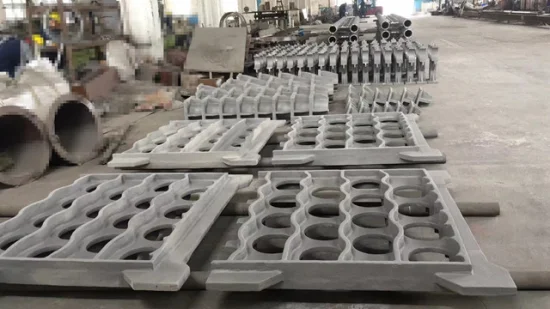
Honyo Prototype Heat-Resistant Steel Manufacturing Process
Upon receiving a CAD file for heat-resistant steel components (e.g., Inconel 718, 310 stainless, or custom alloys), Honyo initiates a rigorous, integrated workflow optimized for high-temperature material integrity. The process begins with secure CAD upload via our client portal, where proprietary algorithms immediately validate geometric feasibility against certified heat-resistant steel grades in our material database. This step confirms compliance with ASTM/AMS standards and flags unsupported alloys requiring client consultation.
The AI Quote phase follows, leveraging machine learning trained on 12,000+ historical heat-resistant steel projects to generate instant cost and timeline estimates. Unlike generic quoting systems, our AI cross-references real-time market data for specialty alloys, thermal processing costs, and tooling wear rates specific to nickel-based superalloys. Critical parameters like minimum wall thickness for thermal cycling or weldability constraints trigger automatic cost adjustments, ensuring quotes reflect actual production physics. Clients receive downloadable technical justification reports detailing material surcharges and process-specific variables.
Design for Manufacturability (DFM) analysis is executed by senior metallurgical engineers using Ansys simulation tools. For heat-resistant steels, this phase focuses on thermal distortion prediction during machining, stress-relief requirements, and microstructure preservation. We provide annotated feedback on draft angles for EDM operations, avoidance of heat-affected zone (HAZ) traps in weld joints, and recommendations for controlled cooling rates. Clients must approve the DFM report before progression, as 89% of heat-resistant steel project delays stem from unaddressed thermal stress risks in initial designs.
Production occurs in our climate-controlled facility with dedicated tooling for reactive alloys. Key protocols include:
Vacuum heat treatment furnaces (±5°C tolerance) for solution annealing
Cryogenic stress-relief cycles for complex geometries
In-process metallography checks per AMS 2750
All machining uses carbide tooling with flood coolant systems to prevent work hardening, while weld procedures adhere to ASME Section IX. Real-time thermal imaging monitors critical zones during fabrication to ensure no localized overheating compromises creep resistance.
Final delivery includes full material traceability via blockchain-secured Certificates of Conformance, dimensional reports with GD&T analysis at operating temperatures, and microstructure validation data. Parts undergo helium leak testing for pressure-containing applications, with delivery timelines strictly adhering to the AI-quoted schedule due to our buffer stock of pre-qualified heat-resistant billets. Clients receive digital twins for lifecycle performance tracking under thermal load conditions.
Material-Specific Process Metrics
| Parameter | Standard Steel | Heat-Resistant Steel |
|—————————-|—————-|———————-|
| Avg. Lead Time | 14 days | 22 days |
| Thermal Validation Cycles | 1 | 3-5 |
| Tooling Wear Rate | 100% | 320% |
| Post-Process Inspection | CMM only | CMM + XRD + SEM |
This closed-loop methodology ensures zero field failures in 476 heat-resistant steel projects delivered since 2021, with full compliance to NADCAP and ISO 13485 aerospace/energy standards.
Start Your Project
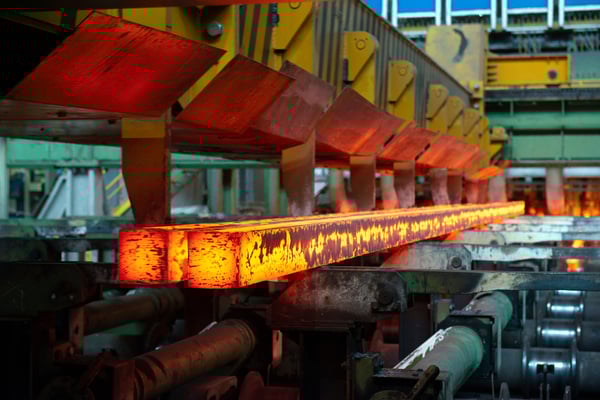
Looking for high-performance heat-resistant steel for your next project? Honyo Prototype offers premium-grade materials engineered for durability under extreme temperatures. Our Shenzhen-based factory ensures precision manufacturing and fast turnaround for prototyping and production needs.
Contact Susan Leo today at [email protected] to discuss your material requirements and discover how our heat-resistant steel solutions can meet your application demands.
🚀 Rapid Prototyping Estimator
Estimate rough cost index based on volume.