
Contents
Manufacturing Insight: Heat-Resistant Stainless Steel
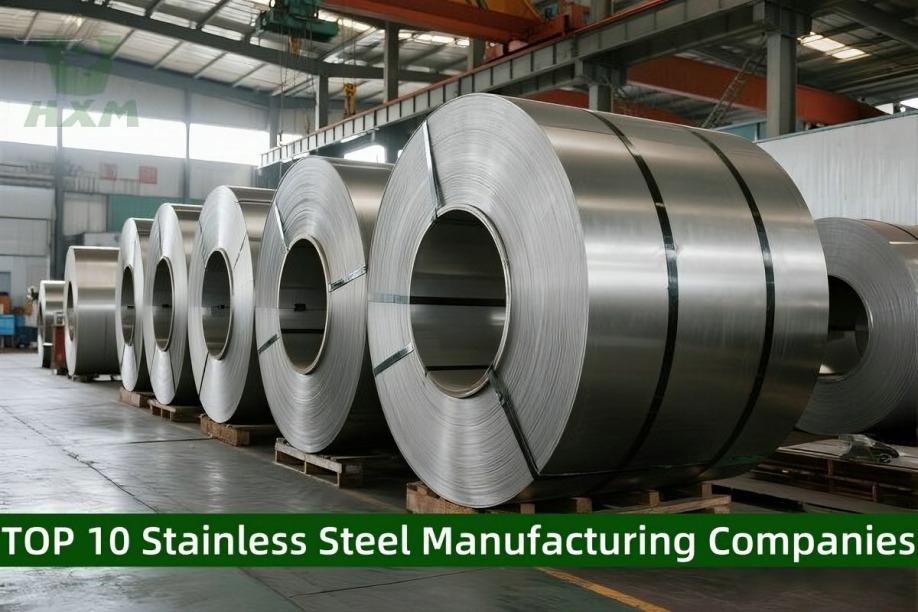
Precision Machining Solutions for Demanding Heat-Resistant Stainless Steel Applications
When your application demands exceptional performance under extreme temperatures—such as in aerospace combustion systems, industrial furnace components, or energy sector equipment—material selection becomes mission-critical. Heat-resistant stainless steel grades like 309, 310, and S30815 offer superior oxidation resistance, creep strength, and structural integrity at elevated temperatures, but their inherent toughness and work-hardening characteristics present significant machining challenges. Suboptimal toolpaths, thermal management, or process control can lead to dimensional inaccuracies, surface defects, or premature tool failure, jeopardizing component reliability and project timelines.
At Honyo Prototype, we specialize in CNC machining these demanding alloys with uncompromising precision. Our advanced multi-axis machining centers, combined with proprietary tooling strategies and in-process metrology, ensure tight tolerances down to ±0.0002″ and surface finishes as fine as Ra 0.8 μm—even in complex geometries. Our engineering team leverages decades of experience with high-temperature alloys to optimize cutting parameters, minimize thermal distortion, and maintain metallurgical integrity throughout production. This expertise translates to components that consistently meet stringent ASME, NADCAP, and aerospace material specifications.
Accelerate your development cycle with Honyo’s Online Instant Quote platform. Upload your CAD file, specify material requirements (including heat-resistant stainless steel grades), and receive a detailed manufacturability analysis with competitive pricing in under 60 seconds. Eliminate quoting delays and move from design to high-integrity prototype or production parts faster.
| Key Capability | Specification Detail |
|---|---|
| Material Expertise | 309, 310, S30815, 253MA, Inconel hybrids |
| Tolerance Range | ±0.0002″ (5 μm) |
| Surface Finish | Ra 0.8 μm to 3.2 μm |
| Max Part Size | 24″ x 20″ x 16″ (610 x 508 x 406 mm) |
| Quality Certification | ISO 9001:2015, AS9100D |
Partner with Honyo Prototype to transform thermally demanding designs into mission-ready components—where material science meets machining excellence.
Technical Capabilities
Heat-resistant stainless steel is commonly used in high-temperature environments and demanding mechanical applications. When machined using 3/4/5-axis milling or turning processes, achieving tight tolerances requires careful selection of alloy type, tooling, and process parameters. Below is a technical overview focused on machining performance, material compatibility, and key specifications relevant to precision manufacturing.
Key Technical Specifications for Heat-Resistant Stainless Steel in Precision Machining Applications
| Parameter | Specification |
|---|---|
| Common Alloys | AISI 304, 310, 316, 321, 347, Inconel 600, 625, and 718 (nickel-based superalloys often grouped with heat-resistant stainless steels) |
| Temperature Resistance | Up to 1100°C (2012°F) continuous service for select grades (e.g., 310, Inconel 625) |
| Hardness (Typical) | 150–350 HB (Brinell); higher after work hardening |
| Tensile Strength | 515–1300 MPa (75–189 ksi), depending on grade and condition |
| Machinability Rating | 30–45% of free-machining steel (e.g., 12L14); low due to work hardening and high toughness |
| Typical Surface Finish (Machined) | 0.8–3.2 µm Ra (achievable with proper tooling and parameters) |
| Tight Tolerance Capability | ±0.005 mm (±0.0002″) achievable with thermal compensation and high-precision CNC systems |
| Tooling Requirements | Carbide or ceramic end mills; CBN or PCD inserts for turning; high-pressure coolant recommended |
| Recommended RPM (Milling, Ø10 mm tool) | 200–800 RPM (dependent on alloy and tool material) |
| Feed Rate (Milling) | 0.05–0.2 mm/tooth (low due to toughness and work hardening) |
Machining Compatibility with Common Materials
| Material | Machinability | Max Operating Temp | Notes for Multi-Material Projects |
|---|---|---|---|
| Aluminum (6061, 7075) | Excellent (Machinability ~90%) | 120–180°C | Lightweight, easy to machine; use separate tools to avoid contamination |
| Mild / Alloy Steel (1018, 4140) | Good (Machinability ~65%) | 400–500°C | Moderate wear on tools; predictable chip formation |
| ABS (Thermoplastic) | Excellent | 80–100°C | Low melting point; requires sharp tools and low heat input |
| Nylon (PA6, PA66) | Very Good | 120–150°C | Low friction; prone to melting if cutting speed too high |
Process Considerations for 3/4/5-Axis Milling and Turning
Heat-resistant stainless steel demands optimized CNC strategies due to its tendency to work-harden and generate high cutting temperatures. In 3-axis milling, simple geometries are efficiently produced with robust toolpaths and rigid setups. 4-axis and 5-axis machining enables complex contours and undercuts, reducing setup次数 and improving positional accuracy for tight-tolerance components.
Thermal stability of the machine tool is critical—especially when holding tolerances within ±0.01 mm or tighter. Precision turning operations require stable inserts with positive rake angles to reduce cutting forces and manage heat buildup.
For hybrid assemblies involving aluminum, steel, ABS, or nylon, material-specific tooling and parameters must be applied within the same workflow. Workholding solutions should accommodate differential thermal expansion, particularly in multi-material prototypes or functional assemblies.
At Honyo Prototype, we apply adaptive toolpath strategies, in-process probing, and environmental controls to ensure dimensional accuracy across all materials, especially when integrating heat-resistant stainless steel into high-performance components.
From CAD to Part: The Process

Honyo Prototype’s end-to-end process for heat-resistant stainless steel components ensures precision, material integrity, and thermal performance compliance through a rigorously controlled workflow. This specialized process addresses the unique challenges of alloys like 310S, 316H, and 321, which require strict thermal treatment and dimensional control under high-temperature service conditions.
Initial CAD Upload and Material Specification
Clients initiate the process by uploading native or STEP-format CAD files to our secure portal. Critical thermal application parameters must be specified, including maximum operating temperature, thermal cycling requirements, and environmental exposure (e.g., oxidizing vs. carburizing atmospheres). Our system validates alloy selection against ASME BPVC Section II or EN 10088 standards, flagging non-compliant material choices for immediate client consultation.
AI-Powered Quoting with Thermal Analysis
Our proprietary AI engine analyzes the CAD geometry alongside the declared thermal parameters to generate a dynamic quote within 2 business hours. The algorithm factors in:
Alloy-specific machining allowances (e.g., 3–5× higher tool wear rates for 310S versus 304)
Required solution annealing cycles (e.g., 1095°C ±15°C for 310S with rapid quenching)
Non-destructive testing (NDT) scope based on temperature thresholds
The quote includes a preliminary thermal distortion risk assessment using finite element analysis (FEA) simulation data.
DFM Optimization for High-Temperature Performance
Engineers conduct a dual-focus Design for Manufacturability review:
Structural Integrity: Verifying section thickness uniformity to prevent warpage during thermal cycling, with minimum radii adjustments to mitigate stress concentration at 800°C+
Process Feasibility: Confirming weldability per AWS A5.9/A5.9M specs and validating grain growth control methods (e.g., stabilizing with Ti/Nb for 321)
A formal DFM report details required modifications, including mandatory solution annealing hold times and interpass temperature controls for welding.
Precision Production with Thermal Validation
Production occurs in climate-controlled cells with dedicated tooling for heat-resistant alloys:
Machining uses carbide grades with TiAlN coatings and reduced SFM (50–70% of 304 rates) to manage work hardening
All welds undergo post-weld solution annealing per ASTM A480, with grain size verification via microstructure analysis
Final heat treatment includes vacuum furnace processing to prevent scaling, with traceable thermal profiles logged per AMS 2750
Material Certification and Delivery Assurance
Each shipment includes:
Full material test reports (MTRs) with creep rupture data at client-specified temperatures
Dimensional certification using CMM with thermal drift compensation
Packaging engineered for thermal-shock prevention during transit (e.g., vacuum-sealed containers with desiccants)
Delivery timelines include buffer periods for mandatory 48-hour post-heat-treatment dimensional stabilization checks.
Key Material Specifications Managed in This Process
| Property | 310S Typical Range | 316H Typical Range | Testing Standard |
|————————-|——————–|——————–|——————|
| Max Continuous Temp | 1150°C | 870°C | ASTM E220 |
| Creep Strength (10k hrs)| 55 MPa @ 900°C | 38 MPa @ 750°C | ASTM E139 |
| Solution Anneal Temp | 1038–1121°C | 1093–1149°C | AMS 2750 |
| Intergranular Corrosion | ASTM A262 Practice E| ASTM A262 Practice E| ASTM A262 |
This integrated workflow ensures components maintain structural reliability in extreme thermal environments, with full traceability from raw material to certified delivery. All processes adhere to NADCAP AC7102/7 audit requirements for aerospace-grade heat-resistant components.
Start Your Project
Looking for high-performance heat-resistant stainless steel for your next project? Honyo Prototype offers precision-engineered metal solutions ideal for demanding thermal environments.
Our manufacturing facility in Shenzhen ensures fast turnaround and strict quality control, meeting the highest industry standards.
Contact Susan Leo today at [email protected] to discuss your material requirements and get a competitive quote.
🚀 Rapid Prototyping Estimator
Estimate rough cost index based on volume.