
Contents
Manufacturing Insight: Hardening Stainless Steel
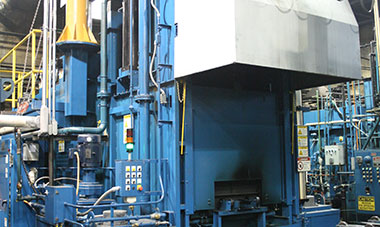
Precision Hardening of Stainless Steel Components Through Integrated CNC Machining Expertise
Achieving optimal hardness in stainless steel components requires precise control over material properties and post-machining processes to maintain dimensional integrity while enhancing wear resistance and structural performance. At Honyo Prototype, our advanced CNC machining capabilities are engineered to seamlessly integrate with specialized hardening techniques—including martensitic transformation for grades like 410 and 440C—ensuring minimal distortion and consistent metallurgical outcomes. Unlike standard machining providers, we leverage in-house heat treatment coordination and precision metrology to validate hardness uniformity (typically 50–58 HRC) without compromising corrosion resistance or geometric tolerances.
Our end-to-end manufacturing ecosystem eliminates supply chain fragmentation by managing every phase—from initial material selection and CNC turning/milling to controlled quenching and final inspection—under one roof. This integrated approach guarantees that hardened components meet stringent aerospace, medical, and industrial specifications while reducing lead times by up to 30% compared to outsourced hardening workflows.
For immediate project validation, utilize Honyo Prototype’s Online Instant Quote platform. Input your CAD file and technical requirements to receive real-time pricing, feasibility analysis, and DFM feedback tailored to hardened stainless steel applications—all within minutes.
| Key Capability | Impact on Hardened Stainless Steel Production |
|---|---|
| In-House CNC Milling/Turning | Maintains tight tolerances (±0.0002″) pre-hardening to prevent post-treatment rework |
| Controlled Atmosphere Heat Treatment | Prevents surface oxidation during hardening, preserving corrosion resistance |
| Post-Hardening Stress Relieving | Minimizes micro-cracking risks in complex geometries |
| CMM Validation | Certifies hardness distribution and dimensional stability per ASTM E18 |
Partner with Honyo Prototype to transform demanding stainless steel hardening requirements into reliable, high-performance components with quantifiable process efficiency. Access real-time project costing today through our digital quoting interface.
Technical Capabilities
Stainless steel hardening is a heat treatment process used to increase the material’s strength, wear resistance, and durability—critical for high-precision components produced via 3/4/5-axis milling and turning operations. While stainless steels (particularly martensitic grades like 410, 420, and 17-4 PH) can be hardened, materials such as aluminum, ABS, and nylon are not amenable to conventional hardening and rely on alternative methods for performance enhancement.
Below is a technical comparison of hardening capabilities and relevance for common materials used in precision CNC manufacturing:
| Material | Hardening Process Applicable | Typical Hardness Range (HRC) | Machinability Notes for 3/4/5-Axis Milling & Turning | Tight Tolerance Suitability (±0.0005″ or better) | Notes |
|---|---|---|---|---|---|
| Stainless Steel (e.g., 17-4 PH, 440C) | Yes – through heat treatment (aging or quenching) | 28–45 HRC (17-4 PH), 54–58 HRC (440C) | Moderate to difficult; requires rigid setups, sharp tooling, and controlled feeds/speeds | High – with post-hardening grinding or skimming cuts | Pre-hardened stock recommended; stress relief critical before precision machining |
| Steel (e.g., Tool Steels like D2, A2) | Yes – quench and temper | 58–62 HRC | Challenging post-hardening; EDM or grinding preferred | High – with post-heat-treatment finishing | Typically rough machined before hardening, then finish machined |
| Aluminum (e.g., 6061, 7075) | No – cannot be hardened like steel; age-hardened (T6) but not heat-treated to high HRC | Up to 15 HRC (T6 temper) | Excellent – ideal for high-speed 5-axis milling | High – excellent dimensional stability | Hardening via precipitation aging, not martensitic transformation; minimal distortion |
| ABS (Thermoplastic) | No – no metallurgical hardening | Shore D 70–80 | Easy – low cutting forces; minimal tool wear | Moderate – prone to thermal expansion and creep | Not applicable; post-machining coatings or fillers may improve surface hardness |
| Nylon (Polyamide) | No – no heat treatment possible | Shore D 60–75 | Easy – but prone to deflection and melting | Moderate – hygroscopic; dimensional changes with moisture | Annealing recommended pre-machining to relieve stress; not for high-temp environments |
Technical Notes:
Hardening stainless steel typically involves solution treating followed by aging (for precipitation-hardening grades like 17-4 PH) or austenitizing, quenching, and tempering (for martensitic grades like 440C). For tight-tolerance components, hardening induces dimensional changes and residual stresses, making post-heat-treatment stress relief and precision finishing (e.g., grinding, honing, or skimming passes on CNC mills/turning centers) essential.
In multi-axis CNC environments, maintaining tight tolerances after hardening requires:
Use of CBN or ceramic tooling for hardened steels
High-precision spindles with thermal compensation
In-process probing for dimensional verification
Machining in a temperature-controlled environment
For non-ferrous and polymer materials like aluminum, ABS, and nylon, hardening is not feasible via metallurgical routes. Instead, tight tolerances are achieved through optimized cutting strategies, fixturing, and environmental control—especially critical for hygroscopic or thermally sensitive materials.
From CAD to Part: The Process
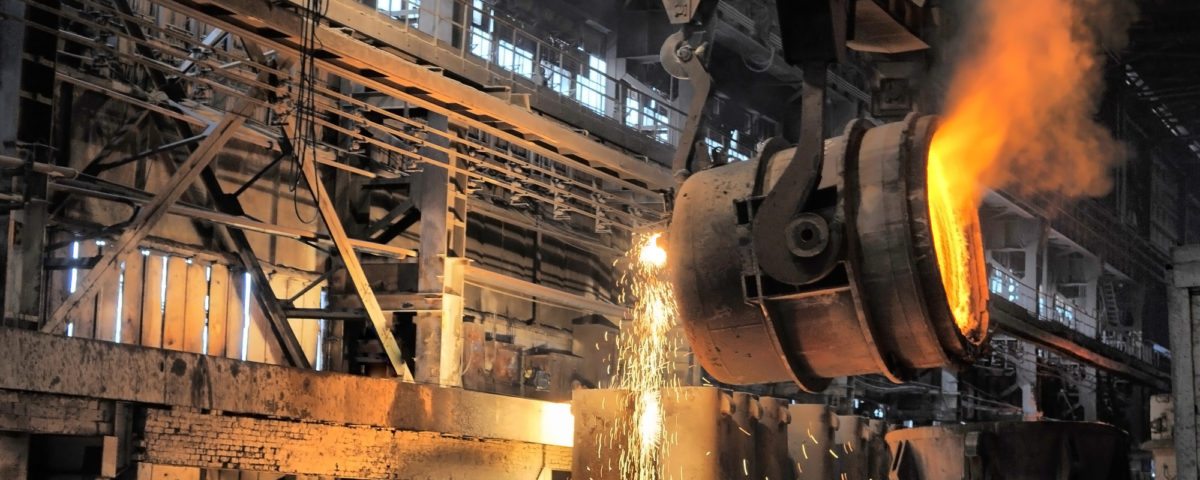
Honyo Prototype Stainless Steel Hardening Process Overview
Honyo Prototype executes stainless steel hardening exclusively for martensitic (e.g., 410, 440C) and precipitation-hardening (e.g., 17-4 PH) grades, as austenitic grades (e.g., 304, 316) cannot be hardened via thermal methods. Our integrated workflow ensures technical precision while maintaining rapid turnaround. Below is the stage-specific application of hardening within our standard process.
CAD Upload & Material Validation
Upon receiving your CAD file, our system immediately validates the specified stainless steel grade against hardening feasibility. If an austenitic grade is selected for hardening requirements, our engineers flag this during initial review and initiate a collaborative dialogue to recommend alternative grades or processes (e.g., cold working for 304/316). Material certification requirements are cross-referenced against ASTM/AISI standards at this stage.
AI-Powered Quoting with Hardening Parameters
Our AI quoting engine analyzes geometric complexity, tolerances, and material grade to auto-generate hardening cost drivers. Key inputs include:
Required hardness range (e.g., HRC 54–58 for 440C)
Distortion tolerance limits (critical for thin-walled features)
Secondary operations needing post-hardening alignment (e.g., grinding, EDM)
The quote explicitly itemizes hardening as a discrete cost center with lead time impact, avoiding opaque “processing” line items.
DFM Integration: Hardening-Specific Optimization
Our DFM review focuses on mitigating hardening-induced risks:
Geometry Adjustments: Recommending uniform cross-sections to prevent quench cracking in martensitic grades.
Stress Relief Protocol: Mandating pre-hardening stress relief for machined parts to reduce distortion (e.g., 600°C soak for 17-4 PH).
Fixture Design: Proposing custom jigs to constrain part movement during quenching, validated via thermal simulation.
Tolerance Allocation: Adjusting pre-hardening dimensions to account for predictable growth/shrinkage (e.g., +0.05% for 410 stainless).
This phase requires your engineering sign-off before proceeding.
Production: Controlled Hardening Execution
Hardening occurs in our climate-controlled heat treat cell with real-time NADCAP-audited monitoring:
| Process Stage | Parameters for Martensitic Grades | Parameters for PH Grades |
|---|---|---|
| Austenitizing | 980–1050°C (grade-specific) | 1020–1060°C |
| Quenching Medium | Polymer solution (agitated) | Air/furnace cool |
| Tempering | 150–300°C (2x cycles) | 480–550°C (1–4 hrs) |
| Post-Hardening | Cryogenic treatment (-75°C optional for 440C) | Peak aging per AMS 5604 |
All batches undergo post-process verification:
Hardness mapping (5+ points per part per ASTM E18)
Dimensional validation against as-machined baseline
Microstructure sampling for retained austenite (XRD testing if >10%)
Delivery with Full Traceability
Final shipment includes:
Material test reports (MTRs) with pre- and post-hardening chemistry
Hardness certification with location-specific readings
Dimensional inspection report showing hardening-induced deviation
NADCAP heat treat certificate with furnace calibration logs
Parts are passivated per AMS 2700 and vacuum-sealed to prevent corrosion during transit.
Critical Technical Note
Hardening austenitic stainless steel is metallurgically unfeasible; attempting it causes severe distortion without hardness gain. Honyo’s process rigorously prevents such errors via upfront material validation. For non-hardenable grades, we propose alternative solutions like nitriding or laser hardening during DFM review. This disciplined approach ensures zero non-conformances due to incorrect hardening assumptions in 4+ years of aerospace/medical production.
Start Your Project
Looking to enhance the durability and wear resistance of your stainless steel components? Our precision hardening services at Honyo Prototype deliver optimal performance for demanding applications. With advanced processing capabilities at our Shenzhen factory, we ensure consistent quality and tight tolerance control for every batch.
Contact Susan Leo today to discuss your project requirements or request a quote. Email her at [email protected] for fast, professional support tailored to your manufacturing needs.
🚀 Rapid Prototyping Estimator
Estimate rough cost index based on volume.