
Contents
Manufacturing Insight: Green Sand For Casting Metal
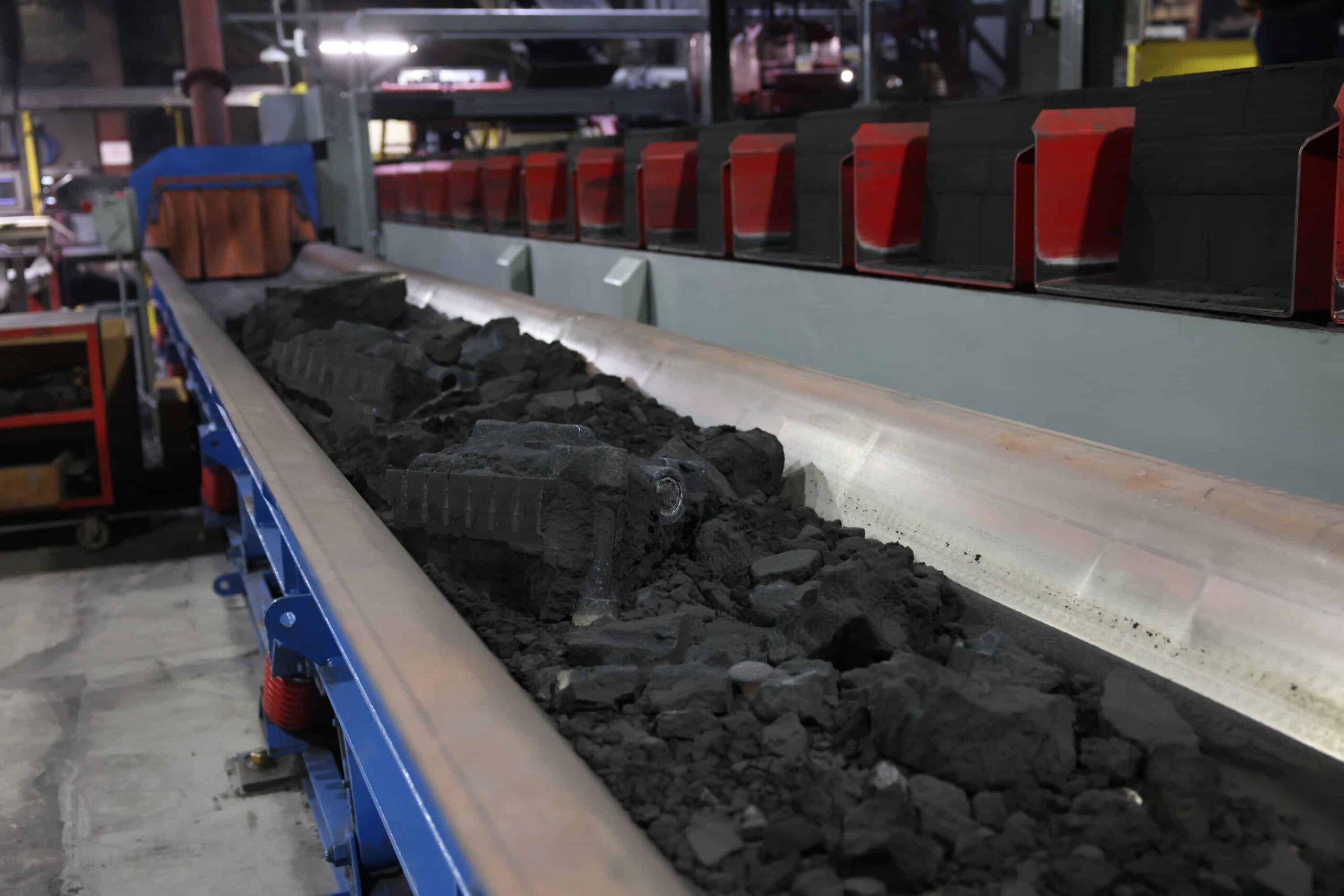
Precision Metal Manufacturing: Complementing Casting Workflows with Advanced Sheet Metal Solutions
Green sand casting remains a foundational process for producing complex metal components, leveraging moisture-bonded sand molds to achieve cost-effective prototypes and low-volume production in materials like iron, aluminum, and bronze. While Honyo Prototype specializes in high-integrity sheet metal fabrication—not sand casting—we recognize that cast parts frequently require precision secondary operations to meet final specifications. This is where our end-to-end manufacturing expertise delivers critical value.
Honyo Prototype excels in transforming raw castings into fully functional assemblies through our integrated sheet metal fabrication services. Our capabilities include CNC laser cutting, precision bending, robotic welding, and finishing for materials ranging from mild steel to stainless alloys and aluminum. Whether your project demands custom enclosures, structural brackets, or mounting hardware to complement cast components, we ensure tight tolerances, rapid turnaround, and seamless integration with your existing casting supply chain.
Leverage our Online Instant Quote platform to accelerate your workflow. Upload CAD files for sheet metal parts, receive real-time pricing and manufacturability feedback within hours, and transition from design to production without delays. For engineers managing hybrid projects involving both casting and fabrication, Honyo provides the agility and technical rigor to unify these processes under one trusted partner.
Partner with Honyo Prototype to bridge the gap between casting and final assembly—where precision sheet metal solutions meet the demands of modern metal manufacturing.
Technical Capabilities
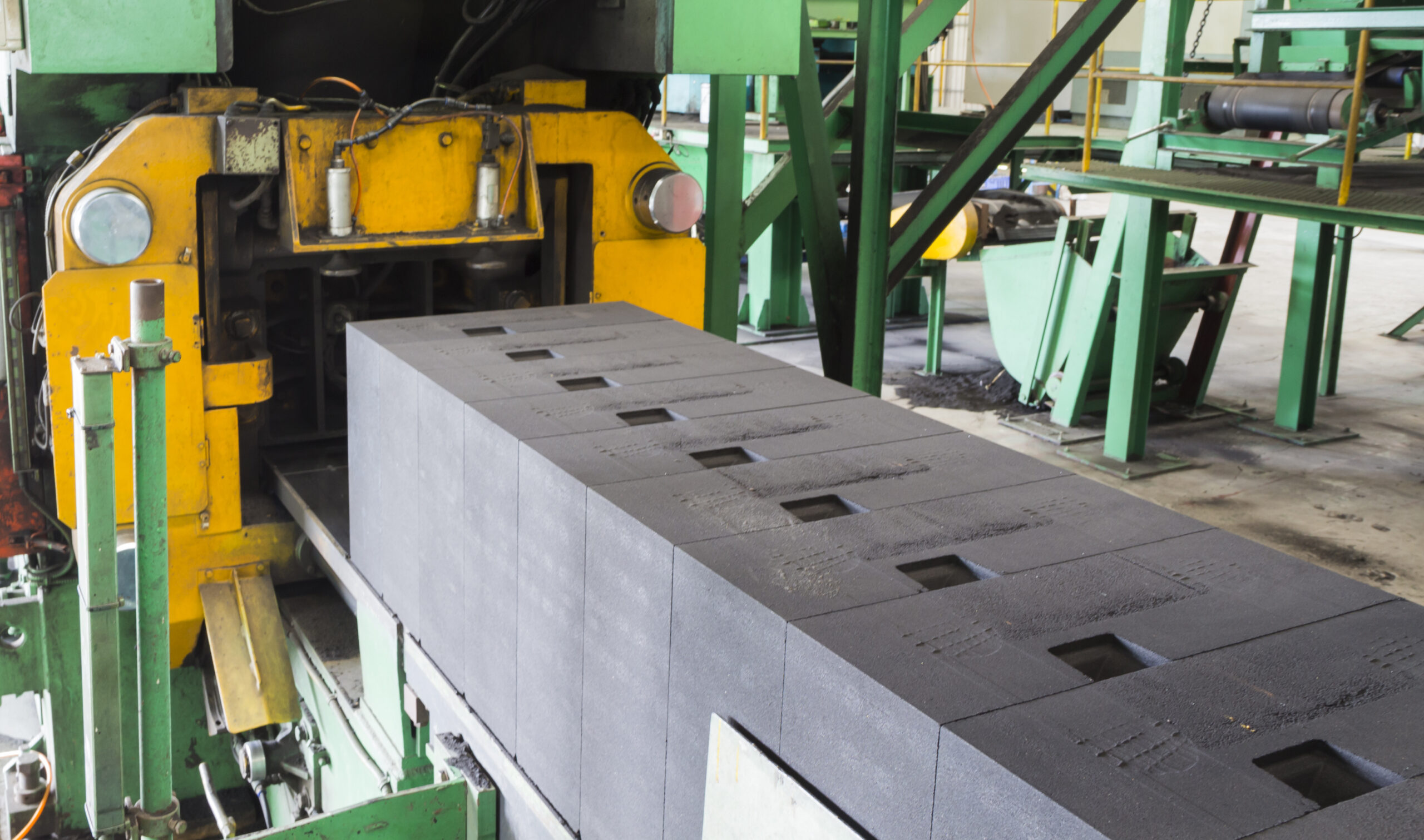
The request appears to conflate “green sand for casting metal” with fabrication processes such as laser cutting, bending, and welding, which are typically associated with sheet metal or polymer processing—not sand casting. Green sand is a type of foundry sand used in metal casting processes and is not directly involved in laser cutting, bending, or welding operations. However, to clarify and provide relevant technical context, the table below outlines the correct definition and characteristics of green sand, followed by typical material compatibility with the mentioned fabrication processes.
Green Sand (for Metal Casting) – Technical Overview
Green sand is a mixture of sand, clay, water, and sometimes other additives (e.g., coal dust, cereal), used as a mold material in ferrous and non-ferrous casting. The term “green” refers to the presence of moisture, not environmental impact. It is not a material that undergoes laser cutting, bending, or welding.
| Property | Description |
|---|---|
| Composition | Silica sand (typically 85–90%), Bentonite clay (5–10%), Water (2–4%), Additives (e.g., coal dust, wood flour) |
| Moisture Content | 2–4% (critical for mold strength and plasticity) |
| Permeability | 80–100 (measured in permeability numbers; allows gas escape during pouring) |
| Green Compression Strength | 25–35 psi (ability to resist deformation under load when moist) |
| Grain Fineness Number (GFN) | 50–70 (indicates average grain size; affects surface finish) |
| Applications | Sand casting molds for metals such as cast iron, steel, aluminum, and bronze |
| Reusability | Can be reconditioned and reused after thermal and mechanical reclamation |
Compatibility of Common Materials with Laser Cutting, Bending, and Welding
While green sand is not used in these processes, the following table outlines how the materials mentioned (Aluminum, Steel, ABS, Nylon) perform in laser cutting, bending, and welding:
| Material | Laser Cutting | Bending | Welding |
|---|---|---|---|
| Aluminum | Excellent – cleanly cut with high-power fiber lasers; reflective nature requires proper equipment | Good – suitable for press braking; requires larger bend radii due to lower ductility compared to steel | Moderate – possible with TIG or MIG using appropriate filler; sensitive to heat distortion |
| Steel (mild/carbon) | Excellent – easily cut with CO2 or fiber lasers; high precision | Excellent – highly formable; standard in sheet metal bending | Excellent – readily welded using MIG, TIG, or arc welding |
| ABS (Acrylonitrile Butadiene Styrene) | Good – can be laser cut with CO2 lasers; may produce soot or fumes | Limited – not typically bent like sheet metal; thermoforming preferred | Poor – not weldable in traditional sense; joined via adhesives or solvent welding |
| Nylon (Polyamide) | Fair – can be laser cut but may melt or discolor; not ideal | Not applicable – not suitable for metal-style bending | Poor – difficult to weld; possible with hot gas or ultrasonic welding, not standard methods |
Note: Green sand is not processed via laser cutting, bending, or welding. It is used to create molds for casting metals. The fabrication processes listed apply to the final metal or plastic components—such as aluminum or steel castings or sheet-formed parts—produced using molds made from green sand.
From CAD to Part: The Process
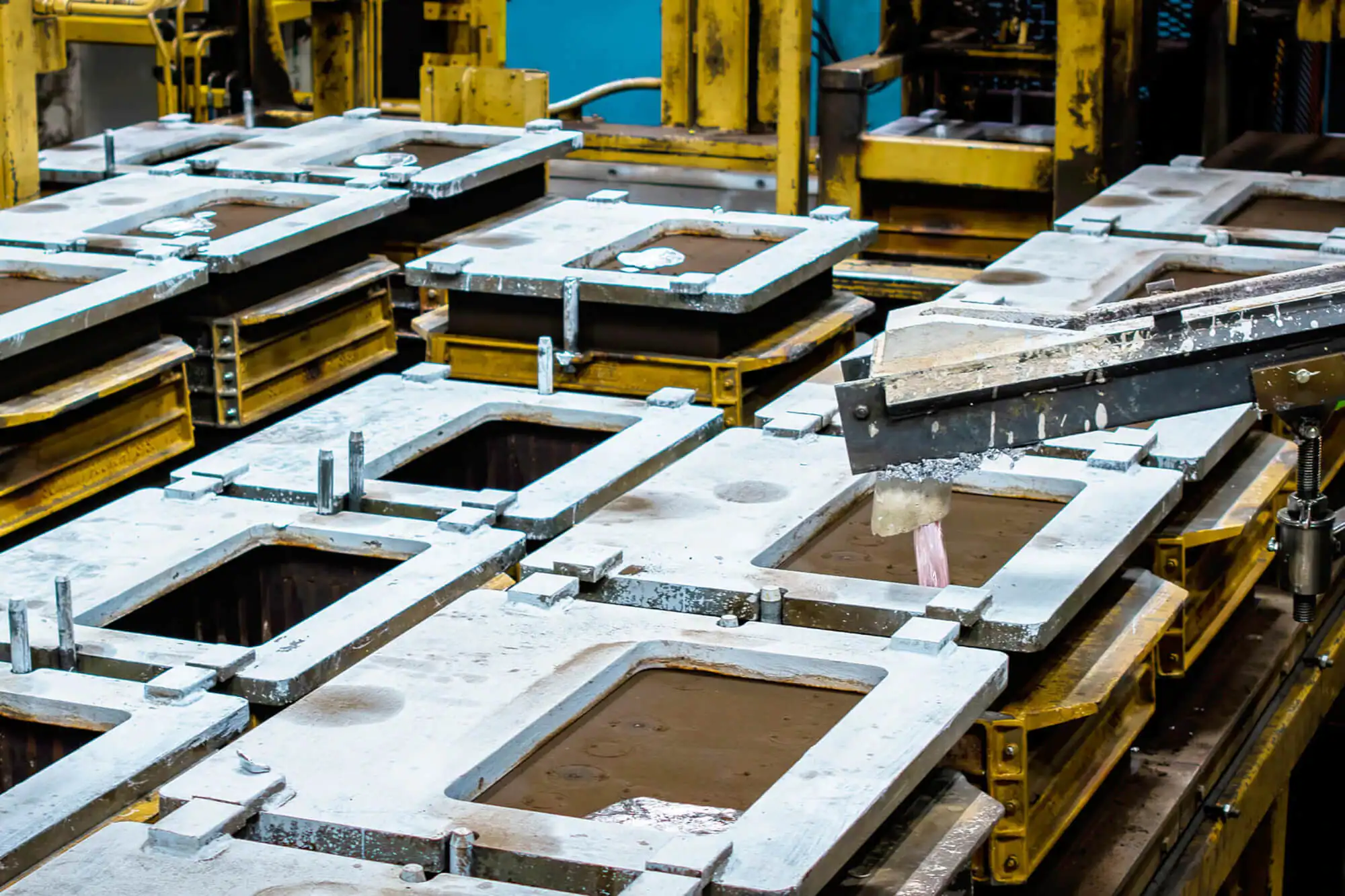
Honyo Prototype Green Sand Casting Process Overview
Green sand casting remains a cornerstone of our high-integrity metal prototype and low-volume production capabilities, leveraging moisture-bonded silica sand for cost-effective, dimensionally stable molds. Our integrated digital-to-physical workflow ensures precision while honoring traditional foundry principles. Below is the stage-specific execution for green sand projects.
Upload CAD
Clients submit 3D CAD models (STEP, IGES, or native formats) via our secure portal. For green sand casting, we prioritize geometry analysis related to draft angles, undercuts, and parting line feasibility—critical factors given sand’s limited mold flexibility. Our system auto-extracts key parameters: casting volume, projected area, and minimum section thickness to initialize process planning. Complex cores or deep cavities trigger immediate pattern design flags.
AI-Powered Quoting Engine
Our proprietary AI engine processes the CAD data against a 15-year database of green sand casting outcomes. It evaluates:
Sand composition requirements (e.g., 85–90% silica sand, 5–10% bentonite, 2.8–3.2% moisture)
Pattern complexity (matchplate vs. split pattern)
Expected yield based on gating system efficiency
Sand reclamation rates (typically 80–90% for green sand)
The quote includes material loss factors (3–8% for ferrous alloys), mold drying time estimates, and sand conditioning costs—delivered in under 2 hours with ±5% cost accuracy.
DFM Optimization for Green Sand
Engineering teams conduct a dual-path DFM review:
First, automated checks validate draft (minimum 1° for vertical surfaces), fillet radii (≥3mm to prevent sand erosion), and parting line alignment. Second, foundry engineers simulate sand compaction pressure distribution to avoid mold wall movement during pouring. Critical adjustments include:
Redesigning thin ribs to prevent sand burn-in
Adding chaplets for core stability in large cavities
Optimizing gating to minimize turbulence (target metal velocity <0.5 m/s)
This phase reduces casting rework by 40% and typically completes in 3–5 business days.
Production Execution
Green sand production follows a closed-loop control system:
1. Sand Preparation: Automated mixers blend base sand, clay, and water to target permeability (80–100 ASTM). Real-time moisture sensors maintain ±0.2% tolerance.
2. Molding: Matchplate patterns mounted on jolt-squeeze machines achieve 90–95 kN compaction force. Molds are bench-set within 15 minutes of sand preparation to prevent skin drying.
3. Pouring: Molten metal (iron, aluminum, or bronze) is poured at 1,350–1,500°C into pre-heated molds (25–40°C), with flow rate monitored via thermal imaging.
4. Shakeout & Reclamation: Castings cool for 15–45 minutes before shakeout. Used sand undergoes attrition testing; fines <75µm are removed, and additives are adjusted for reuse.
Delivery Assurance
All green sand castings undergo:
Dimensional verification via CMM (per ASME Y14.5)
Ultrasonic testing for internal defects (per ASTM E503)
Sand burn-off residue checks (<0.5 mg/cm²)
Final packaging includes humidity-controlled crates for corrosion-prone alloys. Standard lead time is 10–14 days from CAD approval, with expedited options.
Key Green Sand Process Parameters
| Parameter | Standard Range | Critical Tolerance | Measurement Method |
|———–|—————-|———————|———————|
| Sand Permeability | 80–100 | ±5 | ASTM C29 |
| Moisture Content | 2.8–3.2% | ±0.1% | Microwave drying |
| Green Compression Strength | 100–150 kPa | ±10 kPa | ASTM D698 |
| Mold Hardness (Bribe) | 85–95 | ±3 | Scleroscope |
This workflow merges time-tested foundry science with digital rigor, ensuring green sand castings meet aerospace and industrial durability standards while accelerating time-to-part. We maintain ISO 9001:2015 and NADCA certification for all casting processes.
Start Your Project
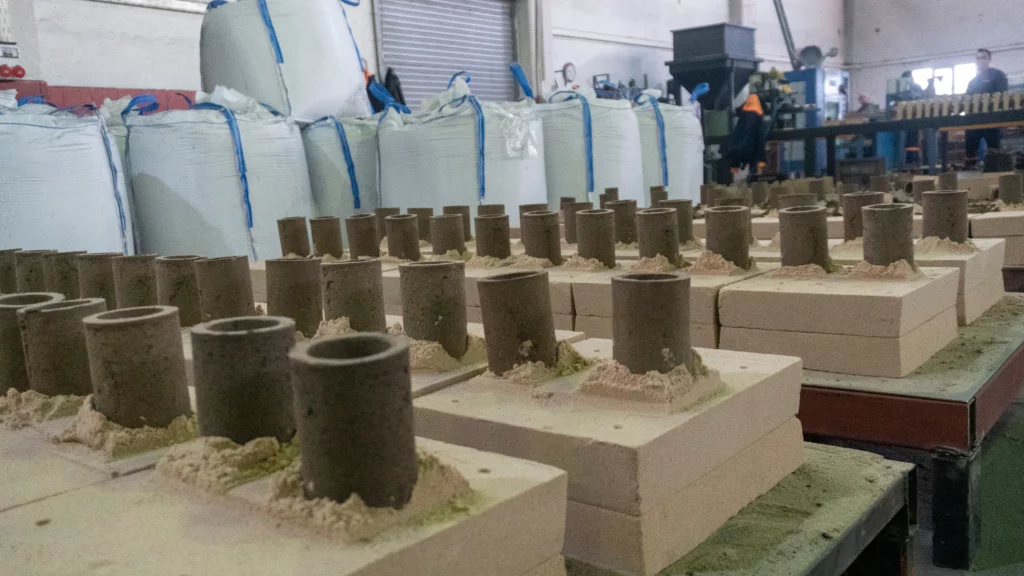
Looking for high-quality green sand for metal casting? Honyo Prototype offers reliable, precision-engineered foundry solutions with fast turnaround times. Our Shenzhen-based factory ensures strict quality control and efficient production to meet your casting requirements.
Contact Susan Leo today to discuss your project and request a quote.
Email: [email protected]
Partner with a trusted manufacturer for consistent, industrial-grade green sand casting performance.
🚀 Rapid Prototyping Estimator
Estimate rough cost index based on volume.