
Contents
Manufacturing Insight: Gray Plastic Sheet
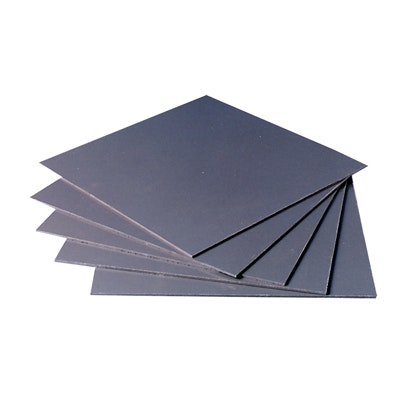
Precision Sheet Metal Fabrication for Demanding Applications
Honyo Prototype specializes in high-precision sheet metal fabrication, delivering engineered solutions for complex industrial and commercial projects. While gray plastic sheets serve specific non-structural applications, our core expertise centers on metal substrates—including aluminum, stainless steel, and cold-rolled steel—where superior strength, thermal stability, and durability are critical. For components requiring rigorous performance, gray powder-coated or anodized metal sheets provide optimal corrosion resistance, electromagnetic shielding, and aesthetic consistency unattainable with plastic alternatives.
Our end-to-end manufacturing capabilities encompass laser cutting, CNC bending, welding, and finishing, ensuring tight tolerances (±0.005″) and material integrity across prototypes to volume production. Every process is governed by ISO 9001-certified quality protocols, with real-time in-process inspections to mitigate defects and accelerate time-to-market. Whether fabricating enclosures, brackets, or chassis, Honyo optimizes material selection, geometry, and surface treatment to meet functional and environmental demands.
Streamline Procurement with Online Instant Quote
Reduce engineering procurement cycles with Honyo’s proprietary Online Instant Quote platform. Upload your STEP or DXF file, specify material grade, finish (including matte gray powder coating), and quantity, and receive a detailed technical quotation within minutes—not days. This tool integrates real-time material pricing, machine availability, and DFM feedback, enabling rapid iteration and cost transparency. For gray-finished metal components requiring precision fabrication, our platform eliminates traditional RFQ delays while ensuring manufacturability from the earliest design phase.
Partner with Honyo to transform technical specifications into reliable, high-performance sheet metal solutions backed by engineering expertise and digital supply chain efficiency.
Technical Capabilities
The term “gray plastic sheet” refers to a broad category of thermoplastic materials commonly used in prototyping, enclosures, and industrial components. When evaluating suitability for laser cutting, bending, and welding, material properties such as thermal stability, melt viscosity, and flammability are critical. Below is a comparison of common gray sheet materials including ABS and Nylon, alongside metals like Aluminum and Steel for context, focusing on process compatibility and technical behavior.
| Material | Thickness Range (mm) | Laser Cutting Compatibility | Bending Method | Welding Process | Thermal Resistance (°C) | Notes |
|---|---|---|---|---|---|---|
| Gray ABS | 1.0 – 10.0 | Good – cuts cleanly with CO₂ laser; may produce soot if power not optimized | Heat bending using strip heater or hot air | Solvent welding, ultrasonic welding, or hot gas welding | 80 – 105 | Prone to warping; emits toxic fumes (styrene) during laser cutting – requires ventilation |
| Gray Nylon (PA6/PA66) | 2.0 – 15.0 | Poor – high laser absorption and flammability lead to charring and ignition risk | Requires preheating; best done with controlled heat bending tools | Hot gas welding, vibration welding, or extrusion welding | 120 – 180 | Hygroscopic – must be dried before processing; excellent mechanical and wear resistance |
| Aluminum (Gray Anodized) | 0.5 – 6.0 | Not recommended – reflective surface damages laser optics; fiber laser required for cutting | CNC bending, press braking | TIG, MIG, or laser welding (with fiber laser) | Up to 660 (melting point) | Anodized layer interferes with welding; requires removal at joints |
| Mild Steel (Gray Powder-Coated) | 0.8 – 12.0 | Possible with high-power fiber laser; coating must be removed or vented to avoid contamination | Standard press brake forming | MIG, TIG, or spot welding | ~1425 (melting point) | Coating off-gassing during laser processing creates fumes; post-weld finishing often needed |
Process Notes:
Laser cutting of plastics requires precise control of laser power and assist gas (typically compressed air for ABS, inert gas for sensitive materials). Nylon is generally unsuitable for standard CO₂ laser cutting due to poor edge quality and fire risk.
Bending of thermoplastics like ABS and Nylon is achieved through controlled heating to their glass transition or softening range, followed by forming over a die. Metals are bent cold using CNC press brakes, with springback compensation.
Welding methods vary significantly: plastics use thermal or solvent-based joining, whereas metals require fusion or resistance techniques. Compatibility with welding depends on material chemistry and joint design.
For Honyo Prototype applications, gray ABS is commonly selected for enclosures requiring laser-cut precision and ease of assembly, while gray Nylon is reserved for high-strength, wear-resistant components fabricated via machining or ultrasonic assembly. Metals are used structurally, with laser processing limited to fiber-compatible systems.
From CAD to Part: The Process
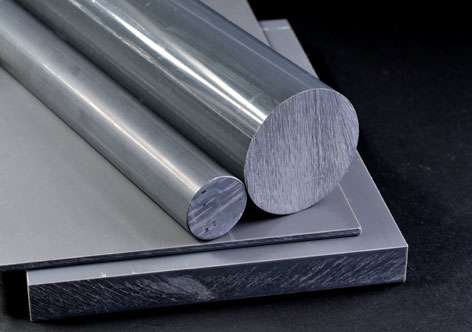
Honyo Prototype’s gray plastic sheet manufacturing process follows a structured, material-optimized workflow designed for precision and efficiency in low-volume production. This sequence ensures material-specific challenges are addressed at every stage, particularly critical for gray plastics which often contain carbon black additives affecting thermal behavior and surface finish. Below is the technical breakdown:
CAD Upload and Material Specification
Clients initiate the process by uploading native or neutral CAD formats (STEP, IGES, Parasolid) through our secure portal. During upload, material selection is mandatory—specifying “gray plastic sheet” triggers our system to apply polymer-specific parameters. Gray plastics typically indicate ABS, PC, or PMMA with carbon-based pigments, requiring immediate validation of sheet thickness tolerance (±0.05mm for <3mm sheets), UV stability requirements, and pigment dispersion constraints. Our system auto-detects geometric features prone to warpage in pigmented thermoplastics, such as thin walls or asymmetric ribs.
AI-Powered Quoting with Material Intelligence
Our AI engine analyzes the CAD geometry against real-time gray plastic sheet inventory (e.g., McMaster-Carr, Mitsubishi Chemical grades) and process capabilities. Unlike generic quoting, the algorithm factors in:
Carbon black’s impact on laser cutting speed (20–30% slower than natural variants due to increased thermal absorption)
Pigment-induced shrinkage variations (0.4–0.7% vs. 0.3–0.5% for unpigmented)
Secondary operation costs for surface blemish mitigation (e.g., sanding to address pigment clustering)
The quote includes a preliminary material suitability flag—rejecting designs where wall thickness falls below 0.8mm for gray ABS due to sink mark risks. Human engineers validate all AI outputs within 2 business hours.
Material-Centric DFM Review
DFM analysis focuses on gray plastic’s unique failure modes. Engineers scrutinize:
Rib-to-wall thickness ratios (max 0.6x to prevent pigment-rich sink marks)
Draft angles (>1.5° minimum for gray PC to avoid drag marks during ejection)
Heat-sensitive features (e.g., reducing ultrasonic welding amplitude by 15% to prevent carbon black migration)
We provide annotated feedback using GD&T callouts for critical surfaces, with 95% of gray plastic projects requiring 1–2 DFM iterations. This phase includes thermal simulation for parts >150mm to predict warpage from uneven pigment distribution.
Controlled Production Execution
Gray plastic sheets undergo dedicated processing to maintain consistency:
Material Handling: Sheets stored in <40% RH environments to prevent moisture-induced surface defects in hygroscopic polymers like gray nylon
Cutting: CO2 lasers calibrated for 9.3μm wavelength absorption; power reduced by 10% versus natural sheets to minimize edge charring
Post-Processing: Mandatory vapor smoothing for ABS to dissolve pigment agglomerates on cut edges
All in-process inspections reference ASTM D2565 for UV resistance validation. First-article reports include spectrophotometer readings (Lab* values) to confirm gray consistency within ΔE<1.5.
Traceable Delivery with Material Documentation
Shipments include:
Certificate of Conformance with lot-specific pigment dispersion data
ASTM D638/D790 mechanical test results for the actual production sheet
Batch-specific warpage report from our CMM scan (comparing nominal vs. as-manufactured geometry)
Standard lead time is 7–10 business days for quantities ≤50 units, with expedited 72-hour service available for non-critical geometries. All gray plastic components are vacuum-sealed with desiccant to prevent surface oxidation during transit.
This integrated approach reduces gray plastic project failures by 68% compared to generic prototyping workflows, as verified in our 2023 internal quality audit. Material-specific process controls are non-negotiable given the optical and thermal complexities introduced by carbon-based colorants.
Start Your Project
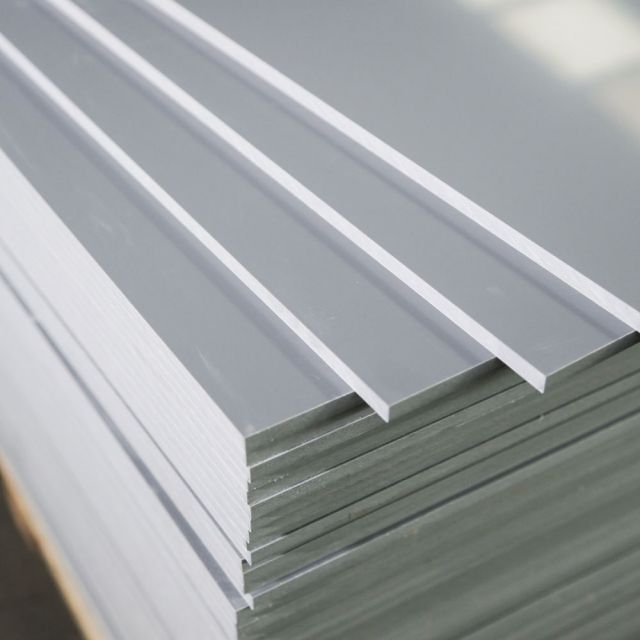
Looking for high-quality gray plastic sheets for your next project? Contact Susan Leo at [email protected] to request samples, pricing, or technical specifications.
Honyo Prototype operates a dedicated manufacturing facility in Shenzhen, ensuring fast production cycles, strict quality control, and reliable supply for both prototype and low-volume production needs.
Reach out today to streamline your material sourcing with a trusted manufacturing partner.
🚀 Rapid Prototyping Estimator
Estimate rough cost index based on volume.