
Contents
Manufacturing Insight: Gf Nylon
Introduction to GF Nylon Machining Excellence at Honyo Prototype
Glass-Filled Nylon (GF Nylon) represents a critical engineering material for demanding applications requiring exceptional strength, dimensional stability, and resistance to wear, chemicals, and elevated temperatures. Its unique glass-fiber reinforcement significantly enhances stiffness and creep resistance compared to standard nylons, making it indispensable for precision components in automotive, aerospace, industrial machinery, and medical devices. However, machining GF Nylon presents distinct challenges, including abrasive wear on tooling, potential for fiber pull-out, and sensitivity to thermal management during processing. Achieving tight tolerances and superior surface finishes demands specialized expertise and optimized CNC parameters to maintain structural integrity and performance characteristics.
Honyo Prototype leverages decades of advanced CNC machining experience to overcome these challenges, delivering production-grade GF Nylon components with micron-level precision and consistent repeatability. Our state-of-the-art 3-, 4-, and 5-axis milling and turning centers, coupled with proprietary toolpath strategies and coolant management systems, ensure minimal material stress and optimal fiber alignment. We rigorously validate processes using in-house metrology, including CMM and optical inspection, guaranteeing that every part meets stringent ASTM D638 and ISO 527 mechanical property standards. This capability allows engineers to confidently specify GF Nylon for mission-critical applications without sacrificing design complexity or lead time.
Accelerate your prototyping and low-volume production cycles with Honyo Prototype’s seamless integration of material science and precision manufacturing. Our Online Instant Quote platform provides real-time, detailed cost and lead time estimates for GF Nylon CNC projects within minutes—simply upload your CAD file to receive a technical review and actionable quote, eliminating traditional RFQ delays. Partner with us to transform challenging GF Nylon designs into high-performance reality, backed by engineering support from concept through validation.
Technical Capabilities
Technical specifications for GF Nylon (Glass-Filled Nylon) are critical when selecting materials for precision machining applications such as 3-axis, 4-axis, and 5-axis milling, as well as CNC turning—especially in tight-tolerance environments. GF Nylon, typically reinforced with 30% glass fibers (e.g., PA6-GF30 or PA66-GF30), offers enhanced mechanical strength, dimensional stability, and heat resistance compared to unfilled nylon. This makes it suitable for structural and load-bearing components in industrial, automotive, and aerospace applications where metal-to-plastic replacement is desired.
Below is a comparative table highlighting key technical properties of GF Nylon alongside other commonly machined materials: Aluminum (6061-T6), Steel (1018), ABS, and standard Nylon (PA6). This data supports material selection for high-precision CNC processes.
| Property | GF Nylon (PA6-GF30) | Aluminum 6061-T6 | Steel 1018 | ABS | Nylon (PA6) |
|---|---|---|---|---|---|
| Tensile Strength (MPa) | 130–150 | 310 | 440 | 40–45 | 70–85 |
| Flexural Strength (MPa) | 180–200 | 350 | 450 | 60–75 | 100–120 |
| Modulus of Elasticity (GPa) | 8.0–9.5 | 68.9 | 200 | 2.0–2.4 | 2.5–3.0 |
| Density (g/cm³) | 1.36–1.40 | 2.70 | 7.87 | 1.04 | 1.13 |
| Thermal Expansion (10⁻⁶/K) | 30–40 | 23.6 | 12.2 | 70–100 | 80–100 |
| Max Continuous Use Temp (°C) | 120–140 | 120–150 | 400+ | 80–90 | 80–100 |
| Moisture Absorption (%) | 0.5–1.0 (eq.) | Negligible | Negligible | 0.2–0.4 | 2.5–3.0 |
| Machinability | Good (low tool wear, chip control) | Excellent (high speed, fine finish) | Moderate (higher tool wear) | Excellent | Good (tendency to melt if overheated) |
| Typical Tolerance Capability (± mm) | 0.05–0.10 | 0.025–0.05 | 0.025–0.05 | 0.10–0.20 | 0.05–0.10 |
| Surface Finish (Ra, μm) | 1.6–3.2 | 0.8–1.6 | 0.8–1.6 | 3.2–6.3 | 1.6–3.2 |
| Applications | Gears, bushings, insulators, structural components | Enclosures, heat sinks, fixtures | Shafts, fasteners, tooling | Prototypes, housings, jigs | Wear strips, rollers, low-friction parts |
Notes on Machining GF Nylon in High-Precision Environments:
3/4/5-Axis Milling: GF Nylon machines cleanly with carbide tools. High glass content improves dimensional stability, enabling complex geometries with tight tolerances. Coolant is generally not required, but light air blasting helps manage heat and chip removal.
Turning: Achieves excellent surface finishes. Feed and speed must be optimized to prevent melting—typical cutting speeds range from 100–200 m/min. Sharp tools are essential to minimize fraying of glass fibers.
Tight Tolerances: GF Nylon’s low moisture absorption and reduced thermal expansion compared to unfilled nylon make it more predictable for ±0.05 mm tolerances. However, post-machining conditioning (stabilization in controlled humidity) may be required for critical applications.
Tooling Consideration: Glass fibers are abrasive—tool wear is higher than with ABS or pure nylon. Use wear-resistant coatings (e.g., TiAlN) and frequent inspection.
Material Comparison: While metals like aluminum and steel offer higher strength and tighter achievable tolerances, GF Nylon provides significant weight savings, corrosion resistance, and electrical insulation—making it ideal for hybrid assemblies where non-conductive, durable plastic parts interface with metal components.
In summary, GF Nylon is a high-performance engineering thermoplastic well-suited for precision CNC machining across multi-axis platforms, particularly when replacing metal parts in non-load-intensive but dimensionally critical applications.
From CAD to Part: The Process
Honyo Prototype GF Nylon Manufacturing Process Overview
Honyo Prototype employs a streamlined, technology-driven workflow for glass-filled nylon (typically 30% glass fiber reinforced) parts, ensuring precision and efficiency from design to delivery. This process addresses the unique material challenges of GF nylon, including anisotropic shrinkage, fiber orientation effects, and heightened wear on tooling. Below is the detailed sequence:
CAD Upload and Material Specification
Customers initiate the process by uploading native or neutral CAD files (STEP, IGES, Parasolid) via Honyo’s secure portal. During upload, the system prompts explicit material selection—GF Nylon (e.g., PA66-GF30)—to activate material-specific validation rules. The portal auto-detects critical geometry features like thin walls (<0.8mm), sharp corners, or non-uniform ribbing that may cause fiber jamming or sink marks in GF nylon. File validation occurs in under 2 minutes, with immediate feedback on unsupported formats or corrupted data.
AI-Powered Quoting Engine
Honyo’s proprietary AI engine processes the CAD geometry and material selection to generate an instant quote within 15 minutes. For GF nylon, the algorithm factors in:
Elevated cycle times due to slower cooling requirements (vs. unfilled nylon)
Tooling wear adjustments (glass fibers accelerate mold erosion)
Warpage risk scoring based on part symmetry and gate placement feasibility
Material cost premiums (GF nylon pellets cost 20–30% more than standard nylon)
The quote includes DFM risk flags, such as “High warpage risk: Asymmetric wall thickness detected” or “Recommended draft angle increase to 2° for GF30 release.”
Material-Specific DFM Analysis
Engineers conduct a rigorous Design for Manufacturability review focused on GF nylon’s constraints. Key checks include:
Wall Thickness Uniformity: Ensuring deviations stay within ±15% to prevent fiber segregation
Rib Design: Verifying rib thickness ≤60% of parent wall to avoid surface sinks
Draft Angles: Confirming minimum 1.5° draft (vs. 1° for unfilled nylon) for ejection
Gate Location: Optimizing for minimal fiber orientation-induced warpage
Mold Temperature: Recommending 80–100°C ranges to reduce residual stress
Clients receive a detailed DFM report with actionable annotations—e.g., “Increase corner radius to 0.5mm to mitigate knit lines at fiber-rich junctions.” Revisions are tracked iteratively until approval.
Production with GF Nylon Process Controls
Approved designs move to production under strict GF nylon protocols:
Drying: Material dried at 80°C for 4+ hours (moisture <0.2%) to prevent hydrolysis
Molding Parameters:
Melt temperature: 275–290°C (higher than unfilled nylon to ensure flow)
Injection speed: Moderate to avoid fiber breakage
Pack pressure: 800–1000 bar to compensate for high shrinkage (1.0–1.4% vs. 1.5–2.2% for unfilled)
Tooling: Hardened steel molds (HRC 50+) with polished cavities to resist abrasion
In-Process Checks: First-article dimensional validation at critical fiber-sensitive zones (e.g., boss bases, rib intersections)
Delivery and Documentation
Completed parts undergo final QA per ASTM D638/D790 standards, with GF nylon-specific reporting:
Warpage measurement reports (max deviation <0.5mm per 100mm)
Material certification (including glass content verification via TGA)
As-molded surface roughness (Ra 1.6–3.2µm typical for GF nylon)
Standard lead time is 8–12 business days from DFM sign-off. Delivery includes traceable documentation, such as batch-specific moisture content logs and mold flow analysis summaries. Expedited shipping options maintain full quality compliance.
Delivery Timeline Reference
| Process Stage | Typical Duration | GF Nylon-Specific Adjustments |
|————————-|——————|——————————-|
| DFM Approval to Mold Start | 2–3 days | +1 day for hardened steel tool prep |
| First Article Production | 3–5 days | +1 day for material drying validation |
| Final QA & Packaging | 1–2 days | Includes warpage rework buffer |
This integrated workflow minimizes GF nylon’s inherent risks while accelerating time-to-part. Honyo’s material expertise ensures consistent structural performance in demanding applications like automotive under-hood components or industrial housings.
Start Your Project
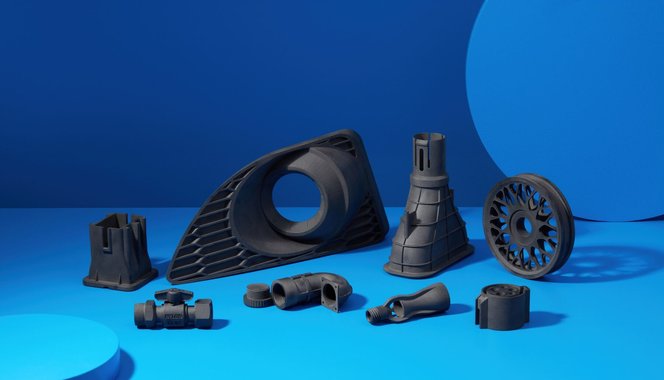
Looking for high-quality GF nylon for your next project? Honyo Prototype offers precision-engineered GF nylon components with tight tolerances and excellent mechanical properties. Our manufacturing facility in Shenzhen ensures fast turnaround and consistent quality for prototyping and low-volume production.
Contact Susan Leo at [email protected] to discuss your requirements and get a competitive quote today.
🚀 Rapid Prototyping Estimator
Estimate rough cost index based on volume.