
Contents
Manufacturing Insight: Gauge Aluminum
Precision Aluminum Machining for Demanding Applications
Honyo Prototype delivers exceptional CNC machining services for aluminum components where dimensional accuracy, material integrity, and repeatability are non-negotiable. Our expertise spans aerospace-grade 2024-T3 to corrosion-resistant 6061-T6 alloys, ensuring your gauge-critical parts meet stringent specifications from prototype to production. We leverage advanced 3-, 4-, and 5-axis CNC milling and turning centers to achieve tolerances as tight as ±0.0002 inches, eliminating variability in critical thickness, hole patterns, and surface finishes.
Our integrated manufacturing ecosystem combines ISO 9001-certified processes with rigorous in-process metrology, including CMM and optical inspection, to validate every dimension against your engineering intent. Whether machining thin-wall enclosures, precision spacers, or complex structural brackets, we optimize toolpaths and fixturing to prevent material deformation and maintain geometric consistency across batches. This precision is essential for applications where aluminum gauge directly impacts performance—such as EMI shielding, thermal management, or load-bearing assemblies.
Common aluminum alloys we machine with guaranteed dimensional control include:
| Alloy | Temper | Typical Use Case | Key Machinability Advantage |
|---|---|---|---|
| 6061-T6 | T6 | Structural brackets, housings | Excellent strength-to-weight ratio |
| 7075-T6 | T6 | Aerospace fittings, high-stress components | Superior fatigue resistance |
| 2024-T3 | T3 | Aircraft structural parts | High shear strength |
| 5052-H32 | H32 | Marine components, fuel tanks | Optimal corrosion resistance |
Accelerate your development cycle with Honyo’s Online Instant Quote platform. Upload your STEP or IGES file, specify material and quantity, and receive a detailed manufacturability analysis with competitive pricing in under 60 seconds. This seamless integration between design intent and production capability ensures engineers spend less time sourcing and more time innovating. For precision aluminum components that perform to specification, trust Honyo Prototype’s CNC machining excellence—where every micron matters.
Technical Capabilities
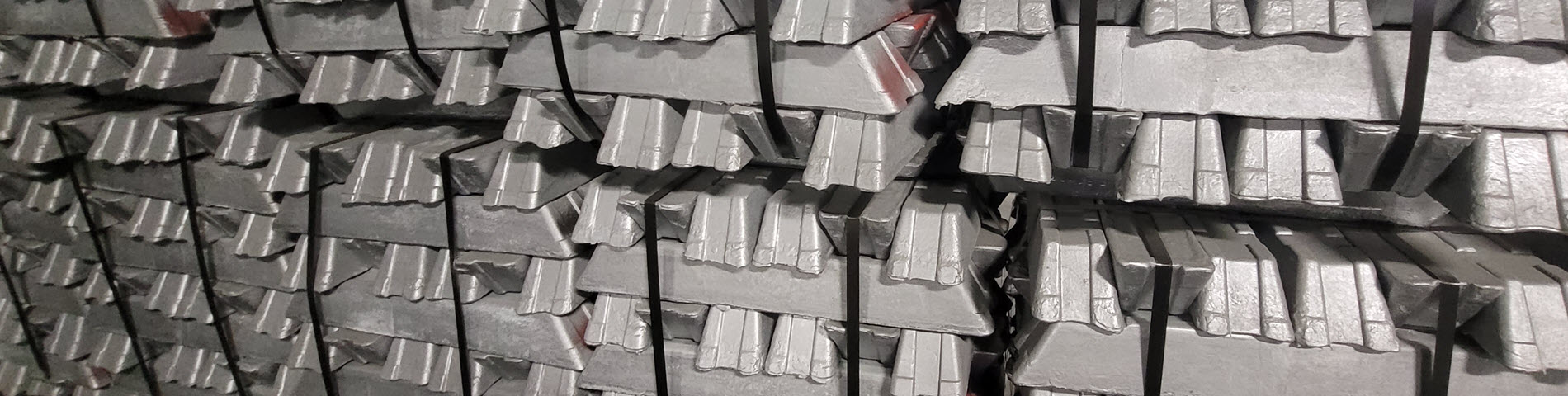
The term “gauge aluminum” typically refers to thin sheet aluminum defined by its thickness according to the standard gauge system, where a lower gauge number indicates greater thickness. However, in precision CNC manufacturing environments—particularly in 3-, 4-, and 5-axis milling and turning applications—the focus shifts from gauge designations to precise dimensional control, material properties, and machinability. For tight-tolerance components, gauge terminology is generally replaced with exact thickness specifications in inches or millimeters.
Below is a technical comparison of commonly used materials—including aluminum, steel, ABS, and nylon—in high-precision CNC machining processes. While aluminum (especially 6061-T6 and 7075-T6) is the most frequently specified for lightweight, high-strength, and tight-tolerance applications, the other materials serve specific functional roles depending on mechanical, thermal, and environmental requirements.
| Material | Typical Forms | Machinability Rating | Tensile Strength (MPa) | Typical Tolerance (±) | Surface Finish (Ra) | Key Applications in CNC |
|---|---|---|---|---|---|---|
| Aluminum 6061-T6 | Plate, Bar, Block | Excellent (Machinability: 75–85%) | 310 | 0.005 mm (0.0002″) | 0.8–3.2 µm | Aerospace components, enclosures, jigs, fixtures |
| Aluminum 7075-T6 | Plate, Bar, Block | Good (Machinability: 55–60%) | 570 | 0.005 mm (0.0002″) | 0.8–3.2 µm | High-stress structural parts, defense, racing |
| Steel (4140) | Bar, Forging | Moderate (Machinability: 65%) | 655 | 0.010 mm (0.0004″) | 1.6–6.3 µm | Tooling, shafts, high-wear components |
| Steel (A2 Tool) | Bar, Block | Fair (Machinability: 55%) | 1800 | 0.010 mm (0.0004″) | 1.6–6.3 µm | Precision dies, molds, gauges |
| ABS (Acrylonitrile Butadiene Styrene) | Sheet, Rod | Excellent | 40–50 | 0.025 mm (0.001″) | 3.2–6.3 µm | Prototypes, housings, non-structural parts |
| Nylon 6/6 | Sheet, Rod | Good | 75–85 | 0.025 mm (0.001″) | 3.2–6.3 µm | Insulators, bushings, low-friction components |
Notes on Machining for Tight Tolerances:
For 3-, 4-, and 5-axis milling and turning operations requiring tight tolerances (±0.005 mm to ±0.0125 mm), aluminum alloys—particularly 6061-T6 and 7075-T6—are preferred due to their excellent strength-to-weight ratio, thermal stability during machining, and ability to hold dimensional accuracy. These alloys respond well to high-speed machining (HSM) strategies used in multi-axis platforms, allowing for complex geometries with minimal part deflection.
Steel materials are used when higher wear resistance, hardness, or structural integrity under load is required. However, they demand more rigorous tooling (carbide or coated inserts), slower feed rates, and increased attention to thermal management due to lower thermal conductivity.
ABS and nylon, while easily machinable and suitable for prototyping or non-load-bearing parts, are subject to moisture absorption (especially nylon) and thermal expansion, making them less ideal for long-term tight-tolerance applications unless post-machining stabilization is applied.
Summary:
Although “gauge aluminum” may describe sheet thickness in fabrication, precision CNC operations rely on exact material specifications. Aluminum remains the dominant material for high-accuracy, complex parts in multi-axis systems, while steel, ABS, and nylon serve niche roles based on mechanical and environmental requirements.
From CAD to Part: The Process
Honyo Prototype employs a rigorously defined workflow for gauge aluminum components, ensuring precision in material thickness adherence per ASTM B209 standards. Our process begins when a client uploads their CAD file to our secure portal. The system automatically extracts geometric data, material specifications, and critical dimensions including required aluminum gauge thickness. This triggers our proprietary AI quoting engine, which cross-references the specified gauge against standard thickness tolerances (e.g., 16 gauge = 0.0625″ ±0.005″) and validates against alloy-specific properties like 5052-H32 or 6061-T6.
The AI Quote phase generates a real-time cost estimate within 90 seconds, explicitly calling out any gauge-related cost drivers such as thin-sheet handling requirements or secondary operations needed for tight thickness tolerances. Concurrently, our system performs an automated preliminary DFM check, flagging potential issues like minimum bend radii violations relative to the selected gauge or excessive springback in softer alloys.
Formal DFM analysis follows immediately after quote acceptance, conducted by our sheet metal engineering team. We scrutinize bend allowances, hole-to-edge distances, and flat pattern development specifically for the submitted gauge thickness. For aluminum gauges under 0.063″, we mandate coining over air bending to maintain ±0.003″ flatness tolerances and provide detailed recommendations on grain direction orientation to prevent cracking during forming. Clients receive a marked-up DFM report with actionable feedback within 4 business hours.
Production commences only upon DFM sign-off, utilizing our calibrated Amada LC-2415 laser cutter with nitrogen assist for burr-free edges on gauges up to 0.250″ thickness. Press brakes feature real-time tonnage monitoring to prevent gauge variation during bending, while our in-process inspection protocol includes micrometer verification of thickness at 3 locations per part before secondary operations. All gauge-critical dimensions undergo first-article inspection via CMM against the original CAD model.
Final delivery includes traceable documentation: material certs confirming ASTM-compliant gauge, CMM reports showing actual thickness measurements, and a process validation sheet detailing all machine parameters. Parts ship in anti-static packaging with humidity indicators for moisture-sensitive aluminum alloys, with standard lead times of 7-10 days for gauge aluminum prototypes. We maintain strict adherence to gauge tolerances through our ISO 9001-certified production system, ensuring dimensional consistency from prototype to low-volume production.
Standard Aluminum Gauge Thickness Reference
| Gauge | Nominal Thickness (inches) | Tolerance (inches) | Common Applications |
|——-|—————————-|——————-|———————|
| 10 | 0.1285 | ±0.007 | Enclosures, brackets |
| 12 | 0.1046 | ±0.006 | Chassis components |
| 14 | 0.0747 | ±0.005 | Control panels |
| 16 | 0.0625 | ±0.005 | Heat shields |
| 18 | 0.0500 | ±0.004 | Thin-walled ducts |
Start Your Project
Looking for high-quality gauge aluminum components? Partner with Honyo Prototype for precision manufacturing and rapid turnaround. Our factory in Shenzhen is equipped to handle your most demanding prototyping and low-volume production needs.
Contact Susan Leo today at [email protected] to discuss your project and get a competitive quote.
🚀 Rapid Prototyping Estimator
Estimate rough cost index based on volume.