
Contents
Manufacturing Insight: Galvanized Versus Stainless Steel
Material selection between galvanized steel and stainless steel presents a critical decision point during the prototyping phase, directly impacting part performance, longevity, and manufacturability. Galvanized steel utilizes a protective zinc coating—typically applied via hot-dip or electro-galvanization—to resist corrosion at a lower material cost, making it suitable for structural applications in less aggressive environments. Stainless steel, however, relies on its inherent chromium-nickel alloy composition (e.g., 304, 316 grades) to form a passive oxide layer, providing superior corrosion resistance in demanding conditions like chemical exposure or marine settings without risking coating damage. Understanding these fundamental differences is essential, as each material behaves distinctly under CNC machining processes. Galvanized steel can introduce zinc residue buildup on cutting tools, potentially affecting dimensional accuracy and surface finish, while stainless steel alloys are prone to work-hardening, requiring optimized feed rates and specialized tooling to prevent tool wear and maintain tight tolerances.
Honyo Prototype leverages extensive CNC machining expertise to navigate these material-specific challenges, ensuring your prototype accurately reflects the final production part’s performance characteristics. Our precision milling and turning capabilities accommodate the unique demands of both galvanized and stainless steel components, from complex geometries to stringent surface finish requirements. We provide actionable engineering feedback during the quoting stage to optimize material choice and manufacturability, preventing costly redesigns or performance failures downstream. To accelerate this critical evaluation phase, utilize Honyo’s Online Instant Quote system. Upload your CAD file, specify material preferences, and receive a detailed manufacturability analysis alongside a competitive price within hours—enabling faster iteration and informed decision-making for your next-generation product development.
Key Material Comparison for Prototyping
| Property | Galvanized Steel | Stainless Steel (304) | Machining Consideration at Honyo |
|---|---|---|---|
| Corrosion Mechanism | Sacrificial zinc coating | Passive chromium oxide | Coating integrity affects post-machining |
| Typical Use Case | Outdoor structures, frames | Medical, marine, food | Dictates finishing requirements |
| Machinability Challenge | Zinc buildup on tooling | Work-hardening tendency | Requires tailored speeds/feeds & tooling |
| Cost Factor | Lower base material cost | Higher base material cost | Optimized programming reduces waste |
Technical Capabilities
Galvanized steel and stainless steel are both widely used in precision manufacturing processes such as 3/4/5-axis milling and turning, especially when tight tolerances (±0.001″ to ±0.005″) are required. However, their material properties, machinability, and suitability vary significantly based on the application, environmental exposure, and part geometry. Below is a comparative analysis of galvanized versus stainless steel in the context of high-precision CNC machining, with reference to other common materials such as aluminum, carbon steel, ABS, and nylon.
| Property / Material | Galvanized Steel | Stainless Steel (e.g., 304, 316) | Aluminum (e.g., 6061, 7075) | Carbon Steel (e.g., 1018, 1045) | ABS (Acrylonitrile Butadiene Styrene) | Nylon (e.g., PA6, PA66) |
|---|---|---|---|---|---|---|
| Composition | Low carbon steel coated with zinc | Iron-chromium-nickel alloy (Cr ≥10.5%) | Aluminum-magnesium-silicon | Iron-carbon alloy | Thermoplastic polymer | Polyamide thermoplastic |
| Corrosion Resistance | Moderate (zinc protects steel sacrificially) | Excellent (passive chromium oxide layer) | Good (forms oxide layer) | Poor (rusts without coating) | Good (resists many chemicals) | Good (but absorbs moisture) |
| Machinability (CNC) | Fair – coating can cause tool wear, uneven cutting | Moderate to Fair – galling and work hardening | Excellent – high chip removal, low cutting forces | Good – but harder than aluminum | Excellent – low melting point, easy to mill | Good – but prone to melt/deflection |
| Tool Wear | Moderate to High (zinc coating abrasive) | High (especially in 316 due to work hardening) | Low | Moderate | Very Low | Low |
| Typical Tolerance (CNC) | ±0.005″ (achievable with care) | ±0.001″ to ±0.003″ (with proper fixturing) | ±0.001″ to ±0.002″ | ±0.002″ to ±0.005″ | ±0.005″ (due to thermal expansion) | ±0.005″ (hygroscopic swelling) |
| Best Suited for 3/4/5-Axis Milling | Limited – coating damage risk, post-machining re-coating may be needed | Yes – especially for high-strength, corrosion-resistant parts | Ideal – lightweight, fast cycle times | Yes – for structural, non-corrosive environments | Yes – for prototypes, jigs, fixtures | Yes – for wear-resistant non-metal parts |
| Best Suited for Turning | Yes – but avoid deep cuts into base steel to preserve coating integrity | Yes – with sharp tools and controlled feeds/speeds | Excellent – high RPM capability | Good – widely used in shafts and pins | Limited – better for milling | Limited – stringy chips, melting risk |
| Thermal Stability | Moderate | High | Moderate | High | Low (softens at low temps) | Moderate (absorbs moisture and heat) |
| Post-Processing Needs | Re-galvanizing if coating is machined through | Passivation or polishing for optimal corrosion resistance | Anodizing, painting, or coating | Painting, plating, or coating | Sanding, priming, painting | None or annealing to reduce moisture |
Key Considerations for Honyo Prototype Applications:
When selecting between galvanized and stainless steel for tight-tolerance CNC machining, stainless steel is generally preferred for final-use components requiring long-term corrosion resistance and dimensional stability. Galvanized steel is typically used in structural or non-precision applications where cost is a factor and full coating coverage can be maintained.
For 3/4/5-axis milling and turning operations involving tight tolerances, aluminum remains the optimal choice for rapid prototyping and lightweight performance parts due to its excellent machinability and dimensional predictability. Stainless steel is reserved for medical, marine, or food-grade applications where hygiene and durability are critical.
Non-metallic materials such as ABS and nylon are suitable for low-stress, high-complexity prototypes and fixtures but are not recommended for high-temperature or high-load environments due to thermal expansion and creep.
At Honyo Prototype, material selection is guided by functional requirements, environmental exposure, and post-processing constraints to ensure optimal manufacturability and part performance.
From CAD to Part: The Process
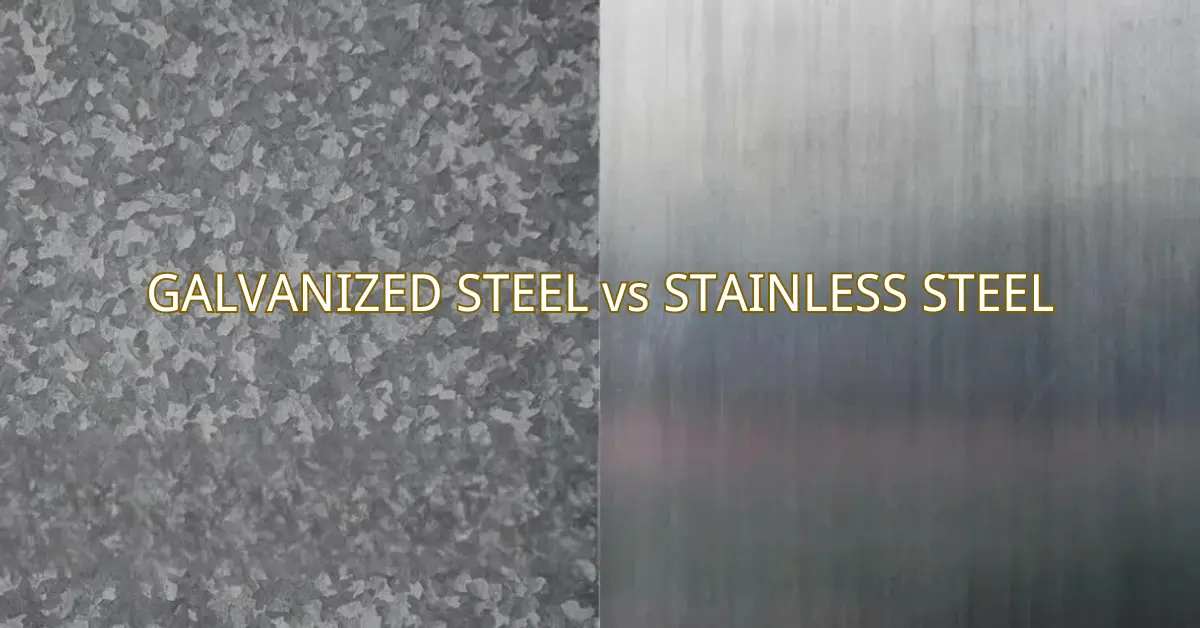
Honyo Prototype Galvanized vs. Stainless Steel Process Integration
Honyo Prototype integrates material selection criteria for galvanized steel and stainless steel at critical decision points within our standardized workflow. Material properties directly influence feasibility, cost, and lead time from initial upload through final delivery. Below is the precise sequence with material-specific considerations.
CAD Upload
Clients must specify material grade in the CAD file metadata or accompanying documentation. For galvanized steel, ASTM A653 G90 or equivalent zinc-coating specifications are required. For stainless steel, grade (e.g., 304, 316), finish (e.g., #4 brushed), and passivation requirements must be declared. Omission triggers an automated query via our portal, delaying the quote phase until resolved.
AI Quote Generation
Our AI engine cross-references material specifications against real-time supplier databases and process constraints. Galvanized steel triggers alerts for laser cutting limitations due to zinc vapor hazards, necessitating plasma or mechanical cutting alternatives. This adds a 5–8% processing surcharge. Stainless steel 316 quotes include molybdenum content costs and potential tariffs, while 304 leverages broader supply chain availability. Corrosion resistance requirements (e.g., ASTM B117 salt spray testing) automatically adjust pricing tiers.
DFM Analysis
Material-driven manufacturability checks occur here. Key divergences include:
| Parameter | Galvanized Steel | Stainless Steel |
|---|---|---|
| Bend Radius | Minimum 2x material thickness | Minimum 3x material thickness (304/316) |
| Welding | Post-weld re-galvanizing required | TIG/MIG with inert gas shielding |
| Surface Treatment | No additional coating needed | Passivation mandatory for corrosion resistance |
| Tolerances | ±0.5mm standard | ±0.2mm achievable with stress relief |
Galvanized steel parts with complex bends or weld seams receive DFM flags for coating integrity risks. Stainless steel designs undergo grain structure analysis to prevent intergranular corrosion in welded zones.
Production Execution
Galvanized steel fabrication uses dedicated cutting lines isolated from stainless to prevent cross-contamination. Zinc fume extraction systems operate at 10,000 CFM during any thermal process. Stainless steel components move to HEPA-filtered clean zones for passivation (ASTM A967) in nitric acid baths, followed by deionized water rinsing. Secondary operations like tapping or countersinking differ: galvanized parts require oversized holes to accommodate coating thickness, while stainless uses coolant-free machining to avoid work hardening.
Delivery & Documentation
Galvanized steel shipments include ASTM A123 coating thickness reports and weld re-coating certificates. Stainless steel orders ship with mill test reports (ASTM A480), passivation validation logs, and RoHS compliance documentation. Lead times differ: galvanized steel averages 12–15 business days due to coating logistics, while stainless steel ranges from 10–18 days depending on grade (316 requiring longer passivation cycles). All deliveries undergo final salt spray verification per client-specified hours (e.g., 500+ hours for marine-grade stainless).
Material selection is not a standalone step but a threaded parameter influencing every phase. Honyo’s system ensures galvanized and stainless steel paths maintain distinct quality gates while adhering to the same delivery framework. Clients receive granular material-specific data in the AI quote to inform early-stage trade-off decisions.
Start Your Project
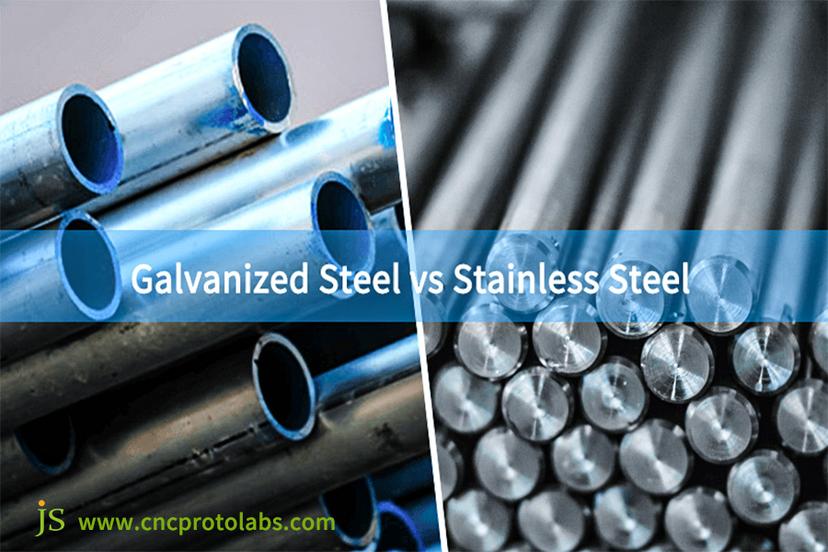
Considering the differences between galvanized and stainless steel for your next project? Understanding material selection is critical for performance, longevity, and cost-efficiency in manufacturing and construction applications.
Galvanized steel offers a cost-effective solution with good corrosion resistance, ideal for outdoor or high-moisture environments when properly coated. Stainless steel provides superior durability, high temperature resistance, and excellent corrosion resistance, making it suitable for demanding environments such as food processing, marine, and medical applications.
At Honyo Prototype, with our manufacturing facility in Shenzhen, we support low to high-volume production with expert material guidance and precision fabrication services. Whether you’re deciding between galvanized or stainless steel for sheet metal components, enclosures, or structural parts, we ensure optimal material pairing based on your application requirements.
For technical consultation or material recommendations, contact Susan Leo at [email protected]. Let us help you make the right choice for performance, compliance, and cost efficiency.
🚀 Rapid Prototyping Estimator
Estimate rough cost index based on volume.