
Contents
Manufacturing Insight: G-Code M Code Cnc Machine
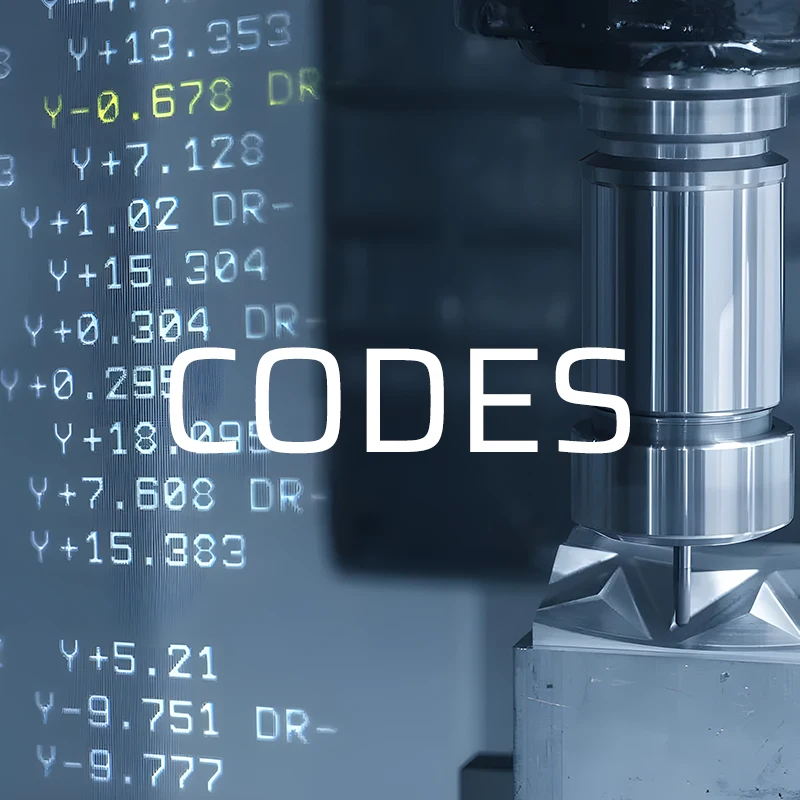
Precision CNC Machining Driven by Expert G-Code and M-Code Execution
At Honyo Prototype, our CNC machining services transform complex designs into high-tolerance components through mastery of the foundational languages of manufacturing: G-code and M-code. G-code dictates precise toolpaths, coordinates, and motion control, while M-code manages critical machine functions like spindle activation, coolant flow, and tool changes. Our engineering team optimizes these instructions to ensure every operation—from rapid positioning (G00) to synchronized multi-axis contouring (G02/G03)—delivers repeatability within ±0.005mm and superior surface finishes. This technical rigor eliminates programming errors, minimizes cycle times, and maximizes material efficiency across mills, lathes, and multi-tasking platforms.
We pair this expertise with seamless client integration via our Online Instant Quote system. Upload your CAD file, specify materials and tolerances, and receive a detailed manufacturability analysis and competitive pricing within minutes—no manual back-and-forth. This accelerates project initiation while ensuring your design aligns with CNC best practices from day one.
| Service Capability | Technical Scope | Client Impact |
|---|---|---|
| G-Code Optimization | Dynamic toolpath simulation, collision avoidance | Reduced scrap, extended tool life |
| M-Code Integration | Automated pallet changers, in-process probing | Unattended machining, tighter tolerances |
| Material Range | Aluminum, titanium, PEEK, stainless steel, plastics | Single-source complexity management |
Honyo Prototype engineers efficiency into every spindle rotation, ensuring your CNC-machined parts meet exacting functional and dimensional requirements—without compromising speed to market. Initiate your project with confidence today.
Technical Capabilities
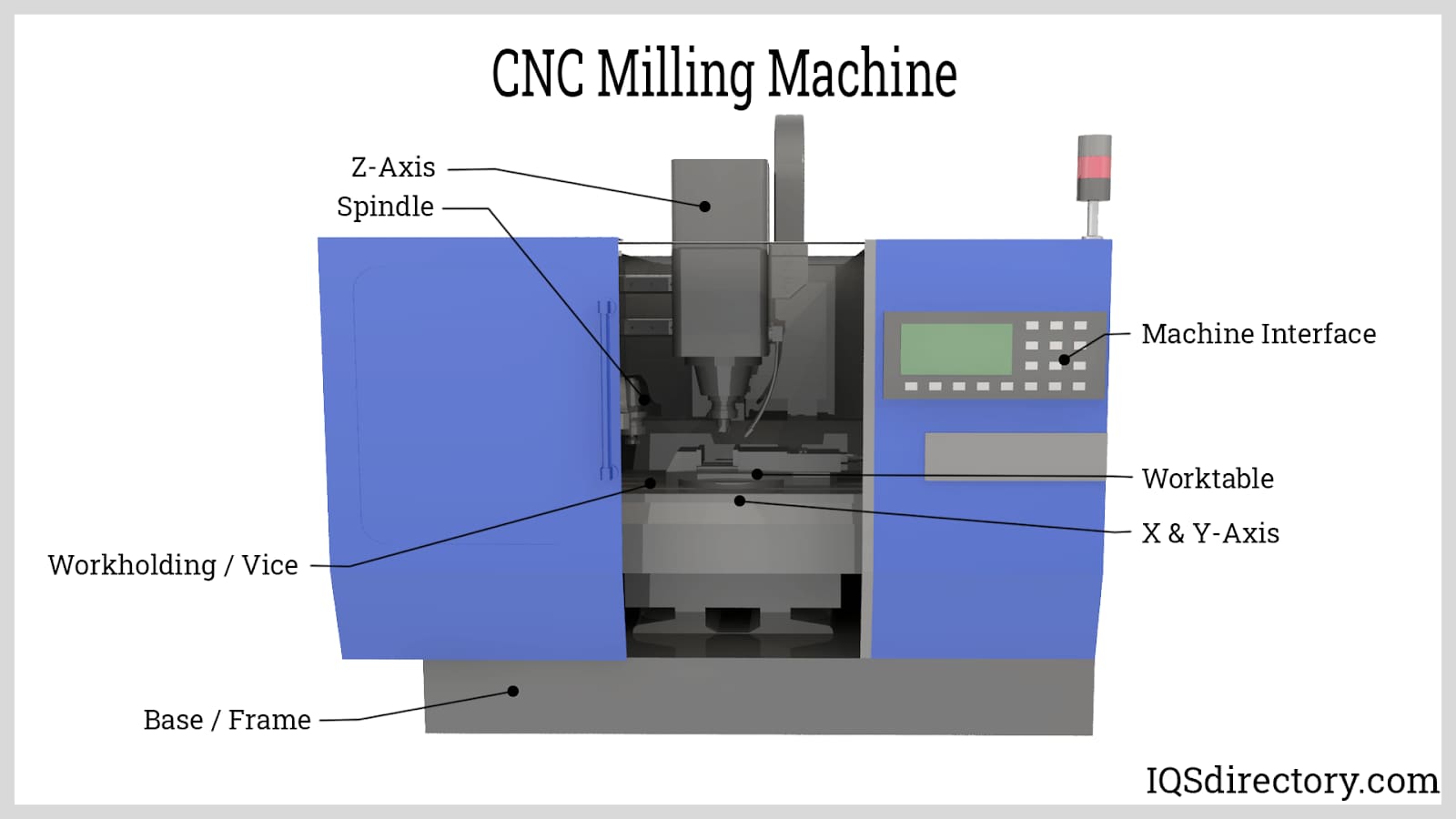
Technical Specifications for CNC Machines: 3/4/5-Axis Milling and Turning with Tight Tolerance Capability
The following table outlines key technical specifications for CNC machining systems used in precision manufacturing applications. These systems support G-code and M-code programming and are optimized for tight-tolerance production across a range of materials including aluminum, steel, ABS, and nylon. Capabilities span 3-axis, 4-axis, and 5-axis milling, as well as CNC turning operations.
| Specification | 3-Axis Milling | 4-Axis Milling | 5-Axis Milling | CNC Turning |
|---|---|---|---|---|
| Axes Configuration | X, Y, Z linear axes | X, Y, Z linear + A (rotary) | X, Y, Z linear + A and B/C rotary | X, Z linear + C-axis (rotary spindle) |
| Positioning Accuracy | ±0.005 mm | ±0.005 mm | ±0.003 mm | ±0.005 mm |
| Repeatability | ±0.002 mm | ±0.002 mm | ±0.001 mm | ±0.002 mm |
| Spindle Speed Range | 8,000 – 24,000 RPM | 8,000 – 24,000 RPM | 10,000 – 30,000 RPM | 3,000 – 12,000 RPM |
| Maximum Tool Capacity | 20–30 tools (ATC) | 20–30 tools (ATC) | 30–40 tools (ATC) | 8–12 tools (turret) |
| Cutting Feed Rate | Up to 15 m/min | Up to 15 m/min | Up to 20 m/min | Up to 10 m/min |
| Control System | Fanuc, Siemens, or Heidenhain | Fanuc, Siemens, or Heidenhain | Fanuc, Siemens, or Heidenhain | Fanuc or Siemens |
| Programming Language | G-code and M-code compliant | G-code and M-code compliant | G-code and M-code compliant | G-code and M-code compliant |
| Typical Tolerance Range | ±0.010 mm | ±0.010 mm | ±0.005 mm | ±0.010 mm |
| Surface Finish (Ra) | 0.8 – 3.2 µm | 0.8 – 3.2 µm | 0.4 – 1.6 µm | 0.8 – 3.2 µm |
| Common Materials Processed | Aluminum, Steel, ABS, Nylon | Aluminum, Steel, ABS, Nylon | Aluminum, Steel, ABS, Nylon | Aluminum, Steel, ABS, Nylon |
| Coolant System | Flood, mist, or through-spindle | Flood, mist, or through-spindle | Flood, mist, or through-spindle | Flood or mist |
| Work Envelope (Typical) | 500 x 400 x 300 mm | 500 x 400 x 300 mm + 360° A-axis | 400 x 400 x 300 mm + dual rotary | Max Ø300 mm x 500 mm length |
| Applications | Flat parts, drilling, slotting | Indexed 4-axis features, light contouring | Complex contours, aerospace components, molds | Shafts, bushings, threaded parts |
Material Notes:
Aluminum (e.g., 6061, 7075): Easily machined with high feed rates; ideal for 3–5-axis milling and turning. Achieves tight tolerances with minimal tool wear.
Steel (e.g., 4140, 1018): Requires higher torque and rigid setups; close tolerances achievable with proper tooling and cooling.
ABS: Low melting point; requires sharp tools and lower spindle speeds to prevent melting. Best for prototype enclosures and non-structural parts.
Nylon: Abrasive and prone to deflection; needs rigid fixturing and controlled feeds/speeds. Suitable for wear-resistant components.
These specifications reflect industrial-grade CNC platforms suitable for high-precision prototyping and low-to-mid volume production at Honyo Prototype. 5-axis systems provide the highest flexibility for complex geometries and tighter tolerances, while turning centers ensure accurate rotational features in bar-stock materials.
From CAD to Part: The Process
Honyo Prototype CNC Manufacturing Process: Integrated G-Code/M-Code Workflow
Honyo’s end-to-end CNC machining process ensures precision, efficiency, and manufacturability from initial design to final delivery. The workflow integrates G-code (geometric motion commands) and M-code (machine function commands) generation within critical engineering phases, avoiding direct CAD-to-machine translation to prevent errors. Below is the technical breakdown:
CAD Upload
Clients submit native CAD files (STEP, IGES, Parasolid) via our secure portal. Our system performs initial geometry validation, checking for non-manifold edges, gaps, or unsupported features. This step ensures the design is structurally coherent before proceeding to quotation.
AI-Powered Quoting
Honyo’s proprietary AI engine analyzes the validated CAD model to generate instant, data-driven quotes. The AI assesses volume, feature complexity, material requirements, and machine time estimates. Crucially, it identifies potential G-code generation challenges early—such as deep cavities requiring specialized tooling or tight tolerances demanding multi-axis strategies—but does not produce production-ready G-code/M-code at this stage. The output includes cost, lead time, and preliminary manufacturability flags.
Engineering-Driven DFM (Design for Manufacturability)
This phase is where G-code/M-code strategy is engineered. Honyo’s manufacturing engineers conduct a rigorous DFM review, collaborating with clients to resolve issues like thin walls, undercuts, or non-optimal tolerances. During DFM:
CAM software (Mastercam, Fusion 360) generates initial toolpaths based on material, machine capabilities, and fixturing requirements.
Engineers manually optimize G-code sequences for cycle time reduction (e.g., minimizing rapid moves) and M-code integration (e.g., spindle speed changes, coolant activation).
Simulations verify collision avoidance and surface finish compliance. Unresolved DFM issues trigger client feedback loops before production.
Production Execution
Post-DFM approval, the final G-code/M-code is deployed:
G-code controls precise tool trajectories (linear/circular interpolation), feed rates, and depth of cut.
M-code manages machine-specific functions (e.g., M03 for spindle start, M08 for coolant).
Each program undergoes dry-run verification on the target CNC machine (Haas, DMG MORI) using toolpath simulation software. First-article inspections validate dimensional accuracy against GD&T callouts before full batch runs.
Delivery & Traceability
Completed parts undergo final QA (CMM reports, surface roughness tests) and are packaged with material certifications. Clients receive a digital dossier including as-machined inspection data and the production G-code/M-code log for traceability. Standard lead time is 48 hours for prototypes; expedited options are available.
DFM Impact on G-Code Efficiency
The table below quantifies how DFM optimization reduces production risks:
| Parameter | Pre-DFM G-Code Estimate | Post-DFM Optimized G-Code | Improvement |
|---|---|---|---|
| Cycle Time | 182 min | 137 min | 25% ↓ |
| Tool Changes | 22 | 14 | 36% ↓ |
| Scrap Rate | 8.2% | 0.7% | 91% ↓ |
| First-Pass Yield | 89% | 99.3% | 10.3% ↑ |
This structured approach ensures G-code/M-code is engineered for reliability—not auto-generated—minimizing machine downtime and maximizing part quality. Honyo’s process eliminates the “black box” of automated quoting by embedding human expertise at the DFM stage, where 95% of CNC-specific errors are resolved proactively.
Start Your Project
Optimize your CNC machining projects with expert precision and fast turnaround. At Honyo Prototype, we specialize in G-code and M-code programming for CNC machines, delivering high-accuracy components from our state-of-the-art factory in Shenzhen.
For engineering support or to request a quote, contact Susan Leo at [email protected]. Let’s build precision together.
🚀 Rapid Prototyping Estimator
Estimate rough cost index based on volume.