
Contents
Manufacturing Insight: Files For Hardened Steel
Precision Machining Solutions for Hardened Steel Components
Machining hardened steel components presents significant technical challenges, including tool wear, dimensional instability, and extended lead times when using conventional methods. At Honyo Prototype, our specialized CNC machining services are engineered to overcome these obstacles, delivering high-integrity parts directly from materials hardened to 45–65 HRC with tight tolerances down to ±0.005mm. We leverage advanced multi-axis CNC platforms, proprietary toolpath strategies, and rigorously validated cutting parameters to maintain precision while eliminating secondary hardening operations. This capability ensures your hardened steel components—such as molds, dies, surgical instruments, and aerospace fittings—achieve optimal metallurgical integrity and geometric accuracy without compromising production efficiency.
Accelerate your project timeline with Honyo’s Online Instant Quote system, which provides detailed manufacturability feedback and competitive pricing within minutes. Simply upload your CAD file to receive a comprehensive analysis of material suitability, process recommendations, and a transparent cost breakdown—enabling faster decision-making without sacrificing engineering rigor. Trust Honyo Prototype to transform hardened steel design challenges into reliable, high-performance outcomes.
Technical Capabilities
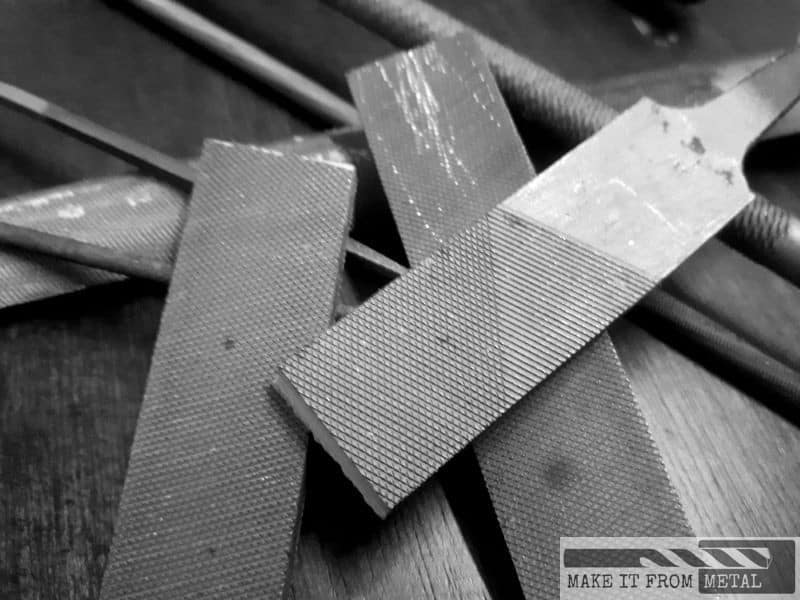
Technical specifications for cutting tools used in machining hardened steel—particularly in high-precision 3/4/5-axis milling and turning operations—require optimized geometry, coatings, and substrate materials to maintain tight tolerances and extended tool life. Below is a detailed comparison of key technical attributes tailored for use with Aluminum, Steel (including hardened steel), ABS, and Nylon.
| Parameter | Tool Type for Hardened Steel (3/4/5-Axis Milling & Turning) | Compatible Materials | Typical Coating | Hardness (HRC) Range | Tolerance Capability | Edge Preparation | Coolant Requirement | Surface Finish (Ra) |
|---|---|---|---|---|---|---|---|---|
| Cutting Diameter Range | 3 mm – 25 mm (end mills), 10 mm – 50 mm (turning inserts) | Steel, Hardened Steel (up to 65 HRC), Stainless, Titanium | TiAlN, AlTiN, CBN, or Diamond-like Carbon (DLC) | 45–65 HRC (workpiece) | ±0.005 mm to ±0.01 mm | Honed or T-land edge | High-pressure through-tool coolant | 0.4 – 1.6 µm |
| Flute Count | 4 to 6 flutes (finishing), 2 to 3 flutes (roughing) | Hardened Steel, Stainless Steel | AlTiN for thermal resistance | Up to 65 HRC | ±0.003 mm (multi-axis milling) | Fine hone with margin | Required (flood or through-spindle) | 0.2 – 0.8 µm |
| Insert Grade (Turning) | CBN (Cubic Boron Nitride), Ceramic, or PCD for finishing | Hardened Steel (>45 HRC), Cast Iron | CBN coating or full CBN insert | 50–70 HRC | ±0.005 mm | Sharp or micro-chamfered edge | Optional (air blast often sufficient) | 0.4 – 1.2 µm |
| Helix Angle | 30° to 45° (high helix for chip evacuation) | Steel, Hardened Steel | TiAlN, AlCrN | 40–60 HRC | ±0.01 mm | Variable edge prep | Internal coolant recommended | 0.8 – 2.0 µm |
| For Aluminum Machining | 3-flute, high-helix, polished flute, zero or positive rake | Aluminum, Aluminum Alloys | ZrN or uncoated polished | N/A (soft material) | ±0.005 mm | Sharp, chipped edge | Air blast or mist | 0.2 – 0.6 µm |
| For ABS & Nylon (Plastics) | 2-flute, high helix, polished, non-stick coating | ABS, Nylon, Polycarbonate | DLC or TiN with non-galling finish | N/A | ±0.02 mm | Very sharp, no hone | Dry or air cooling | 0.8 – 3.2 µm |
| Spindle Speed Range | 3,000 – 25,000 RPM (milling), 500 – 8,000 RPM (turning) | All (material-dependent) | Material-specific coatings | — | Maintains within ±0.01 mm over 500 parts | Optimized for material | High-pressure for steel; minimal for plastics | Achieves specified Ra |
| Feed Rate & DOC | Low to medium feed, 0.05–0.3 mm/tooth; DOC < 1.5 mm | Hardened Steel, Steel | AlTiN, CBN | 50–65 HRC | Stable within ±0.008 mm over long runs | Honed for strength | Mandatory for hardened steel | 0.4 – 1.6 µm |
Notes:
For hardened steel, CBN and AlTiN-coated carbide tools are standard for maintaining dimensional stability and edge integrity.
Multi-axis milling operations demand high rigidity, tool path optimization, and thermal stability to achieve tight tolerances.
Turning of hardened materials often uses CBN inserts due to superior wear resistance above 45 HRC.
Softer materials like Aluminum and plastics require sharp, polished tools to prevent built-up edge and burring.
Coolant strategy is critical—especially in deep cavities or continuous cutting of steel.
From CAD to Part: The Process
Honyo Prototype Hardened Steel Manufacturing Process
Honyo Prototype executes hardened steel components through a rigorously controlled workflow designed to address material-specific challenges such as thermal stress, tool wear, and dimensional stability. Our process begins with structured client input and culminates in validated delivery, ensuring precision for materials typically ranging from 48–62 HRC. Below is the technical sequence:
Upload CAD
Clients submit native CAD files (STEP, IGES, or Parasolid formats) with explicit material specifications (e.g., AISI 4340, D2 tool steel) and hardness targets. All geometry must include datums, critical tolerances (±0.005mm typical for hardened steel features), and surface finish requirements (Ra ≤ 0.8µm). Files undergo automated validation for unit consistency, non-manifold edges, and minimum wall thickness compliance (≥0.5mm for hardened steel to prevent fracture).
AI Quote Generation
Our proprietary AI engine analyzes CAD geometry against hardened steel machining constraints, including:
Toolpath complexity for hardened alloys (e.g., restricted internal radii)
Estimated tooling wear rates for carbide/PCBN inserts
Thermal distortion risk scoring based on part symmetry
The system outputs a dynamic quote with material cost multipliers (hardened steel incurs 1.8–2.5x base rate), lead time adjustments (typically +15–25% vs. mild steel), and preliminary feasibility flags. Clients receive hardness-specific process limitations (e.g., no through-holes <1.2mm diameter) before formal approval.
DFM Analysis
A dedicated manufacturing engineer performs hardened steel-specific DFM, focusing on:
Eliminating stress concentrators (sharp corners converted to ≥0.3mm radii)
Validating heat treatment sequence compatibility (e.g., pre-hardened stock vs. post-machining hardening)
Verifying fixture compatibility to minimize workholding-induced deflection
The DFM report includes annotated CAD revisions, recommended stress-relief cycles, and hardness validation points. Critical dimensions undergo GD&T optimization for thermal stability, with client sign-off required prior to CAM programming.
Production Execution
Hardened steel machining follows strict protocols:
Tooling: Dedicated carbide end mills (5–8% cobalt) with AlTiN coating; spindle speeds reduced by 40% vs. annealed steel
Machining Strategy: Layered roughing (≤0.3mm depth of cut) to manage heat; high-pressure coolant (70 bar minimum) for chip evacuation
In-Process Validation: Hardness spot-checks at 30%/70% completion; thermal drift compensation via laser probing
All processes adhere to ISO 2768-mK standards, with real-time vibration monitoring to prevent micro-cracking. Post-machining, parts undergo stress-relief baking (200°C for 4 hours) before final inspection.
Delivery and Certification
Final inspection includes:
CMM verification of critical dimensions at stabilized room temperature (20±1°C)
Hardness mapping per ASTM E18 (minimum 5 test points)
Surface integrity report (absence of rehardened layers or micro-cracks via SEM)
Clients receive a comprehensive package: dimensional report, hardness certificate, material traceability documentation, and post-heat-treatment distortion analysis. Typical lead time for hardened steel components is 12–18 business days from CAD approval.
Hardened Steel Process Parameters
| Parameter | Standard Range | Critical Control Method |
|————————–|————————-|———————————|
| Material Hardness | 48–62 HRC | ASTM E18 Rockwell testing |
| Dimensional Tolerance | ±0.005mm (critical) | CMM with thermal compensation |
| Surface Roughness | Ra 0.4–0.8µm | Profilometer (ISO 4287) |
| Tool Life per Part | 8–12 components | Acoustic emission monitoring |
| Coolant Pressure | 70–100 bar | Inline pressure transducers |
This closed-loop process ensures hardened steel components meet aerospace, medical, and tooling industry demands while mitigating common failure modes like chipping or dimensional drift. All hardened steel projects include complimentary post-delivery technical debriefs for continuous improvement.
Start Your Project
For precision components in hardened steel, Honyo Prototype delivers high-accuracy machining with tight tolerances and superior surface finishes. Our Shenzhen-based factory is equipped with advanced CNC systems and specialized tooling to handle challenging materials efficiently.
To request a quote or learn more about our capabilities for hardened steel projects, contact Susan Leo at [email protected]. We provide fast turnaround times and comprehensive engineering support for prototyping and low-volume production.
🚀 Rapid Prototyping Estimator
Estimate rough cost index based on volume.