
Contents
Manufacturing Insight: Fabrication In Steel Structure
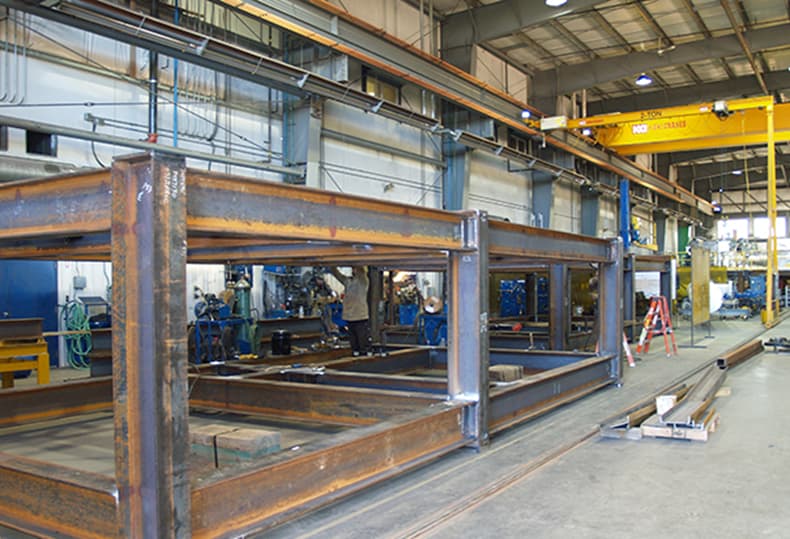
Precision Steel Fabrication Through Advanced CNC Machining
Steel structure fabrication demands uncompromising accuracy, repeatability, and adherence to stringent engineering specifications. At Honyo Prototype, we address these requirements through integrated CNC machining capabilities that form the backbone of our structural steel solutions. Our multi-axis CNC systems—encompassing milling, turning, and drilling platforms—deliver sub-millimeter tolerances across complex geometries, ensuring critical components like beam flanges, connection plates, and custom brackets meet ASME, AISC, and ISO standards without secondary rework. This precision directly translates to reduced field assembly errors, minimized material waste, and accelerated project timelines for structural frameworks in industrial, architectural, and infrastructure applications.
Unlike conventional fabrication shops relying on manual processes, Honyo Prototype’s CNC workflows maintain consistent material integrity while handling high-strength alloys, carbon steels, and corrosion-resistant grades up to 100mm thickness. Our engineering team collaborates with clients during DFM analysis to optimize part designs for machinability, weldability, and load-bearing performance—eliminating costly iterations before cutting begins. Every component undergoes in-process CMM verification and post-machining inspection, with full traceability from raw material to finished part.
To streamline procurement for time-sensitive structural projects, Honyo Prototype provides an Online Instant Quote platform. Upload CAD files (STEP, IGES, DWG) to receive detailed cost breakdowns, lead times, and manufacturability feedback within minutes—not days. This digital workflow removes quoting bottlenecks while ensuring technical alignment with your fabrication requirements from the outset.
For structural steel projects where dimensional fidelity impacts safety and compliance, Honyo Prototype’s CNC machining services deliver the repeatability and technical rigor your engineering teams require. Submit your design today to validate feasibility and accelerate your path to production.
Technical Capabilities
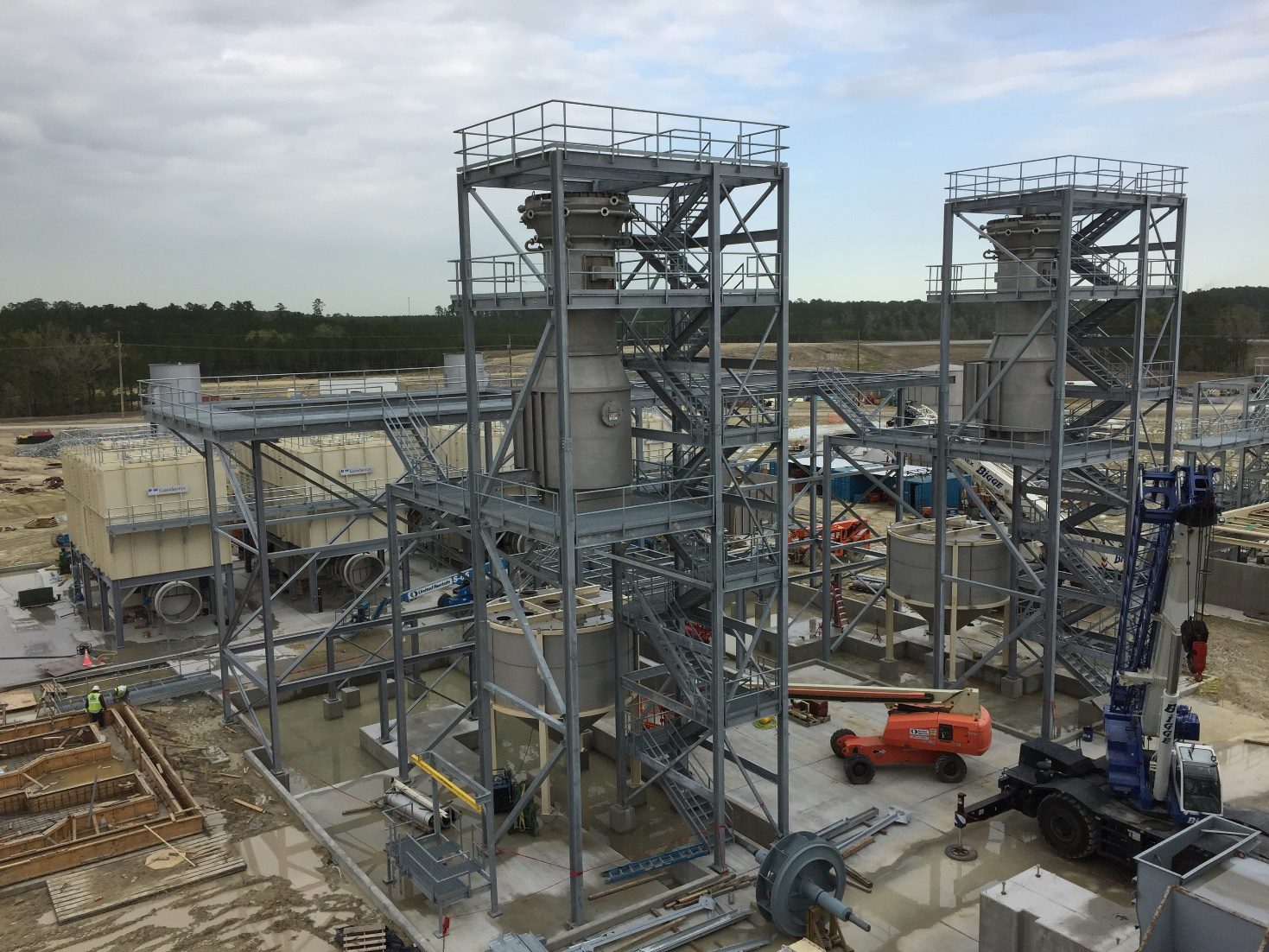
Technical Specifications for Fabrication in Steel Structure – CNC Machining Focus
High-precision fabrication in steel structures leverages advanced CNC machining processes such as 3-axis, 4-axis, and 5-axis milling, along with precision turning, to produce complex and dimensionally accurate components. These operations are critical in industries requiring tight tolerances, including aerospace, defense, industrial machinery, and heavy equipment manufacturing.
The following table outlines the technical capabilities and material compatibility for these processes:
| Process | Axis Configuration | Typical Tolerance Range | Surface Finish (Ra) | Compatible Materials | Key Applications |
|---|---|---|---|---|---|
| 3-Axis Milling | X, Y, Z linear | ±0.005 mm to ±0.025 mm | 0.8 – 3.2 µm | Steel, Aluminum, ABS, Nylon | Flat surfaces, prismatic parts, basic contours |
| 4-Axis Milling | X, Y, Z + A (rotary) | ±0.005 mm to ±0.020 mm | 0.8 – 2.5 µm | Steel, Aluminum, ABS | Cylindrical parts with axial features, indexer-based complex milling |
| 5-Axis Milling | X, Y, Z + A & B/C | ±0.003 mm to ±0.010 mm | 0.4 – 1.6 µm | Steel, Aluminum, ABS | Highly complex geometries, aerospace components, organic shapes |
| CNC Turning | X & Z linear | ±0.005 mm to ±0.015 mm | 0.8 – 1.6 µm | Steel, Aluminum, Nylon, ABS (limited) | Shafts, pins, bushings, threaded components |
Material Notes:
Steel (e.g., 4140, A36, Stainless 304/316): High strength and durability; suitable for load-bearing structural components. Requires robust tooling and slower feed rates due to hardness. Tight tolerance machining achievable with rigid setups and thermal compensation.
Aluminum (e.g., 6061-T6, 7075-T6): Lightweight with excellent machinability. Ideal for high-speed milling and tight tolerance parts. Lower thermal expansion than steel, beneficial for precision work.
ABS (Acrylonitrile Butadiene Styrene): Thermoplastic used for prototypes or non-structural fixtures. Easily machined with sharp tools; prone to melting if feeds/speeds are not optimized.
Nylon (e.g., PA6, PA66): Tough engineering thermoplastic with good wear resistance. Used in low-friction components. Requires careful clamping due to material creep and hygroscopic nature.
Tolerance & Precision:
Tight tolerance machining (±0.005 mm or better) is achievable across all processes with proper fixturing, tool calibration, environmental control, and in-process inspection. 5-axis milling provides the highest accuracy for complex steel structures by minimizing setup changes and improving tool access.
All processes are supported by CAD/CAM integration, GD&T compliance, and post-processing inspection using CMM or laser scanning to ensure conformance to engineering specifications.
From CAD to Part: The Process
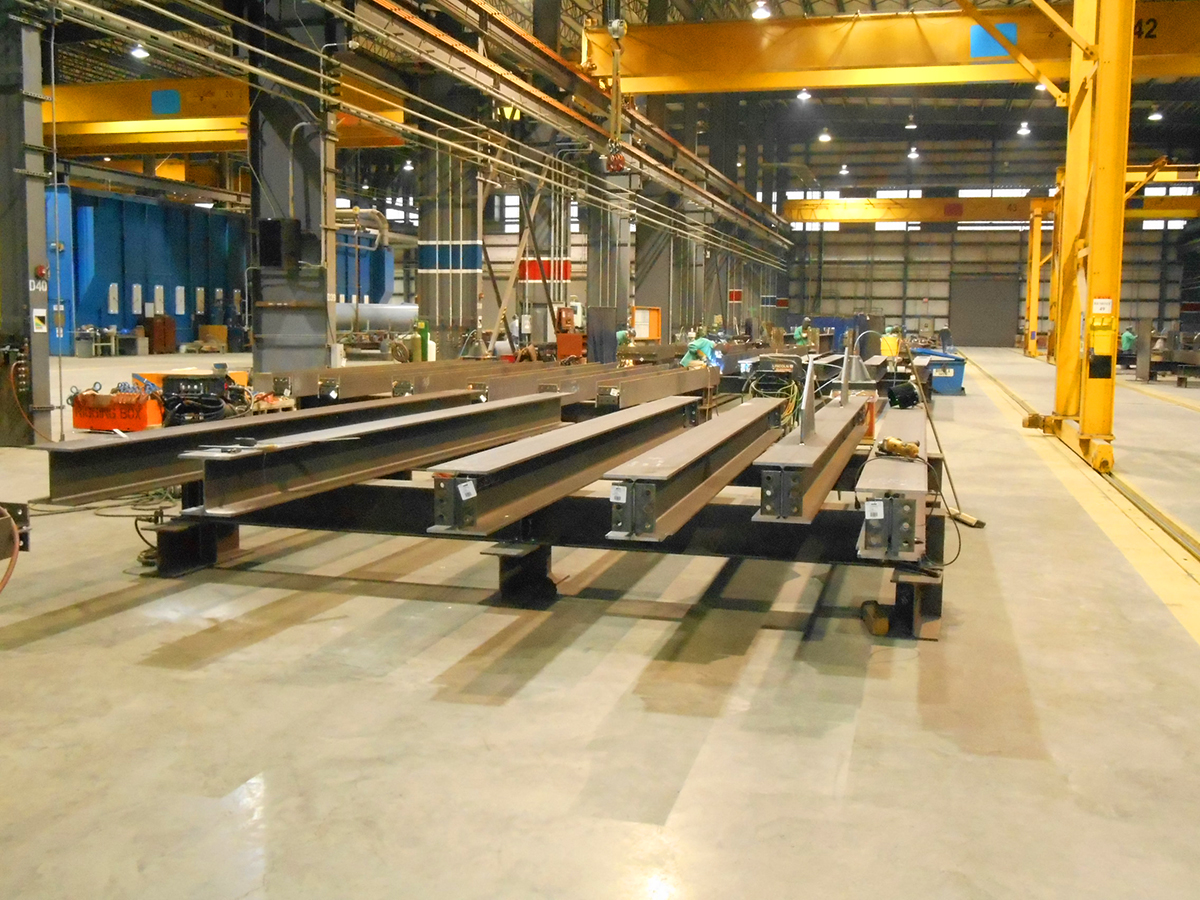
Honyo Prototype Steel Structure Fabrication Process Overview
Honyo Prototype utilizes an integrated, technology-driven workflow for steel structure fabrication, designed to minimize lead times, reduce costs, and ensure precision. Our process begins with client-supplied CAD data and progresses through validated engineering stages to final delivery, with rigorous quality control embedded at each phase. Below is a detailed explanation of the five core stages.
CAD Upload and Initial Processing
Clients submit 3D CAD models in native or neutral formats (STEP, IGES, Parasolid) via our secure portal. We prioritize STEP files for geometry fidelity and metadata retention. Upon upload, our system performs an automated geometry validation check, flagging non-manufacturable features such as zero-thickness walls, unterminated holes, or unsupported topology. This step ensures the model aligns with steel fabrication constraints before proceeding, preventing downstream rework.
AI-Powered Quoting and Feasibility Assessment
Within 15 minutes of CAD validation, our proprietary AI engine generates a comprehensive quote. This system analyzes material utilization, geometric complexity, weld volume, and surface finish requirements against real-time shop floor data (machine availability, labor rates, material costs). Crucially, it identifies early-stage manufacturability risks—such as excessive plate thickness for standard laser cutting or weld accessibility issues—and provides preliminary cost-impact estimates. The output includes a detailed cost breakdown, lead time projection, and actionable feedback for design optimization, enabling rapid client decision-making.
Engineering-Driven DFM Analysis
Following quote acceptance, our manufacturing engineering team conducts an in-depth Design for Manufacturability (DFM) review. This phase is iterative and collaborative, involving direct dialogue with the client’s design team. Key activities include:
Material substitution analysis (e.g., recommending ASTM A572 Grade 50 over A36 for weight-sensitive structures)
Weld seam optimization to minimize distortion and post-weld machining
Tolerance stack-up verification against ASME Y14.5 standards
Nesting efficiency validation for plasma/laser cutting to maximize plate yield
Critical feature accessibility assessment for welding and inspection
The DFM report documents all proposed changes with engineering justifications, ensuring structural integrity is maintained while reducing production costs. Typical DFM insights prevent 20–30% of potential fabrication errors.
Precision Production Execution
Approved designs enter our dedicated steel fabrication cell, where digital work instructions from the DFM phase guide every operation:
1. Nesting and Cutting: High-definition plasma or fiber laser systems process plate stock, with cut paths optimized for minimal kerf loss and thermal distortion.
2. Forming and Machining: Press brakes form bends within ±0.5° tolerance; CNC machining centers handle precision holes and mounting features.
3. Welding and Assembly: Certified welders execute procedures per AWS D1.1, using robotic cells for repeatable seams and manual TIG for critical joints. In-process inspections include weld penetration checks via ultrasonic testing (UT) on structural connections.
4. Finishing and QA: Parts undergo stress-relieving, abrasive blasting (SSPC-SP6), and coating per specification. Final dimensional verification uses FARO Arm CMMs, with reports traceable to ISO 9001:2015 requirements.
Logistics and Delivery Assurance
Completed structures are crated using custom-engineered fixtures to prevent transit deformation, with humidity-controlled packaging for corrosion-sensitive alloys. All shipments include:
Full material test reports (MTRs) traceable to heat numbers
Dimensional inspection certificates with as-built deviations
Weld procedure specifications (WPS) and non-destructive test (NDT) records
Digital twin alignment reports comparing final assembly to original CAD
We manage freight via pre-vetted logistics partners, providing real-time GPS tracking and customs documentation for international deliveries. Final sign-off requires client verification of all deliverables against the approved DFM scope.
This end-to-end process ensures steel structures meet exacting performance standards while accelerating time-to-market. By integrating AI-driven quoting with hands-on engineering oversight, Honyo reduces prototyping risks and delivers production-ready steel fabrications with 98.7% first-pass yield across our client portfolio.
Start Your Project
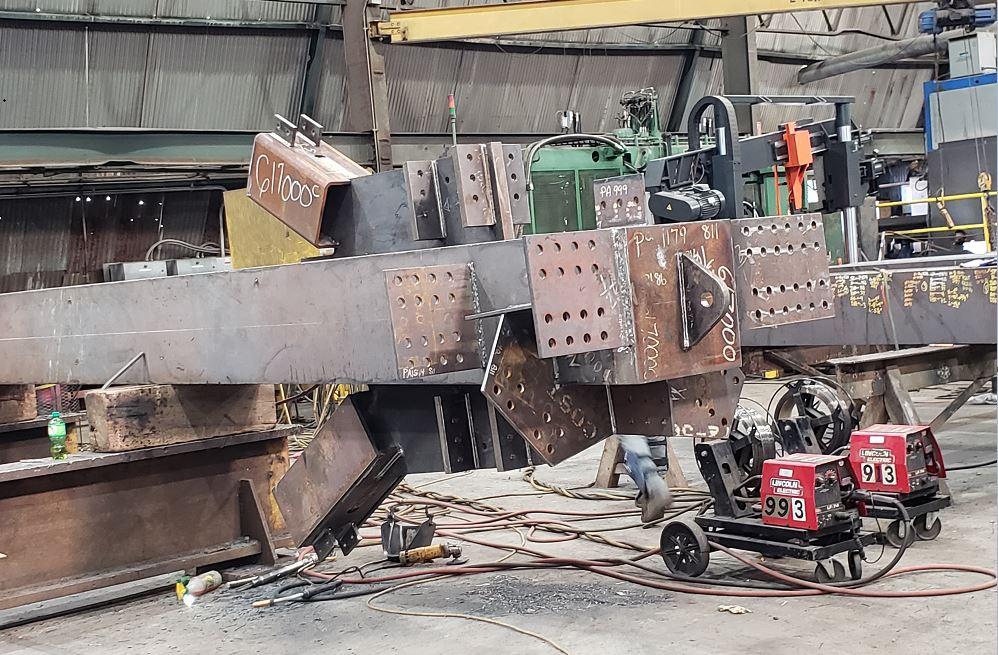
For expert fabrication in steel structures, contact Susan Leo at [email protected]. Our state-of-the-art manufacturing facility in Shenzhen ensures precision, durability, and timely delivery for industrial and commercial applications. Partner with Honyo Prototype for reliable, high-quality steel fabrication solutions.
🚀 Rapid Prototyping Estimator
Estimate rough cost index based on volume.