
Contents
Manufacturing Insight: Fabricating Stainless Steel
Precision Stainless Steel Fabrication: Engineered for Demanding Applications
Stainless steel remains a cornerstone material for industries requiring corrosion resistance, structural integrity, and longevity—from medical devices and aerospace components to semiconductor tooling and fluid handling systems. However, its inherent properties, including work hardening tendencies and thermal conductivity challenges, demand advanced machining expertise to achieve tight tolerances and superior surface finishes without compromising material integrity. At Honyo Prototype, we specialize in high-precision CNC machining of austenitic, ferritic, and duplex stainless steel grades, leveraging state-of-the-art 3-, 4-, and 5-axis milling and turning centers to transform complex designs into mission-critical components.
Our end-to-end manufacturing process integrates rigorous material certification, in-process metrology, and post-machining validation to ensure every part meets stringent ASME, ASTM, and customer-specific requirements. We routinely hold tolerances to ±0.0002″ while maintaining surface finishes down to Ra 8 μin, critical for applications where leakage prevention or biocompatibility is non-negotiable. Unlike generalist shops, Honyo’s engineers optimize toolpaths, cutting parameters, and fixturing specifically for stainless steel’s unique behavior, minimizing cycle times and eliminating costly rework.
Accelerate your development timeline with Honyo’s Online Instant Quote platform. Upload your STEP or IGES file, specify material grade (e.g., 304, 316L, 17-4 PH), and receive a detailed manufacturability analysis with competitive pricing within minutes—not days. This transparency empowers engineering teams to iterate faster, validate cost drivers early, and transition seamlessly from prototype to low-volume production without supply chain delays.
Partner with Honyo Prototype to overcome the complexities of stainless steel fabrication. Our commitment to precision, speed, and technical collaboration ensures your components perform reliably in the most demanding environments. Initiate your project today and experience how engineered excellence drives your success.
Technical Capabilities
Fabricating stainless steel components using advanced CNC machining processes such as 3-axis, 4-axis, and 5-axis milling, along with precision turning, enables the production of high-accuracy parts for demanding industrial, medical, and aerospace applications. These processes are also applicable to other materials including aluminum, steel (carbon and alloy), ABS, and nylon, each with distinct machinability characteristics. Tight tolerance capabilities are critical in achieving repeatability and performance in end-use environments.
Below is a comparative technical specification table outlining key parameters across materials and machining methods:
| Parameter | Stainless Steel (304/316) | Aluminum (6061-T6) | Carbon/Alloy Steel (A36/4140) | ABS (Acrylonitrile Butadiene Styrene) | Nylon (PA6/PA66) |
|---|---|---|---|---|---|
| Typical Machining Process | 3/4/5-axis milling, turning | 3/4/5-axis milling, turning | 3/4/5-axis milling, turning | 3-axis milling, routing | 3-axis milling, turning |
| Spindle Speed Range (RPM) | 800 – 4,000 | 2,000 – 10,000 | 600 – 3,500 | 8,000 – 15,000 | 1,500 – 5,000 |
| Feed Rate (in/min) | 5 – 20 | 10 – 50 | 4 – 18 | 100 – 300 | 15 – 40 |
| Tooling Material | Carbide, coated carbide, ceramic | Carbide, diamond-coated | Carbide, HSS | Carbide, diamond-coated | Carbide |
| Coolant Requirement | Flood coolant or high-pressure | Mist or flood coolant | Flood coolant | Not required (air blow recommended) | Not required (air cooling) |
| Typical Tolerance (±) | ±0.0002″ (5 µm) | ±0.0005″ (13 µm) | ±0.0003″ (8 µm) | ±0.005″ (127 µm) | ±0.001″ (25 µm) |
| Surface Finish (Ra, µin) | 16 – 32 (standard), down to 8 with polishing | 16 – 32 (standard), down to 8 | 32 – 63 (standard), down to 16 | 63 – 125 | 32 – 63 |
| Chatter Sensitivity | High (due to work hardening) | Low | Moderate | Low | Moderate |
| Part Complexity Capability | High (5-axis enables undercuts, contours) | High (excellent for complex geometries) | High (limited by material hardness) | Moderate (best for simple shapes) | Moderate (thermal deformation risk) |
| Common Applications | Medical instruments, aerospace, food processing | Aerospace, automotive, enclosures | Industrial machinery, tooling | Prototypes, jigs, low-stress parts | Gears, bushings, wear components |
Notes:
Precision stainless steel fabrication demands optimized toolpaths, rigid setups, and in-process inspection to maintain tight tolerances, especially in multi-axis configurations. 5-axis milling reduces setup次数 and enables complex organic shapes, while turning is ideal for symmetric cylindrical components. Materials like ABS and nylon require reduced cutting forces and proper chip evacuation due to lower thermal resistance. Aluminum offers the best surface finish and highest material removal rates, whereas stainless steel requires slower speeds and specialized tooling to prevent galling and work hardening.
From CAD to Part: The Process
Honyo Prototype executes stainless steel fabrication through a rigorously integrated digital workflow designed for speed, accuracy, and manufacturability. Our process begins when a client uploads native CAD files (STEP, IGES, or native SOLIDWORKS formats preferred) to our secure portal. The system performs immediate automated geometry validation, checking for critical issues like non-manifold edges, missing radii, or unit inconsistencies that could derail production. Invalid files trigger instant notifications with specific error diagnostics, preventing downstream delays.
The validated CAD model enters our proprietary AI-driven quoting engine. This system cross-references the geometry against real-time databases covering stainless steel grade availability (304L, 316L, 17-4PH standard), current raw material costs, machine capacity loads, and historical process parameters. Crucially, the AI performs a preliminary DFM analysis during quoting, identifying potential high-cost features such as excessive tight tolerances (<±0.05mm), thin walls (<0.8mm), or complex undercuts requiring secondary operations. The generated quote includes not only cost and lead time but also actionable DFM recommendations with cost-impact analysis.
Upon quote acceptance, the project transitions to formal DFM engineering review. Our manufacturing engineers conduct a deep-dive analysis using advanced simulation tools, focusing on stainless steel-specific challenges: thermal distortion during welding, work hardening during machining, and optimal grain structure preservation. We provide detailed feedback on feature modifications—such as adjusting fillet radii to reduce stress concentrations or suggesting alternative fastening methods to avoid tapping 316L—and validate all critical dimensions against ASME Y14.5 standards. This phase typically resolves 95% of manufacturability issues before cutting metal.
Production leverages our certified ISO 9001 facility with dedicated stainless steel workcells. CNC machining occurs on HAAS and DMG MORI centers with corrosion-resistant tooling and coolant systems to prevent iron contamination. Critical parameters are monitored in real-time:
| Process | Key Stainless Steel Parameters | Quality Control Method |
|---|---|---|
| CNC Milling | Spindle speed < 800 RPM for 316L, Peck depth control | In-process CMM probing, surface roughness testing (Ra ≤ 0.8µm) |
| Laser Cutting | Nitrogen assist gas purity >99.99%, kerf compensation | Optical comparator for edge squareness |
| TIG Welding | Argon back-purge, interpass temp <150°C | Dye penetrant testing, weld bead profilometry |
All parts undergo mandatory passivation per ASTM A967 and final inspection against the original CAD model using Zeiss CMMs. Dimensional reports and material certs (including PMI verification) are auto-generated.
Delivery is managed through our integrated logistics platform. Parts ship in anti-static, humidity-controlled packaging with serialized traceability tags. Standard lead time is 7-10 business days from CAD approval, with expedited 72-hour options for critical path components. Every shipment includes digital documentation accessible via client portal: first-article inspection reports, process validation records, and compliance certificates for aerospace (AS9100) or medical (ISO 13485) applications where applicable. This closed-loop system ensures stainless steel components meet stringent industry requirements while minimizing time-to-part.
Start Your Project
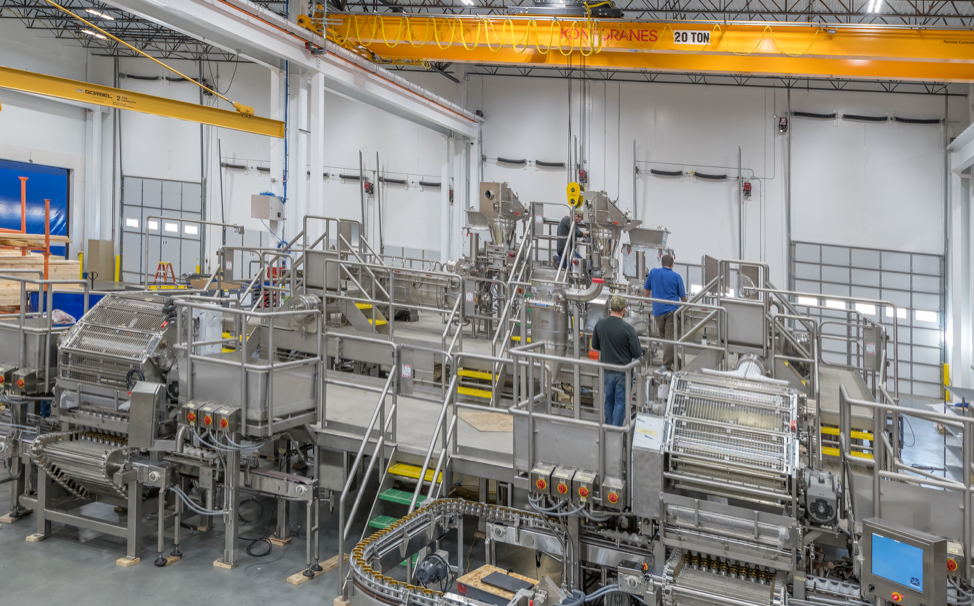
Looking for precision fabrication of stainless steel components? Partner with Honyo Prototype for high-quality manufacturing solutions tailored to your specifications. Our state-of-the-art facility in Shenzhen ensures efficient production with strict quality control, ideal for prototypes and low-to-mid volume runs.
Contact Susan Leo today to discuss your project requirements.
Email: [email protected]
Factory Location: Shenzhen, China
Let us help you bring your designs to life with reliable, cost-effective stainless steel fabrication.
🚀 Rapid Prototyping Estimator
Estimate rough cost index based on volume.