
Contents
Manufacturing Insight: Fabricated Aluminum Parts
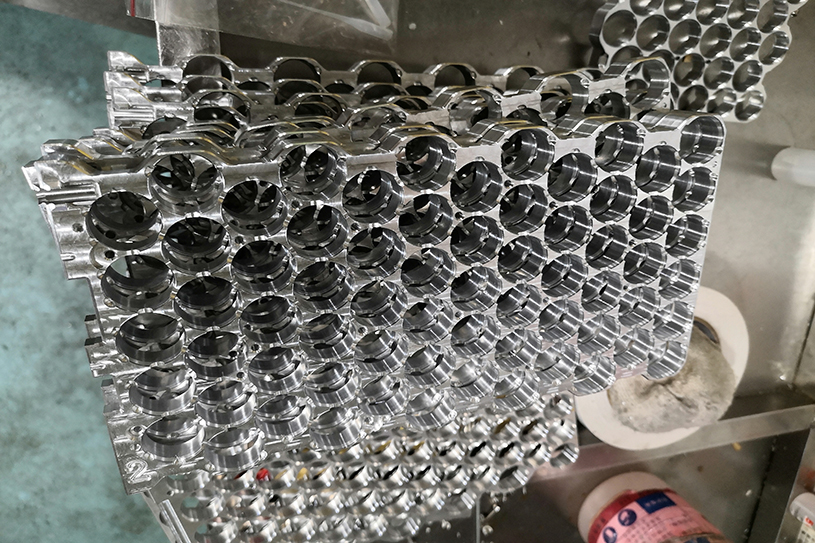
Fabricated Aluminum Parts Precision Engineered for Performance
Honyo Prototype delivers mission-critical fabricated aluminum components through advanced CNC machining services tailored for demanding industrial applications. Our expertise spans complex geometries in aerospace, defense, and medical sectors where material integrity and dimensional accuracy are non-negotiable. Utilizing state-of-the-art 3-, 4-, and 5-axis CNC milling and turning centers, we achieve tight tolerances down to ±0.0005 inches across key aluminum alloys including 6061-T6, 7075-T6, and 2024-T3. This precision is reinforced by integrated secondary operations such as anodizing, bead blasting, and custom finishing—all executed under one roof to eliminate supply chain variables and accelerate time-to-assembly.
We understand that prototyping and low-volume production cycles demand agility without compromising quality. Honyo’s streamlined workflow begins with material certification traceability and concludes with first-article inspection reports compliant with AS9102 and ISO 9001 standards. To further reduce your development timeline, our Online Instant Quote system provides real-time pricing and lead time estimates within minutes of uploading CAD files. This transparent, no-wait quoting process empowers engineering teams to iterate faster and make data-driven sourcing decisions—without navigating manual RFQ delays.
Submit your CAD model today to experience how Honyo’s CNC machining precision transforms aluminum fabrication from a production step into a strategic advantage.
Technical Capabilities
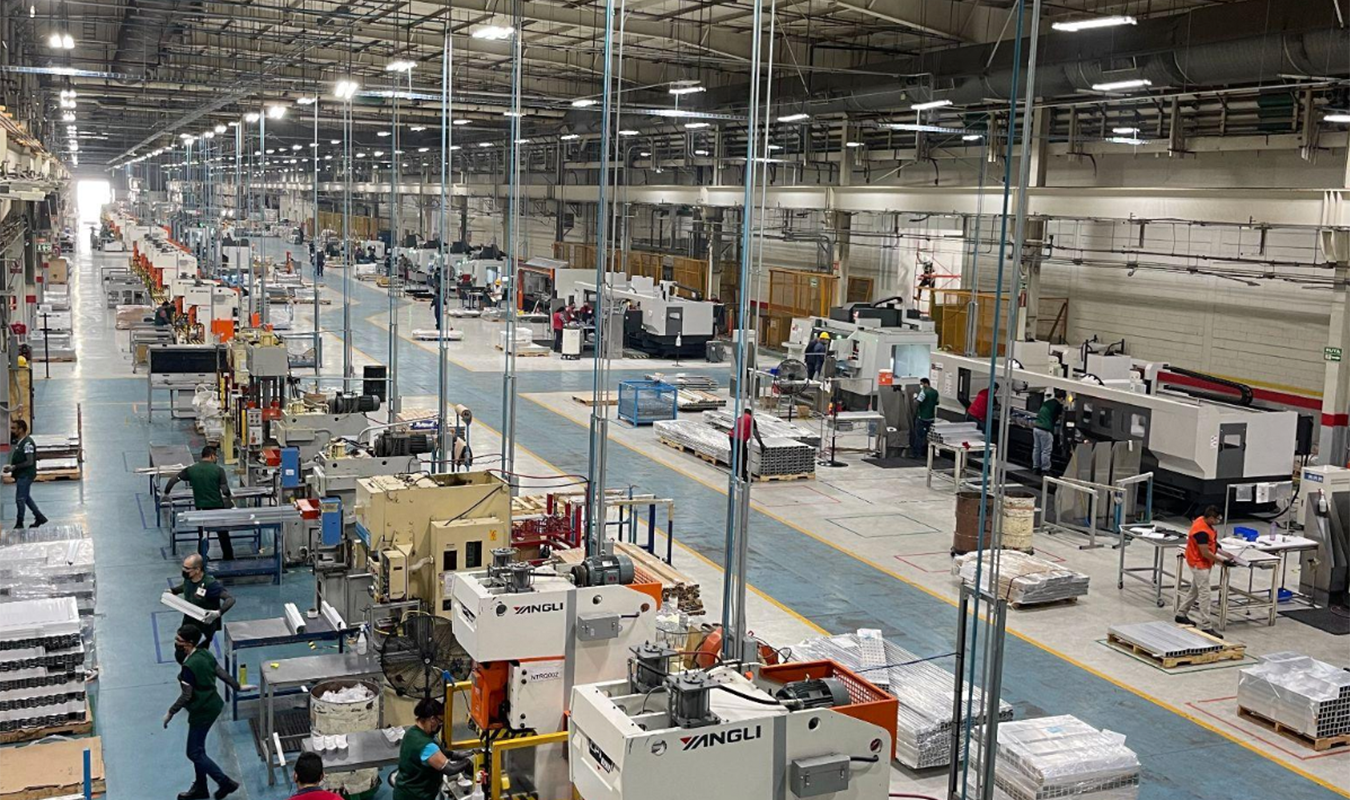
Fabricated aluminum parts produced through 3, 4, and 5-axis CNC milling, along with precision turning, are engineered for high accuracy, complex geometries, and tight tolerance requirements. These processes are commonly used in aerospace, medical, defense, and industrial applications where dimensional consistency and surface finish are critical. While aluminum is the primary material due to its favorable strength-to-weight ratio and machinability, other materials such as steel, ABS, and nylon are also processed using the same equipment for varied functional requirements.
The following table outlines the technical specifications and capabilities for fabricated parts using multi-axis CNC milling and turning:
| Parameter | 3-Axis Milling | 4-Axis Milling | 5-Axis Milling | CNC Turning | Notes |
|---|---|---|---|---|---|
| Primary Materials | Aluminum (6061, 7075, 2024) | Aluminum (6061, 7075, 2024) | Aluminum (6061, 7075, 2024) | Aluminum, Steel (4140, 12L14), ABS, Nylon | Material selection based on application requirements |
| Secondary Materials | Steel, ABS, Nylon | Steel, ABS, Nylon | Steel, ABS, Nylon | Limited engineering plastics | ABS and nylon suitable for non-structural, low-friction, or prototype components |
| Tolerance Capability | ±0.005″ (±0.13 mm) | ±0.003″ (±0.076 mm) | ±0.001″ (±0.025 mm) | ±0.001″ (±0.025 mm) | Tight tolerance achievable with proper fixturing and process control |
| Repeatability | ±0.002″ | ±0.0015″ | ±0.001″ | ±0.0005″ | High repeatability ensured via calibrated tooling and inspection |
| Surface Finish (Typical) | 32–125 μin | 32–64 μin | 16–32 μin | 16–64 μin | As-machined; post-processing available |
| Max Work Envelope (X×Y×Z) | 24″ × 18″ × 12″ | 20″ × 16″ × 10″ | 18″ × 12″ × 10″ | Ø16″ × 20″ length | Varies by machine configuration |
| Axis Configuration | X, Y, Z | X, Y, Z + Rotary (A-axis) | X, Y, Z + Two Rotary (A/B or A/C) | X, Z (+ C-axis for milling) | 5-axis enables simultaneous multi-face machining |
| Tooling | High-speed steel, carbide | Carbide with live tooling | Carbide, high-precision | Carbide inserts, live tools | Coolant-through tooling for thermal control |
| Inspection Tools | CMM, Micrometers, Calipers | CMM, Optical Comparator | CMM, Laser Scanning | CMM, Bore Gauges | Full first-article and in-process inspection |
| Applications | Brackets, housings | Indexable components | Aerospace structural parts | Shafts, fittings, bushings | Suitable for prototyping and low-to-mid volume production |
These capabilities allow Honyo Prototype to deliver fabricated aluminum and other material components with precision, consistency, and rapid turnaround. Tight tolerance machining is supported by environmental controls, tool wear monitoring, and adherence to AS9100 and ISO 9001 quality standards.
From CAD to Part: The Process
Honyo Prototype Fabricated Aluminum Parts Process Overview
Honyo Prototype executes a streamlined, technology-integrated workflow for fabricated aluminum parts, ensuring precision, efficiency, and traceability from initial design to final delivery. This process leverages AI augmentation while maintaining critical human engineering oversight, specifically optimized for aluminum alloys such as 6061-T6, 7075-T6, and 5052-H32.
Upload CAD
Customers initiate the process by uploading native or neutral CAD files (STEP, IGES, Parasolid, or native SOLIDWORKS/Creo formats) via Honyo’s secure customer portal. The system validates file integrity, confirms geometric completeness, and performs preliminary material compatibility checks against aluminum fabrication constraints. All data is encrypted in transit and at rest per ISO 27001 standards, with customer IP strictly protected under NDA.
AI-Assisted Quoting
Honyo’s proprietary AI engine analyzes the CAD geometry, material specifications, and customer-provided requirements to generate an initial cost and timeline estimate within minutes. This AI layer cross-references real-time machine availability, material costs, and historical production data from Honyo’s 200+ CNC machining, bending, welding, and finishing cells. Crucially, all AI outputs undergo immediate validation by a dedicated manufacturing engineer who adjusts parameters for aluminum-specific factors like thermal distortion during welding, anodizing allowances, or secondary operation sequencing. The customer receives a formal quotation with detailed cost breakdowns and lead time commitments within 4 business hours.
DFM Analysis and Collaboration
Upon quote acceptance, Honyo’s engineering team conducts a rigorous Design for Manufacturability (DFM) review focused on aluminum fabrication best practices. This phase includes:
Evaluating bend radii against material thickness to prevent cracking in alloys like 7075
Assessing weld joint accessibility and recommending optimal joint types (e.g., TIG for aerospace-grade 6061)
Identifying opportunities to consolidate features and reduce secondary operations
Verifying tolerances against achievable standards for machined/bent aluminum (typically ±0.005″ for critical features)
Proposing cost-saving material substitutions where feasible (e.g., 5052 for non-structural marine components)
The DFM report is shared via secure portal with annotated CAD markups, and a joint engineering review call is scheduled to finalize the manufacturable design.
Production Execution
Approved designs move to Honyo’s climate-controlled fabrication floor with dedicated aluminum processing zones to prevent cross-contamination. Key production stages include:
Material Verification: Certificates of Conformance (CoC) and batch traceability for all aluminum stock
Precision Machining: 3-5 axis CNC milling/turning with coolant systems optimized for aluminum swarf management
Forming: Press brake operations with coining techniques to maintain tight bend tolerances
Joining: TIG/MIG welding per AWS D1.2 standards, with helium shielding for critical aerospace parts
Finishing: Deburring, anodizing (Type II or III), or powder coating in Honyo’s in-house facility
Real-time in-process inspections occur at each stage using calibrated CMMs and optical comparators, with first-article inspection reports (FAIR) provided per AS9102 for aerospace clients.
Delivery and Traceability
Completed parts undergo final dimensional validation against the original CAD model and customer specifications. Honyo ships via tracked logistics partners with temperature- and humidity-controlled options for sensitive finishes. Every shipment includes:
Certified material test reports (MTRs)
Dimensional inspection reports (including SPC data)
Process validation records (weld logs, anodizing thickness measurements)
Unique serialized part traceability linking to raw material lot numbers
Delivery timelines are rigorously maintained through Honyo’s production control system, with proactive notifications for any potential delays. Standard lead time for fabricated aluminum prototypes is 7–12 business days from DFM sign-off, depending on complexity.
This integrated approach ensures Honyo delivers fabricated aluminum components that meet stringent industry requirements while minimizing time-to-market and eliminating manufacturability risks through proactive engineering collaboration.
Start Your Project
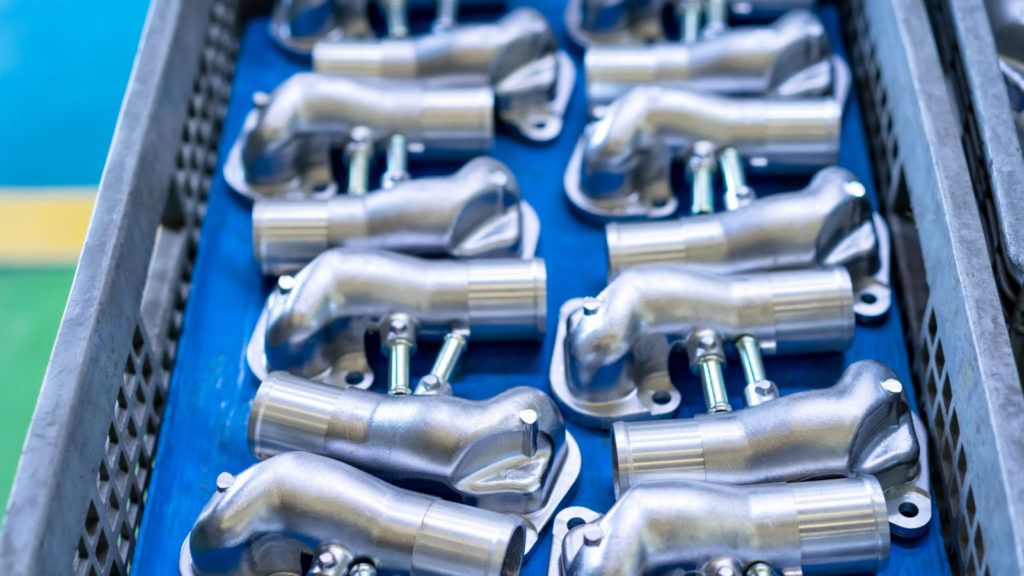
Looking for high-quality fabricated aluminum parts? Partner with Honyo Prototype for precision manufacturing and fast turnaround. Our state-of-the-art facility in Shenzhen ensures strict quality control and scalable production to meet your project demands.
Contact Susan Leo at [email protected] to discuss your next project and get a competitive quote.
🚀 Rapid Prototyping Estimator
Estimate rough cost index based on volume.