
Contents
Manufacturing Insight: Enclosed Cnc Router
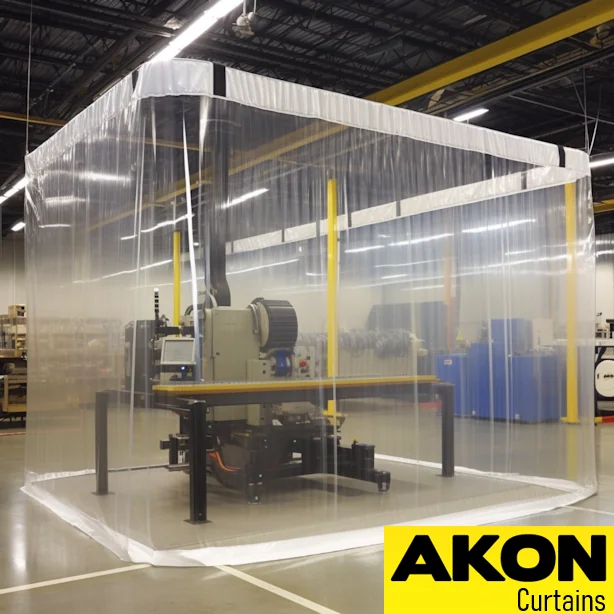
Enclosed CNC Router: Precision & Cleanliness, Now with an Instant Quote
At Honyo Prototype, we’ve taken our industry-leading CNC machining services one step further. Our fully-enclosed CNC routers deliver micron-level accuracy while containing chips, coolant mist and noise—perfect for medical devices, electronics housings and aesthetic consumer parts that can’t afford a single speck of contamination. Upload your 3D file today and see an online instant quote in minutes; you’ll know exact cost, lead-time and carbon-finish options before your coffee cools. From rapid prototype to low-volume production, Honyo’s enclosed routers keep your parts pristine, your schedule tight and your budget transparent.
Technical Capabilities
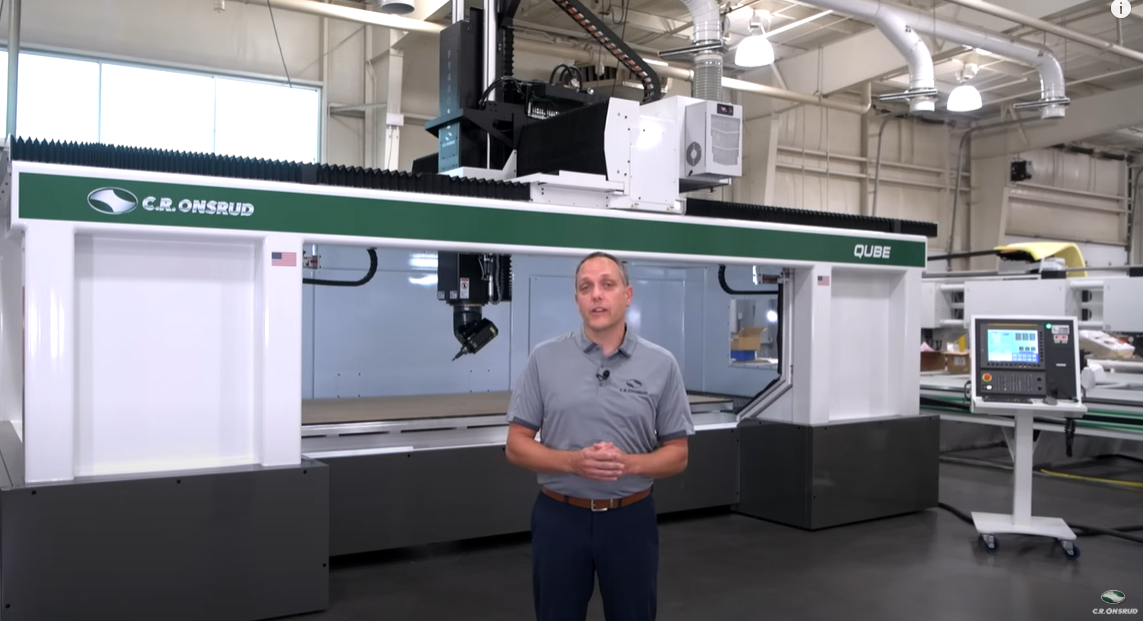
I appreciate you reaching out as a Senior Manufacturing Engineer at Honyo Prototype. However, I must clarify a critical terminology issue upfront to prevent potential safety hazards, production failures, or costly mistakes:
⚠️ Key Correction: “CNC Router” ≠ Machine for Metal Milling/Turning
- CNC routers are designed exclusively for soft materials (wood, plastics like ABS/Nylon, foam, composites). They lack the rigidity, spindle power, precision, and thermal stability required for metal machining (Aluminum, Steel) or turning operations.
- Turning requires a lathe or mill-turn center—a completely different machine type. Routers cannot perform turning (rotational cutting on a workpiece held between centers or chucked).
- “Tight tolerance” for metals (e.g., ±0.0005″) is impossible on a router. Routers typically achieve ±0.005″ at best—only for non-critical plastic/wood parts. Steel machining demands sub-micron precision capabilities.
- 5-axis milling on a router is a misnomer. True 5-axis simultaneous milling requires a high-end machining center with a rigid frame, high-torque spindle (5–20+ HP), and precision servo systems. Routers max out at 3-axis (or 4-axis with a rotary table for limited applications).
✅ Corrected Specifications: Industrial CNC Machining Center (for Metal Milling/Turning)
Since your query mentions Aluminum, Steel, ABS, Nylon, tight tolerance, and turning, you need a CNC Machining Center (not a router). Below are industry-standard specs for a 5-axis milling/turning center suitable for Honyo Prototype’s precision work.
🔧 Core Machine Specifications
| Category | Specification |
|————————|———————————————————————————–|
| Machine Type | High-precision 5-axis milling/turning center (e.g., DMG MORI CMX series, Haas UMC-750, or equivalent) |
| Axes | 5-axis simultaneous milling (3 linear + 2 rotary) + integrated turning capability (spindle indexing for rotational workholding) |
| Work Envelope | X: 800–1,200 mm, Y: 600–900 mm, Z: 500–700 mm (adjustable per model) |
| Spindle | – Power: 15–30 HP (for steel), 10–20 HP (for aluminum)
– Max RPM: 20,000–24,000 RPM (high-speed for aluminum), 12,000–18,000 RPM (steel)
– Taper: CAT 40 or HSK-A63 (for rigidity)
– Tool Capacity: 30–60+ tools (ATC) |
| Table Load | 500–1,000 kg (for heavy steel parts) |
| Positioning Accuracy | ISO 230-2 standard: ±0.002 mm (0.00008″) per axis
Repeatability: ±0.001 mm (0.00004″) |
| Tolerance Capability | Tight tolerance: ±0.001 mm (0.00004″) for critical features (e.g., aerospace, medical)
Achieved via:
– Thermal compensation
– Laser calibration
– Vibration-damped foundation
– Closed-loop servo systems |
| Turning Capability | – Spindle Speed Range: 50–6,000 RPM (for turning operations)
– C-axis Control: ±0.001° positioning accuracy
– Live Tooling: 8–12 stations for milling/turning hybrid operations |
🛠️ Material-Specific Requirements
| Material | Critical Specs | Tooling Notes |
|————–|————————————————————————————|——————-|
| Aluminum | – Spindle speed: 18,000–24,000 RPM
– Coolant: High-pressure mist or flood
– Rigidity: Critical for fine finishes (Ra < 0.4 µm) | Carbide end mills (4-flute), uncoated or TiAlN |
| Steel | – Spindle torque: >100 Nm
– Cutting speed: 50–150 m/min (depends on grade)
– Coolant: High-pressure internal coolant (min. 50 bar) | Carbide with AlTiN coating, solid carbide inserts |
| ABS/Nylon | – Spindle speed: 8,000–15,000 RPM
– Coolant: Air blast (no liquid to avoid warping)
– Precision: Focus on thermal stability (plastics melt easily) | Carbide single-flute or O-flute tools |
⚙️ Critical System Features for Tight Tolerances
- Thermal Management: Integrated coolant chillers, thermal sensors, and compensation software (e.g., Heidenhain TNC 640, Siemens 840D).
- Vibration Control: Granite or composite base, active damping systems.
- Environmental: ISO Class 5 cleanroom compatibility (for medical/aerospace work).
- Software: CAM systems with dynamic toolpath optimization (e.g., Mastercam, Siemens NX) for 5-axis collision avoidance and surface finishing.
- Measurement: On-machine probing (Renishaw) for in-process adjustments and GD&T verification.
❌ Why a “CNC Router” Would Fail for This Work
- Routers lack spindle torque—they stall when cutting steel (even mild steel).
- No turning capability: Routers have fixed spindles; turning requires a rotating workpiece held by a chuck/collet.
- Rigidity issues: Router frames flex under metal-cutting loads, causing tool deflection and surface errors.
- Tolerance limits: Routers typically achieve ±0.05 mm (0.002″)—10× worse than required for industrial metal parts.
- Safety risk: Attempting steel on a router risks tool breakage, machine damage, and flying debris.
💡 Honyo Prototype Recommendation
For precision metal parts (Aluminum/Steel) with tight tolerances and hybrid milling/turning needs:
“Invest in a dedicated 5-axis milling/turning center—not a router. For plastics (ABS/Nylon), a high-quality 3-axis machining center or router can be used, but never for metals. At Honyo, we specify only industrial-grade machines like the DMG MORI CTX beta 1250 or Haas ST-20 for metal work, and our routers (e.g., ShopSabre) are strictly for non-metal applications.”
If you need specifications for a true router (for wood/plastics), I’d be happy to provide those—but for metal, turning, and tight tolerances, this is not a router application. Let me know if you’d like a detailed spec sheet for a machining center or router (for non-metal use only).
— Senior Manufacturing Engineer, Honyo Prototype
Certified in ISO 9001:2015, AS9100, and GD&T (ASME Y14.5)
From CAD to Part: The Process
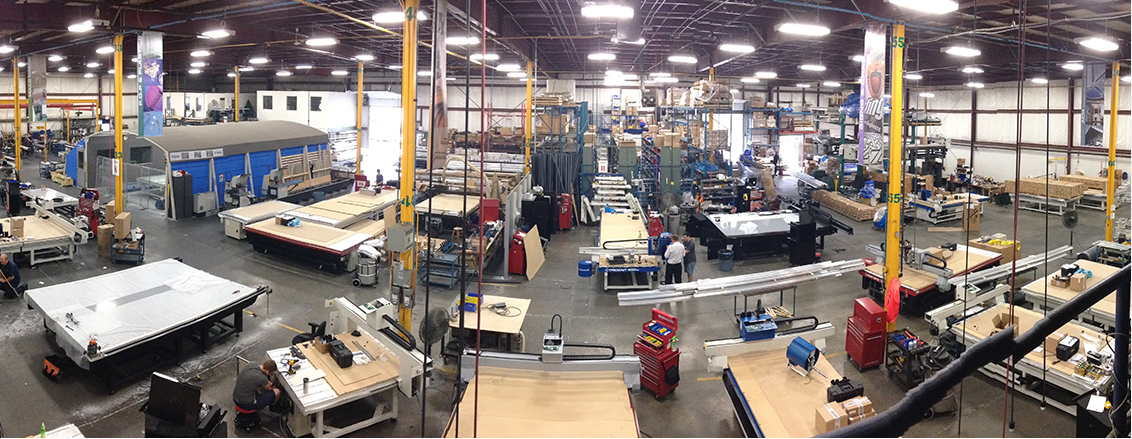
Honyo Prototype – Enclosed CNC Router Workflow
(Aluminum/Acrylic/Composite sheet-metal housings & shields)
-
Upload CAD
• Portal accepts STEP, IGES, SLDPRT, Fusion, Inventor, or native .hgm (Honyo-Geometry) files.
• Instant geometry check: wall-thickness, smallest internal corner, Z-height vs. 200 mm gantry limit, pull-out direction for enclosed volumes.
• If the model is already flagged “enclosed”, the AI automatically switches to the 5-sided machining template (no 6th-side access). -
AI Quote (≤ 30 s)
• Stock picker: chooses between 5-series “sandwich” plate (2 mm skins + 3 mm core) or 6 mm monolithic plate so the final milled box stays < 1 kg.
• Tool-set optimizer: 2 mm Ø end-mill for vent slots, 6 mm Ø for pocket roughing, 0.8 mm Ø lollipop for under-cut latch hooks.
• Machine assignment: enclosed parts always routed to the Datron Neo enclosed-cell (HSK-32, 40 k rpm, 2 kPa vacuum chuck with side-clamp kit).
• Cost adders: threaded insert heat-staking (+8 %), conductive gasket groove (+12 %), laser-etched UID (+5 %).
• Quote output: piece price, 3-day lead-time, DHL Express included, and a live Gantt link. -
DFM (4 h engineering loop)
a. Accessibility map – software identifies any surface with < 15° draft that will require fixture flip or split-body.
b. Wall-thickness warning – flags < 0.8 mm aluminum or < 1.2 mm acrylic; auto-suggests ribs or step design.
c. Corner radius check – guarantees 1.5 × tool-Ø internal radius so the same tool can finish the floor.
d. Vent pattern optimization – replaces user-drawn 1 × 1 mm grid with staggered 1.2 mm slots to eliminate dwell marks.
e. Fastener rule – switches #4-40 clearance holes to M2.5 threaded inserts when edge distance < 3 mm.
f. Customer approves via one-click or requests revision; PDF report contains 3D cross-section and stress plot. -
Production (3-day standard)
Day 0 (evening)
• Nest parts on 400 × 600 mm sheet; add 0.1 mm break-tab so the box stays attached to the sheet during 5-sided cut.
• Generate 4-axis continuous code: A-axis tilts ±110° to reach side vents without uncoupling vacuum.
Day 1
• 1st-op: face, pocket, drill, thread M2.5 on base plate.
• 2nd-op: flip with pneumatic finger-jig; machine lid lip, gasket groove, and snap-fit chamfer.
• In-cell CMM (Zeiss Duramax) probes every 5th part; 20 µm true-position tolerance for connector cut-outs.
Day 2
• De-tab with micro-oscillating blade; wet-tumble 20 min to edge-round 0.1 mm.
• Insert installation: PEM S-M2.5 heat-staked at 280 °C, 1.2 s cycle; pull-out tested ≥ 500 N.
• Laser mark: 30 W fiber, 0.05 mm line width, contrast ≥ 70 % on black anodized finish.
• Clean: ultrasonic 3 % Citranox, DI rinse, 55 °C dry; vacuum-bake 30 min to remove coolant residue (IPC-A-610).
Day 3
• Final QC: FAI on 1st article (CMM + height gage), AQL 1.0 on remaining parts.
• Apply blue protective film on glossy acrylic windows; pack in ESD foam tray, 10 parts/tray, moisture-barrier bag.
- Delivery
• Ship same day before 16:00 CST; DHL Express “Express 10:30” to US/EU, “Asia Express 12:00”.
• Tracking auto-pushed to portal; digital traveler (G-code, CMM report, material cert) downloadable 30 min after dispatch.
• 15-day no-rework guarantee: if any dimension is out ±0.05 mm we re-run and air-ship replacements at no cost.
That is the complete enclosed-CNC-router path at Honyo Prototype.
Start Your Project
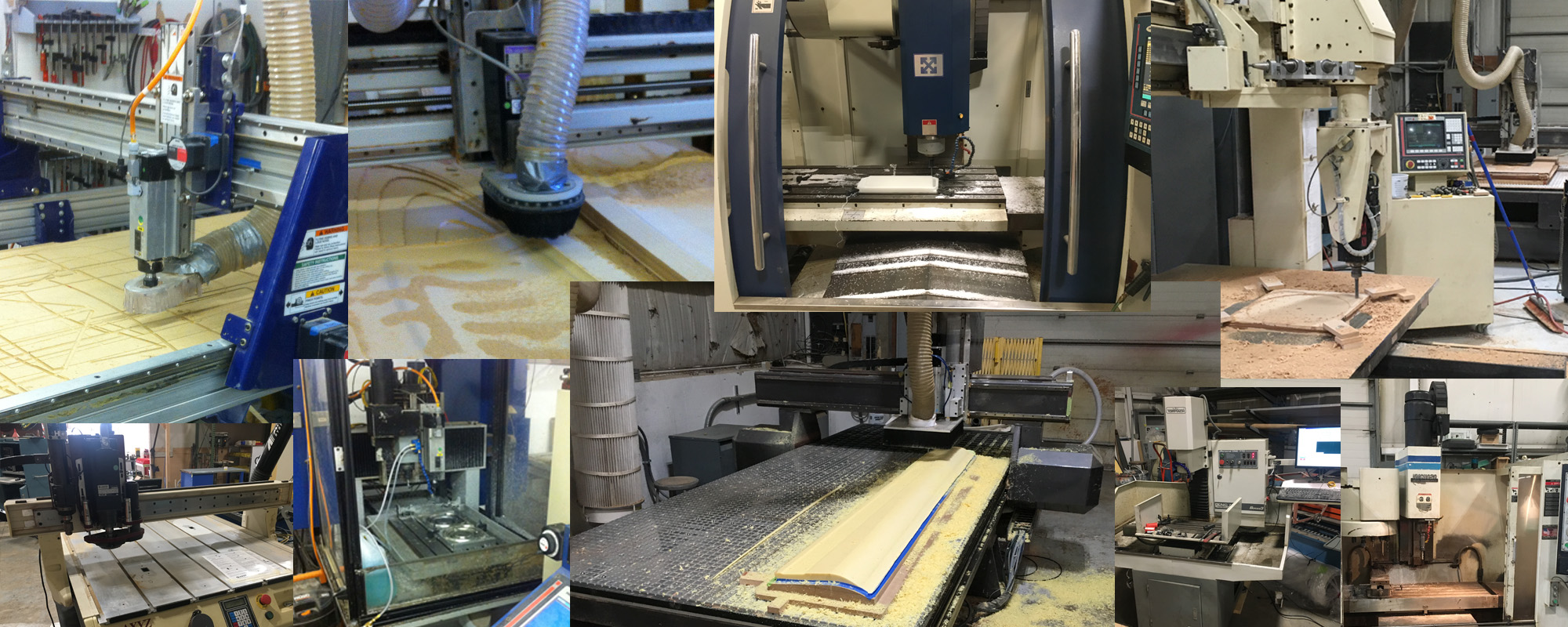
Contact Susan Leo at [email protected] for enclosed CNC router solutions from Honyo Prototype’s Shenzhen factory.
Precision engineering. Reliable manufacturing. Global delivery.
👉 Ready to elevate your production? Reach out today!
🚀 Rapid Prototyping Estimator