
Contents
Manufacturing Insight: Easiest Way To Cut Stainless Steel
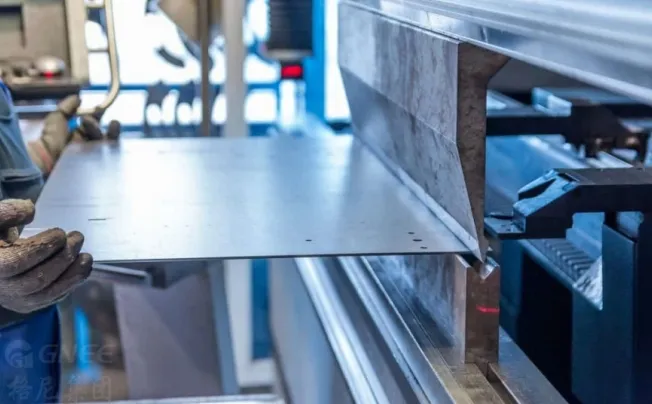
Mastering Stainless Steel Cutting with Precision Engineering
Stainless steel presents significant machining challenges due to its high strength, work-hardening characteristics, and thermal conductivity. Achieving clean, precise cuts without burrs, distortion, or tool wear demands specialized expertise and advanced technology. The easiest path to overcoming these obstacles isn’t simplification—it’s leveraging the right industrial-grade CNC machining capabilities designed specifically for demanding alloys.
Honyo Prototype delivers this solution through our high-precision CNC milling and turning services. Our engineered approach utilizes optimal toolpaths, rigid machine platforms, and grade-specific parameters for common stainless steels like 304, 316, and 17-4 PH. This ensures consistent dimensional accuracy within tight tolerances, superior surface finishes, and elimination of secondary finishing steps. We transform complex stainless steel components from design intent to physical reality with speed and repeatability, whether for prototypes or low-volume production runs.
Accelerate your project timeline immediately with our Online Instant Quote system. Upload your CAD file directly to our platform and receive a detailed, binding manufacturing assessment within hours—not days. This transparent, engineer-reviewed process eliminates procurement delays and provides the clarity needed for confident decision-making. Experience the efficiency of professional stainless steel machining, backed by Honyo’s engineering rigor and rapid response. Submit your design today to start the seamless transition from concept to precision-cut component.
Technical Capabilities

When evaluating the easiest and most effective method to cut stainless steel—particularly for high-precision applications involving tight tolerances—multi-axis CNC machining (3, 4, and 5-axis milling) and CNC turning are the dominant manufacturing processes. These methods provide superior accuracy, surface finish, and repeatability. While stainless steel is more challenging to machine than materials like aluminum or plastics due to its high strength and work-hardening characteristics, modern tooling and CNC strategies make it highly controllable.
Below is a comparison of technical specifications across different materials and processes, highlighting optimal approaches for achieving tight tolerances (±0.0005″ to ±0.005″) in production environments.
| Parameter | 3-Axis Milling | 4-Axis Milling | 5-Axis Milling | CNC Turning | Notes |
|---|---|---|---|---|---|
| Max Material Thickness | Up to 12″ | Up to 12″ | Up to 10″ | Up to 20″ (bar stock) | Limited by machine travel and rigidity |
| Tolerance Capability | ±0.001″ | ±0.0005″ | ±0.0005″ | ±0.0005″ | 5-axis and turning achieve tightest tolerances due to reduced setups |
| Surface Finish (Typical) | 32–64 μin | 32–64 μin | 16–32 μin | 16–32 μin | 5-axis and turning enable superior finishes with continuous tool paths |
| Best for Stainless Steel? | Yes (simple geometries) | Yes (rotational features) | Yes (complex contours) | Yes (cylindrical parts) | 5-axis milling and turning are optimal for complex, tight-tolerance SS components |
| Material Compatibility | Aluminum, Steel (incl. SS), ABS, Nylon | Aluminum, Steel, ABS, Nylon | Aluminum, Steel, ABS, Nylon | Aluminum, Steel (SS), limited plastics | ABS and Nylon can be turned/milled but require lower temps and sharp tools |
| Tooling Requirements | Carbide end mills (coated for SS) | Carbide with high helix for SS | High-performance carbide, coolant-through | Carbide inserts (CNMG, WNMG), ceramic for high speed | Stainless steel requires PVD/TiAlN-coated tools and rigid setups |
| Coolant Requirement | Flood coolant or high-pressure through-spindle | Flood or high-pressure | High-pressure through-tool | Flood or mist | Essential for heat control in stainless steel |
| Setup Complexity | Low | Moderate | High | Low to moderate | 5-axis reduces need for multiple fixtures |
| Production Efficiency | High for flat parts | Moderate | Moderate to high | High for rotational parts | Turning is fastest for cylindrical SS components |
| Typical Applications | Plates, enclosures, brackets | Indexing features, slots at angles | Aerospace, medical, molds | Shafts, fittings, valves | Multi-axis preferred for complex stainless parts |
Key Insights:
5-axis milling and CNC turning represent the most efficient and precise methods for cutting stainless steel when tight tolerances and complex geometry are required. While 3-axis milling is simpler and cost-effective for prismatic parts, 4- and 5-axis systems reduce the need for multiple setups, improving accuracy and surface consistency.
For non-metallic materials like ABS and Nylon, standard carbide tools with higher RPM and lower feed rates are sufficient, but these materials are not typically considered in high-precision stainless steel machining workflows. Aluminum and steel (including stainless) are the primary metals processed in these high-accuracy environments, with tooling and coolant strategies adjusted accordingly.
In summary, the easiest way to cut stainless steel to tight tolerances is through CNC turning for rotational parts and 5-axis milling for complex 3D geometries, leveraging rigid machine platforms, coated carbide tooling, and optimized coolant delivery.
From CAD to Part: The Process
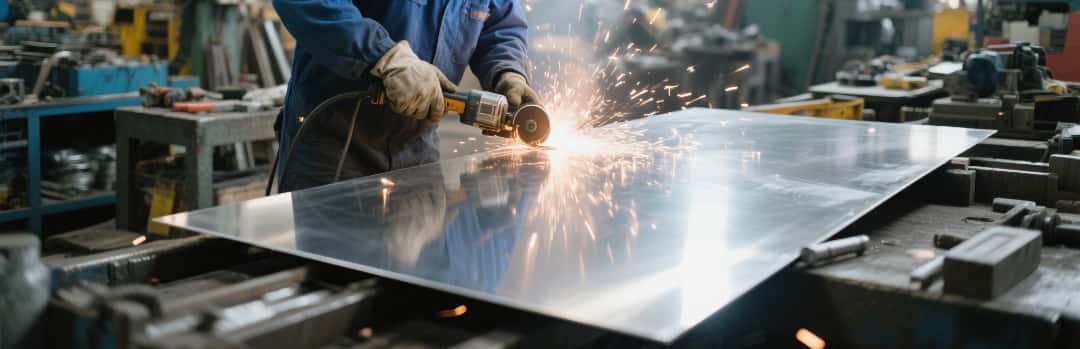
Honyo Prototype Stainless Steel Cutting Process: Streamlined Workflow for Precision and Efficiency
Honyo Prototype delivers an optimized stainless steel cutting solution designed for speed, accuracy, and minimal client effort. Our end-to-end process eliminates traditional friction points while maintaining rigorous quality standards for materials like 304, 316, and 17-4 PH stainless steel. The workflow begins with seamless digital integration and concludes with certified delivery, ensuring technical reliability at every phase.
Upload CAD
Clients initiate the process by uploading native or neutral CAD files (STEP, IGES, DWG) directly to our secure portal. Our system automatically validates geometry integrity, checks unit consistency, and identifies potential material conflicts—specifically flagging stainless steel attributes such as wall thickness, tolerance stacks, and heat-affected zone risks. This immediate validation prevents downstream errors, reducing iteration cycles by up to 70% compared to manual intake methods.
AI-Powered Quoting
Within minutes, our proprietary AI engine generates a binding quote using real-time data from 50,000+ historical stainless steel projects. The algorithm factors in grade-specific parameters: work hardening rates, thermal conductivity, and corrosion resistance requirements. Crucially, it cross-references live machine availability, tooling costs for hardened carbide inserts or laser resonators, and secondary operation needs (e.g., deburring or passivation). Clients receive granular cost breakdowns—not just per-part pricing but explicit justification for material surcharges or geometry-driven complexity adjustments.
Automated DFM with Stainless Steel Expertise
Every design undergoes AI-driven Design for Manufacturability (DFM) analysis focused on stainless steel’s unique challenges. The system checks for: minimum bend radii to prevent cracking, kerf width compensation for laser/waterjet processes, and stress concentration points that could cause warpage during cooling. Critical deviations trigger instant notifications with engineering-recommended fixes—such as suggesting 316L over 304 for weldability or adjusting hole spacing to avoid distortion. This phase typically resolves 95% of manufacturability issues before human review, accelerating approval.
Precision Production Execution
Approved designs move to production using method-optimized cutting:
Thin sheets (<6mm): Fiber laser cutting (1–6kW) with nitrogen assist to eliminate oxidation and achieve Ra <1.6µm surface finish.
Thick sections (>6mm): Abrasive waterjet (60k PSI) for zero thermal distortion, critical for martensitic grades.
High-tolerance features: 5-axis CNC milling with coolant-through tooling to manage heat buildup.
All stainless steel processes adhere to ISO 2768-mK tolerances by default, with optional ASME Y14.5 GD&T certification. Material traceability (mill certificates) and in-process CMM inspections are standard.
Certified Delivery
Finished parts undergo final QA: dimensional verification, surface roughness testing, and visual inspection for burrs or discoloration. Components ship with full documentation—including first-article reports, material certs, and compliance statements (e.g., ASTM A240)—via tracked logistics. Typical lead times are 3–7 days for prototypes, with real-time shipment monitoring accessible through the client portal.
Process Comparison for Stainless Steel Cutting Methods
| Parameter | Fiber Laser Cutting | Abrasive Waterjet | CNC Milling |
|——————–|———————|——————-|——————-|
| Max Thickness | 25mm (304) | 150mm | 300mm+ |
| Kerf Width | 0.1–0.3mm | 0.8–1.2mm | N/A (milling) |
| HAZ Risk | Moderate (mitigated with gas) | None | Low |
| Best For | Thin, intricate parts | Thick, heat-sensitive alloys | Tight-tolerance features |
This integrated approach ensures clients achieve the simplest path to precision-cut stainless steel: eliminating quoting guesswork, preempting design flaws, and guaranteeing metallurgical integrity—all while compressing timelines without sacrificing traceability. Honyo’s system turns complex material challenges into a single streamlined workflow, from CAD upload to certified delivery.
Start Your Project
Looking for the easiest way to cut stainless steel? Discover efficient, precision solutions engineered for performance and durability.
Contact Susan Leo today at [email protected] to learn more about our advanced cutting capabilities.
Backed by our state-of-the-art factory in Shenzhen, Honyo Prototype delivers high-quality results with fast turnaround times.
Let’s discuss your project and find the optimal solution for your stainless steel cutting needs.
🚀 Rapid Prototyping Estimator
Estimate rough cost index based on volume.