
Contents
Manufacturing Insight: Difference Between Low And High Carbon Steel
Material Selection Fundamentals for Precision CNC Machining
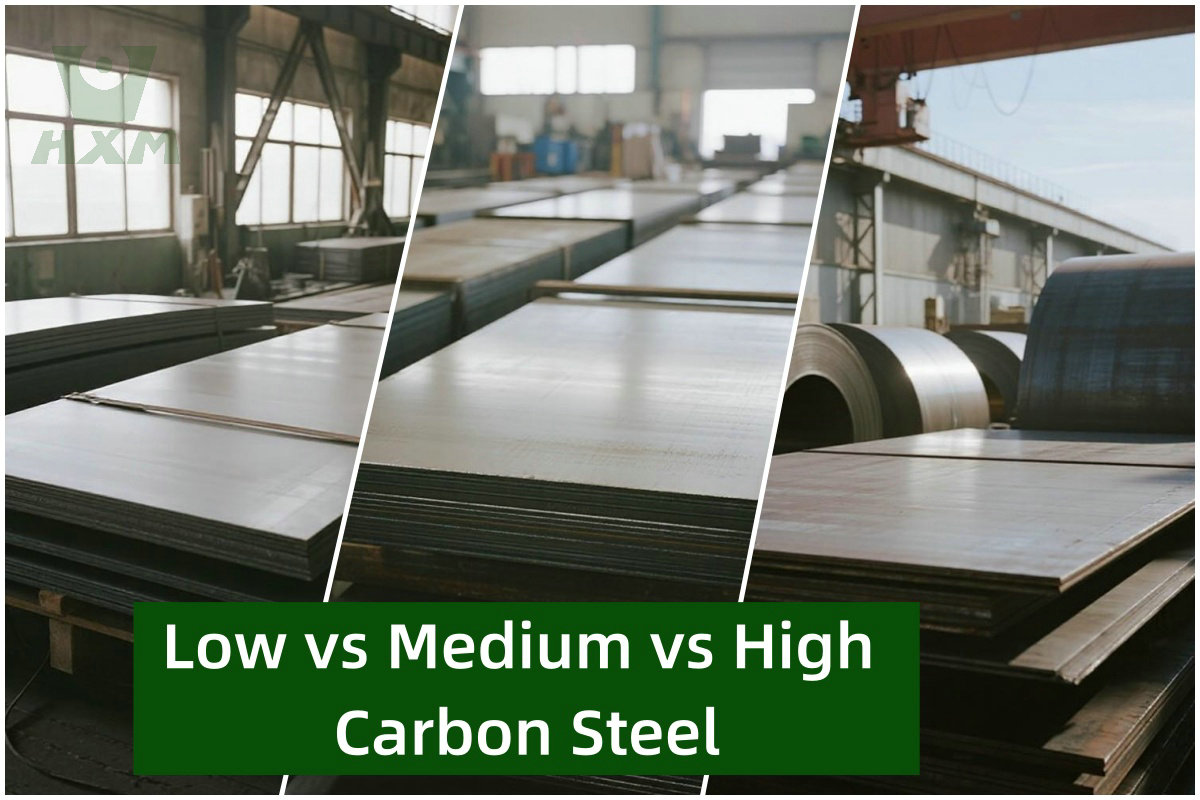
Understanding the distinction between low carbon steel (typically 0.05% to 0.25% carbon) and high carbon steel (0.60% to 1.0%+ carbon) is critical for component performance and manufacturability. Low carbon variants like 1018 or 12L14 offer superior weldability and machinability with minimal tool wear, making them ideal for structural brackets, shafts, and high-volume hardware where moderate strength suffices. Conversely, high carbon grades such as 1095 or 1070 provide exceptional hardness and wear resistance after heat treatment but present significant machining challenges—including accelerated tool degradation, stringent coolant requirements, and heightened risk of work hardening—necessitating specialized CNC strategies for applications like cutting tools or springs.
Honyo Prototype’s CNC Expertise Across the Carbon Spectrum
Our technical team leverages decades of metallurgical insight to optimize CNC machining parameters for both material categories. For low carbon steels, we maximize throughput with aggressive feeds while ensuring dimensional stability. For high carbon alloys, we deploy precision-controlled cutting paths, carbide tooling with tailored geometries, and in-process monitoring to mitigate thermal distortion and achieve tight tolerances ±0.0002″. This material-specific approach guarantees end-use functionality without compromising lead times.
Carbon Steel Comparison for Machinability
| Property | Low Carbon Steel | High Carbon Steel |
|————————-|————————|————————|
| Carbon Content Range | 0.05% – 0.25% | 0.60% – 1.0%+ |
| Typical Machinability | Excellent (80-100%) | Poor (15-40%) |
| Primary Machining Challenge | Minimal tool wear | Rapid tool wear, work hardening |
| Common Applications | Frames, fasteners | Blades, dies, springs |
Accelerate Your Prototyping with Data-Driven Decisions
Honyo Prototype eliminates material selection guesswork through our Online Instant Quote platform. Simply upload your CAD file to receive DFM feedback and a precise cost estimate within hours—not days—including material-specific machining feasibility analysis. This enables rapid iteration between low and high carbon steel options while validating manufacturability upfront.
Partner with Honyo to transform carbon steel specifications into mission-ready components through intelligent CNC execution. Begin your project with confidence by accessing our Online Instant Quote system today.
Technical Capabilities
The distinction between low and high carbon steel is critical when selecting materials for precision machining processes such as 3/4/5-axis milling and turning, especially under tight tolerance requirements. Carbon content directly influences hardness, machinability, wear resistance, and the need for post-machining treatments. Below is a comparison of low vs high carbon steel in the context of CNC machining, with reference to other commonly used materials including aluminum, ABS, and nylon.
| Property / Material | Low Carbon Steel (e.g., 1018, 1020) | High Carbon Steel (e.g., 1060, 1095) | Aluminum (e.g., 6061-T6) | ABS (Acrylonitrile Butadiene Styrene) | Nylon (Polyamide, e.g., PA6) |
|---|---|---|---|---|---|
| Carbon Content | 0.05–0.25% | 0.60–1.00% | N/A | N/A | N/A |
| Typical Hardness (HB) | 120–150 | 200–300+ | 95–105 | ~100 (Shore D) | ~80–90 (Shore D) |
| Machinability | Good; soft, ductile, forms long chips | Poor; hard, abrasive, work-hardens | Excellent; clean cuts, low tool wear | Very good; low melting point, requires cooling | Good; sticky, requires sharp tools |
| Tool Wear (Milling/Turning) | Moderate | High (requires carbide or coated tools) | Low | Very Low | Moderate |
| Surface Finish Potential | Good (with proper parameters) | Fair to Good (chatter-prone) | Excellent | Very Good | Good |
| Dimensional Stability | Good | Variable (may distort after heat treat) | Excellent | Moderate (hygroscopic) | Poor (hygroscopic, creep) |
| Tight Tolerance Suitability (±0.0005″ or better) | Suitable with stable setup | Challenging; requires post-heat treat control | Excellent; minimal thermal drift | Limited; thermal expansion high | Not recommended; absorbs moisture |
| Heat Treatment Requirement | Rarely needed for basic parts | Often required for final hardness | Not applicable | Not applicable | Not applicable |
| Recommended for 3/4/5-Axis Milling | Yes – for structural components | Limited – best for pre-hardened stock or simple geometries | Ideal – complex, thin-walled parts | Suitable – prototypes, jigs, fixtures | Suitable – wear parts, low-friction |
| Recommended for Precision Turning | Yes – easy to thread and chamfer | Possible with rigid setup, slow speeds | Excellent – high RPM capable | Good – low force cutting | Acceptable – controlled feed |
| Common Applications | Brackets, shafts, housings | Cutting tools, springs, dies | Aerospace, enclosures | Prototypes, consumer products | Gears, bushings, insulators |
Key Technical Notes:
Low carbon steel offers superior machinability in multi-axis CNC environments due to its ductility and lower hardness. It responds well to high feed rates and maintains dimensional predictability, making it suitable for tight tolerance work when thermal and tool deflection variables are controlled.
High carbon steel, while strong and wear-resistant in the final state, poses challenges during precision milling and turning. Its tendency to work-harden, high abrasiveness, and frequent need for post-machining heat treatment make achieving and holding tight tolerances difficult without additional finishing operations such as grinding or EDM.
Among non-ferrous and polymer materials, aluminum stands out for high-precision 5-axis applications due to its excellent strength-to-weight ratio, thermal stability, and ability to achieve fine surface finishes. ABS and nylon are used where mechanical performance under low stress or electrical insulation is needed, but their hygroscopic nature and lower stiffness limit use in high-tolerance, long-term functional components.
For optimal results in tight tolerance machining, material selection must balance machinability, stability, and final application requirements. Low carbon steel and aluminum are preferred for complex, precision-machined parts, while high carbon steel is reserved for hardened components where wear resistance is critical.
From CAD to Part: The Process
Honyo Prototype integrates material science expertise directly into our manufacturing workflow to ensure optimal steel selection and processing. Below is our technical process for addressing low versus high carbon steel differentiation within the standard client journey, emphasizing actionable engineering decisions at each stage.
Upload CAD Phase
Upon CAD file submission, our system performs initial geometry and annotation analysis. While carbon steel grade is not auto-detected from geometry alone, explicit material callouts in the CAD metadata (e.g., “AISI 1045” or “ASTM A36”) trigger immediate material-specific protocols. If no material is specified, our AI quote engine defaults to low carbon steel (e.g., 1018) for preliminary cost estimation due to its broader manufacturability, but flags this as a critical DFM review item.
AI Quote Phase
The AI-driven quotation algorithm applies distinct cost and lead time parameters based on carbon content thresholds. Key differentiators include:
| Parameter | Low Carbon Steel (<0.3% C) | High Carbon Steel (>0.6% C) |
|---|---|---|
| Machining Rate | Standard (100%) | Reduced (60-70% due to tool wear) |
| Tooling Cost | Base rate | +15-25% (carbide inserts required) |
| Welding Complexity | None (preheat rarely needed) | +20% cost (preheat/post-weld heat treatment) |
| Lead Time Impact | Baseline | +3-5 days (thermal processing) |
Unspecified materials receive a conservative high-carbon surcharge warning in the quote, requiring client confirmation before proceeding.
DFM Phase
Our engineering team conducts granular material analysis during Design for Manufacturability review. Critical carbon steel considerations include:
Low carbon steel (e.g., 1008-1026) enables aggressive machining parameters but requires strict flatness controls due to lower rigidity. We recommend avoiding it for wear surfaces without case hardening. High carbon steel (e.g., 1060-1095) mandates specific protocols: preheating to 300-650°F before welding to prevent cracking, reduced cutting speeds (<120 SFM for milling), and mandatory stress-relief annealing after critical operations. Geometric features like sharp corners receive automatic redesign suggestions for high-carbon parts to mitigate stress concentration risks. Material certification requirements (e.g., mill test reports for carbon content verification) are explicitly documented here.
Production Phase
Machine programming and setup implement carbon-content-driven parameters. For low carbon steel, we utilize high-feed milling strategies and standard HSS tooling. High carbon steel activates our hardened-material protocol: CNC programs enforce reduced spindle loads (≤60% capacity), mandatory coolant-through-tooling, and in-process hardness validation. Welding procedures switch to low-hydrogen electrodes with interpass temperature monitoring. All high-carbon steel batches undergo 100% post-machining magnetic particle inspection to detect micro-cracks from residual stresses.
Delivery Phase
Final documentation includes material-specific compliance evidence. Low carbon steel shipments contain standard RoHS/REACH certificates. High carbon steel deliveries include supplementary reports: heat treatment records, ultrasonic testing results for critical sections, and carbon content verification via OES (Optical Emission Spectroscopy) traceable to ASTM E415. We also provide post-delivery material performance notes highlighting carbon-content implications for the client’s end-use application, such as fatigue life expectations or surface treatment recommendations.
This structured integration ensures carbon steel properties directly inform technical decisions—not just cost calculations—throughout the manufacturing lifecycle, minimizing rework risks while maintaining Honyo’s 99.2% first-pass yield rate for steel components. Clients receive actionable material insights rather than generic grade descriptions.
Start Your Project
Understanding the difference between low and high carbon steel is essential for selecting the right material for your manufacturing projects. Low carbon steel, with its higher ductility and weldability, is ideal for applications requiring formability and toughness, such as automotive body panels or structural components. High carbon steel, containing more carbon content, offers increased strength and hardness, making it suitable for tools, springs, and high-wear parts—though it is less ductile and more challenging to weld.
Material selection directly impacts performance, cost, and manufacturability. At Honyo Prototype, our engineering team in Shenzhen provides expert guidance on material choices tailored to your production needs.
For technical consultation or project support, contact Susan Leo at [email protected]. Our ISO-certified factory in Shenzhen ensures precision manufacturing with fast turnaround for prototypes and low-volume production.
🚀 Rapid Prototyping Estimator
Estimate rough cost index based on volume.