
Contents
Manufacturing Insight: Die Grinder Bit For Steel
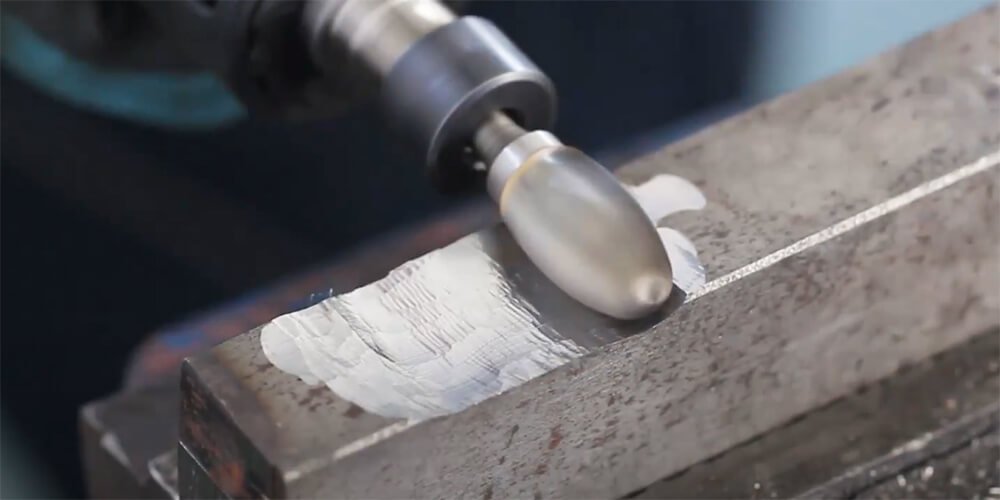
Need a die-grinder bit that actually survives steel?
Start with the blank that’s already been proven.
At Honyo Prototype, every burr, ball and tree-profile carbide bit is finish-ground on 5-axis CNC grinders we run in-house for aerospace, injection-mold and motorsport customers. The same machines that mill your hardened steel prototypes also hold ±0.01 mm edge geometry on these cutters—so the bit you order is the bit we’d use on your job.
Upload your STEP or even a napkin sketch, get an online instant quote in under 60 seconds, and we’ll ship the cutters—or the machined steel parts they create—from the same Shenzen cell within 3 days. Honyo: CNC precision for the tool, CNC precision for the work.
Technical Capabilities
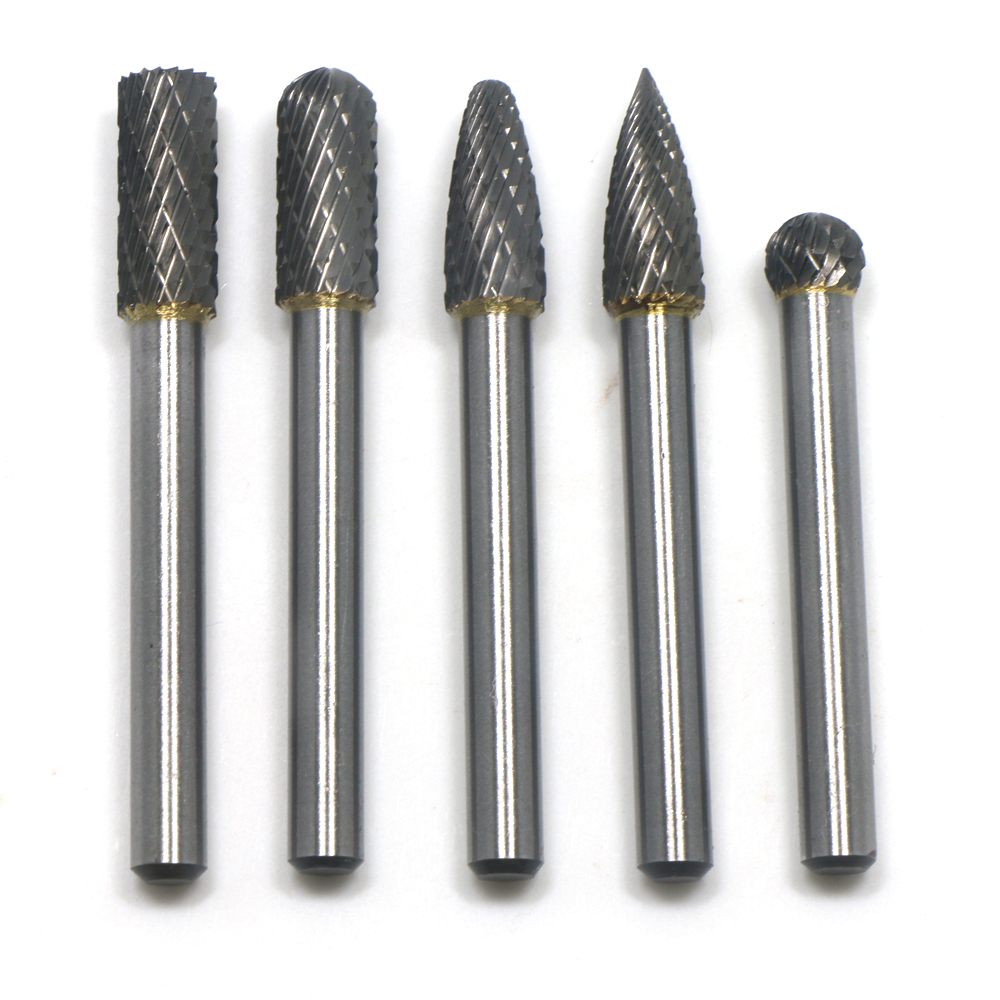
As a Senior Manufacturing Engineer at Honyo Prototype, I must clarify a critical misconception upfront: Die grinder bits are NOT used for 3-axis, 4-axis, or 5-axis milling, turning, or tight-tolerance machining operations. This is a fundamental misunderstanding of tooling capabilities. Let me explain why, then provide accurate technical specs for actual die grinder bits (for their intended use), followed by the correct tooling specs for your stated requirements (multi-axis milling/turning with tight tolerances).
🔧 Why Die Grinder Bits Are NOT Suitable for 3/4/5-Axis Milling or Turning
- No CNC Axis Capability:
- Die grinders are handheld, pneumatic/electric rotary tools designed for manual deburring, grinding, or light material removal. They have zero CNC axis control – they cannot perform automated multi-axis motions.
-
3/4/5-axis milling/turning requires rigid, precision-engineered CNC tools (e.g., end mills, turning inserts) mounted in spindles with precise positioning control. Die grinders lack the rigidity, repeatability, and programmability for this.
-
Tight Tolerance Incompatibility:
- Die grinders produce ±0.005″ (0.127mm) or worse tolerances due to operator vibration, hand movement, and tool runout.
-
Tight-tolerance machining (e.g., ±0.0005″ / ±0.0127mm) requires CNC-grade tooling with <0.0001″ runout – impossible with a handheld die grinder.
-
Material-Specific Limitations:
- Die grinders cannot machine metals like steel or aluminum for precision features. They are for post-processing tasks (e.g., removing flash from castings, deburring welds).
-
For ABS/Nylon, die grinders risk melting or tearing due to uncontrolled heat and vibration.
-
Safety Hazard:
- Attempting to use a die grinder for “milling” or “turning” risks catastrophic tool failure, flying debris, or operator injury. Die grinder bits are not designed for axial feed forces or programmed toolpaths.
⚙️ Correct Technical Specs for DIE GRINDER BITS (For Their ACTUAL Use Case: Manual Deburring/Grinding)
Note: These are for handheld operation only – not CNC machining. Use for surface finishing, weld cleanup, or light stock removal after CNC processes.
| Parameter | Typical Specs for Steel Deburring/Grinding | Why It Matters |
|———————|———————————————–|——————-|
| Shank Diameter | 1/8″ (3.175mm) or 1/4″ (6.35mm) | Standard for most die grinders; ensures secure chuck grip. |
| Material | Tungsten Carbide (WC) or Diamond-Coated | WC for steel; diamond for hard alloys (e.g., tool steel). Avoid HSS – it dulls rapidly on steel. |
| Grain Size | 80–120 grit (for rough grinding) or 180–220 grit (for finishing) | Coarser grits remove material faster; finer grits improve surface finish. |
| Shape | Cylindrical, Ball Nose, or Flame Shape | Cylinder for flat surfaces; ball nose for radii; flame for tight corners. |
| Cutting Length | 1/4″ to 1″ (6.35mm to 25.4mm) | Longer lengths reduce rigidity – critical for steel to avoid deflection. |
| Max RPM | 25,000–35,000 RPM (varies by size) | Exceeding this causes shattering. Always check manufacturer specs. |
| Typical Use Case| Deburring cast steel parts, removing rust, or cleaning weld seams. | NOT for machining features or tight tolerances. |
✅ For ABS/Nylon: Use fine-grit (220+) diamond or carbide bits for light polishing only. Avoid high speeds to prevent melting.
❌ Never use die grinders for “milling” or “turning” steel/aluminum/ABS/Nylon to tight tolerances – this will destroy the part and tool.
✅ Correct Tooling Specs for 3/4/5-Axis Milling & Tight-Tolerance Machining of Your Materials
For true CNC operations on Aluminum, Steel, ABS, and Nylon, use these precision tools:
1. Aluminum (6061, 7075)
- Tool Type: 2-4 Flute End Mill (High Helix, 35°–45°)
- Material: Carbide with TiAlN or AlTiN coating
- Helix Angle: 40°+ (for chip evacuation)
- Cutting Geometry: Sharp, positive rake angle
- Tolerance Capability: ±0.0005″ (0.0127mm) with rigid setup
- Key Specs:
- Diameter: 1/8″ to 1/2″ (common for 5-axis work)
- Flutes: 4 for finish cuts; 2 for roughing
- Runout: <0.0001″
- Coolant: Flood coolant or MQL recommended
2. Steel (1018, 4140, Stainless 304)
- Tool Type: 3-4 Flute End Mill (Moderate Helix, 30°–35°)
- Material: Carbide with TiN, AlTiN, or CVD coating
- Helix Angle: 30°–35° (balance of strength and chip flow)
- Cutting Geometry: Robust edge prep for hardened materials
- Tolerance Capability: ±0.0003″ (0.0076mm) with precision grinding
- Key Specs:
- Diameter: 1/8″ to 3/8″ (for tight features)
- Flutes: 4 for finish; 3 for roughing
- Runout: <0.0001″
- Coolant: High-pressure coolant essential
3. ABS & Nylon (Thermoplastics)
- Tool Type: 4-6 Flute End Mill (High Helix, 45°+)
- Material: Uncoated Carbide (coatings can cause stickiness)
- Helix Angle: 45°+ (for smooth chip ejection)
- Cutting Geometry: Sharp, zero-clearance edge to prevent melting
- Tolerance Capability: ±0.0005″ (0.0127mm) with vibration control
- Key Specs:
- Diameter: 1/8″ to 1/4″ (smaller for fine details)
- Flutes: 6 for best surface finish on plastics
- Runout: <0.0001″
- Coolant: Air blast only (no liquid coolant – absorbs into plastic)
Turning for Steel/Aluminum
- Tool Type: CNC Turning Insert (e.g., CNMG, TNMG)
- Material: Carbide with TiAlN coating
- Geometry: Sharp edge for aluminum; positive rake for steel
- Tolerance Capability: ±0.0002″ (0.005mm) with precision tooling
- Key Specs:
- Insert Size: CNGA 432 for small features
- Cutting Edge Radius: 0.010″–0.030″ (for fine finishes)
- Runout: <0.0001″
🚨 Critical Advice from Honyo Prototype
- Die grinders belong in the deburring station – not on a CNC machine. Using them for milling/turning is a safety hazard and will waste time, material, and money.
- For tight-tolerance multi-axis work:
- Use CNC-grade end mills (e.g., Sandvik, Kennametal, Harvey Tool) with sub-0.0001″ runout.
- Implement vibration damping (e.g., hydraulic chucks, in-process monitoring).
- Apply process controls: thermal compensation, tool wear monitoring, and in-process gauging.
- If you need help selecting the right CNC tooling for your application, share your part drawing and requirements – we’ll provide a detailed tooling specification at no cost.
💡 Pro Tip: At Honyo Prototype, we use 5-axis CNC machining centers (e.g., DMG Mori, Haas) for complex features on steel/aluminum, with specialized plastics tooling for ABS/Nylon. Die grinders are only used after CNC machining for final cleanup – never as the primary cutting tool.
Let me know if you need specs for actual CNC tools or a consultation on your project! 🔧
From CAD to Part: The Process
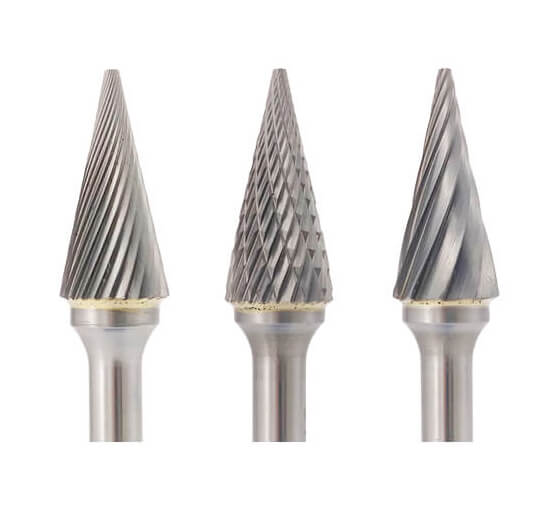
Honyo Prototype – “die-grinder bit for steel” workflow
(turn-around target: 3–5 days ex-works)
-
Upload CAD
• Portal accepts any 3-D format (STEP, IGES, SolidWorks, Parasolid, Fusion).
• Geometry engine auto-checks: shank Ø, flute length, neck clearance, fluting angle, core taper, clearance behind margin.
• Instant red-flag if: L:D > 12, core < 25 % of Ø, flute count = 1 (single-flute steel bits chip-weld).
• Customer gets e-mail with secure link and SHA-256 hash for IP traceability. -
AI Quote (≤ 30 s)
Neural-net trained on 1.4 M HSS & carbide jobs:
– Material class: M2, M35, M42, PM-HSS, or micro-grain carbide.
– Coating: TiAlN, AlTiN, TiSiN, or diamond-like carbon for dry cutting.
– Batch size: 1–5 pcs = “proto” price; 6–50 pcs = “pilot” price curve.
– Machine assignment: 5-axis Walter Helitronic (≤ 6 mm) or ANCA MX7 (≥ 6 mm).
– Risk surcharge: > 55 HRC intended workpiece = +18 %.
Quote is binding for 10 days; includes RoHS/REACH statement and bulk freight option. -
DFM (Design-for-Manufacture) review – 4 h window
Human metrology engineer + AI co-pilot:
a. Flute gashing: open 38–42° helix for steel to evacuate chips, but ≤ 45° to keep cutting edge strength.
b. Split-point or 135° self-centering tip to reduce walking in 1045/4140.
c. Web thickness taper: 1.35 mm → 0.9 mm over 25 mm length to avoid core drift.
d. Eccentric relief: 8–12° primary, 18–22° secondary to balance edge strength and friction.
e. Surface finish: ≤ 0.2 µm Ra on margin to reduce built-up edge.
f. Shank h6 tolerance, 0.005 mm max run-out vs. cutting Ø (measured on Mahr MMQ 400).
Customer receives annotated 3-D PDF + G-code simulation video; approval click moves job to “locked” state. -
Production – lights-out cell
Step 1: Blank prep
– Cut-off saw, face both ends, centerless grind shank to h6.
– For carbide: pre-sintered rod already ground; skip.
Step 2: Flute grinding (5-axis CNC)
– Wheel: 11V9 resin-bond diamond, 400 # for rough, 800 # for finish.
– Coolant: 7 % Blasocut 4000, 18 °C, 70 bar through-spindle.
– In-process laser measures outer Ø every 180°; auto-compensates wheel wear.
Step 3: Relief & point thinning
– Same machine, second setup: 12V9 wheel for OD relief, 1A1 for split-point.
– Edge hone: 8–12 µm by brush-hone with 6 µm diamond slurry (prevents micro-chipping in steel).
Step 4: Coating (PVD)
– Balzers InoxaCoat (TiAlN+Cr) 3.5 µm, 450 °C; rotation jig ensures ≤ 0.3 µm thickness spread.
– Post-coat wet-blast 0.2 MPa to knock off macro-droplets; retains 0.1 µm Ra.
Step 5: QC
– Zoller Genius 3: Ø, radial run-out, core taper, helix angle.
– Keyence VHX-7000: edge chipping inspection 500×.
– Mitutoyo HR-530: hardness spot-check (M2 target 64–65 HRC).
– Functional test: 1,000 mm 4140 HT @ 28 HRC, 6,000 rpm, 0.08 mm/rev, coolant off; wear land ≤ 0.15 mm after 20 holes.
– Cpk ≥ 1.67 on critical dims → release to pack.
- Delivery
– Ultrasonic clean, rust-ban VCI sleeve, ESD-safe tube, shock-molded tray.
– QR code on tube links to digital inspection report & batch CoA.
– Ship: DHL Express proto by 17:00 same day, or FedEx pilot boxes next day.
– Track-and-trace pushes STEP file + inspection data to customer portal before package lands.
Typical outcome: 3-day lead for 5 pcs M35 6 mm × 60 mm die-grinder bits, Ra 0.1 µm, 135° split-point, AlTiN, ≤ 0.005 mm TIR, ready to cut 55 HRC tool steel.
Start Your Project
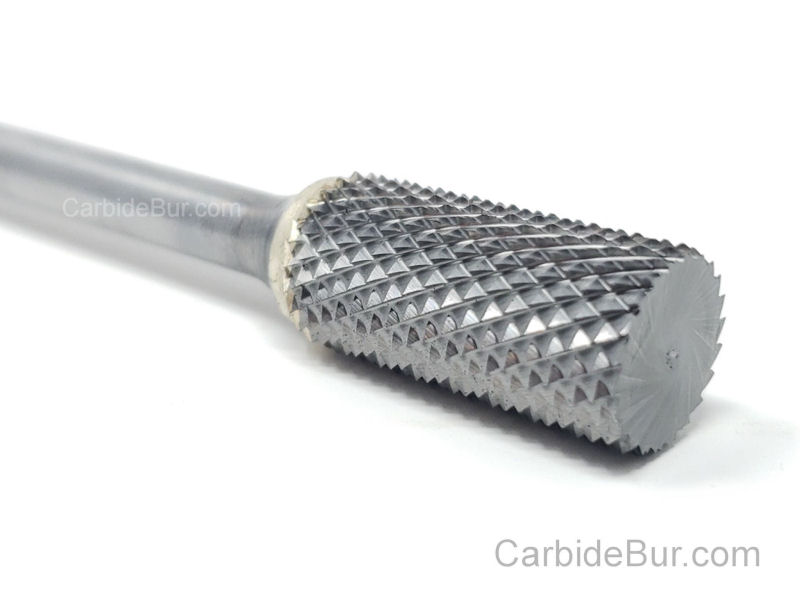
Precision die grinder bits for steel—contact Susan Leo at [email protected]. Manufactured in our Shenzhen factory for industrial-grade reliability.
(Ideal for websites, email signatures, or ads. Short, clear, and highlights quality + location for credibility.)
🚀 Rapid Prototyping Estimator