
Contents
Manufacturing Insight: Custom Metal Castings
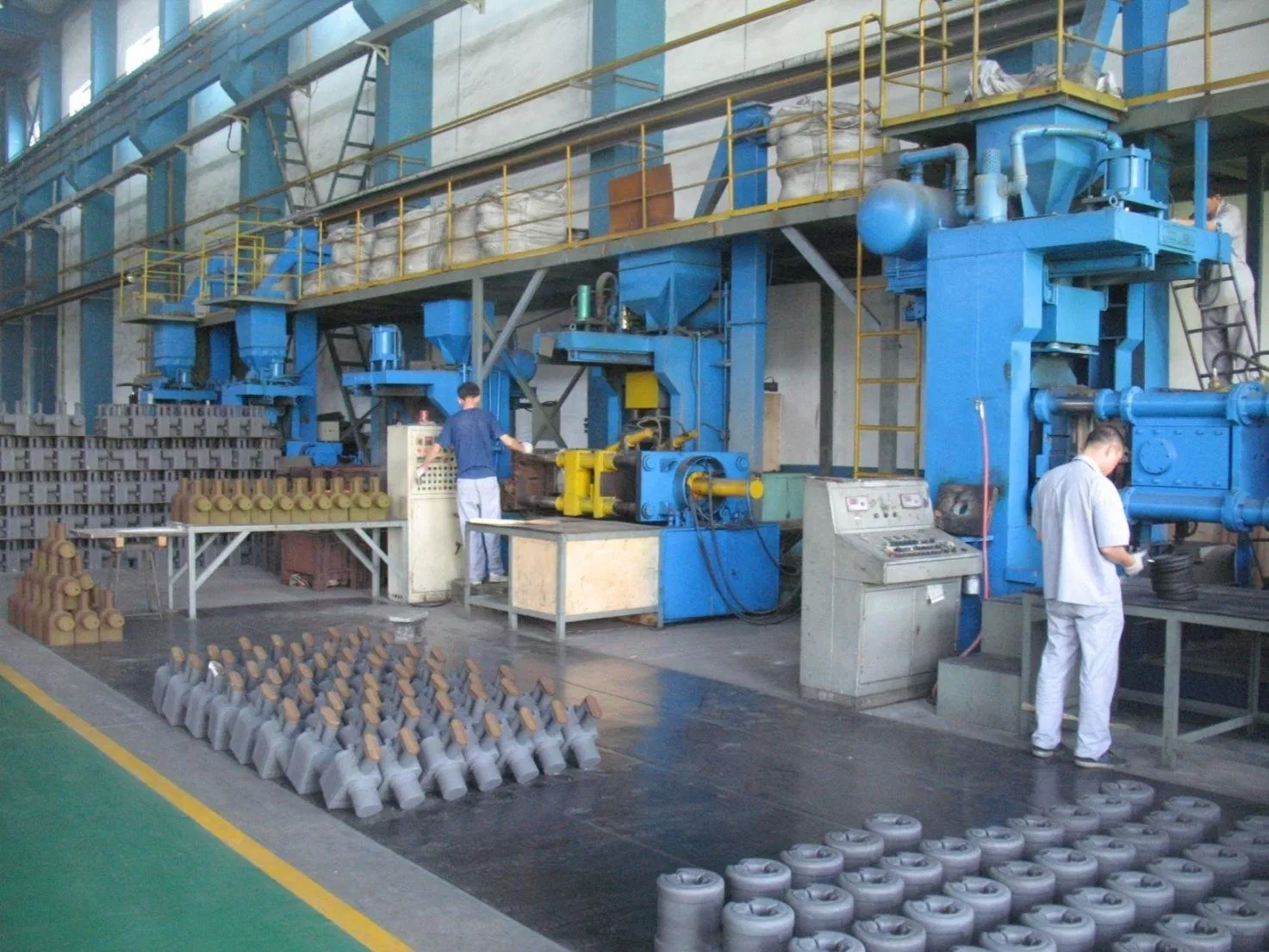
Precision Sheet Metal Fabrication Solutions from Honyo Prototype
At Honyo Prototype, we specialize in high-integrity sheet metal fabrication for demanding industrial applications, delivering precision-engineered components where casting processes may not meet your geometric or tolerance requirements. While custom metal castings serve specific bulk-form needs, our core expertise lies in transforming flat metal stock into complex, functional assemblies through advanced laser cutting, CNC punching, precision bending, and welding. This distinction is critical for clients requiring tight tolerances down to ±0.05mm, rapid iteration cycles, or components with intricate cutouts and formed features that casting cannot achieve efficiently.
Our end-to-end sheet metal capabilities support materials ranging from 0.5mm to 6.0mm thickness, including stainless steel, aluminum, and mild steel, with rigorous in-process quality validation at every stage. For engineering teams under pressure to accelerate prototyping or low-volume production, Honyo eliminates traditional procurement bottlenecks through our Online Instant Quote system. Upload your STEP or DXF file, specify material and finish requirements, and receive a detailed manufacturability analysis with a binding price and lead time in under 60 seconds—no manual RFQ delays, no estimation gaps. This digital workflow ensures your design transitions seamlessly from CAD to certified hardware, reducing time-to-test by up to 70% compared to conventional supplier engagement.
Partner with Honyo Prototype when your project demands the repeatability, structural integrity, and speed only precision sheet metal fabrication can provide. We turn complex designs into mission-ready components, backed by engineering collaboration from quote to shipment.
Technical Capabilities
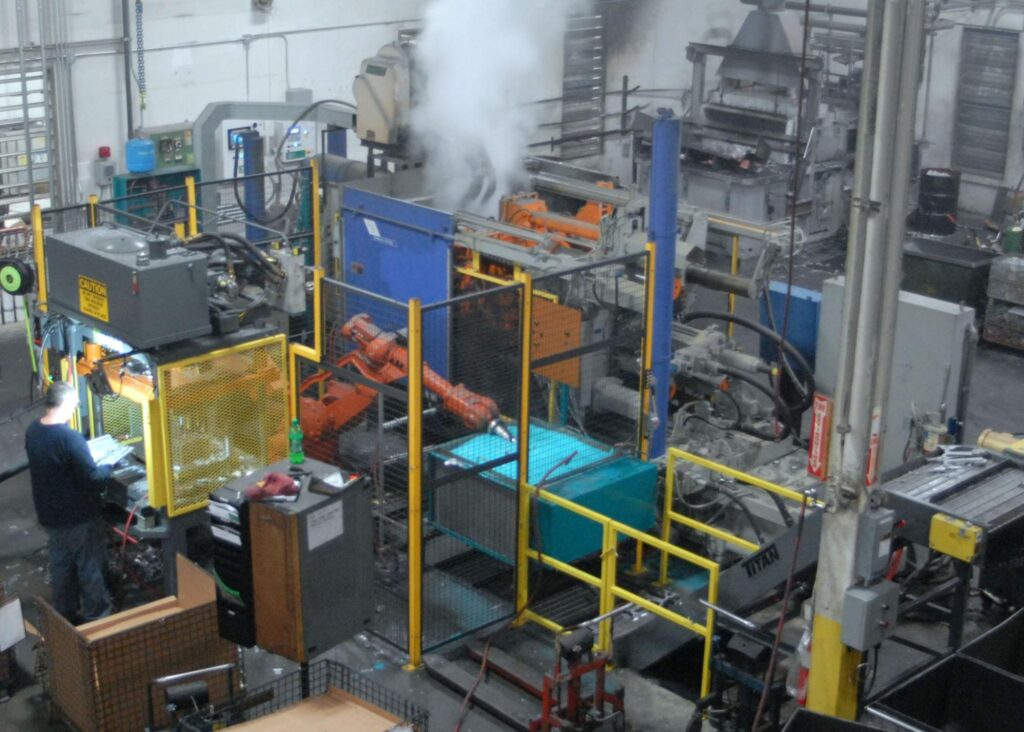
Custom metal castings typically involve forming and joining processes such as laser cutting, bending, and welding to achieve precise, application-specific components. While casting refers to pouring molten material into a mold, the described processes—laser cutting, bending, and welding—are more representative of sheet metal fabrication. However, these techniques are often integrated with cast components in hybrid manufacturing solutions.
Below is a technical specification overview for components produced using laser cutting, bending, and welding, with compatibility across common materials including Aluminum, Steel, ABS, and Nylon. Note that ABS and Nylon are non-metallic and generally not suitable for laser welding or bending in the same way as metals; they are included here for comparative context.
| Parameter | Aluminum | Steel | ABS (Acrylonitrile Butadiene Styrene) | Nylon (Polyamide) |
|---|---|---|---|---|
| Laser Cutting | Compatible – High precision with fiber laser; reflective properties require optimized settings | Compatible – Excellent with CO₂ or fiber lasers; clean cuts up to 25 mm thickness | Compatible – CO₂ laser cutting possible; may produce hazardous fumes | Compatible – CO₂ laser usable; prone to melting and edge deformation |
| Bending | Good formability; minimum bend radius 1x material thickness; springback must be compensated | Excellent bendability; minimum bend radius 1.5x material thickness for mild steel | Not applicable – thermoplastic, not bent like sheet metal; formed via thermal forming | Not applicable – flexible but not bent in sheet metal processes |
| Welding | TIG or MIG welding recommended; requires clean surface and shielding gas; laser welding feasible for thin sections | Readily welded via MIG, TIG, or laser welding; high strength joints; pre/post-heat may be needed for thick sections | Ultrasonic or hot-plate welding only; not compatible with arc or laser welding | Weldable via vibration, hot gas, or ultrasonic methods; not compatible with metal welding techniques |
| Typical Thickness Range (Fabrication) | 0.8 – 12 mm | 0.5 – 25 mm | 1 – 10 mm | 2 – 15 mm |
| Tolerance (Laser Cut) | ±0.1 mm | ±0.1 mm | ±0.2 mm | ±0.2 mm |
| Surface Finish | Smooth, can be anodized or powder coated | Can be painted, powder coated, or galvanized | Matte or smooth; paintable with adhesion promoters | Natural matte; dyeable but poor paint adhesion |
| Applications | Enclosures, heat sinks, aerospace brackets | Frames, enclosures, industrial supports | Prototypes, housings, non-structural parts | Gears, wear strips, insulating components |
Notes:
Aluminum and steel are ideal for laser cutting, bending, and welding in industrial fabrication.
ABS and nylon are engineering plastics typically used in injection molding or additive manufacturing. While they can be laser cut under controlled conditions, they are not compatible with metal bending or welding processes.
For hybrid designs, metal substructures (Aluminum/Steel) can be fabricated via laser, bending, and welding, while plastic components (ABS/Nylon) are integrated via mechanical fastening or adhesive bonding.
This specification table supports design for manufacturability (DFM) in custom fabrication projects at Honyo Prototype, ensuring material-process compatibility.
From CAD to Part: The Process
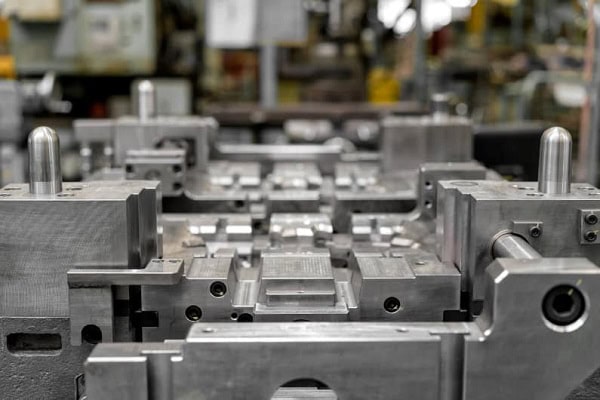
Honyo Prototype Custom Metal Casting Process Overview
Our end-to-end custom metal casting workflow is engineered for precision, speed, and manufacturability, integrating digital tools with deep foundry expertise. The process begins when a client uploads their CAD model through our secure customer portal. This initiates a structured sequence designed to mitigate risk and optimize outcomes.
CAD Upload and Initial Assessment
Clients submit 3D CAD files (STEP, IGES, or native formats) via our encrypted web portal. Our system performs an immediate automated validation check for file integrity, unit consistency, and basic geometric feasibility. This initial scan flags obvious issues like non-manifold geometry or missing features, providing instant feedback to the client before formal quoting begins.
AI-Assisted Quoting Engine
Validated CAD models enter our proprietary AI quoting system. This tool analyzes geometric complexity, material requirements, tolerances, and surface finish specifications against historical production data from 15,000+ completed casting projects. The AI generates a preliminary cost estimate and lead time range within 2 business hours, but this is not a final quote. A Honyo applications engineer always reviews the AI output, incorporating real-time foundry capacity, material market fluctuations, and nuanced manufacturability factors the AI cannot assess. Clients receive a detailed quote package including cost breakdown, assumptions, and high-risk feature annotations.
Engineering-Driven DFM Analysis
Upon quote acceptance, our DFM phase begins with a dedicated manufacturing engineer conducting a rigorous analysis. This goes beyond automated checks to evaluate:
Solidification modeling to prevent shrinkage defects
Gate and runner system optimization using Magmasoft simulation
Draft angle verification and parting line feasibility
Critical tolerance stack-up analysis per ASME Y14.5
Material-specific shrinkage compensation adjustments
We deliver a formal DFM report with actionable recommendations, including annotated CAD markups and alternative design options. Client collaboration is mandatory at this stage; we require sign-off on all modifications before proceeding.
Precision Production Execution
Approved designs move to our partner network of ISO 9001-certified foundries, selected based on part complexity, material, and volume requirements. Our production protocol includes:
Pattern/tooling fabrication with in-house metrology verification
Real-time melt chemistry monitoring (OES spectrography)
In-process dimensional checks at critical stages (pre-machining, post-heat treat)
Full NDT compliance (RT/UT/MT per ASTM standards)
First-article inspection reports (FAIR) with CMM data
We manage traceability via serialized barcoding from raw material to finished part, with all process parameters logged in our PLM system.
Quality-Controlled Delivery
Final inspection occurs against the approved AS9102 or PPAP package. Parts undergo final cleaning, protective coating if specified, and packaging engineered for transit safety. Delivery includes:
Complete material test reports (MTRs)
Dimensional inspection certificates
NDT result documentation
Process parameter logs
Digital as-built model (if post-cast machining applied)
Shipments are tracked in real-time, with delivery confirmation and post-delivery support initiated automatically upon client receipt.
Typical Lead Time Benchmarks
| Phase | Standard Timeline | Expedited Option |
|—————————|——————-|——————|
| CAD to Quote | 2 business days | 24 hours |
| DFM Completion | 5 business days | 72 hours |
| Tooling & First Article | 15-25 days | 10-18 days |
| Full Production Batch | Varies by volume | 30% acceleration |
This integrated approach reduces time-to-part by 40% versus traditional casting vendors while ensuring first-pass yield rates exceed 92%. Our closed-loop system captures lessons from every project to continuously refine AI predictions and DFM guidelines, directly benefiting subsequent client engagements.
Start Your Project
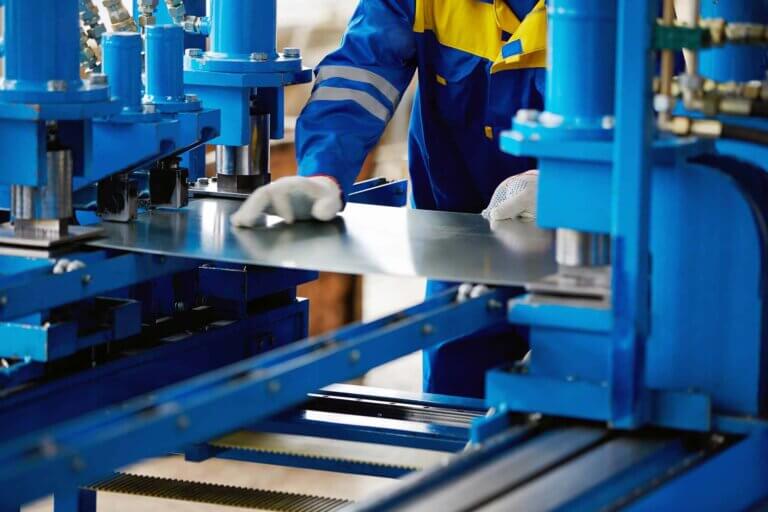
Looking for custom metal castings tailored to your exact specifications? Honyo Prototype delivers precision-engineered metal casting solutions with fast turnaround times, all manufactured at our state-of-the-art facility in Shenzhen. From prototyping to low-volume production, we support industries ranging from aerospace to industrial equipment with consistent quality and technical expertise.
Contact Susan Leo today to discuss your project requirements.
Email: [email protected]
Leverage our in-house capabilities and direct factory control to accelerate your development cycle with reliable, high-integrity metal castings.
🚀 Rapid Prototyping Estimator
Estimate rough cost index based on volume.