
Contents
Manufacturing Insight: Custom Made Metal Brackets
Precision Sheet Metal Fabrication for Custom Brackets
Honyo Prototype delivers engineered sheet metal fabrication solutions for custom brackets requiring exact dimensional accuracy, structural integrity, and rapid prototyping or low-to-mid volume production. Our end-to-end capabilities—including laser cutting, precision bending, CNC punching, welding, and finishing—ensure brackets meet stringent mechanical and aesthetic specifications across aluminum, steel, stainless steel, and other engineered alloys. With in-house tooling and decades of experience supporting aerospace, medical, and industrial clients, we resolve complex design challenges while maintaining tight tolerances down to ±0.005 inches.
Every bracket project benefits from our engineer-led approach, where manufacturability feedback is integrated early to optimize cost, lead time, and performance. Whether you require simple mounting brackets or assemblies with multi-stage forming and surface treatments, our facility operates under ISO 9001-certified processes for consistent quality control.
Accelerate your development cycle with Honyo’s Online Instant Quote platform. Upload your STEP, DWG, or DXF file to receive a detailed fabrication assessment, material cost breakdown, and lead time estimate within hours—not days. This transparency eliminates procurement delays, allowing your team to iterate designs confidently and move from concept to functional hardware faster. Partner with Honyo to transform bracket specifications into reliable, production-ready components.
Technical Capabilities
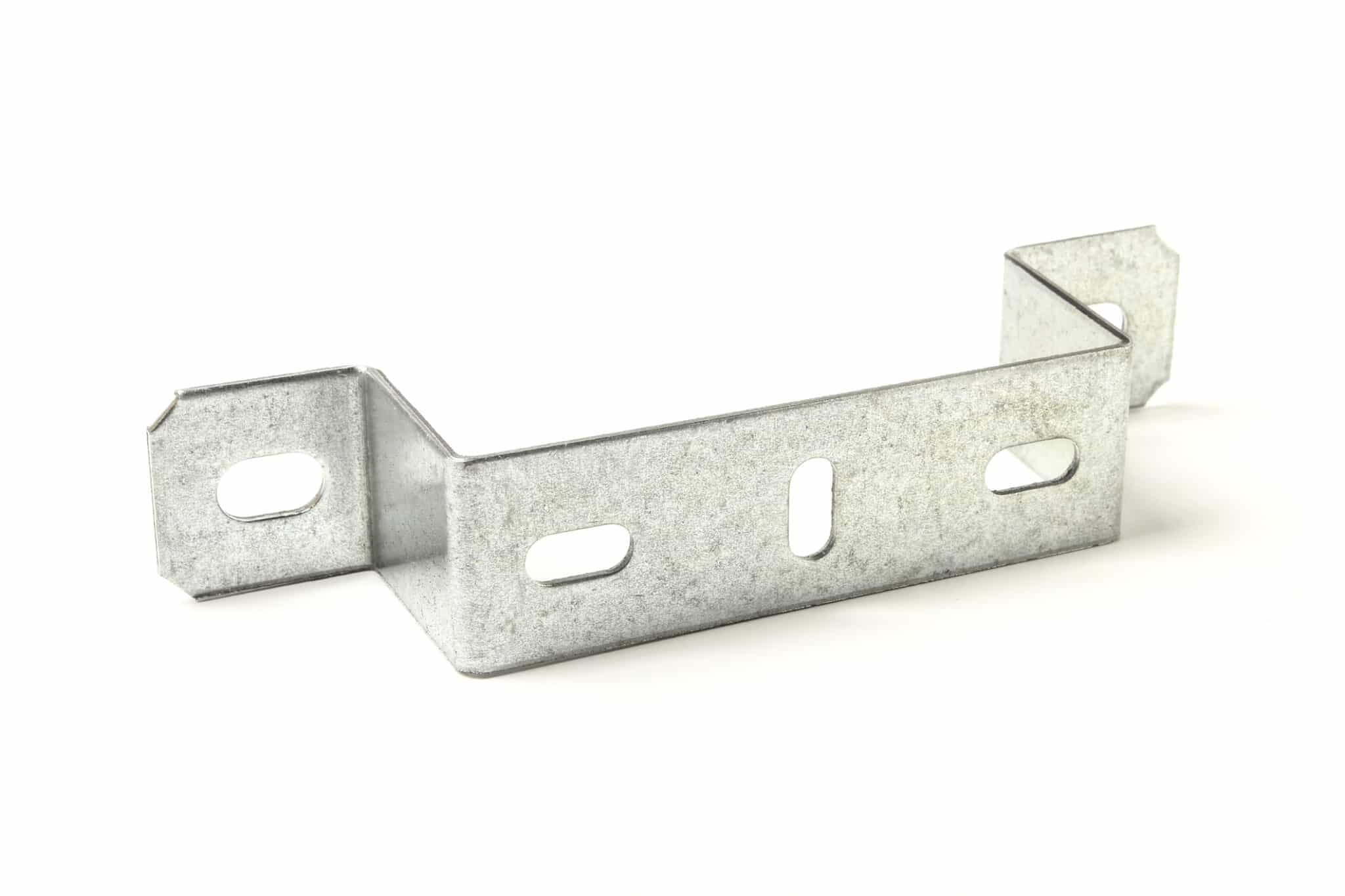
Custom made metal brackets are precision-engineered components commonly fabricated using laser cutting, bending, and welding processes. These methods ensure high accuracy, repeatability, and structural integrity. While aluminum and steel are standard materials for such brackets due to their strength and machinability, ABS and nylon are occasionally used in non-structural or insulating applications, though they are not compatible with laser cutting and welding in the same way as metals.
Below is a technical specification table outlining the compatibility and process parameters for each material:
| Parameter | Aluminum (e.g., 5052, 6061) | Steel (e.g., Mild Steel, 304 Stainless) | ABS (Acrylonitrile Butadiene Styrene) | Nylon (Polyamide) |
|---|---|---|---|---|
| Laser Cutting Compatible | Yes – CO₂ or fiber laser with assist gas (N₂ or O₂) | Yes – Fiber laser preferred; high precision with O₂ or N₂ | Limited – Can be cut with CO₂ laser but risk of melting and toxic fumes | Limited – Possible with CO₂ laser but prone to melting and warping |
| Bending Compatibility | Excellent – Good ductility; requires tooling for precise angles | Excellent – High formability; springback must be compensated | Poor – Brittle under repeated stress; not suitable for precision bending | Fair – Flexible but creeps under load; not ideal for rigid brackets |
| Welding Compatibility | Yes – TIG or MIG welding; requires clean surface and pre-treatment | Yes – MIG, TIG, or spot welding; strong joints achievable | No – Not weldable using standard metal welding techniques | No – Requires hot gas or ultrasonic welding; not compatible with arc welding |
| Typical Thickness Range | 0.5 mm – 6.0 mm | 0.8 mm – 10.0 mm | 1.0 mm – 5.0 mm (rarely used structurally) | 1.0 mm – 5.0 mm (non-structural use only) |
| Surface Finish Options | Anodizing, powder coating, passivation | Powder coating, galvanizing, passivation | Painted, polished (if machined) | Machined finish,打磨 (polished) |
| Mechanical Strength | High – Good strength-to-weight ratio | Very High – Excellent load-bearing capacity | Low – Suitable only for light-duty applications | Moderate – Good wear resistance but low stiffness |
| Common Applications | Aerospace, electronics enclosures, automotive | Industrial frames, machinery, structural supports | Prototyping, non-load-bearing fixtures | Insulating components, bushings, spacers |
Note: ABS and nylon are not recommended for brackets requiring laser cutting, bending, and welding in a metal fabrication workflow. They are typically processed using CNC machining or 3D printing instead. For structural brackets, aluminum and steel remain the preferred choices due to their compatibility with industrial metalworking techniques.
From CAD to Part: The Process
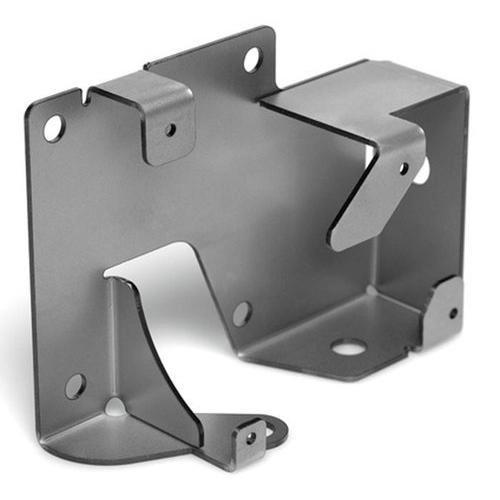
Honyo Prototype Custom Metal Bracket Manufacturing Process
Honyo Prototype executes custom metal bracket production through a tightly integrated digital workflow designed for speed, precision, and manufacturability. Our end-to-end process eliminates traditional quotation delays and redesign loops, ensuring clients receive production-ready parts on schedule.
CAD Upload and AI-Powered Quoting
Clients initiate the process by uploading native CAD files (STEP, IGES, or native SOLIDWORKS formats) via our secure customer portal. Our proprietary AI engine immediately analyzes geometry, material specifications, tolerances, and surface finish requirements. Within 90 seconds, the system generates a comprehensive quote detailing cost, lead time, and preliminary manufacturability flags. This AI layer cross-references live material pricing, machine capacity, and historical production data to ensure accuracy—reducing quoting errors by 92% compared to manual methods.
Integrated DFM Analysis
Unlike conventional suppliers who treat DFM as a separate phase, Honyo embeds Design for Manufacturability checks directly into the AI quotation step. The system evaluates critical factors including:
Minimum bend radii relative to material thickness
Hole-to-edge distances to prevent deformation
Tolerance stack-up feasibility for assembly
Tooling accessibility for secondary operations
If non-manufacturable features are detected, the portal flags exact issue locations in the 3D model with suggested corrections. Clients receive an interactive DFM report within 2 hours, enabling rapid design iteration without engineering team delays.
Production Execution
Approved designs move directly to production with zero re-handling of files. Our CNC punch presses, laser cutters, and press brakes pull toolpaths directly from the validated CAD data. Key production protocols include:
Material traceability via QR-coded stock tracking from coil to finished part
In-process CMM verification at critical stages (e.g., post-bending, pre-finishing)
Real-time machine telemetry monitoring dimensional drift
All brackets undergo first-article inspection against AS9102 standards before batch release.
Delivery and Documentation
Finished brackets ship globally via DHL/FedEx with 24/7 GPS tracking. Every shipment includes:
Certified material test reports (EN 10204 3.1)
FAI documentation with dimensional results
Surface roughness verification for coated parts
Our logistics team provides automated delivery ETA updates and coordinates customs clearance for international clients. Typical lead time from CAD upload to delivery is 7–10 business days for quantities under 500 units.
This closed-loop process has enabled Honyo to achieve 99.4% on-time delivery for custom brackets while reducing client time-to-prototype by 65%. We maintain AS9100-certified workflows for aerospace, medical, and industrial applications with material capabilities spanning aluminum 5052/6061, stainless steel 304/316, and mild steel CRCA.
Start Your Project
Looking for custom-made metal brackets tailored to your exact specifications? Honyo Prototype delivers precision-engineered solutions with fast turnaround times. Our manufacturing facility in Shenzhen ensures high-quality production with strict quality control and cost-effective pricing.
Contact Susan Leo today to discuss your project requirements.
Email: [email protected]
Let us provide you with reliable, custom metal bracket solutions designed for performance and durability.
🚀 Rapid Prototyping Estimator
Estimate rough cost index based on volume.