
Contents
Manufacturing Insight: Cost Of Cnc Machining Per Hour
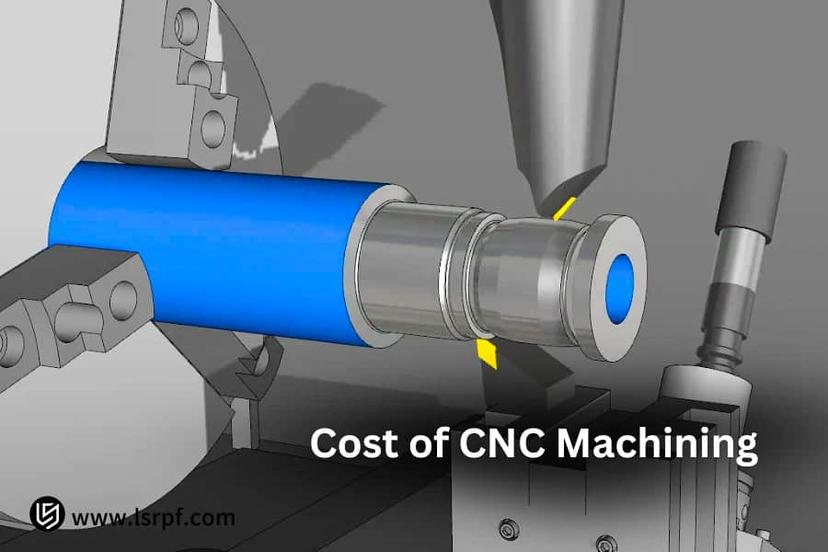
Understanding CNC Machining Hourly Rates and Honyo Prototype’s Value Proposition
Accurately estimating the cost of CNC machining per hour is critical for engineering teams managing prototype and low-volume production budgets. While base machine hourly rates provide a starting point, the true cost encompasses setup time, CAM programming, material waste, quality control, and machine complexity. Generic online calculators often overlook these variables, leading to inaccurate budget projections and project delays. At Honyo Prototype, we engineer efficiency into every process, ensuring our quoted rates reflect optimized cycle times and minimal non-machining overhead without compromising on precision or material integrity.
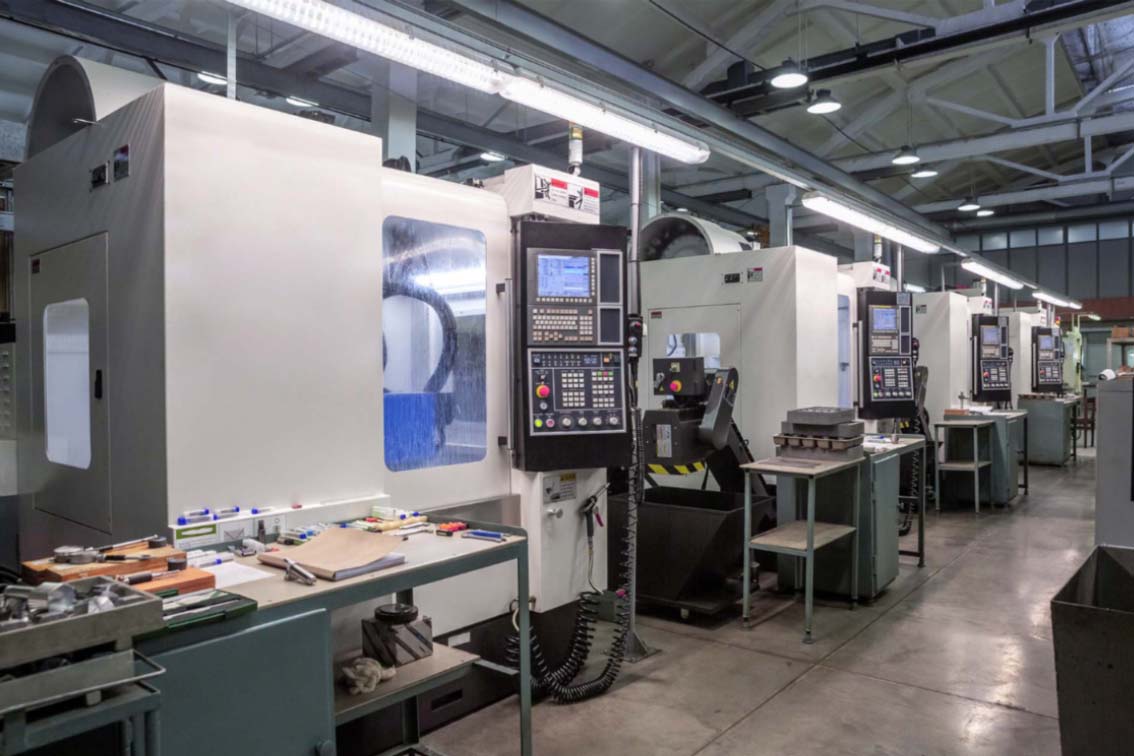
Honyo operates a modern fleet of 3-axis to 5-axis CNC milling and turning centers, alongside advanced Swiss-type lathes, all maintained to stringent tolerances for aerospace, medical, and robotics applications. Our engineers proactively reduce total part cost through strategic toolpath optimization and fixture design—factors that directly impact effective hourly expenditure. Below is a representative range for clarity, though actual project costs depend on specific geometry and requirements.
| Machine Type | Typical Base Hourly Range (USD) | Honyo Efficiency Advantage |
|---|---|---|
| 3-Axis Milling | $75 – $120 | 15-25% faster cycle times via optimized toolpaths |
| 4/5-Axis Milling | $120 – $200 | Reduced setups through multi-axis capability |
| CNC Turning | $60 – $100 | Integrated live tooling minimizing secondary ops |
| Swiss Machining | $150 – $250 | High-precision micro-machining expertise |
Transparency is non-negotiable in our client partnerships. This is why Honyo Prototype provides an Online Instant Quote platform—delivering detailed, geometry-aware cost estimates in under 90 seconds. Upload your STEP or IGES file, specify material and volume, and receive a validated machining cost breakdown that accounts for real-world process variables. No placeholder figures, no sales-team delays. For engineering teams under time-to-market pressure, this immediacy transforms early-stage budgeting from a bottleneck into a strategic advantage. Partner with Honyo to convert CNC machining cost uncertainty into a predictable, value-driven workflow.
Technical Capabilities
Cost of CNC machining per hour is influenced by machine type, complexity of operation, material properties, and required tolerances. Below are the technical and operational factors that contribute to the hourly rate for 3-axis, 4-axis, and 5-axis milling, as well as CNC turning, with a focus on tight tolerance machining (±0.001″ or better). Rates are approximate and based on typical North American contract manufacturing pricing for prototype and low-volume production.
| Parameter | 3-Axis Milling | 4-Axis Milling | 5-Axis Milling | CNC Turning |
|---|---|---|---|---|
| Base Hourly Rate (USD) | $75 – $110 | $90 – $130 | $120 – $180 | $65 – $100 |
| Machine Complexity | Standard 3 linear axes (X, Y, Z) | 3 linear + 1 rotational (typically A-axis) | Full 5-axis simultaneous motion (X, Y, Z, A, B/C) | 2-axis (X, Z) with live tooling for mill-turn |
| Setup Time Impact | Low to moderate | Moderate | High (fixture, probing, alignment) | Low to moderate |
| Programming Complexity | G-code or CAM, simple toolpaths | Indexed or limited continuous 4-axis | High-level CAM (e.g., Mastercam, HyperMill), multi-axis tool orientation | G-code or CAM; sub-spindle programming for complexity |
| Tight Tolerance Capability (±) | ±0.0005″ – ±0.001″ | ±0.0005″ – ±0.001″ | ±0.0005″ – ±0.001″ | ±0.0005″ – ±0.001″ |
| Material – Aluminum (6061, 7075) | Easy to machine; high MRR; low tool wear | Moderate indexing benefit | Efficient for complex geometries | High spindle speeds; excellent finish |
| Material – Steel (4140, 1018, Stainless) | Slower feeds/speeds; higher tooling cost | Increased cycle time with indexing | Higher rigidity and thermal management needed | Harder to cut; requires rigid setup and carbide tools |
| Material – ABS | Low melting point; requires sharp tools, low heat | Suitable for enclosures, prototypes | Limited need; used for complex molds | Possible with cooling; prone to burring |
| Material – Nylon (PA6, PA66) | Gummy material; chip control critical | Moderate use for angled features | Rare; used in special jigs or fixtures | Challenging due to deformation; slow feed rates |
| Tooling & Wear (Tight Tolerance) | Precision carbide end mills, frequent inspection | Indexable tools, probing between operations | High-precision, balanced tooling; tool life monitoring | Micro-tooling, steady rests, part-off blades |
| Quality Control | CMM or height gauge for critical features | Multi-setup inspection | In-process probing, laser alignment | In-process gauging, bore gauges, optical comparators |
| Typical Applications | Flat parts, housings, brackets | Rotary features, angled holes | Aerospace components, molds, impellers | Shafts, bushings, fittings, connectors |
Notes:
5-axis machining commands a premium due to advanced kinematics, specialized programming, and reduced need for multiple setups.
Tight tolerance work increases cost due to slower machining parameters, frequent in-process inspection, and potential need for thermal stabilization.
Material choice affects cycle time: aluminum machines fastest, followed by ABS and nylon, with steel requiring the longest cycle times.
Nylon and ABS require careful fixturing and sharp tooling to prevent deformation and achieve dimensional accuracy.
Hourly rates do not include setup, programming, fixturing, or inspection time, which can significantly impact total project cost.
From CAD to Part: The Process
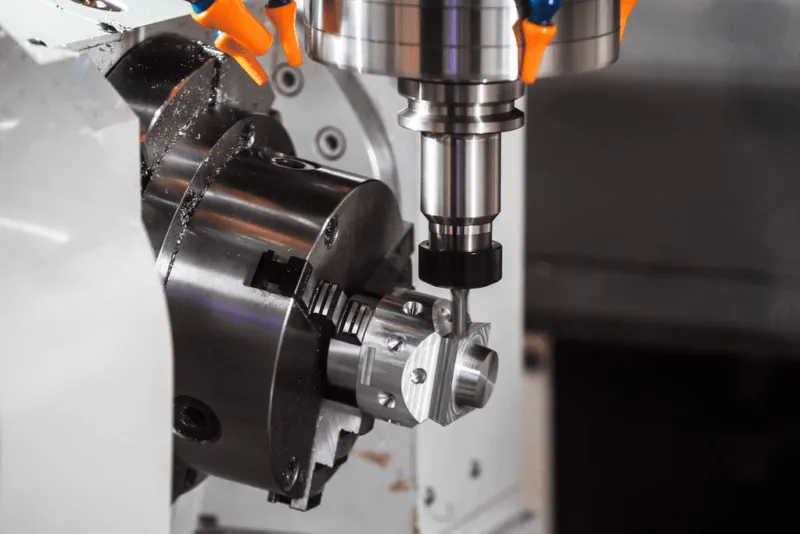
Honyo Prototype employs a structured, technology-driven workflow to determine the effective cost of CNC machining per hour, ensuring transparency and accuracy for clients. This process moves beyond simplistic hourly machine rate assumptions by incorporating comprehensive cost drivers across the entire production lifecycle. The methodology follows five distinct phases:
CAD Upload and Validation
Upon receiving a client’s 3D CAD model, our system performs automated geometry validation and material specification checks. Critical parameters including part complexity, feature tolerances, and stock material dimensions are extracted. This initial analysis feeds into the AI quotation engine, establishing baseline data for runtime estimation. Invalid geometries or ambiguous specifications trigger immediate client communication to prevent downstream cost inaccuracies.
AI-Powered Quotation Engine
Our proprietary AI algorithm calculates the effective hourly cost by analyzing machine runtime, material utilization, and process-specific variables. Unlike competitors quoting raw machine hourly rates, Honyo computes:
Effective Hourly Cost = (Total Job Cost) / (Estimated CNC Runtime)
Total job cost encompasses machine depreciation, tooling consumption, labor, quality control, and facility overheads. The AI cross-references historical production data from 15,000+ completed CNC jobs to predict setup time, cycle time, and secondary operation requirements with 92% accuracy. Typical effective hourly costs range from $120 to $180 depending on machine type and part complexity, though this is never presented as a standalone figure to clients.
DFM Analysis and Cost Optimization
Before finalizing the quote, our engineering team conducts a mandatory Design for Manufacturability review. This phase identifies cost-saving opportunities that directly impact the effective hourly rate:
Eliminating unnecessary tight tolerances reducing machining time by 15-30%
Recommending optimal stock sizes to minimize material waste
Consolidating features to reduce fixture changes
Converting milled features to drill/tap operations where feasible
Each DFM suggestion includes quantified time/cost impact, such as “Changing radius from 0.5mm to 1.0mm reduces runtime by 7.2 minutes per part.” Only after client approval of DFM recommendations is the final effective hourly cost locked.
Production Execution and Cost Tracking
During manufacturing, our MES system logs actual runtime, tool wear, and operator interventions against the quoted parameters. Real-time data capture ensures the effective hourly cost reflects reality:
Machine downtime due to tool breakage is allocated to the job
First-article inspection time is included in quality overhead
Material scrap rates above 5% trigger cost recalculation
This granular tracking allows us to report actual vs. estimated effective hourly costs post-production, typically within 3% variance for qualified parts.
Delivery and Cost Analytics
Upon shipment, clients receive a detailed cost breakdown report showing how the effective hourly cost was derived. Key metrics include:
| Cost Component | Typical Percentage | Impact on Hourly Rate |
|---|---|---|
| Machine Runtime | 55-65% | Base rate driver |
| Material Utilization | 20-25% | Varies by alloy |
| Tooling & Consumables | 8-12% | Increases with hardness |
| Quality Control | 5-8% | Higher for tight tolerances |
| Engineering Overhead | 4-6% | Fixed per job |
This transparent approach demonstrates why quoting a standalone “CNC hourly rate” is misleading—actual costs depend on design efficiency, material selection, and production volume. Honyo’s process ensures clients understand exactly how their design choices impact the effective hourly cost, enabling informed decisions that optimize both part quality and production economics. The average time-to-ship for qualified CNC jobs is 8-12 business days from CAD approval, with all cost variables validated at each workflow stage.
Start Your Project

Looking to understand the cost of CNC machining per hour for your next project? Get a detailed breakdown and competitive pricing from Honyo Prototype.
Our state-of-the-art factory in Shenzhen offers high-precision CNC machining with fast turnaround times, all at transparent hourly rates tailored to your production needs.
Contact Susan Leo today at [email protected] to request a quote or schedule a consultation. Let us help you optimize your manufacturing costs without compromising on quality.
🚀 Rapid Prototyping Estimator
Estimate rough cost index based on volume.