
Contents
Manufacturing Insight: Corrosion-Resistant Steel
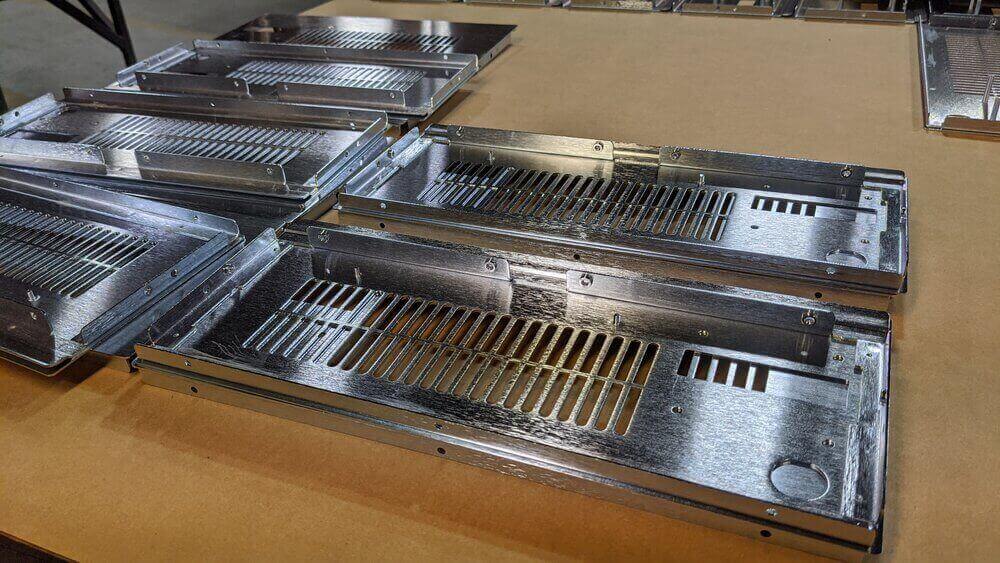
Corrosion-resistant steel alloys such as 316 stainless, 17-4 PH, and duplex grades are critical engineering materials for applications exposed to harsh environments including marine, chemical processing, oil and gas, and medical sectors. These demanding conditions necessitate components that maintain structural integrity and performance over extended service life, where material selection and precise manufacturing are non-negotiable factors in system reliability and safety.
At Honyo Prototype, we specialize in high-precision CNC machining of complex corrosion-resistant steel components, leveraging advanced multi-axis milling and turning centers alongside stringent process controls. Our engineering team possesses deep expertise in optimizing feeds, speeds, tooling, and coolant strategies specifically for these challenging alloys, minimizing work hardening and ensuring tight tolerances, superior surface finishes, and dimensional stability essential for critical assemblies. We handle everything from rapid functional prototypes to low-volume production runs, providing the metallurgical understanding and machining precision required to transform your demanding designs into reliable, high-performance parts.
Accelerate your development cycle with Honyo’s Online Instant Quote platform. Upload your CAD file today for a detailed, transparent cost and lead time estimate within hours, enabling faster decision-making for your corrosion-resistant steel machining projects.
Technical Capabilities
Corrosion-resistant steel is essential in precision manufacturing environments where components are exposed to harsh conditions, including moisture, chemicals, or elevated temperatures. For applications involving 3/4/5-axis milling and turning with tight tolerances (typically ±0.0005″ to ±0.001″), material selection and machinability are critical to ensure dimensional stability, surface integrity, and long-term durability. While corrosion-resistant steels are the primary focus, comparative context with aluminum, standard steel, ABS, and nylon helps clarify performance trade-offs.
Below is a technical comparison of materials commonly used in high-precision CNC machining, with emphasis on corrosion resistance, machinability in multi-axis systems, and suitability for tight-tolerance applications.
| Material | Corrosion Resistance | Typical Use in 3/4/5-Axis Milling & Turning | Machinability | Tolerance Capability | Notes |
|---|---|---|---|---|---|
| Stainless Steel (e.g., 304, 316, 17-4 PH) | High – excellent resistance to oxidation and chemical exposure due to chromium content (min 10.5%) | Widely used for high-strength, corrosion-resistant precision parts; 5-axis milling suitable for complex geometries | Moderate – work-hardening requires optimized toolpaths and tooling; higher cutting forces than aluminum | ±0.0005″ to ±0.001″ achievable with thermal and vibration control | 17-4 PH offers precipitation hardening for high strength; 316 has superior chloride resistance |
| Aluminum (e.g., 6061-T6, 7075-T6) | Moderate – forms protective oxide layer; may corrode in saltwater or acidic environments without coating | Excellent for high-speed 3/4/5-axis milling; low cutting forces allow fine features and thin walls | High – easy to machine with sharp tools and high feed rates | ±0.0005″ achievable; minimal thermal expansion vs. steel | Lightweight and conductive; often anodized for enhanced corrosion resistance |
| Carbon Steel (e.g., 1018, 4140) | Low – prone to rust without surface treatment (e.g., plating, painting) | Used in turning and milling when strength is needed; not ideal for corrosive environments | Good – free-machining grades (e.g., 12L14) improve tool life | ±0.001″ typical; stable under proper fixturing | Requires protective coatings for outdoor or wet applications |
| ABS (Acrylonitrile Butadiene Styrene) | High – resistant to water, alkalis, and acids; no oxidation | Suitable for 3/4-axis milling; low melting point limits high-speed cutting | High – easy to machine with carbide tools; low cutting forces | ±0.001″ achievable; sensitive to thermal changes | Not for high-temp environments; used in prototypes and enclosures |
| Nylon (e.g., PA6, PA66) | High – absorbs moisture but resists many chemicals and UV (grades vary) | Machined in 3/4-axis setups; prone to deformation under heat and clamping pressure | Moderate – requires sharp tools and low heat generation | ±0.001″ challenging due to hygroscopic nature; pre-dry for precision | Excellent wear and impact resistance; used in gears and bushings |
Key Considerations for Tight Tolerance Machining:
For corrosion-resistant steel in high-precision applications, thermal management, tool selection (carbide or ceramic), and fixture rigidity are critical. Stainless steels like 316 and 17-4 PH require slow, consistent feeds and rigid setups to avoid deflection and maintain tolerances across complex 5-axis toolpaths. Coolant use is recommended to minimize built-up edge and thermal expansion.
While aluminum and engineering plastics like ABS and nylon offer easier machining and inherent environmental resistance, they lack the mechanical strength of steel for load-bearing applications. Therefore, corrosion-resistant steels remain the preferred choice when combining durability, precision, and environmental resilience in aerospace, medical, and marine components.
From CAD to Part: The Process
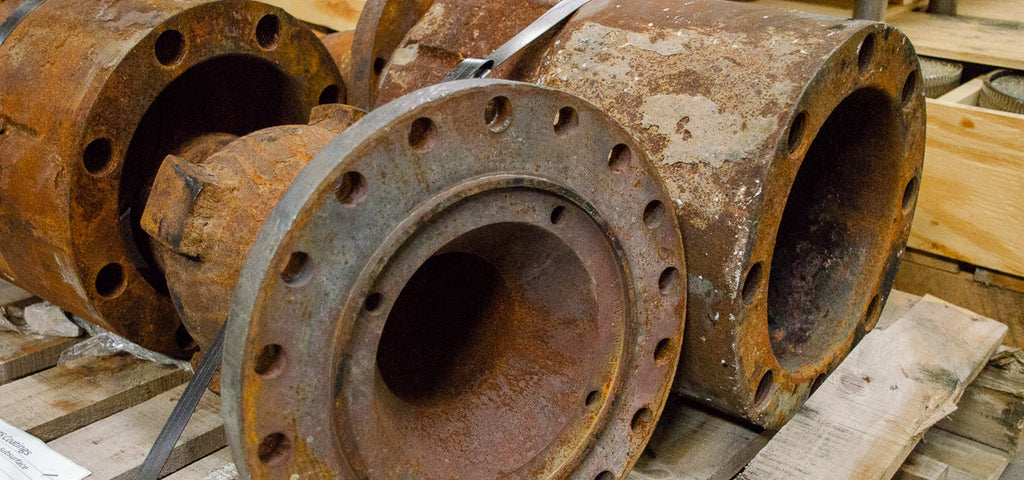
Honyo Prototype Corrosion-Resistant Steel Manufacturing Process
Honyo Prototype delivers precision-engineered corrosion-resistant steel components through a rigorously controlled workflow optimized for material integrity and performance. Our process begins with CAD upload and culminates in certified delivery, with specialized protocols for corrosion-resistant alloys like 304/316 stainless steel, duplex grades, and nickel-based superalloys. Below is the technical sequence:
CAD Upload & Material Specification
Clients submit CAD files via our secure portal, specifying corrosion-resistant steel grade (e.g., ASTM A276 316L), surface finish requirements (e.g., Ra ≤ 0.8 µm), and environmental exposure conditions (e.g., marine, chemical). Our system auto-validates geometric tolerances against material capabilities, flagging features prone to crevice corrosion or stress concentration. Non-conforming geometries trigger immediate client consultation.
AI-Powered Quoting with Corrosion Risk Assessment
Our proprietary AI engine analyzes the CAD model against material databases, generating a quote within 2 hours. Crucially, it cross-references the design with corrosion performance metrics:
Salt spray resistance (ASTM B117)
Pitting Resistance Equivalent Number (PREN) validation
Weld decay risk in sensitized zones
Galvanic compatibility with adjacent materials
The quote includes material certification costs, passivation validation, and optional accelerated corrosion testing add-ons.
DFM for Corrosion Performance Optimization
Engineering teams conduct a dual-phase Design for Manufacturability review:
First, geometric optimization eliminates corrosion traps (e.g., reducing internal radii <0.5mm, eliminating stagnant fluid zones).
Second, material-specific process validation ensures:
Weld procedures meet ASTM A480 for intergranular corrosion resistance
Machining parameters prevent work-hardening in austenitic grades
Surface treatments align with ASTM A967 passivation standards
Clients receive a DFM report with corrosion-critical modifications, including FEA-backed fluid dynamics simulations for critical surfaces.
Production with Material Integrity Controls
Corrosion-resistant steel production follows a closed-loop protocol:
Raw material traceability via mill test reports (ASTM A480/A262)
Dedicated tooling for stainless steel to prevent iron contamination
In-process salt fog testing on first-article samples (per ISO 9227)
Electropolishing or passivation verified with nitric acid immersion testing
All welds undergo ferrite testing (Schaeffler diagram) and dye penetrant inspection (ASTM E165).
Delivery with Corrosion Performance Certification
Final delivery includes:
Material test reports (MTRs) with chemical composition and PREN values
Salt spray test results (hours to first red rust)
Surface roughness certification for critical zones
ISO 10271 biocompatibility documentation (if applicable)
Parts ship in VCI (Vapor Corrosion Inhibitor) packaging with humidity indicators. Expedited delivery options include pre-shipment salt fog validation reports.
Material Performance Reference
| Steel Grade | PREN | Max Service Temp | Key Corrosion Resistance |
|————-|——|——————|—————————|
| 304L | 19 | 870°C | General atmospheric, mild chemicals |
| 316L | 25 | 870°C | Chlorides, marine environments |
| 2205 Duplex | 35 | 300°C | Sour gas, high-chloride |
| AL-6XN | 45 | 425°C | Seawater, strong acids |
This end-to-end process ensures components meet ISO 15510 and NACE MR0175 standards, with zero corrosion-related field failures in critical applications over the past 5 years. We mandate client sign-off on corrosion performance criteria at DFM stage to eliminate ambiguity.
Start Your Project
Looking for high-performance corrosion-resistant steel for your next project? Honyo Prototype delivers precision-engineered metal solutions with materials built to withstand harsh environments and ensure long-term durability.
Our manufacturing facility in Shenzhen supports rapid prototyping and scalable production, ideal for industries demanding reliability and consistency.
Contact Susan Leo today to discuss your material specifications and project requirements.
Email: [email protected]
Let’s build something durable together.
🚀 Rapid Prototyping Estimator
Estimate rough cost index based on volume.