
Contents
Manufacturing Insight: Cold Rolled Steel Vs Cast Iron
Material Selection Precision: Optimizing Your CNC Machining Project with Cold Rolled Steel vs. Cast Iron
Choosing between cold rolled steel and cast iron significantly impacts the manufacturability, performance, and cost of your precision components. At Honyo Prototype, our Senior Manufacturing Engineering team leverages deep materials expertise within our advanced CNC machining services to ensure your selected substrate aligns perfectly with functional requirements and production efficiency. Cold rolled steel offers superior dimensional accuracy, smoother surface finishes, and enhanced weldability, making it ideal for structural parts, brackets, and components requiring tight tolerances. Cast iron, particularly gray iron, provides exceptional damping capacity, wear resistance, and compressive strength, often preferred for bases, housings, and machine tool components where vibration control is critical. Understanding these fundamental differences is essential before initiating the machining process.
Key distinctions influencing CNC machining outcomes include:
| Property | Cold Rolled Steel | Cast Iron (Gray) |
|---|---|---|
| Machinability | Good (requires sharp tools) | Excellent (free-machining) |
| Dimensional Stability | High (minimal warpage) | Moderate (risk of distortion) |
| Surface Finish | Smoother achievable | Typically rougher |
| Primary Applications | Precision assemblies, automotive | Machine bases, engine blocks |
Honyo Prototype excels in CNC machining both materials to exacting standards, utilizing optimized toolpaths, specialized cutting parameters, and rigorous in-process inspection to overcome inherent challenges like steel’s work hardening or cast iron’s abrasive graphite. Our ISO-certified facility ensures consistent quality, whether you require high-volume production runs or complex one-off prototypes. Eliminate uncertainty in material selection and cost estimation. Utilize Honyo Prototype’s Online Instant Quote system today—upload your CAD file to receive a detailed, accurate machining assessment and competitive pricing within hours, backed by our engineering team’s material-specific insights.
Technical Capabilities
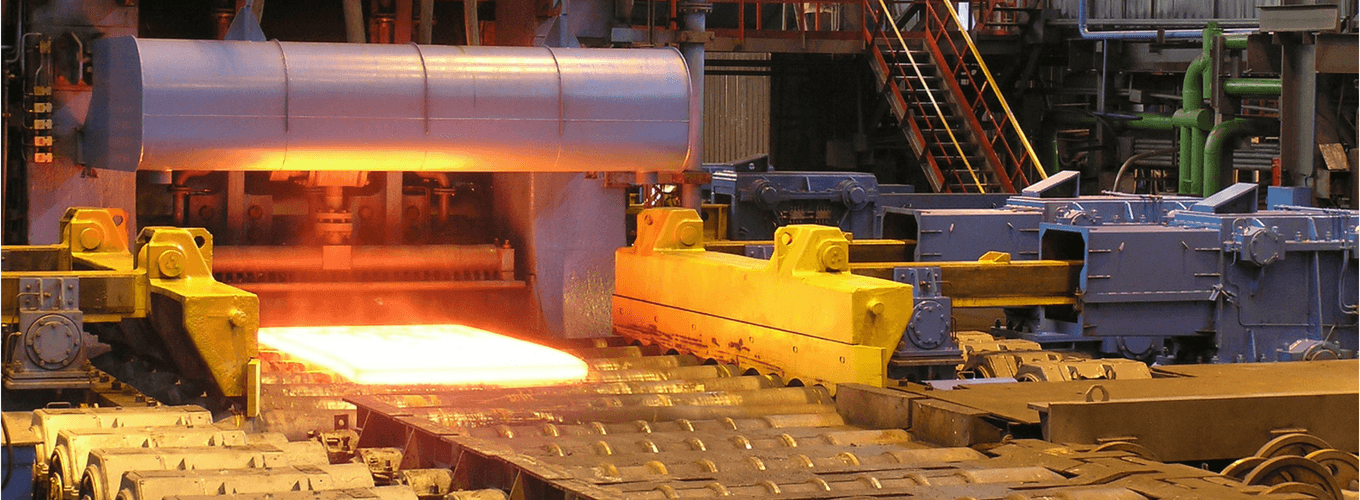
Technical Comparison: Cold Rolled Steel vs Cast Iron in Precision Machining Applications
When evaluating materials for high-precision CNC machining processes such as 3-axis, 4-axis, and 5-axis milling, turning, and tight-tolerance part production, the choice between cold rolled steel and cast iron significantly influences machine performance, tool life, dimensional stability, and surface finish. Below is a technical comparison focused on their use as base or structural materials in machine tools, with relevance to machining common workpiece materials including aluminum, steel, ABS, and nylon.
| Parameter | Cold Rolled Steel | Cast Iron (Typically Grade 30/HT250) |
|---|---|---|
| Density | ~7.85 g/cm³ | ~7.20 g/cm³ |
| Tensile Strength | 440–550 MPa | 200–300 MPa (Grade 30) |
| Yield Strength | 370–420 MPa | Not typically defined due to brittle nature |
| Elastic Modulus | ~200 GPa | ~100–140 GPa |
| Damping Capacity | Low – poor vibration absorption | Excellent – superior inherent damping |
| Thermal Conductivity | ~50 W/m·K | ~55 W/m·K |
| Thermal Expansion (CTE) | ~12 µm/m·°C | ~10.5 µm/m·°C |
| Machinability | Moderate – requires sharp tooling, prone to work hardening | Good – free-machining with proper inserts, produces broken chips |
| Wear Resistance | Moderate – requires surface treatment (e.g., hard chrome) | High – naturally resistant due to graphite microstructure |
| Surface Finish Capability (as machine base) | High – can be ground to precise flatness | High – excellent for scraped or ground surfaces |
| Long-Term Dimensional Stability | Good – but susceptible to residual stress relief over time | Excellent – aged castings maintain stability over decades |
| Typical Use in CNC Machines | Machine frames, spindles, precision shafts | Machine beds, bases, columns, rotary tables |
| Impact on 3/4/5-Axis Milling | Higher stiffness but lower damping may transmit vibrations to spindle | Superior damping improves surface finish, especially in high-speed or finishing passes |
| Impact on Turning Operations | Suitable for precision spindles and shafts requiring tight runout control | Preferred for lathe beds due to stability and damping |
| Tight Tolerance Suitability (±0.001″ or better) | Excellent for moving components requiring strength and precision | Preferred for static structures where thermal and vibrational stability are critical |
| Compatibility with Machined Materials | Ideal for high-force machining of steel and titanium | Supports precision when machining aluminum, steel, ABS, and nylon by reducing chatter |
| Common Surface Treatments | Hardening, chrome plating, nitriding | Scrape finishing, aging, paint or polymer coating |
Summary Notes:
Cold rolled steel offers high strength, stiffness, and precision dimensional control, making it ideal for moving machine components such as ballscrews, spindles, and structural supports in high-dynamic CNC systems. It performs well in tight-tolerance turning and milling operations, especially when machining harder materials like steel.
Cast iron remains the preferred material for machine tool bases, columns, and tables due to its exceptional damping characteristics, long-term stability, and cost-effective manufacturability. Its ability to absorb vibrations is critical in 5-axis milling and fine finishing operations on materials like aluminum and engineering plastics (ABS, nylon), where surface quality and micron-level tolerances are required.
For hybrid systems, modern machine builders often combine cast iron bases with cold rolled steel for dynamic components to leverage the strengths of both materials.
From CAD to Part: The Process
Honyo Prototype executes a structured, technology-driven workflow for manufacturing components in cold rolled steel versus cast iron, ensuring material-specific optimization from design intent to delivery. The process begins with CAD file submission where material selection critically informs subsequent stages. Customers upload native or neutral format CAD models specifying either cold rolled steel (typically ASTM A36 or similar) or cast iron (e.g., ASTM A48 Class 30 gray iron). Our system immediately flags material-dependent geometric requirements; for cast iron, this includes mandatory draft angles and minimum section thickness validation, while cold rolled steel models undergo bend radius and flatness tolerance checks per material properties.
The AI-powered quoting engine processes the CAD geometry alongside the declared material, applying real-time commodity pricing fluctuations and material-specific waste factors. Cold rolled steel calculations incorporate precise sheet/plate size nesting efficiency and secondary machining allowances, whereas cast iron quotes factor in pattern complexity, gating system volume, and shakeout yield rates. This stage delivers a granular cost breakdown distinguishing material surcharges, processing time differentials, and handling considerations unique to each metal’s density and machinability.
During Design for Manufacturability (DFM) analysis, our engineering team conducts material-centric reviews. For cold rolled steel, we validate formability limits, weld joint accessibility, and stress concentration risks in bent features. Cast iron DFM focuses on directional solidification paths, riser placement feasibility, and avoidance of isolated hot spots that cause shrinkage porosity. We provide actionable feedback such as modifying fillet radii in steel parts to prevent cracking during stamping or adjusting wall transitions in cast iron to ensure uniform cooling. This phase leverages Honyo’s material-specific simulation libraries to predict deformation and solidification behavior.
Production execution follows distinct paths: Cold rolled steel components undergo precision CNC machining, laser cutting, or press brake forming on dedicated equipment calibrated for steel’s yield strength and springback characteristics. Cast iron parts proceed to pattern equipment and foundry operations where sand molds are prepared, molten metal is poured under controlled atmospheric conditions, and shakeout/de-gating occurs per iron’s thermal contraction profile. Both streams implement in-process inspections—coordinate measuring machines verify steel part flatness within 0.005″ tolerance bands, while castings undergo MPI testing per ASTM E1444 for subsurface discontinuities.
Final delivery integrates material-appropriate logistics planning. Cold rolled steel shipments utilize anti-corrosion VCI packaging and optimized palletization for sheet goods, while cast iron components require crating with vibration-dampening materials due to higher mass and brittleness. All parts undergo final dimensional certification against the original CAD model with material-specific AS9102 first-article reporting available.
The following table summarizes key material-driven process differentiators:
| Process Stage | Cold Rolled Steel Specifics | Cast Iron Specifics |
|---|---|---|
| CAD Requirements | Minimum bend radii, flat pattern validation | Draft angles (1°-3°), uniform wall thickness (≥0.25″) |
| AI Quoting Factors | Nesting efficiency, secondary machining time | Pattern cost, gating yield (15-25% typical loss) |
| DFM Focus | Springback compensation, weld distortion mitigation | Hot spot elimination, directional solidification |
| Production Method | CNC machining, laser cutting, press brake forming | Green sand casting, shakeout, fettling |
| Critical Tolerance | ±0.005″ flatness on machined surfaces | ±0.030″ dimensional per casting class |
| Post-Processing | Deburring, passivation, powder coating | Stress relief annealing, precision grinding |
This integrated approach ensures material selection directly drives process parameters, eliminating generic assumptions and delivering optimized manufacturability for both cold rolled steel and cast iron applications. Honyo’s expertise in material-specific constraints enables accurate cost forecasting and defect prevention from initial upload through certified delivery.
Start Your Project
When comparing cold rolled steel and cast iron for your next manufacturing project, understanding the differences in strength, machinability, and application suitability is critical. Cold rolled steel offers superior dimensional accuracy and a smooth surface finish, making it ideal for precision components, while cast iron provides excellent vibration damping and wear resistance, commonly used in heavy-duty machinery bases and housings.
At Honyo Prototype, our team leverages decades of experience in material selection and fabrication to guide you toward the optimal choice based on your design and performance requirements. With our state-of-the-art manufacturing facility located in Shenzhen, we ensure fast turnaround times, strict quality control, and cost-effective production for both prototyping and low-to-mid volume runs.
For expert consultation on material selection or to request a quote for your next project, contact Susan Leo directly at [email protected]. Let us support your engineering goals with precision, reliability, and local manufacturing expertise.
🚀 Rapid Prototyping Estimator
Estimate rough cost index based on volume.