
Contents
Manufacturing Insight: Cold Rolled Steel Material
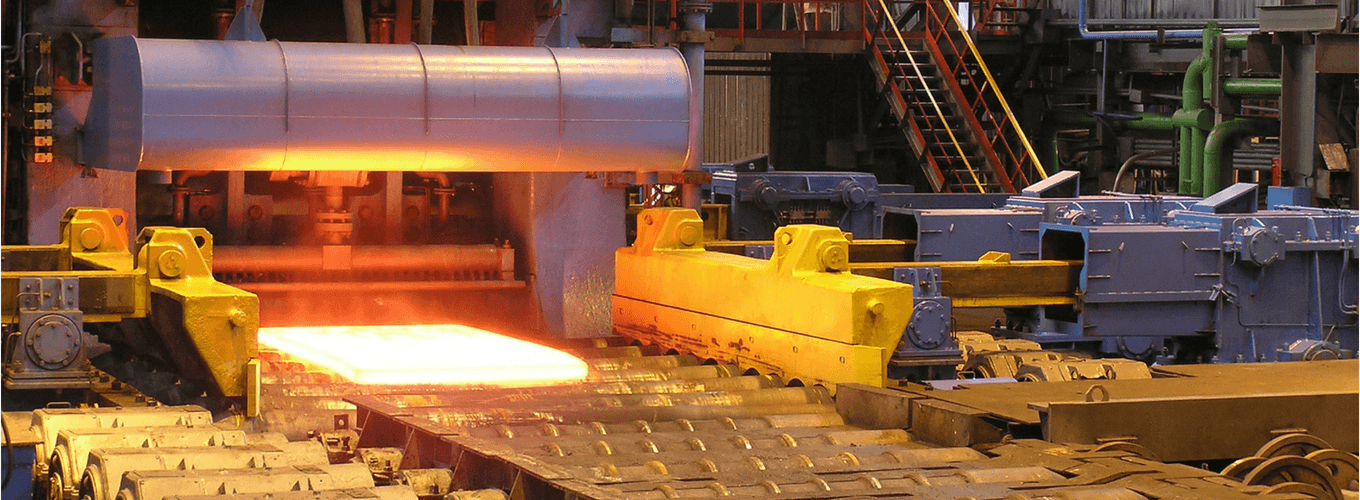
Precision Machining Excellence Starts with Superior Cold Rolled Steel
Cold rolled steel remains a cornerstone material for demanding precision components due to its exceptional dimensional accuracy, superior surface finish, and enhanced mechanical properties compared to hot rolled alternatives. The cold rolling process imparts critical characteristics—reduced internal stress, tighter thickness tolerances, and a smoother, scale-free surface—making it inherently ideal for high-precision CNC machining operations where consistency and repeatability are non-negotiable. At Honyo Prototype, we leverage these inherent advantages of cold rolled steel grades like 1008, 1010, and 1018 to deliver machined parts meeting the most stringent aerospace, medical, and industrial automation specifications.
Our advanced CNC machining capabilities are specifically optimized for cold rolled steel’s predictable behavior. Utilizing state-of-the-art 3-, 4-, and 5-axis machining centers equipped with high-precision tooling and rigorous in-process inspection protocols, Honyo consistently achieves tolerances down to ±0.0002″ (5µm) on complex geometries. This precision, combined with our deep material science expertise in managing cold rolled steel’s work hardening tendencies and thermal characteristics, minimizes scrap rates and ensures first-article success. We provide comprehensive finishing options including deburring, passivation, and precision cleaning to meet exact application requirements.
Material selection directly impacts manufacturability and final part performance. The table below highlights key advantages of cold rolled steel relevant to precision machining:
| Property | Benefit for CNC Machining |
|---|---|
| Tight Thickness Tolerance | Reduced stock variation enables consistent tool paths and predictable chip loads |
| Smooth Surface Finish | Minimizes tool wear, improves surface integrity of machined features |
| Lower Residual Stress | Enhances dimensional stability during and after machining |
| Uniform Grain Structure | Promotes consistent cutting forces and surface finish |
Leveraging cold rolled steel with Honyo’s precision CNC services translates to faster time-to-market, reduced total cost of ownership, and components that perform reliably in critical applications. Begin your project with confidence: access our Online Instant Quote platform today. Upload your CAD file to receive a detailed, accurate machining quotation for cold rolled steel parts within hours—not days—enabling rapid design validation and seamless transition to production.
Technical Capabilities
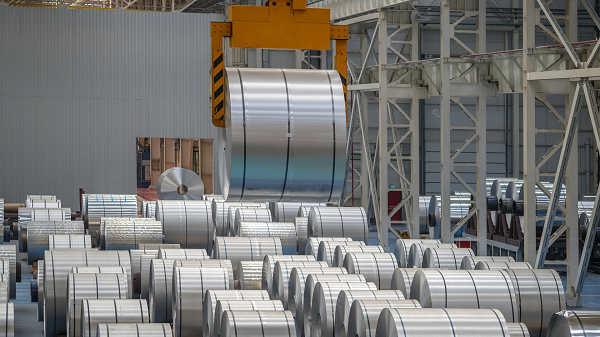
Cold rolled steel is a widely used material in precision CNC machining applications, particularly in 3, 4, and 5-axis milling and turning operations where tight tolerances, excellent surface finish, and dimensional accuracy are critical. It is produced by further processing hot rolled steel at room temperature, which enhances its mechanical properties, improves surface quality, and provides tighter dimensional control.
Cold rolled steel exhibits high strength, good machinability, and improved surface finish compared to hot rolled variants, making it ideal for components requiring tight tolerances (±0.0005″ to ±0.005″ typical). It responds well to CNC milling and turning processes across multi-axis platforms due to its uniform grain structure and reduced internal stresses.
Below is a comparison of cold rolled steel with other commonly machined materials in high-precision applications:
| Material | Typical Grades | Tensile Strength (psi) | Hardness (HB) | Machinability Rating (%) | Common Applications in CNC | Suitability for Tight Tolerance ±0.001″ | Notes on 3/4/5-Axis Milling & Turning |
|---|---|---|---|---|---|---|---|
| Cold Rolled Steel | 1018, 1020, 1045 | 60,000 – 85,000 | 120 – 200 | 55 – 70 | Shafts, brackets, fixtures, precision components | Excellent | High rigidity and dimensional stability; excellent for complex geometries; requires proper tooling due to abrasiveness |
| Aluminum | 6061-T6, 7075-T6, 2024-T3 | 45,000 – 83,000 | 95 – 150 | 90 – 100 | Aerospace parts, enclosures, heat sinks | Excellent | High material removal rates; ideal for high-speed 5-axis milling; minimal thermal deformation |
| ABS | Standard, Flame Retardant Grades | 4,500 – 6,000 | 80 – 100 | 100+ | Prototypes, housings, jigs, non-structural parts | Good | Low melting point; requires sharp tools and light cuts; best for low-stress applications |
| Nylon | Nylon 6, Nylon 6/6, Glass-Filled | 7,000 – 12,000 | 70 – 90 | 80 – 90 | Insulators, gears, wear components | Moderate | Prone to creep and moisture absorption; needs stress relief; use with care in high-precision roles |
Cold rolled steel is particularly valued in environments requiring repeatable precision and long-term durability. In multi-axis machining, it allows for intricate contouring and deep cavity milling when paired with rigid setups and carbide tooling. Coolant and chip evacuation are critical to maintaining tight tolerance integrity and surface finish.
For applications demanding the highest accuracy and mechanical performance, cold rolled steel remains a preferred choice over plastics like ABS and Nylon, though aluminum often competes due to its lighter weight and superior machinability.
From CAD to Part: The Process
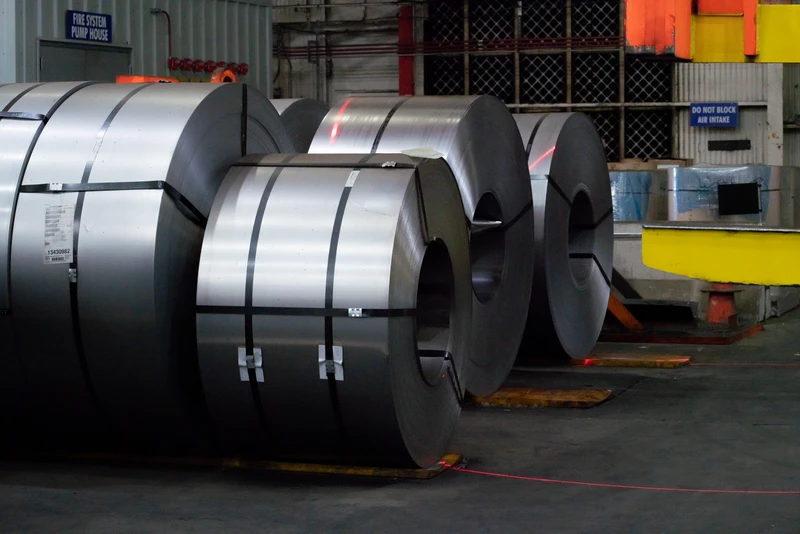
Honyo Prototype Cold Rolled Steel Manufacturing Process
Honyo Prototype executes a rigorously controlled workflow for cold rolled steel (CRS) components, ensuring dimensional precision, material integrity, and on-time delivery. Our integrated digital-to-physical pipeline begins with client CAD submission and concludes with certified shipment. Below is the technical sequence:
Upload CAD
Clients initiate the process by uploading native or neutral-format CAD files (STEP, IGES, Parasolid) via our secure customer portal. For cold rolled steel projects, we explicitly require material grade specifications (e.g., ASTM A1008 CS Type B, DC01/DC04), thickness tolerances per ASTM A568, and critical surface finish requirements. Geometric dimensioning and tolerancing (GD&T) annotations must align with ASME Y14.5 standards to avoid downstream ambiguities. Non-compliant submissions trigger an automated validation alert prior to quote generation.
AI Quote Generation
Our proprietary AI quoting engine processes the CAD geometry, material specs, and client-defined parameters (quantity, lead time, finish). The system cross-references real-time cold rolled steel coil pricing from tier-1 mills, scrap rate algorithms based on part complexity, and machine-hour costs from our press brake and laser cutting databases. Crucially, the AI applies CRS-specific rules: accounting for grain direction effects on bend allowances, springback compensation factors per yield strength, and minimum bend radii validation against material thickness. Quotes include material certification costs (e.g., mill test reports per ASTM A751) and surface protection requirements (e.g., oiled vs. dry sheet). Typical quote turnaround is under 2 hours for standard CRS geometries.
DFM Analysis
All CRS orders undergo mandatory Design for Manufacturability review by our engineering team. This phase identifies CRS-specific risks:
Verification of bend radii against material ductility (e.g., 0.8mm min radius for 2mm CR1018)
Grain orientation analysis for parts requiring tight angular tolerances
Flat pattern nesting efficiency to minimize coil width waste
Springback mitigation strategies for critical bend angles
Surface mar resistance assessment for cosmetic-facing features
Client collaboration occurs within 24 hours if modifications are needed. Revised flat patterns or tolerance adjustments are provided with technical justification per ISO 2768-mK standards.
Production Execution
Approved DFM packages move to production with CRS-specific protocols:
Material staging from climate-controlled inventory (max 40% humidity to prevent flash rust)
Laser cutting using nitrogen assist gas to maintain oxide-free edges per AMS 2750
CNC press brake forming with real-time tonnage monitoring to prevent over-stressing
In-process inspection at 1st article, mid-lot, and final using calibrated CMMs (ISO 10360-2)
Optional secondary operations (e.g., robotic deburring, powder coating) under controlled environmental conditions
Delivery Certification
Final inspection includes full CRS compliance documentation:
Dimensional reports against client’s critical-to-quality (CTQ) features
Material traceability from mill certificate to finished part
Surface roughness validation per Ra 1.6μm (typical for CRS)
Packaging in VCI paper with humidity indicators for transit protection
Standard lead time is 7–10 business days from DFM sign-off. Expedited options are quantified below:
| Service Tier | Lead Time | Cost Impact | CRS-Specific Constraints |
|---|---|---|---|
| Standard | 7–10 days | Base rate | Full DFM cycle, standard material allocation |
| Accelerated | 5–7 days | +18% | Pre-staged coil inventory, priority machine scheduling |
| Emergency | 72 hours | +35% | Limited to thickness ≤3mm, max 1m x 2m flat patterns |
All shipments include PPAP Level 3 documentation upon request, with CRS parts meeting ISO 9001:2015 and IATF 16949 requirements. This end-to-end control ensures cold rolled steel components achieve target mechanical properties and surface integrity without secondary stress relief.
Start Your Project
Looking for high-quality cold rolled steel material for your next manufacturing project? Honyo Prototype offers precision-engineered cold rolled steel solutions produced in our Shenzhen factory, ensuring tight tolerances, superior surface finish, and consistent mechanical properties.
Contact Susan Leo today at [email protected] to request material specifications, pricing, or samples. Let us support your production needs with reliable, on-time delivery and technical expertise tailored to your application.
🚀 Rapid Prototyping Estimator
Estimate rough cost index based on volume.