
Contents
Manufacturing Insight: Cold Formed And Hot Rolled Steel
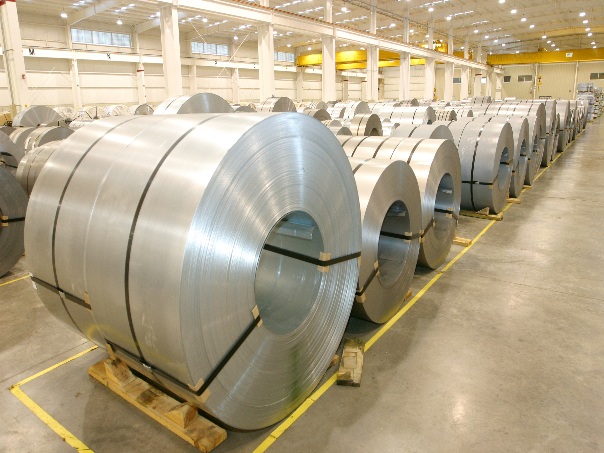
Material Expertise for Precision Steel Components
Selecting between cold formed and hot rolled steel significantly impacts the structural integrity, surface finish, and manufacturability of your prototype or low-volume production parts. Cold formed steel delivers enhanced strength, tighter dimensional tolerances, and a superior surface quality ideal for precision-critical applications, while hot rolled steel offers cost efficiency and material ductility for robust structural components where exact dimensions are less critical. At Honyo Prototype, our advanced CNC machining capabilities are optimized to handle both material types with uncompromising accuracy, achieving tolerances down to ±0.005 mm across complex geometries.
Integrated CNC Machining for Streamlined Prototyping
Leveraging state-of-the-art 3-, 4-, and 5-axis CNC systems, we transform your steel material specifications into fully functional prototypes or bridge production parts with rapid turnaround. Our engineering team applies deep material science knowledge to program optimal toolpaths, mitigate residual stresses inherent in cold formed sections, and address the scaling challenges of hot rolled stock—ensuring dimensional stability and repeatability. This technical rigor eliminates costly redesigns and accelerates time-to-test for demanding industrial, automotive, and aerospace applications.
Accelerate Your Development Cycle with Real-Time Quoting
Eliminate procurement delays with Honyo’s Online Instant Quote platform. Simply upload your CAD file, specify material requirements (including cold formed or hot rolled steel grades), and receive a detailed manufacturability analysis with pricing and lead time in under 60 seconds. This seamless integration of engineering insight and digital efficiency allows you to iterate faster, validate designs earlier, and transition confidently from prototype to production. Partner with Honyo Prototype for steel components where material expertise meets machining precision.
Technical Capabilities
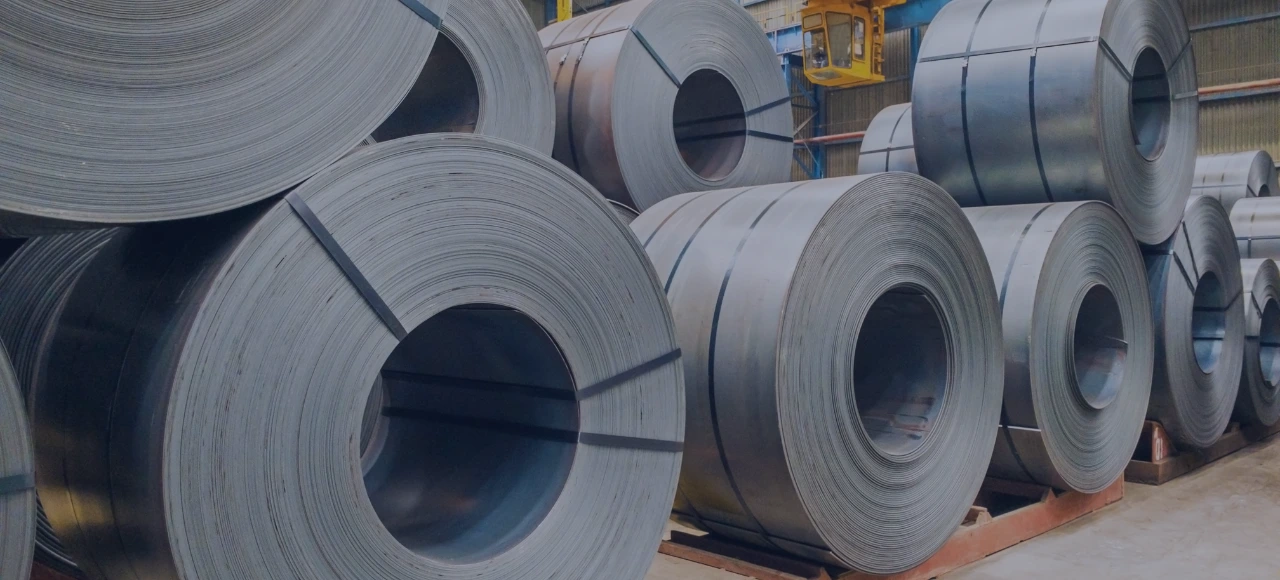
Cold formed and hot rolled steel are two distinct manufacturing processes for steel that influence the material’s mechanical properties, dimensional accuracy, and suitability for precision machining operations such as 3/4/5-axis milling and turning. Cold forming is performed at room temperature, resulting in improved surface finish, tighter dimensional control, and increased strength due to strain hardening. Hot rolling occurs above the recrystallization temperature of steel, producing larger shapes with less precise tolerances but better formability for bulky sections.
For high-precision CNC machining applications—especially those requiring tight tolerances (±0.0005″ or better)—material consistency, machinability, and stability are critical. While cold formed steel offers better dimensional accuracy than hot rolled, neither is typically preferred over free-machining steels (e.g., 12L14) or stress-relieved bar stock for tight-tolerance components. However, when steel must be used, cold formed variants are more suitable due to improved uniformity.
Below is a comparative table outlining key technical considerations for selected materials in multi-axis milling and turning applications, with emphasis on tight tolerance performance.
| Material | Form/Process | Typical Tolerance (Machined) | Machinability (Relative) | Surface Finish (Achievable) | Dimensional Stability | Notes for 3/4/5-Axis Milling & Turning |
|---|---|---|---|---|---|---|
| Aluminum 6061-T6 | Extruded / Bar | ±0.0005″ – ±0.001″ | Excellent | 32–64 μin Ra | High | Preferred for complex, tight-tolerance parts; excellent chip flow and thermal conductivity; ideal for high-speed 5-axis milling. |
| Steel 12L14 | Cold Drawn | ±0.0005″ – ±0.001″ | Excellent | 64–125 μin Ra | High | Free-machining steel; excellent for precision turning and milling; cold drawing ensures tight initial tolerances and uniformity. |
| Steel (Hot Rolled) | Hot Rolled | ±0.005″ – ±0.010″ (as-machined) | Moderate to Poor | 125–250 μin Ra | Low to Moderate | Not recommended for tight-tolerance parts; internal stresses may cause warping during machining; requires stress relief before precision work. |
| Steel (Cold Formed) | Cold Formed | ±0.002″ – ±0.005″ | Moderate | 64–125 μin Ra | Moderate | Better dimensional control than hot rolled; suitable for moderate precision parts; may require stress relief for critical applications. |
| ABS (Plastic) | Extruded / Cast | ±0.002″ – ±0.005″ | Good | 32–64 μin Ra | Low | Easy to machine with sharp tools; low melting point requires careful speed/feed control; used for prototypes and non-structural components. |
| Nylon 6/6 | Cast / Extruded | ±0.003″ – ±0.008″ | Good | 64–125 μin Ra | Low | Hygroscopic—dimensional changes with moisture; requires dry machining and post-process conditioning; suitable for low-friction wear parts. |
In high-precision CNC environments, aluminum 6061-T6 and cold drawn free-machining steels (e.g., 12L14) are preferred for tight-tolerance components due to their predictable behavior, consistent microstructure, and excellent machinability. Cold formed steel can be used when moderate precision is acceptable, but hot rolled steel is generally avoided unless followed by stress-relieving and semi-precision machining. Non-metallic materials like ABS and Nylon are used in prototyping or specialized applications but require environmental and thermal compensation for tight-tolerance features.
From CAD to Part: The Process
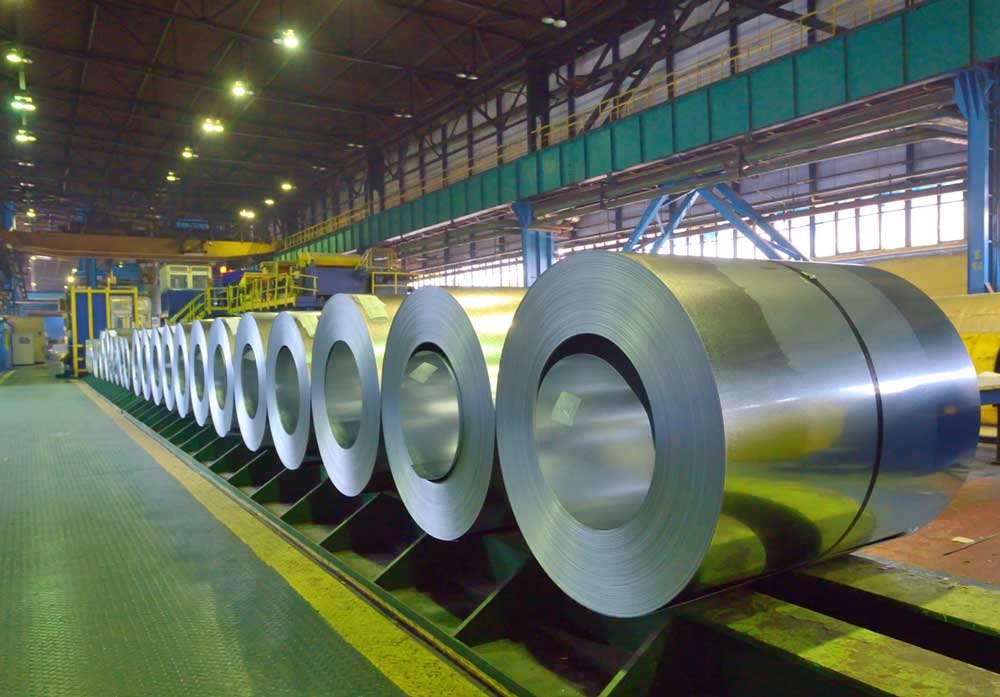
Honyo Prototype executes a streamlined, technology-driven workflow for cold formed and hot rolled steel components, ensuring precision and efficiency from initial design to final shipment. This integrated process minimizes lead times while maintaining rigorous quality standards essential for industrial applications.
Upon CAD model upload to our secure customer portal, our AI-powered quoting engine immediately analyzes geometry, material specifications, and critical tolerances. For cold formed steel, the system evaluates bend radii, hole proximity to bends, and springback compensation requirements. For hot rolled steel, it assesses mill tolerance allowances, scaling effects on surface finish, and thermal distortion risks during secondary operations. The AI generates a preliminary cost and timeline within 2 business hours, incorporating real-time material cost databases and machine availability metrics. All quotes undergo human validation by our applications engineering team to verify feasibility.
The Design for Manufacturability (DFM) phase is where material-specific expertise becomes critical. Our engineers conduct a dual-path analysis:
For cold formed parts, we validate formability using finite element analysis (FEA) to predict material flow, thinning risks, and tooling requirements. We specifically check for notch sensitivity in high-strength steels and recommend punch/die clearances optimized for your grade (e.g., ASTM A367 for cold rolled vs. ASTM A1008 for structural forms).
For hot rolled components, we focus on as-rolled surface characteristics, potential camber in long sections, and machining allowances to remove mill scale. We provide actionable feedback on feature placement to avoid warpage during heat treatment and suggest cost-saving adjustments like consolidating secondary operations. Clients receive a detailed DFM report with annotated CAD markups and tolerance stack-up analysis within 48 hours of quote acceptance.
Production leverages dedicated material-specific workflows. Cold forming occurs on our 200-ton Amada press brakes with real-time laser bend angle monitoring, while hot rolled sections move through our shot-blasting line before CNC machining to ensure scale-free surfaces. All steel undergoes material certification verification against your specified standard (e.g., ASTM A36, A572, or SAE 1008). In-process inspections include first-article dimensional reports per ASME Y14.5 and ultrasonic thickness verification for critical formed zones.
Final delivery includes comprehensive traceability documentation: mill test reports, heat-treated certifications where applicable, and a dimensional conformance certificate with actual vs. nominal measurements for key features. Parts ship in custom-engineered packaging with humidity control for corrosion-prone grades, with global logistics options including bonded warehouse availability. Typical lead times range from 7 days for simple cold formed brackets to 15 days for complex hot rolled assemblies, with rush protocols available for time-critical industrial projects.
This end-to-end process ensures your cold formed or hot rolled steel components meet both functional requirements and production economics, with zero surprises from quotation through delivery.
Start Your Project
Looking for high-quality cold formed and hot rolled steel solutions tailored to your manufacturing needs? Honyo Prototype offers precision-engineered steel components with fast turnaround times, leveraging our state-of-the-art facility in Shenzhen.
Contact Susan Leo today at [email protected] to discuss your project requirements and discover how our expertise in cold formed and hot rolled steel can support your production goals.
🚀 Rapid Prototyping Estimator
Estimate rough cost index based on volume.