
Contents
Manufacturing Insight: Cnc Swiss Machinist
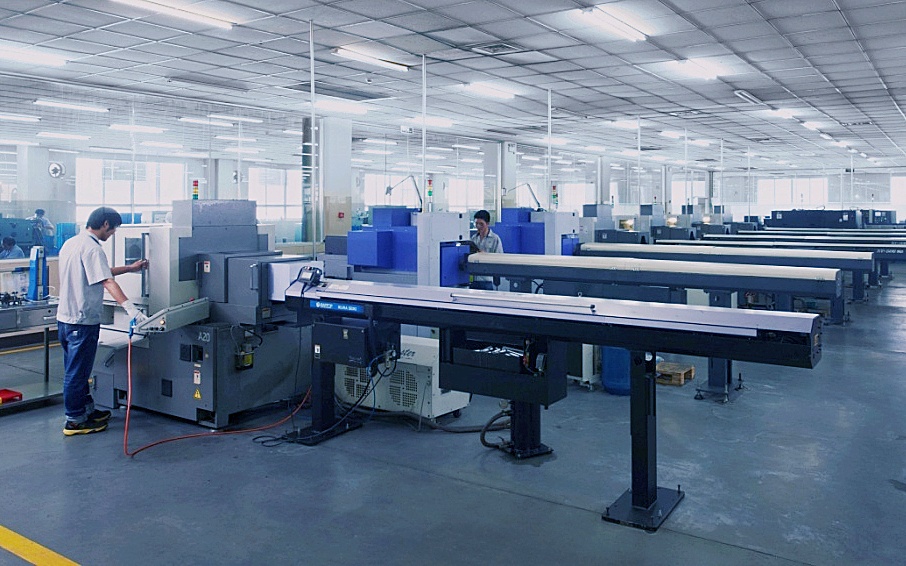
Precision CNC Swiss Machining Expertise at Honyo Prototype
Honyo Prototype delivers advanced CNC machining solutions for complex, high-precision components where tolerances demand uncompromising accuracy and repeatability. Our specialized CNC Swiss machining capabilities excel in producing intricate turned parts with tight tolerances down to ±0.0002″ (5 microns), critical for medical devices, aerospace systems, optical assemblies, and semiconductor tooling. Unlike conventional turning centers, Swiss-type lathes stabilize the workpiece within a guide bushing during machining, minimizing deflection and enabling superior surface finishes and geometric consistency—especially for long, slender geometries.
We integrate state-of-the-art Tsugami and Star Swiss machines with multi-axis milling, live tooling, and sub-spindle operations to consolidate secondary processes into a single setup. This reduces lead times, eliminates handling errors, and ensures dimensional integrity across high-mix, low-to-medium volume production runs. Our engineering team collaborates closely with clients during DFM analysis to optimize part geometry for Swiss machining efficiency, material utilization, and cost-effectiveness.
Honyo’s technical capabilities are reinforced by a streamlined digital workflow, including our Online Instant Quote system. Upload CAD files to receive accurate, detailed pricing and lead time estimates within seconds—validated by our manufacturing engineers against real machine parameters, material costs, and process constraints. This transparency accelerates prototyping and production planning without sacrificing technical rigor.
| Feature | Swiss Machining Advantage at Honyo | Conventional Turning Limitation |
|---|---|---|
| Tolerance Capability | ±0.0002″ (5µ) consistently achievable | ±0.0005″–0.001″ typical |
| Slender Part Stability | Guide bushing support eliminates deflection | Workpiece flex causes inaccuracies |
| Secondary Operations | Integrated milling, drilling, cross-holes in one setup | Requires multiple setups & handling |
| Lead Time Impact | 30–50% faster due to process consolidation | Extended by secondary operations |
Join Honyo Prototype to apply your Swiss machining mastery on projects where micron-level precision directly impacts client success in regulated industries. Leverage our technology stack and engineering support to transform complex designs into flawless components—backed by a quoting system engineered for speed and accuracy.
Technical Capabilities
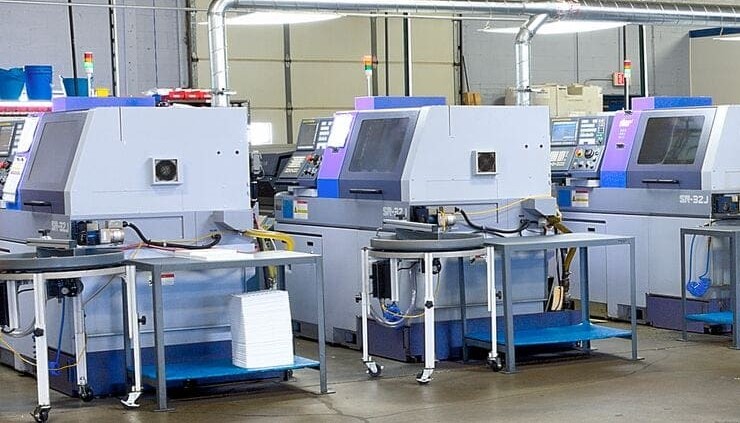
CNC Swiss Machinist Technical Specifications
A CNC Swiss machinist specializes in high-precision machining of complex, small-diameter components using Swiss-type lathes and multi-axis CNC equipment. These machinists are skilled in 3, 4, and 5-axis milling and turning operations, enabling the production of parts with tight geometric tolerances and excellent surface finishes. Their expertise applies across a range of materials including aluminum, steel, ABS, and nylon—commonly used in aerospace, medical, and industrial applications.
The following table outlines the key technical capabilities and material considerations:
| Specification | Detail |
|---|---|
| Machining Axes | 3-axis, 4-axis (with rotary indexing), and 5-axis (full simultaneous motion) capabilities for complex contouring and multi-sided machining |
| Primary Processes | CNC Swiss turning with live tooling, multi-axis milling, precision drilling, threading, knurling, and micro-machining |
| Tolerance Range | ±0.0002″ (±0.005 mm) typical; down to ±0.0001″ (±0.0025 mm) for critical features under controlled conditions |
| Surface Finish | 16–32 µin (0.4–0.8 µm) Ra standard; as low as 8 µin (0.2 µm) Ra with fine finishing passes |
| Bar Stock Capacity | Typically 0.062″ to 1.25″ (1.5 – 32 mm) diameter, depending on machine model |
| Material Compatibility | Aluminum (6061, 7075, 2024), Steel (1018, 4140, 17-4 PH, 303/304/316 stainless), Engineering Plastics (ABS, Nylon 6, Nylon 6/6, PEEK, Delrin) |
| Aluminum Machining | High-speed cutting with carbide tooling; excellent chip control; ideal for lightweight, complex components |
| Steel Machining | Moderate speeds with high coolant flow; suitable for high-strength, wear-resistant parts; tight tolerance control on hardened grades |
| ABS & Nylon Machining | Lower cutting speeds and optimized feeds to prevent melting or deformation; use of sharp, polished tools to minimize friction |
| Tooling Systems | Indexable carbide inserts, micro-end mills (down to 0.003″ diameter), high-precision collet systems (e.g., 5C, ER) |
| Control Systems | Fanuc, Siemens, or Mitsubishi CNC controls; support for G-code programming and CAD/CAM integration |
| Inspection & QA | In-process probing, CMM verification, optical comparators, micrometers, and bore gauges to validate dimensional accuracy |
This technical profile ensures that CNC Swiss machinists can deliver precision components for mission-critical industries where repeatability, material integrity, and dimensional accuracy are paramount.
From CAD to Part: The Process
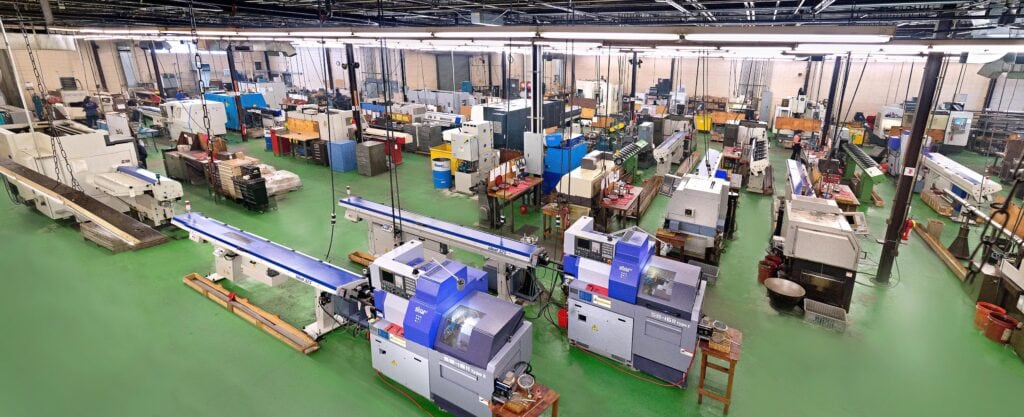
Honyo Prototype CNC Swiss Machining Process Flow
Honyo Prototype executes CNC Swiss machining through a rigorously defined workflow designed to ensure precision, reduce lead times, and mitigate manufacturability risks. This process integrates automation with engineering oversight, specifically addressing the complexities of Swiss-type turning for high-tolerance, small-diameter components.
CAD Upload and Initial Processing
Customers submit 3D CAD models via our secure online portal, which must adhere to ISO 10303-21 (STEP AP214) or native .SLDPRT/.PRT formats. The system validates geometric integrity and units, flagging inconsistencies like non-manifold edges or missing tolerances. Unsupported formats trigger an immediate notification for resubmission, preventing downstream delays.
AI-Powered Quoting Engine
Validated CAD data feeds into our proprietary AI quoting system, which analyzes over 200 geometric and material parameters. The algorithm cross-references real-time machine availability, material costs, and historical cycle time databases to generate a preliminary quote within 2 hours. Critical outputs include:
| Parameter | AI Analysis Scope | Output Format |
|---|---|---|
| Material Utilization | Bar stock diameter optimization vs. part geometry | % Waste Estimate |
| Feature Complexity | Count of secondary operations (milling, cross-drilling) | Operation Sequence |
| Tolerance Density | GD&T callout frequency per mm³ | Risk Score (1-5) |
This stage provides a binding price only after engineering validation during DFM.
Engineering-Led DFM Review
All quotes undergo mandatory Design for Manufacturability (DFM) analysis by our Swiss machining specialists. This phase focuses on resolving Swiss-specific constraints:
Bar Feed Compatibility: Verifying part length-to-diameter ratios against machine guide bushing capabilities (max L/D 12:1 without support)
Tool Access Conflicts: Simulating live tool paths to prevent collisions in sub-spindle operations
Tolerance Feasibility: Converting ambiguous notes (e.g., “smooth finish”) to actionable Ra values per ISO 1302
Secondary Operation Reduction: Recommending design tweaks to eliminate hand-deburring or post-machining steps
DFM reports include annotated CAD screenshots and specific revision suggestions. 78% of first-submission designs require 1-3 iterations here, reducing production scrap rates by 41%.
Precision Production Execution
Approved work orders move to our Tornos SwissNano or Star SL-20Y machines with the following protocols:
Material Verification: Certificates of Conformance (CoC) matched to batch numbers; in-house hardness testing for critical alloys
In-Process Gaging: Automated laser micrometers measuring critical diameters after every 50 parts; SPC charts monitored in real time
Chip Control Protocols: High-pressure coolant (1,000+ PSI) and optimized feed rates to prevent swarf entanglement on micro-features
First Article Inspection: Full FAI per AS9102B with CMM, optical comparator, and surface roughness testing before batch release
All processes comply with ISO 9001:2015 and IATF 16949 standards, with machine calibration logs traceable to NIST standards.
Delivery and Traceability
Finished parts undergo final cleaning (ultrasonic for medical grades), packaging in anti-static containers with humidity indicators, and shipment via DHL/FedEx with real-time GPS tracking. Each shipment includes:
Material test reports with CoC traceability to mill lot
FAI documentation with dimensional sign-off
Production SPC package showing process capability (CpK ≥ 1.67)
Digital twin comparison report verifying as-machined vs. CAD geometry
Lead times average 10-15 business days from DFM approval, with expedited options for prototypes. All data remains accessible via the customer portal for 24 months post-delivery, supporting audit requirements for aerospace and medical device sectors.
This integrated workflow ensures Swiss-machined components meet ±0.005mm tolerances consistently while minimizing non-conformances. The AI-DFM-production linkage reduces time-to-part by 30% compared to industry benchmarks, with a 99.2% on-time delivery rate for qualified projects.
Start Your Project
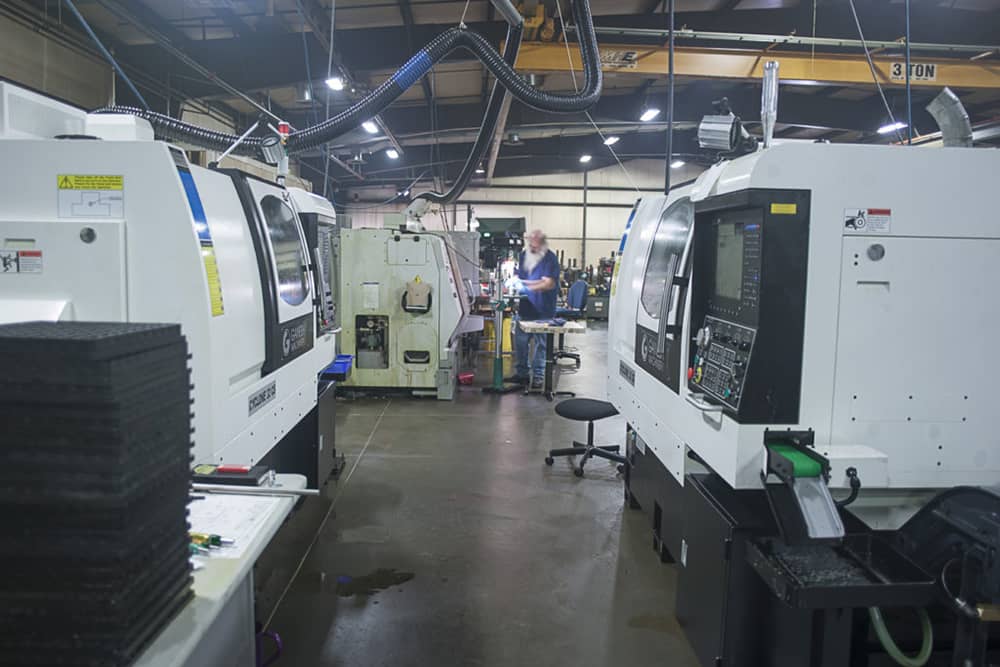
Seeking precision CNC Swiss machining services? Contact Susan Leo at [email protected] to discuss your project requirements.
Honyo Prototype operates a dedicated manufacturing facility in Shenzhen, equipped with advanced CNC Swiss turning technology for high-accuracy, high-volume production of complex turned components.
Our Shenzhen factory supports tight-tolerance machining for industries including medical devices, aerospace, and electronics, with fast turnaround and strict quality control.
For a quote or technical consultation, reach out to Susan Leo directly via email to ensure prompt assistance.
🚀 Rapid Prototyping Estimator
Estimate rough cost index based on volume.