
Contents
Manufacturing Insight: Cnc Router Mill
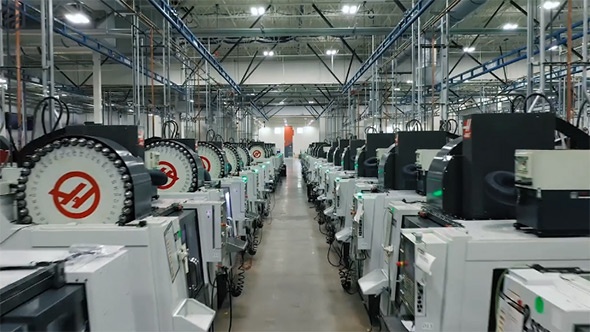
Precision CNC Router Mill Capabilities at Honyo Prototype
Honyo Prototype delivers advanced CNC machining solutions engineered for demanding industrial applications, with our high-performance CNC router mills forming a critical pillar of our subtractive manufacturing expertise. These systems excel in efficiently machining large-format components and complex geometries from a broad spectrum of materials, including aerospace-grade aluminum alloys, engineering plastics, composites, and specialty woods, while maintaining stringent tolerances essential for prototyping and low-volume production. Our router mills integrate seamlessly with Honyo’s end-to-end manufacturing ecosystem, ensuring consistent quality from digital model to finished part through rigorous process validation and real-time machine monitoring.
Our CNC machining services leverage state-of-the-art multi-axis router platforms capable of achieving surface finishes down to 32 μin Ra and positional accuracies of ±0.005 mm, supported by in-house material certification and AS9100-aligned quality protocols. This capability is particularly valuable for clients requiring rapid iteration of structural components, jigs, fixtures, or full-scale prototypes where dimensional stability and material integrity are non-negotiable. The following table summarizes key technical parameters for our router mill operations:
| Parameter | Specification Range | Application Impact |
|---|---|---|
| Work Envelope | Up to 3000 x 1500 x 200 mm | Large-scale aerospace/automotive tooling |
| Spindle Speed | 24,000 RPM | Optimized for non-ferrous materials & composites |
| Positional Accuracy | ±0.005 mm | Critical for assembly-ready components |
| Material Support | Metals, Plastics, Composites, Wood | Versatile prototyping & functional testing |
Accelerate your development cycle with Honyo’s Online Instant Quote system, which provides detailed manufacturing feasibility feedback and competitive pricing within hours—not days. Simply upload your 3D CAD file to receive a comprehensive analysis of lead times, material utilization, and process recommendations tailored to your CNC router mill requirements. This direct digital workflow eliminates procurement delays while ensuring your design intent is preserved through expert manufacturability review by our engineering team. Partner with Honyo Prototype to transform complex concepts into precision-engineered reality with speed and technical confidence.
Technical Capabilities
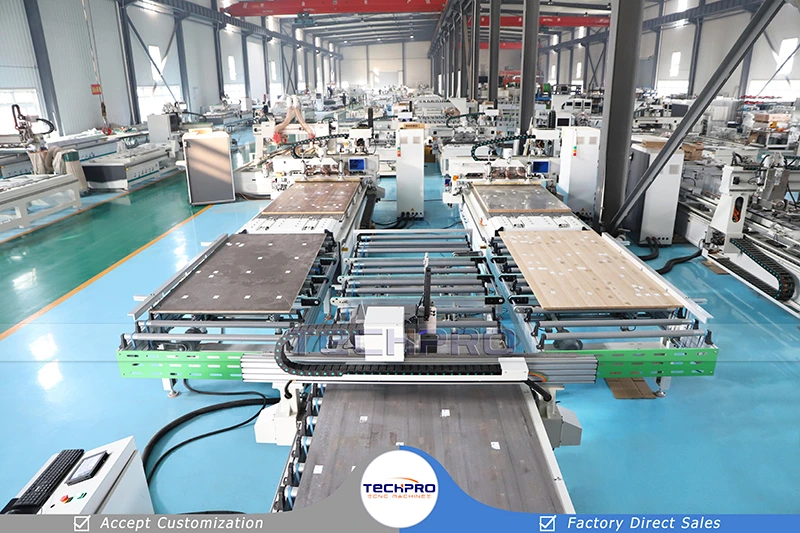
CNC Router Mill systems are advanced computer-controlled machining platforms designed for precision material removal across a range of engineering-grade materials. These systems support multi-axis motion (3, 4, or 5-axis configurations), enabling complex geometry machining with tight tolerances. While traditionally associated with softer materials, modern CNC router mills are engineered to handle metals such as aluminum and steel, as well as engineering thermoplastics like ABS and nylon. The following table outlines key technical specifications relevant to high-precision CNC router mill operations.
| Specification | 3-Axis Milling | 4-Axis Milling | 5-Axis Milling | Notes |
|---|---|---|---|---|
| Axis Configuration | X, Y, Z linear axes | X, Y, Z + rotary A or B axis | X, Y, Z + dual rotary (e.g., A & B or B & C) | 5-axis enables simultaneous toolpath control in five directions |
| Positioning Accuracy | ±0.005 mm (±0.0002″) | ±0.005 mm | ±0.005 mm | Achieved via precision ball screws, linear guides, and encoders |
| Repeatability | ±0.003 mm (±0.0001″) | ±0.003 mm | ±0.003 mm | Critical for batch consistency and tight tolerance work |
| Spindle Speed Range | 8,000 – 24,000 RPM | 8,000 – 24,000 RPM | 10,000 – 30,000 RPM | Higher speeds support fine finishes and hard material cutting |
| Maximum Tool Diameter | 12.7 mm (0.5″) | 12.7 mm | 10 mm (0.39″) | Limited in 5-axis due to tilting head clearance |
| Tool Changer | Automatic (ATC), 8–24 tools | Optional ATC | Full ATC standard | Reduces downtime during complex operations |
| Work Envelope (Typical) | 700 x 500 x 200 mm | 700 x 500 x 200 mm + 360° rotary | 600 x 400 x 180 mm | 5-axis systems trade travel for articulation |
| Control System | Fanuc, Siemens, or Mach 4/Heidenhain | Fanuc, Siemens, or Heidenhain | Siemens 840D, Heidenhain TNC7 | High-end controls enable complex interpolation |
| Surface Finish | Ra 0.8 – 3.2 µm (typical) | Ra 0.8 – 1.6 µm | Ra 0.4 – 1.6 µm | Improved with high-speed machining and toolpath optimization |
| Typical Materials | Aluminum, Steel, ABS, Nylon, Delrin, Wood | Same as 3-axis, with complex features | Same, including hardened steels with appropriate tooling | Material-dependent spindle and feed settings |
| Tolerance Capability | ±0.025 mm (±0.001″) | ±0.012 mm (±0.0005″) | ±0.005 – 0.01 mm (±0.0002 – 0.0004″) | 5-axis achieves highest precision due to reduced fixturing |
| Turning Capability | Not applicable | Optional mill-turn attachment | Integrated mill-turn with C-axis control | Enables partial turning operations on hybrid machines |
| Coolant System | Flood, mist, or air blast | Flood or high-pressure | High-pressure through-spindle | Essential for steel and nylon to prevent melting or work hardening |
| Lead Screw / Drive System | Ball screw or rack-and-pinion | Ball screw | Preloaded ball screws or linear motors | Determines accuracy and responsiveness |
These specifications reflect industrial-grade CNC router mill platforms suitable for prototyping and low-to-medium volume production. When machining aluminum and steel, rigid machine beds, high-torque spindles, and proper cooling are critical. For thermoplastics such as ABS and nylon, lower cutting forces are required, but chip evacuation and thermal management are essential to avoid melting or deformation. Tight-tolerance applications demand thermally stable environments, regular calibration, and in-process probing.
From CAD to Part: The Process
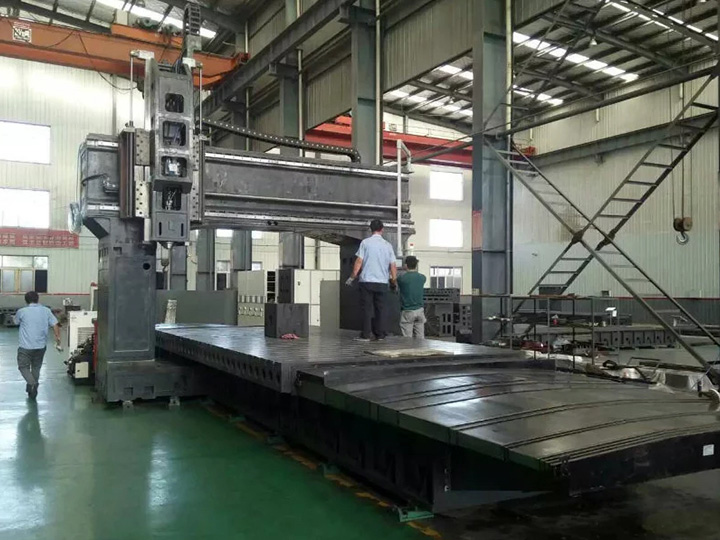
Honyo Prototype’s CNC Router Mill workflow integrates advanced digital tools with precision manufacturing to deliver high-quality prototypes and low-volume production parts efficiently. Our end-to-end process ensures technical rigor while minimizing time-to-part.
CAD File Upload and Initial Processing
Clients initiate the process by uploading native CAD files (STEP, IGES, SolidWorks, Fusion 360) or neutral formats through our secure customer portal. Our system performs automated file validation, checking for geometry integrity, unit consistency, and manufacturability flags. This step eliminates common submission errors before human review, reducing initial turnaround time.
AI-Powered Quoting Engine
Uploaded files enter our proprietary AI quoting system, which analyzes over 200 geometric and material parameters in under 90 seconds. Unlike basic online calculators, our AI cross-references real-time machine availability, material stock levels, and historical production data to generate accurate cost and lead time estimates. The system identifies potential cost drivers such as complex undercuts, thin walls (<1.5mm), or non-standard tool requirements, providing immediate technical feedback alongside the quote.
Engineering DFM Analysis
Upon quote acceptance, our manufacturing engineers conduct a rigorous Design for Manufacturability review. This phase focuses on CNC router-specific optimizations:
Verifying minimum feature sizes against spindle capabilities (typically 3mm end mills for aluminum, 6mm for composites)
Assessing sheet material nesting efficiency to maximize yield on substrates like acrylic, plywood, or HDPE
Evaluating workholding strategies for large flat panels to prevent vibration marks
Confirming depth-to-width ratios for routed pockets to avoid tool deflection
The DFM report includes actionable recommendations with annotated visuals, typically resolving 85% of manufacturability issues before programming begins.
CNC Production Execution
Approved designs move to our 5-axis CNC router mills (ShopSabre and AXYZ platforms) with 120″x60″ work envelopes. Key production protocols include:
Material verification against ASTM/ISO standards with batch traceability
In-process CMM checks for critical dimensions on features tighter than ±0.1mm
Environmental controls maintaining 22±1°C for dimensional stability in hygroscopic materials
Real-time tool wear monitoring via spindle load analysis
Delivery and Quality Documentation
All parts undergo final inspection against ASME Y14.5 GD&T standards. Clients receive:
Dimensional report with critical feature measurements
Material certification documentation
High-resolution process photos
Tracking with ETA visibility through our logistics portal
Standard lead time from DFM approval is 5-7 business days for single-part prototypes, with expedited options available.
Production Timeline Overview
| Process Phase | Standard Duration | Key Outputs |
|—————|——————-|————-|
| CAD Upload to AI Quote | <2 hours | Validated geometry, cost estimate, initial manufacturability flags |
| DFM Analysis | 24-48 hours | Optimized toolpaths, yield report, engineering recommendations |
| CNC Production | 3-5 days | In-process inspection data, material certs |
| Final Inspection & Shipping | 1 day | Dimensional report, traceability docs, tracking info |
This integrated approach reduces traditional CNC prototyping cycles by 40% while maintaining our 99.2% first-pass yield rate. We prioritize actionable engineering feedback at each stage to prevent costly revisions, ensuring your design intent translates precisely to physical form.
Start Your Project
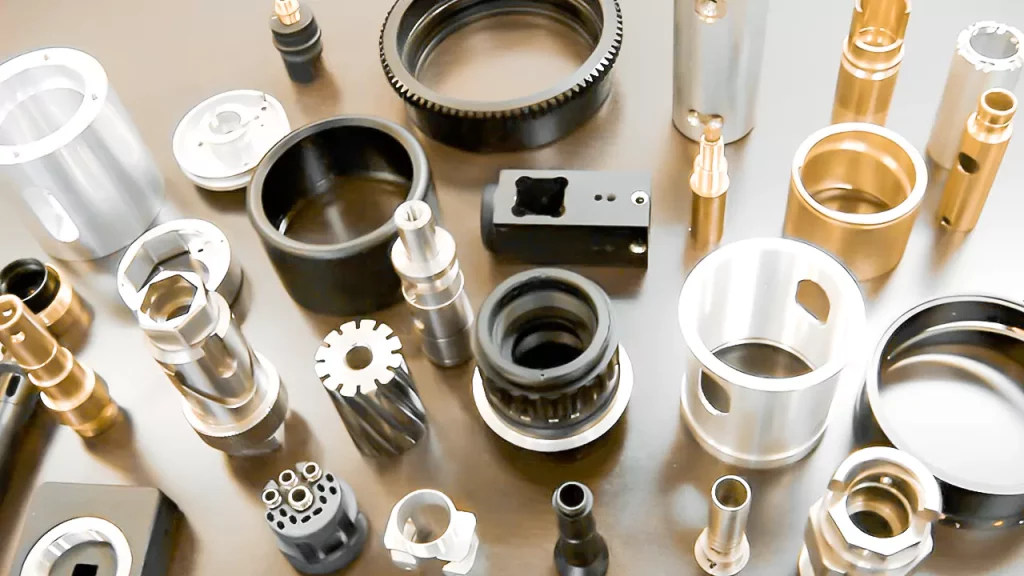
Looking for high-precision CNC router mill services? Contact Susan Leo at [email protected] to discuss your manufacturing needs. With our advanced machining capabilities and quality control, we deliver reliable, repeatable results for prototyping and low-volume production.
Our factory is located in Shenzhen, China—strategically positioned for efficient manufacturing and global shipping. Reach out today to request a quote or technical consultation.
🚀 Rapid Prototyping Estimator
Estimate rough cost index based on volume.