
Contents
Manufacturing Insight: Cnc Router Design Files
Precision CNC Machining for Your Design Files
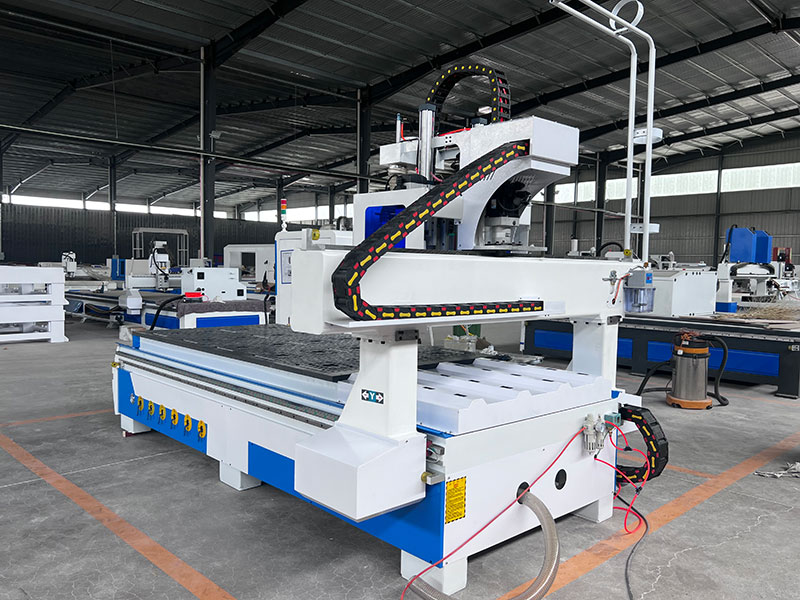
When your CNC router design files are ready for production, Honyo Prototype delivers unmatched accuracy and efficiency in transforming digital models into high-tolerance physical components. Our advanced 3-, 4-, and 5-axis CNC machining centers handle complex geometries across aerospace-grade aluminum, engineering plastics, composites, and specialty alloys, ensuring dimensional consistency within ±0.0002 inches. Every part undergoes rigorous in-process inspection using calibrated CMMs and optical comparators, adhering strictly to AS9100 and ISO 9001 standards.
Seamless Integration from File to Finished Part
We accept native CAD formats including STEP, IGES, and DWG, with automated pre-flight validation to identify toolpath conflicts or manufacturability issues before machining begins. Our engineering team collaborates directly with clients to optimize designs for reduced cycle times and material waste, leveraging decades of prototyping and low-volume production expertise. Whether you require rapid functional prototypes or bridge production runs, Honyo’s agile workflow minimizes lead times without compromising quality.
Accelerate Your Timeline with Online Instant Quotes
Upload your CNC router design files to Honyo’s proprietary platform for a detailed, no-obligation quote in under 60 seconds. The system analyzes file complexity, material requirements, and tolerances to generate transparent pricing with real-time capacity visibility. This eliminates traditional quoting delays, allowing engineering teams to proceed with confidence while maintaining project momentum. Start your next precision-machined component today—where engineering intent meets flawless execution.
Technical Capabilities
Technical specifications for CNC router design files vary significantly based on the machining process, axis configuration, material properties, and required tolerances. Below is a summary of key technical parameters relevant to 3-axis, 4-axis, and 5-axis milling, as well as CNC turning operations, with emphasis on tight-tolerance applications using common engineering materials such as Aluminum, Steel, ABS, and Nylon.
| Parameter | 3-Axis Milling | 4-Axis Milling | 5-Axis Milling | CNC Turning | Notes |
|---|---|---|---|---|---|
| Axis Configuration | X, Y, Z linear axes | X, Y, Z linear + A-axis (rotary around X) | X, Y, Z linear + two rotational axes (e.g., A and B or dual trunnion) | X, Z linear axes + C-axis (spindle rotation) | 5-axis enables complex contours without re-fixturing |
| Typical Positioning Accuracy | ±0.005 mm (±0.0002″) | ±0.005 mm (±0.0002″) | ±0.003 mm (±0.0001″) | ±0.005 mm (±0.0002″) | High-precision machines achieve sub-micron repeatability |
| Repeatability | ±0.002 mm (±0.0001″) | ±0.002 mm (±0.0001″) | ±0.001 mm (±0.00004″) | ±0.002 mm (±0.0001″) | Critical for tight-tolerance batch production |
| Tolerance Range (Machined Features) | ±0.025 mm to ±0.05 mm | ±0.025 mm to ±0.05 mm | ±0.0125 mm to ±0.025 mm | ±0.0125 mm (diametrical) | 5-axis and turning achieve tighter control on critical dimensions |
| Surface Finish (Ra) | 0.8 – 3.2 µm (32–125 µin) | 0.8 – 3.2 µm | 0.4 – 1.6 µm (16–63 µin) | 0.4 – 1.6 µm | Improved with fine toolpaths and proper tool selection |
| Materials – Aluminum (e.g., 6061, 7075) | High feed rates, low tool wear | Suitable for impeller/vane geometries | Ideal for aerospace components | Excellent machinability, tight diametrical control | High thermal conductivity; requires chip evacuation |
| Materials – Steel (e.g., 4140, 1018) | Requires rigid setup, coated tools | Moderate speeds; good for shaft features | Used in molds, tooling, and structural parts | High precision shafts, pins, and fasteners | Higher cutting forces; coolant recommended |
| Materials – ABS | Low melting point; sharp tools required | Suitable for enclosures with angled features | Complex prototypes with draft-free surfaces | Limited use; small fixtures or jigs | Avoid excessive heat; use high-speed, low-feed |
| Materials – Nylon (e.g., PA6, PA66) | Prone to deflection; support needed | Machinable for custom gears or bushings | Low stiffness limits thin-wall features | Bushings, insulators, wear components | Hygroscopic; pre-dry material if critical |
| Design File Requirements | 3D CAD model (STEP, IGES, or native) with clear datums and tolerances | Include rotary axis setup and indexing instructions | Full 5-axis toolpath compatibility; STL not acceptable | Turnable geometry with centerline alignment | GD&T per ASME Y14.5 recommended for tight tolerances |
| Minimum Feature Size | 1.0 mm end mill typical | 1.0 mm with A-axis access | 0.5 mm with micro-tooling | 0.1 mm radius on grooves | Limited by tool aspect ratio and rigidity |
| Coolant & Lubrication | Flood or mist for metals; air blast for plastics | Required for extended tool life in steel | Essential for thermal stability in precision work | Often through-spindle coolant | Prevents warping in thermoplastics |
Design files intended for tight-tolerance CNC machining must include fully dimensioned and toleranced 3D models, preferably in STEP or native CAD formats. Geometric Dimensioning and Tolerancing (GD&T) should be applied where functional fit is critical. Material selection directly influences toolpath strategy, feed rates, and fixturing requirements—especially in multi-axis setups where dynamic tool engagement varies. For high-precision applications in aluminum and steel, thermal stability and machine calibration are paramount. Plastics like ABS and nylon require reduced cutting forces and careful clamping to avoid deformation.
From CAD to Part: The Process
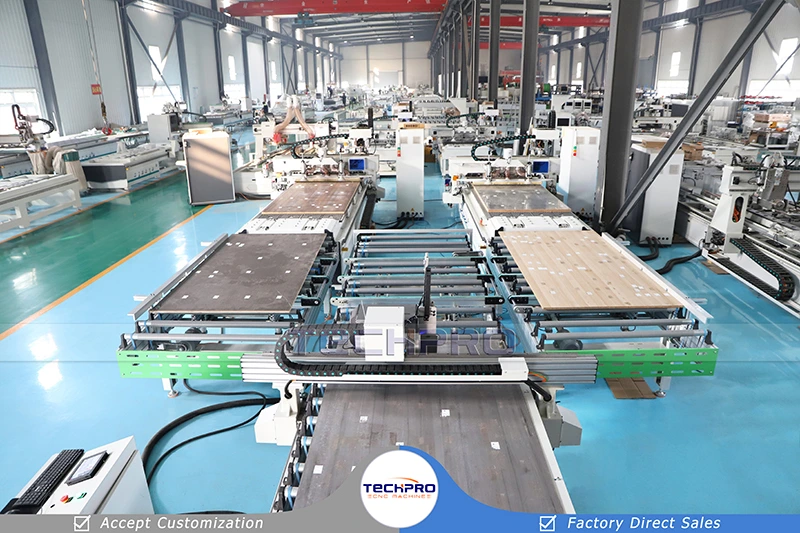
Honyo Prototype executes a streamlined, technology-driven workflow for CNC router design file processing to ensure precision, efficiency, and client transparency. This end-to-end process eliminates traditional bottlenecks while maintaining rigorous engineering standards.
CAD File Upload and Validation
Clients initiate the process by uploading native CAD files (STEP, IGES, Parasolid, or native SOLIDWORKS/Creo formats) via our secure customer portal. Our system automatically validates file integrity, checks for unit consistency, and confirms geometric completeness. Unsupported formats or corrupted files trigger an immediate notification with specific resolution steps, preventing downstream delays. This phase typically completes within 15 minutes of submission.
AI-Powered Quoting Engine
Validated designs enter our proprietary AI quoting system, which analyzes over 200 geometric and material parameters in under 90 seconds. Unlike basic cost calculators, our AI cross-references real-time machine availability, material waste algorithms, and historical production data from 15,000+ prior CNC router projects. The output delivers a granular cost breakdown including material utilization efficiency, fixture requirements, and secondary operation estimates—not just a flat price. Clients receive this actionable quote via email with downloadable PDF specifications.
Engineering-Led DFM Analysis
Upon quote acceptance, Honyo’s manufacturing engineers conduct a formal Design for Manufacturability review. This is not an automated checklist but a collaborative engineering assessment focusing on router-specific optimizations: minimizing toolpath complexity, verifying feasible undercut geometries, assessing vacuum table hold-down requirements, and identifying opportunities to reduce sheet waste through nesting efficiency. Critical deviations (e.g., non-manufacturable radii, unsupported thin walls) are communicated with annotated 3D markups and alternative solutions within 4 business hours. Client approval of DFM recommendations is required before production.
CNC Router Production Execution
Approved designs move to production on our network of 5-axis CNC routers (ShopSabre, AXYZ, and Thermwood models) with 4’x8’ to 5’x12’ work envelopes. Each job includes:
Material traceability from certified supplier lots
In-process CMM verification at critical stages
Real-time machine monitoring for vibration and tool wear
Dedicated technician oversight for complex geometries
First-article inspection reports are generated per AS9102 standards, with full batch traceability maintained through our digital twin system. Typical lead times range from 3 to 10 business days depending on material and complexity.
Quality-Controlled Delivery
Finished parts undergo final dimensional validation against original CAD models using Zeiss CMMs or structured light scanners. All components ship with:
Material certification and RoHS/REACH compliance documentation
First-article inspection report (FAIR)
As-built 3D scan data (optional)
Protective packaging rated for international freight
Shipments include real-time logistics tracking with delivery confirmation. For urgent projects, we offer expedited air freight coordination directly through the portal. Post-delivery, clients access full production analytics including machine runtime logs and quality metrics via their secure project dashboard.
This integrated workflow reduces traditional CNC prototyping timelines by 40–60% while ensuring engineering-grade output. Every phase maintains ISO 9001:2015 traceability, with all client data protected under GDPR-compliant infrastructure.
Start Your Project
For CNC router design files and custom manufacturing solutions, contact Susan Leo at [email protected].
Honyo Prototype operates a dedicated manufacturing facility in Shenzhen, providing precision CNC routing services with rapid turnaround for prototypes and production runs.
Reach out to discuss your project specifications, material requirements, and delivery timelines.
🚀 Rapid Prototyping Estimator
Estimate rough cost index based on volume.