
Contents
Manufacturing Insight: Cnc Programming:
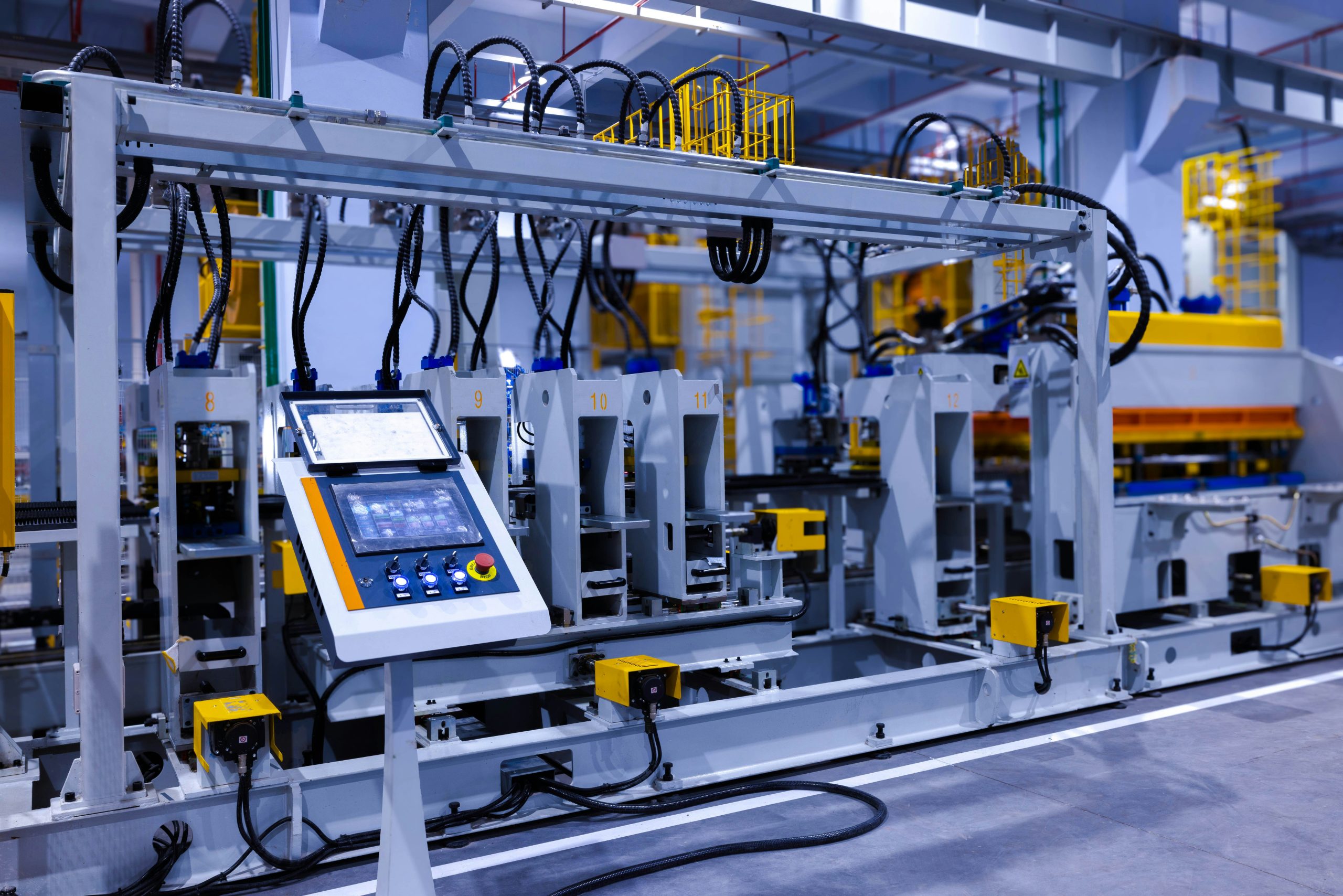
Precision CNC Programming: The Foundation of Honyo Prototype’s Machining Excellence
At Honyo Prototype, our CNC machining services transform complex engineering designs into high-integrity components through advanced programming expertise and state-of-the-art multi-axis capabilities. We specialize in producing precision-engineered parts with tolerances as tight as ±0.0002 inches across diverse materials—from aerospace-grade aluminum and titanium to engineered plastics and hardened steels. Our engineering team utilizes industry-leading CAM software to optimize toolpaths, minimize cycle times, and ensure repeatability for both single prototypes and low-volume production runs.
The core of our competitive advantage lies in proprietary CNC programming methodologies that address geometric complexity while mitigating risks like tool deflection, thermal drift, and material deformation. Unlike standard quoting services, Honyo’s engineers perform upfront manufacturability analysis during programming, identifying potential issues in 3D models to prevent costly revisions. This proactive approach guarantees that every G-code program is rigorously validated for surface finish, dimensional accuracy, and structural integrity before material ever reaches the spindle.
To accelerate your development timeline, Honyo Prototype offers an Online Instant Quote platform integrated directly with our programming workflow. Upload your STEP or IGES file, specify material and quantity requirements, and receive a technically vetted quote within minutes—not days. This system eliminates traditional quoting bottlenecks by leveraging automated feature recognition and real-time machine capacity data, allowing engineering teams to iterate designs faster and move from concept to physical part with unprecedented speed.
| Service Capability | Honyo Prototype Standard | Industry Typical |
|---|---|---|
| Max Tolerance Control | ±0.0002 in (5 µm) | ±0.001 in (25 µm) |
| Lead Time (Simple Part) | 3-5 business days | 7-10 business days |
| Online Quote Turnaround | < 10 minutes | 24-72 hours |
| Material Range | 50+ metals & plastics | 20-30 standard options |
Our commitment to programming excellence ensures your critical components meet stringent functional requirements while reducing time-to-market. Partner with Honyo Prototype to leverage CNC machining where engineering precision meets operational agility. Initiate your project today with a technically accurate quote in minutes.
Technical Capabilities
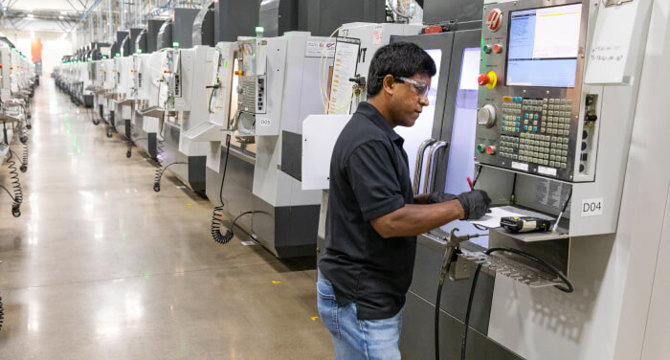
CNC programming for 3/4/5-axis milling and turning operations involves precise toolpath generation to achieve tight tolerances and high-quality surface finishes across a range of engineering materials. These programs are created using CAM software (such as Mastercam, Fusion 360, or Siemens NX) and are optimized for machine kinematics, cutting strategies, and material behavior. The following table outlines key technical specifications relevant to CNC programming across multi-axis platforms, emphasizing tight tolerance capabilities and material-specific considerations.
| Specification | 3-Axis Milling | 4-Axis Milling | 5-Axis Milling | CNC Turning | Notes |
|---|---|---|---|---|---|
| Axis Movement | X, Y, Z linear axes | X, Y, Z + A (rotary around X) | X, Y, Z + A, B or C (dual rotary) | X, Z linear axes with rotating chuck | 5-axis enables complex geometry in single setup |
| Typical Positioning Accuracy | ±0.005 mm | ±0.005 mm | ±0.005 mm | ±0.005 mm | High-precision machines achieve ±0.002 mm |
| Tight Tolerance Capability | ±0.010 mm | ±0.010 mm | ±0.008 mm | ±0.005 mm (diameter) | Achievable with thermal stability, high-end tooling |
| Surface Finish (Ra) | 0.8 – 3.2 µm | 0.8 – 3.2 µm | 0.4 – 1.6 µm | 0.8 – 1.6 µm | 5-axis allows optimal tool engagement for smoother finishes |
| Materials – Aluminum (e.g., 6061-T6, 7075-T6) | High-speed machining; spindle speeds up to 20,000 RPM; sharp carbide tools | Suitable for impellers, housings | Ideal for aerospace components; minimal deflection | Common for shafts, bushings | Excellent machinability; high thermal conductivity |
| Materials – Steel (e.g., 4140, 1018, Stainless 304/316) | Moderate speeds; robust tooling; coolant critical | Used for molds, tooling | Complex steel parts (e.g., turbine blades) | Precision shafts, fittings | Requires high-torque spindles and rigid setups |
| Materials – ABS | Low cutting forces; avoid heat buildup | Prototyping enclosures | Lightweight fixtures or molds | Not typically turned | Use polished tools; chip evacuation critical |
| Materials – Nylon (e.g., PA6, PA66) | Low feed rates; sharp tools to prevent smearing | Jigs and low-friction components | Custom fixtures | Bushings, wear parts | Prone to thermal expansion; clamp gently |
| Programming Considerations | 2.5D and 3D toolpaths; pocketing, drilling | Indexing (positional 4-axis) or continuous | Simultaneous 5-axis for contours, undercuts | G-code for facing, turning, threading | Use adaptive clearing, high-speed toolpaths |
| Fixturing Complexity | Standard vises, clamps | Rotary indexer integration | Custom fixtures or tombstones with trunnions | Collets, chucks, steady rests | 5-axis reduces need for multiple setups |
| Typical Applications | Flat plates, molds, simple enclosures | Impellers, turbine components | Aerospace structural parts, medical implants | High-precision shafts, connectors | Tight tolerance: ±0.005 mm achievable with process control |
Additional Notes:
Tight tolerance machining (±0.005 mm or better) requires environmental control (stable temperature), in-process probing, tool length compensation, and high-precision spindles (≤ 3 µm runout). Material selection impacts tool wear and cycle time—aluminum allows high MRR, while steel and engineering plastics like nylon require careful parameter tuning. Programming for multi-axis systems must account for collision avoidance, tool orientation, and work envelope limitations.
From CAD to Part: The Process
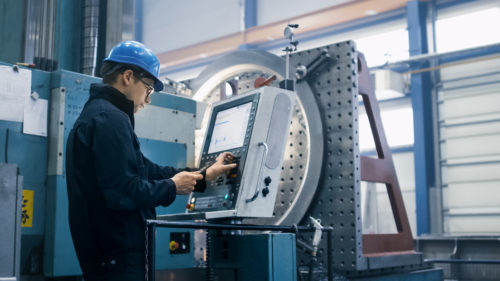
Honyo Prototype employs a rigorously defined CNC programming workflow designed to maximize efficiency, accuracy, and manufacturability while minimizing lead times for our clients. This integrated process ensures seamless transition from digital design to physical part delivery.
The process initiates when the client uploads a native or neutral format CAD file (STEP, IGES, Parasolid, or native formats like SOLIDWORKS, Fusion 360) through our secure customer portal. This file serves as the single source of truth for geometry, critical tolerances, and material specifications. Our system automatically validates file integrity and extracts key manufacturing data.
Following CAD upload, our proprietary AI-powered quoting engine analyzes the geometry, material selection, required tolerances, and surface finish specifications. This engine cross-references real-time machine availability, tooling costs, material pricing, and historical production data to generate a highly accurate preliminary quote within minutes. Crucially, this stage includes an initial AI-driven manufacturability assessment flagging potential high-risk features such as excessive thin walls, non-standard tolerances, or inefficient tool access paths before human review.
The Design for Manufacturability (DFM) phase is where Honyo’s engineering expertise becomes critical. Our certified CNC programming engineers conduct a comprehensive manual DFM review, building upon the AI’s preliminary findings. This involves direct collaboration with the client to discuss feasible design modifications that optimize for CNC machining without compromising functional intent. Key focus areas include tool selection feasibility, workholding strategy, optimal stock size, feature accessibility, and minimizing secondary operations. Client approval of the DFM report and final quote is required before proceeding, ensuring alignment on cost, timeline, and design intent.
Upon DFM sign-off, our CNC programming team generates optimized toolpaths using industry-leading CAM software (Mastercam, Fusion 360 CAM, or NX depending on complexity). Programmers select appropriate cutting tools, define precise spindle speeds and feeds, and implement strategies like high-speed machining (HSM) or adaptive clearing to maximize material removal rates while ensuring surface quality. All programs undergo rigorous simulation within the CAM environment to verify collision avoidance, toolpath accuracy, and efficient machining sequences. Critical programs also receive physical dry-run verification on designated machines.
Production execution occurs within our climate-controlled machine shop on certified Haas, DMG MORI, and Makino CNC mills and lathes. Each job is assigned a unique tracking number. Machinists load approved programs, set up vises or custom fixtures, and perform first-article inspection (FAI) using calibrated CMMs, optical comparators, or height gauges against the original CAD model. In-process inspections occur at predefined stages for critical dimensions. Material certificates and process documentation are maintained throughout.
Final inspection confirms all dimensions, tolerances, and surface finishes per the original specifications. Parts undergo deburring, cleaning, and any requested secondary operations (tapping, anodizing coordination, etc.). Comprehensive inspection reports, including FAI data and material certifications, are compiled. Parts are securely packaged with protective materials based on fragility and shipped via the client’s preferred carrier with real-time tracking. Digital delivery of all inspection documentation and as-machined models occurs simultaneously with physical shipment, providing full traceability.
This structured workflow, combining automated intelligence with deep engineering expertise at critical decision points, ensures Honyo consistently delivers high-precision CNC machined prototypes and low-volume production parts with exceptional reliability and reduced time-to-market for our manufacturing partners.
Start Your Project
Looking for precision CNC programming services? Contact Susan Leo at [email protected] to discuss your project requirements. Our advanced manufacturing facility is located in Shenzhen, ensuring high-quality production with fast turnaround times. Partner with Honyo Prototype for reliable, expert CNC programming and machining solutions.
🚀 Rapid Prototyping Estimator
Estimate rough cost index based on volume.