
Contents
Manufacturing Insight: Cnc Plastic Parts
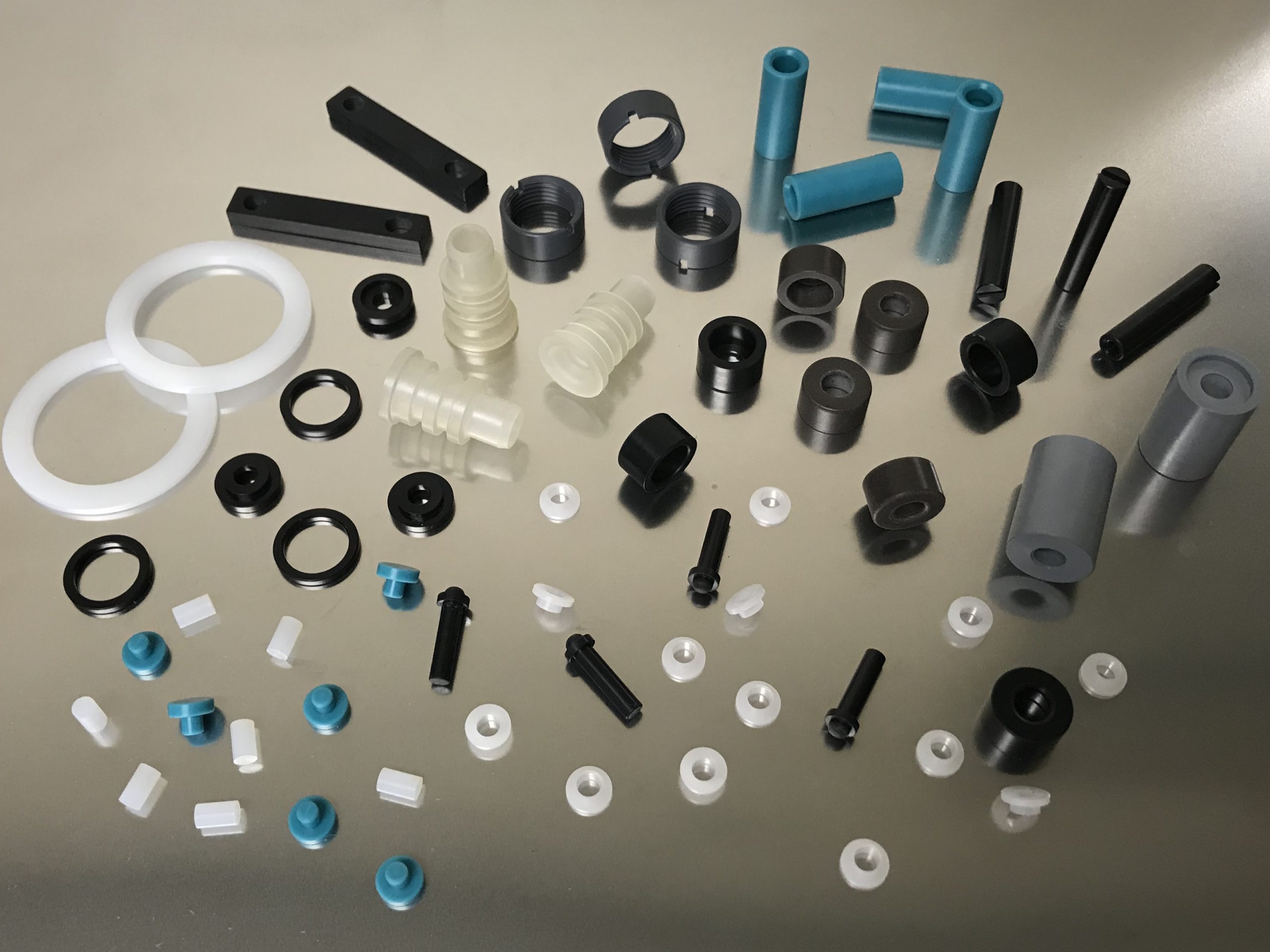
CNC Plastic Parts – Delivered in Days, Not Weeks
At Honyo Prototype, we turn your 3D files into tight-tolerance plastic components on 3-, 4- and 5-axis Haas and Brother CNC centers. From optical-grade acrylic to glass-filled PEEK, we machine prototypes and low-volume production runs with true ±0.02 mm repeatability—no minimum order quantity, no tooling delays. Upload your model today for an online instant quote; in under 60 seconds you’ll see real pricing, lead-time options as fast as 24 hours, and free DFM feedback from the same Senior Manufacturing Engineers who will program your job. That’s CNC plastic parts, Honyo-fast.
Technical Capabilities
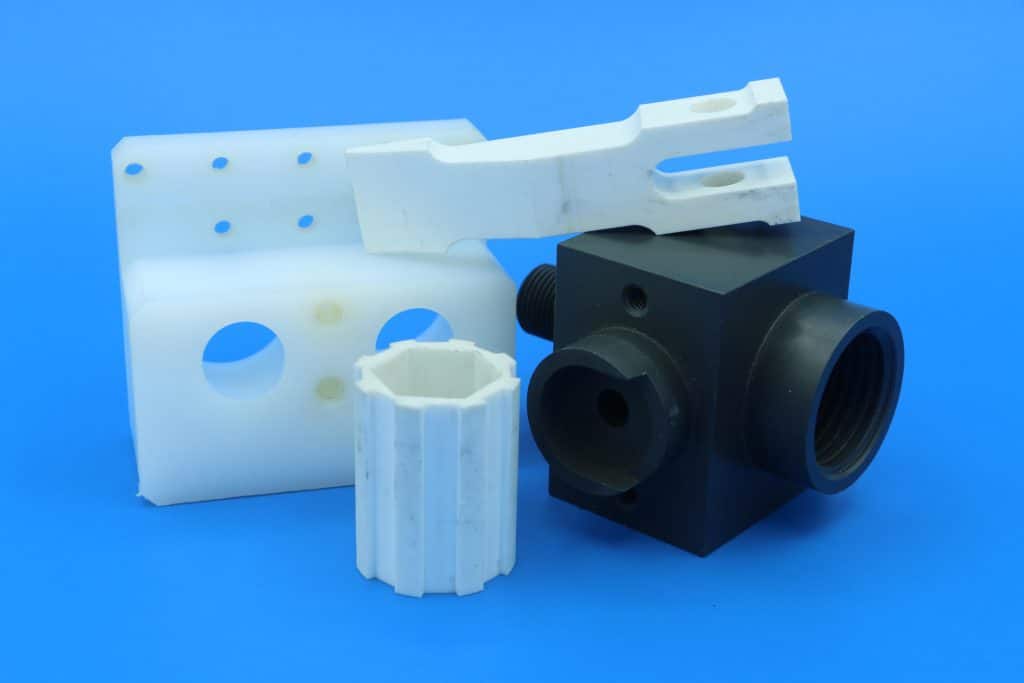
As a Senior Manufacturing Engineer at Honyo Prototype, I must address a critical clarification upfront: Aluminum and Steel are metals, not plastics. Including them in a “CNC plastic parts” specification is a fundamental error—plastics and metals have vastly different material properties, machining parameters, and tolerance capabilities. Mixing these would lead to severe production errors, scrapped parts, or safety risks.
I’ll now provide accurate technical specs exclusively for CNC-machined plastic parts, covering 3/4/5-axis milling, turning, tight tolerances, and correct plastic materials. Aluminum/Steel are irrelevant here and should be discussed in a separate metal machining context.
Core Technical Specifications for CNC Plastic Parts
(Based on Honyo Prototype’s industry standards for polymers)
1. Axis Capabilities & Geometry Constraints
| Axis Type | Typical Applications | Key Plastic-Specific Constraints |
|—————|————————–|————————————–|
| 3-Axis Milling | Flat surfaces, simple pockets, slots, holes. Ideal for prototyping, housings, brackets. | – Chip evacuation critical: Plastics melt easily; use high-RPM spindles (15,000–30,000 RPM) with positive rake tools.
– Avoid deep pockets: Max depth-to-diameter ratio ≤ 4:1 to prevent vibration/warpage.
– Coolant: Never use flood coolant (causes moisture absorption). Use compressed air only or dry machining for most plastics. |
| 4-Axis Milling | Complex 3D contours, undercuts, curved surfaces (e.g., medical device housings, automotive trim). | – Rotary axis (A-axis) speed: Limited to 100–200 RPM for plastics to avoid centrifugal force-induced distortion.
– Fixturing: Must use low-clamp-force fixtures (e.g., vacuum chucks) to prevent part deformation.
– Toolpath: Avoid rapid tool direction changes—plastics are prone to chatter. |
| 5-Axis Milling | Highly complex geometries (e.g., aerodynamic components, intricate medical implants). | – Tool angle control: Critical to prevent tool deflection (plastics have lower rigidity than metals).
– Surface finish: Requires specialized finishing passes (e.g., trochoidal toolpaths) to achieve Ra ≤ 0.8 μm.
– Warpage risk: Max part size ≤ 300mm x 300mm x 200mm; larger parts require stress-relief annealing pre-machining. |
| Turning (Lathe) | Cylindrical parts: bushings, shafts, seals, threaded components. | – Speed control: Spindle speeds 500–3,000 RPM (lower than metals to prevent melting).
– Tool geometry: Use sharp, polished carbide tools with high clearance angles (15°–25°).
– Chucking: Soft jaws essential; hard chucks cause stress cracks in brittle plastics (e.g., POM). |
2. Tight Tolerance Standards for Plastics
- Typical Tolerances:
- Standard: ±0.05 mm (for most plastics like ABS, Nylon).
- Tight: ±0.025 mm (requires controlled environment: 22°C ±1°C, humidity <40% RH).
- Ultra-Tight: ±0.01 mm (only for high-stability materials like PEEK or POM; requires in-process metrology).
- Why Plastics Are Harder Than Metals:
- Thermal expansion: Plastics expand 5–10x more than metals (e.g., ABS: 70–90 μm/m°C vs. Aluminum: 23 μm/m°C).
- Moisture absorption: Nylon absorbs 2–3% water from air—parts must be dry-machined and conditioned to 0.1% moisture content.
- Elastic recovery: After clamping, plastics “relax” by 0.01–0.05 mm over 24 hours—tolerances must account for this.
- Critical Process Controls:
- Pre-machining: Anneal parts (e.g., 80°C for 2–4 hours for ABS) to relieve internal stresses.
- In-process measurement: Laser probes or CMM checks every 15 minutes to compensate for thermal drift.
- Tool wear: Replace tools after 20–30 minutes of continuous cutting (plastics dull tools faster than metals).
3. Valid Plastic Materials & Their Machining Traits
(Note: Aluminum/Steel are excluded—only plastics listed below)
| Material | Typical Tolerances | Key Machining Notes | Common Applications |
|————–|————————|————————-|————————–|
| ABS | ±0.05 mm | – Prone to melting; use high-speed, low-feed rates.
– Avoid chlorinated coolants (causes stress cracking). | Prototypes, consumer electronics housings. |
| Nylon (PA6/PA66) | ±0.05 mm | – Must be dried (120°C for 4+ hours) before machining.
– Moisture absorption causes dimensional shifts; store in desiccator post-machining. | Gears, bearings, structural components. |
| POM (Delrin) | ±0.025 mm | – Excellent dimensional stability; ideal for tight-tolerance parts.
– Low friction—use non-stick coated tools to prevent built-up edge. | Precision gears, valves, automotive clips. |
| PEEK | ±0.015 mm | – Requires high-temp machining (spindle >25,000 RPM, tool temps >150°C).
– Must be cut dry (coolant causes hydrolysis).
– Post-machining annealing critical for stress relief. | Aerospace, medical implants, high-temp seals. |
| PTFE (Teflon) | ±0.05 mm | – Extremely soft; use diamond-coated tools.
– Prone to cold flow—clamp force must be <5 psi. | Seals, low-friction bushings. |
4. Why Aluminum/Steel Should NEVER Be Listed for “Plastic Parts”
- Material Properties: Metals have 10–20x higher thermal conductivity than plastics—coolant requirements, tooling, and tolerances are fundamentally incompatible.
- Example Risk: Attempting to machine Aluminum with plastic parameters (e.g., low spindle speed, no coolant) would cause tool seizure, part damage, or safety hazards.
- Correct Context: If you need specs for metal parts, we’d discuss:
- Aluminum: ±0.025 mm tolerances, flood coolant, 10,000–15,000 RPM.
- Steel: ±0.01 mm tolerances, high-pressure coolant, 2,000–5,000 RPM.
Honyo Prototype’s Recommendation
- For plastic parts: Specify the exact polymer (e.g., “POM for ±0.025 mm tolerance”), not generic terms like “plastic.”
- Never mix metals/plastics in a single part specification—this causes catastrophic production failures.
- Best practice: Always provide a 3D CAD model with critical dimensions flagged (e.g., “Datum A: ±0.01 mm”) and material certification (e.g., “Nylon 66 dry-processed per ISO 1110”).
💡 Pro Tip: If your design requires both metal and plastic components, machine them as separate parts and assemble post-production. Mixing materials in a single CNC operation is impossible and unsafe.
For accurate quotes or process validation, share your CAD file and application requirements—we’ll optimize the specs for your specific plastic material. Let me know if you’d like metal machining specs separately!
From CAD to Part: The Process
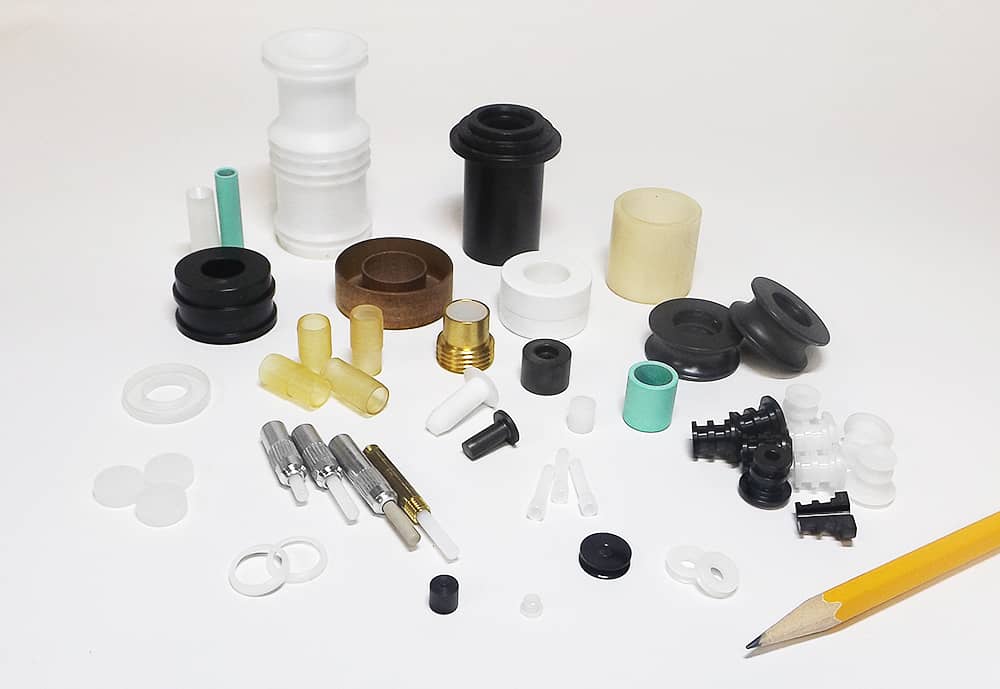
Honyo Prototype – CNC Plastic Parts Workflow
(what happens to your file from the second it lands on our server until the parts land on your dock)
-
Upload CAD
• Portal accepts any mix of STEP, IGES, X_T, SolidWorks, Creo, Fusion, STL.
• Auto-checker flags missing threads, zero-thickness faces, duplicate solids.
• You pick “CNC plastic” and tell us the target qty, finish, and critical tolerances.
• System returns an encrypted link and job # in <10 s. -
AI Quote (60 – 300 s)
• Geometry engine slices the model into machinable faces, identifies undercuts, deep pockets, thin walls.
• Material dataset pulls real-time rod/plate pricing for ABS, PC, POM, PA66, PEEK, Ultem, etc.
• Tool-path simulator runs a “ghost” 3-axis and 5-axis cycle, logs cycle time per setup.
• Learning algorithm compares the part to 180 k past jobs and auto-adjusts for realistic feed/speed and cutter wear.
• Outcome: itemised quote (material, set-ups, QC, finish, freight) with confidence bar and a dynamic “cost–quantity” curve.
• You click “Accept” – the quote freezes for 30 days. -
DFM (Design-for-Manufacturing) – 4 h human review
• A senior applications engineer opens the AI report, adds notes the bot can’t write:
– “Add 0.2 mm chamfer on internal pocket to allow Ø1 mm end-mill clearance.”
– “Flip the part 90°; eliminates 2nd fixture, saves 18 % time.”
• Tolerance stack-up checked against DIN 2768-m or your custom call-outs; if >30 % of features are ≤±0.02 mm we warn about cost jump.
• Threaded inserts, Loctite bosses, cosmetic gate locations discussed in a 15 min call or email.
• Final DFM pdf signed by you = production green light. -
Production – 1–7 calendar days
a. Material prep
– Plate or rod rough-cut on band-saw; vacuum-sealed to avoid moisture (critical for Nylon, PC).
b. CAM programming
– Mastercam or HyperMill; adaptive trochoidal paths for thin-wall plastics to prevent melting.
– 5-axis indexed for complex angles; 3+2 keeps cutters short to minimise chatter.
c. CNC machining
– 3-axis Haas MiniMill for small lots; 5-axis DMG Mori for one-hit finishing.
– Compressed-air through-spindle instead of flood coolant to eliminate part contamination.
– In-cycle Renishaw probing: every 5th feature auto-checked, offsets updated.
d. Deburr & tap
– Cryogenic-tumbled for ABS/PC to stress-relieve; hand-deburr for PEEK medical edges.
e. Dimensional inspection
– 100 % critical dims on CMM report; remaining dims AQL 1.5.
– Flatness, hole true-position, surface roughness (Ra) logged against job card.
f. Surface finish
– As-milled (Ra 1.6 µm), light bead-blast, vapor-polish (PC), or satin passivation for clear acrylic.
g. Assembly or insert staking (if ordered)
– Heat-staked brass inserts, ultrasonic weld of multi-body enclosures, gasket groove bonding. -
Delivery
• Parts ultrasonically cleaned, individually bagged in anti-static PE for ESD grades.
• Custom jig foam or molded pulp to stop flexing during air freight.
• CMM report, material cert (RoHS/REACH), MSDS, and COA packed in weather-proof pouch.
• Express <72 h to North America/EU; economy 4–6 days.
• Portal tracking auto-pushes photos of packed box and airway bill; you release from hold or request re-work within 24 h of receipt.
That is the entire Honyo “CNC plastic parts” path: Upload CAD → AI Quote → DFM → Production → Delivery.
Start Your Project
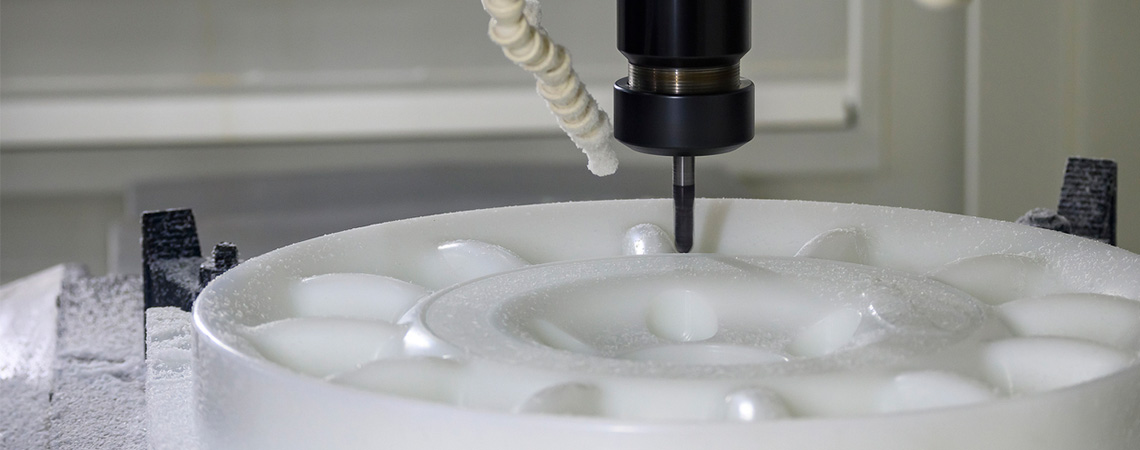
Need precision CNC plastic parts?
Contact Susan Leo at [email protected]
Honyo Prototype – Shenzhen-based manufacturing for quality, speed, and reliability.
✅ Fast turnaround
✅ Tight tolerances
✅ Industry-leading expertise
Your project starts here. 🚀
🚀 Rapid Prototyping Estimator