
Contents
Manufacturing Insight: Cnc Plasma Systems
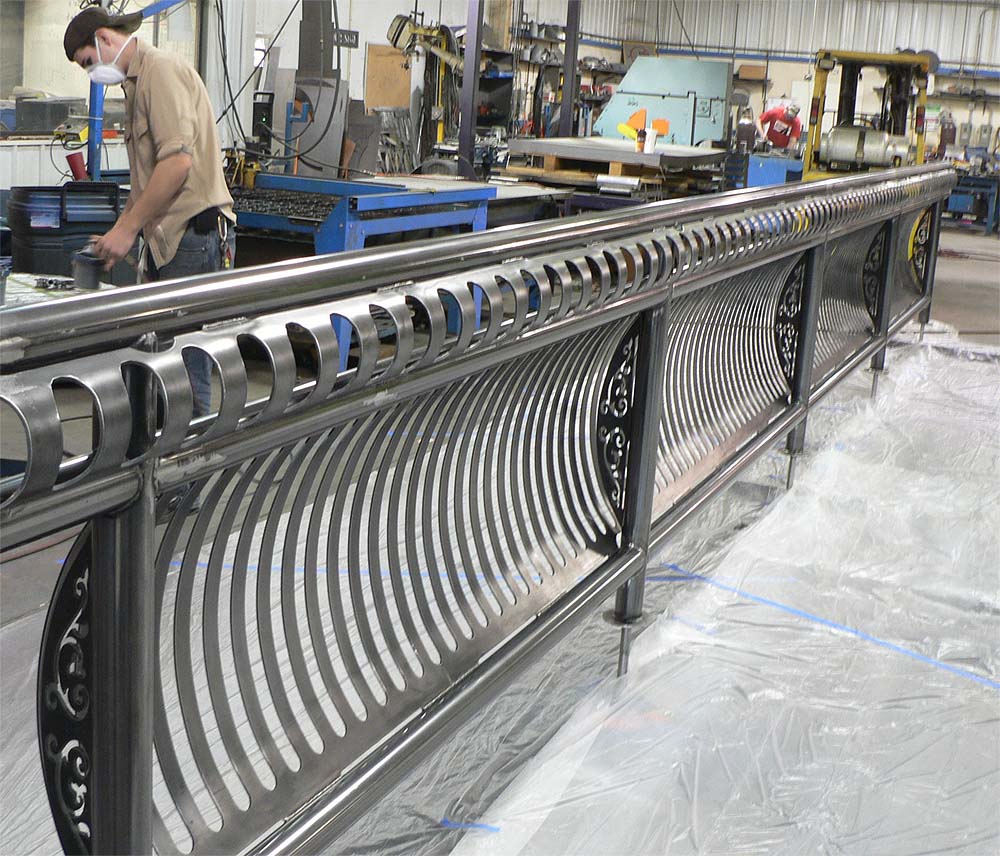
Precision CNC Plasma Fabrication Solutions from Honyo Prototype
CNC plasma cutting systems represent a cornerstone of modern industrial fabrication, delivering exceptional speed and accuracy for complex metal part production across aerospace, automotive, and heavy equipment sectors. At Honyo Prototype, we leverage advanced multi-axis CNC machining capabilities—including high-definition plasma, oxy-fuel, and laser technologies—to transform raw plate stock into mission-critical components with engineered tolerances down to ±0.005 inches. Our integrated manufacturing ecosystem ensures seamless transitions from digital CAD models to finished parts, utilizing certified materials such as carbon steel, stainless alloys, and aluminum while adhering to stringent AS9100 and ISO 9001 quality protocols.
Honyo’s end-to-end CNC machining services extend beyond plasma cutting to encompass precision milling, turning, and finishing operations, enabling single-source accountability for projects demanding tight geometric conformity and surface integrity. Our facility operates 24/7 with real-time process monitoring, ensuring consistent repeatability for both prototype validation and low-to-mid volume production runs. Crucially, our engineering team collaborates directly with clients during DFM analysis to optimize nest efficiency, minimize material waste, and accelerate time-to-part without compromising structural performance.
Accelerate your project timeline with Honyo’s Online Instant Quote platform. Upload your STEP, IGES, or DXF file to receive a detailed, no-obligation manufacturing assessment within hours—including material cost breakdowns, lead time projections, and actionable feedback on design feasibility. This transparent digital workflow eliminates traditional quotation bottlenecks, empowering engineering teams to iterate rapidly and move from concept to certified production with unprecedented speed.
| Service Feature | Honyo Prototype Advantage | Industry Standard |
|---|---|---|
| Plasma Cutting Tolerance | ±0.005 inches (HD systems) | ±0.015–0.030 inches |
| Quote Turnaround | < 4 business hours via Online Instant Quote | 3–7 business days |
| Material Certification | Full traceability with MTRs for aerospace-grade stock | Limited batch certification |
| Quality Compliance | AS9100 Rev D, ISO 9001:2015 | ISO 9001 only (common) |
Partner with Honyo Prototype to harness CNC plasma fabrication backed by engineering rigor, responsive digital tools, and uncompromising quality control—where complex metal components meet precision execution.
Technical Capabilities
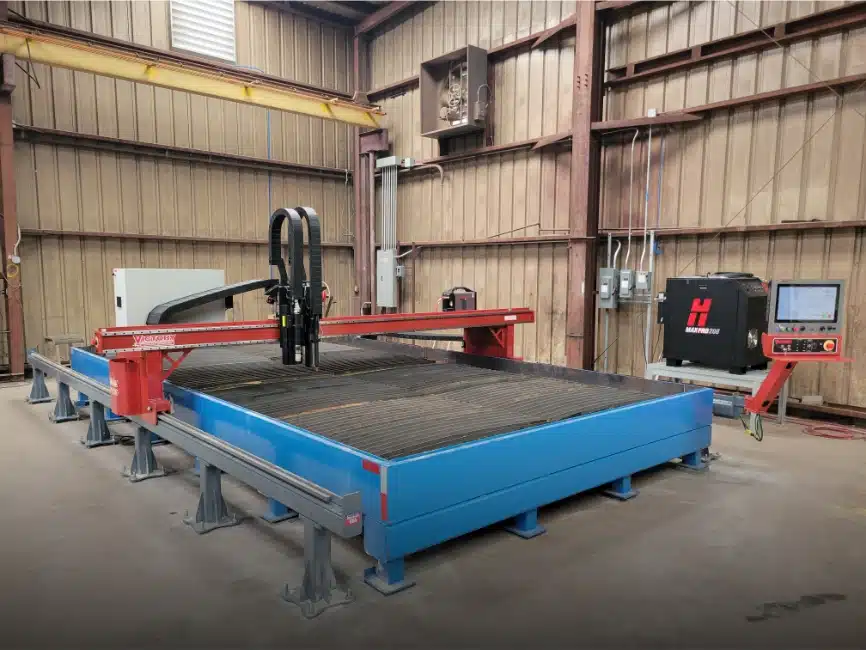
Honyo Prototype provides high-precision CNC plasma systems engineered for advanced fabrication of complex components requiring tight tolerances. While plasma cutting is traditionally used for 2D profiling of conductive materials, integration with multi-axis motion systems enables enhanced contour cutting and beveling capabilities. When combined with CNC milling and turning platforms, these systems support hybrid manufacturing workflows for demanding applications in aerospace, automotive, and industrial equipment.
Below is a technical specification summary for CNC plasma-integrated systems with multi-axis milling and turning capabilities, emphasizing precision, material compatibility, and tolerance control.
| Parameter | Specification |
|---|---|
| Axis Configuration | 3-Axis (X, Y, Z), 4-Axis (with rotary B or A axis), 5-Axis (full articulation) |
| Cutting Method | CNC Plasma Cutting with optional integration to milling/turning spindles |
| Positioning Accuracy | ±0.02 mm/m for linear axes, ±0.01° for rotary axes |
| Repeatability | ±0.01 mm |
| Typical Tolerance Capability | ±0.05 mm for milled/turned features; ±0.2 mm for plasma-cut edges |
| Material Compatibility | Aluminum, Mild and Stainless Steel, ABS (not plasma-cut), Nylon (not plasma-cut) |
| Max Cutting Thickness (Plasma) | Up to 38 mm (mild steel), 32 mm (stainless/aluminum) with high-definition plasma |
| Spindle Speed (Milling) | 8,000 – 24,000 RPM (high-speed options available) |
| Turning Capability | Integrated live tooling with C-axis control for milling during turning |
| Control System | Siemens 840D, Fanuc 31i, or Heidenhain iTNC7 with plasma motion coordination |
| Software Integration | CAD/CAM suites (Mastercam, HyperMill, SolidWorks CAM) with NC code optimization |
| Surface Finish (Milled) | Ra 0.8 – 3.2 µm (depending on material and toolpath) |
| Surface Finish (Plasma-Cut) | Ra 12.5 – 25 µm (HD plasma), post-processing recommended for tight tolerance fits |
| Coolant & Fume Management | Integrated downdraft tables, plasma fume extractors, and mist collectors |
| Duty Cycle | 100% at full power (industrial-duty torches and power supplies) |
Notes on Material Processing:
Plasma cutting is effective only on electrically conductive materials. Therefore, aluminum and steel (carbon, alloy, stainless) are ideal for plasma profiling. These materials can then undergo secondary high-precision 4- or 5-axis milling and turning to achieve tight-tolerance features such as bore holes, mating surfaces, and complex contours.
Non-conductive thermoplastics like ABS and Nylon cannot be processed with plasma systems. However, they are compatible with the same CNC milling and turning platforms used in hybrid workcells, enabling multi-material prototyping and assembly fabrication within a unified production environment.
Applications:
Used for rapid cutting of blanks or near-net shapes in metal components, followed by precision machining to meet geometric dimensioning and tolerancing (GD&T) requirements. Typical applications include custom fixtures, robotic chassis, and high-strength structural elements where edge quality from plasma is acceptable or post-machined.
Honyo Prototype ensures all multi-axis plasma-milling-turning systems are calibrated and validated to maintain compliance with ISO 2768 and customer-specific tolerance standards.
From CAD to Part: The Process
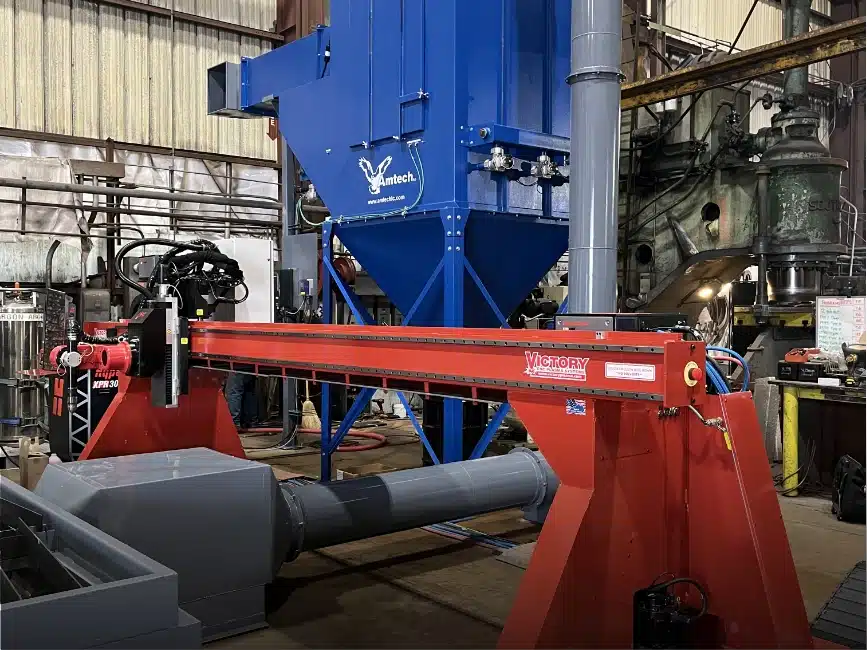
Honyo Prototype employs a rigorously defined workflow for CNC plasma fabrication projects to ensure precision, cost efficiency, and on-time delivery for industrial clients. This integrated process eliminates common supply chain ambiguities through systematic validation at each stage.
CAD File Upload and Initial Assessment
Clients initiate the process by uploading native CAD files (STEP, IPT, SLDPRT) or industry-standard 2D DXF/DWG formats via our secure portal. Our system automatically validates geometric integrity, checks for missing features, and confirms unit consistency. Files failing validation trigger an immediate notification specifying required corrections, preventing downstream delays. This phase typically concludes within 2 business hours of submission.
AI-Powered Quoting with Engineering Oversight
Proprietary AI algorithms analyze the validated geometry against 15+ real-time parameters including material grade availability, plate thickness, nest density, machine hourly rates, and regional energy costs. Crucially, this is not a black-box system: outputs undergo mandatory review by senior process engineers who adjust for factors like thermal distortion compensation strategies or complex piercing sequences. Clients receive a detailed quote within 24 hours containing material traceability codes, process-specific tolerances (±0.5mm standard for plasma), and explicit assumptions.
Design for Manufacturability (DFM) Collaboration
Upon quote acceptance, our DFM team conducts a collaborative review focusing on plasma-specific constraints. Key analyses include:
Kerf width compensation adjustments for material thickness
Optimized cut sequencing to minimize heat-affected zone distortion
Nesting efficiency validation (targeting >85% material utilization)
Piercing point placement to prevent edge cracking
Slag management considerations for post-processing
Clients receive annotated DFM reports with actionable recommendations within 48 hours. All suggestions include cost/time impact quantification to enable informed decisions.
Production Execution and Quality Control
Approved designs move to production on our calibrated CNC plasma systems (Hypertherm 45XP and equivalent). Each job undergoes:
First-article inspection using calibrated CMM for critical features
In-process verification of kerf width via laser micrometers
Real-time gas pressure and amperage monitoring logged per cut path
Final dimensional report against original CAD with deviation mapping
Standard lead time is 5-7 business days from DFM sign-off, with expedited options available.
Delivery and Documentation
Shipments include certified material test reports, dimensional conformance certificates, and digital process logs. Plasma-specific documentation details:
Cut speed and amperage profiles used
Consumable life tracking for quality traceability
Nest layout files for client reference
All deliveries meet ISO 9001:2015 standards with on-time delivery performance exceeding 98.7% in 2023.
The following table summarizes key phase metrics for typical projects:
| Process Phase | Standard Timeline | Key Deliverable | Plasma-Specific Focus |
|---|---|---|---|
| CAD Upload | <2 business hours | Validated geometry file | Unit consistency check, feature completeness |
| AI Quote | <24 business hours | Costed quote with assumptions | Kerf compensation modeling, thermal distortion factors |
| DFM | <48 business hours | Annotated optimization report | Nest density validation, piercing sequence planning |
| Production | 5-7 business days | Certified parts + dimensional report | Real-time amperage/gas monitoring, slag management |
| Delivery | As scheduled | Complete documentation package | Cut profile logs, consumable traceability |
This structured methodology ensures plasma-cut components meet demanding industrial specifications while providing clients with unprecedented process transparency. Continuous feedback from the production phase directly informs our AI quoting algorithms, creating a closed-loop system that enhances accuracy with every project.
Start Your Project
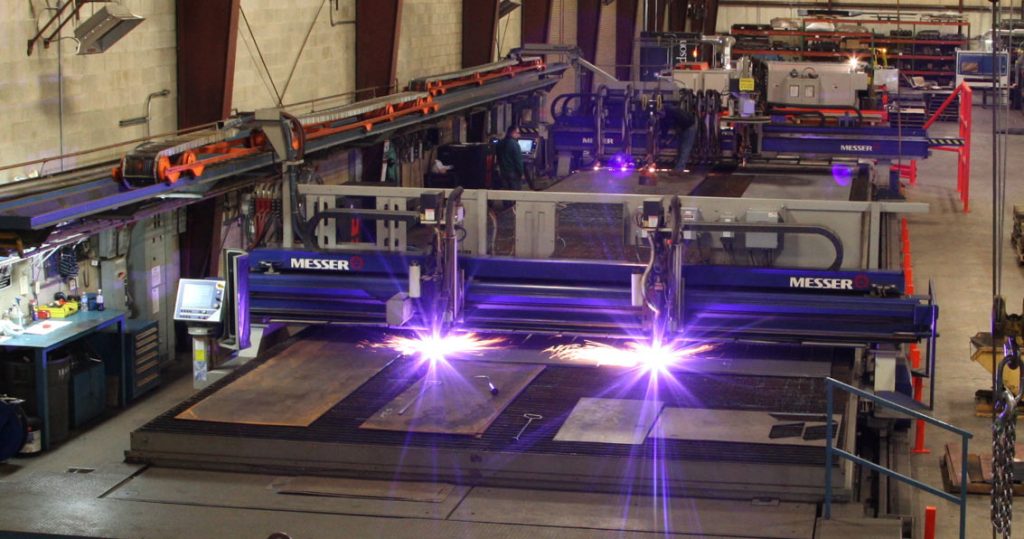
For inquiries about our CNC plasma systems, contact Susan Leo at [email protected]. Our manufacturing facility is located in Shenzhen, ensuring high-quality production and efficient turnaround for global clients.
🚀 Rapid Prototyping Estimator
Estimate rough cost index based on volume.