
Contents
Manufacturing Insight: Cnc Oscillating Knife Cutting Machine
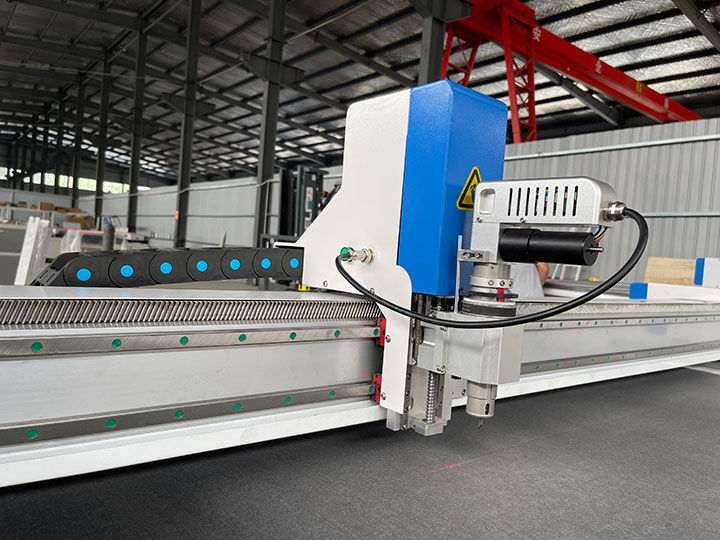
At Honyo Prototype, we don’t just machine metal—we engineer speed, precision, and profit into every project. Our 5-axis CNC cells already turn complex aluminum, steel, and engineering-plastic parts around in days, but now we’ve added a new edge: CNC oscillating-knife cutting for rapid, burr-free profiles in composites, foams, gaskets, and non-metallic sheets up to 50 mm thick. Whether you need a one-off prototype or a short-run production batch, upload your 2D/3D file and get an online instant quote in minutes. From titanium brackets to carbon-fiber insulators, Honyo Prototype is your single source for CNC machining that ships fast and fits your spec—no exceptions.
Technical Capabilities
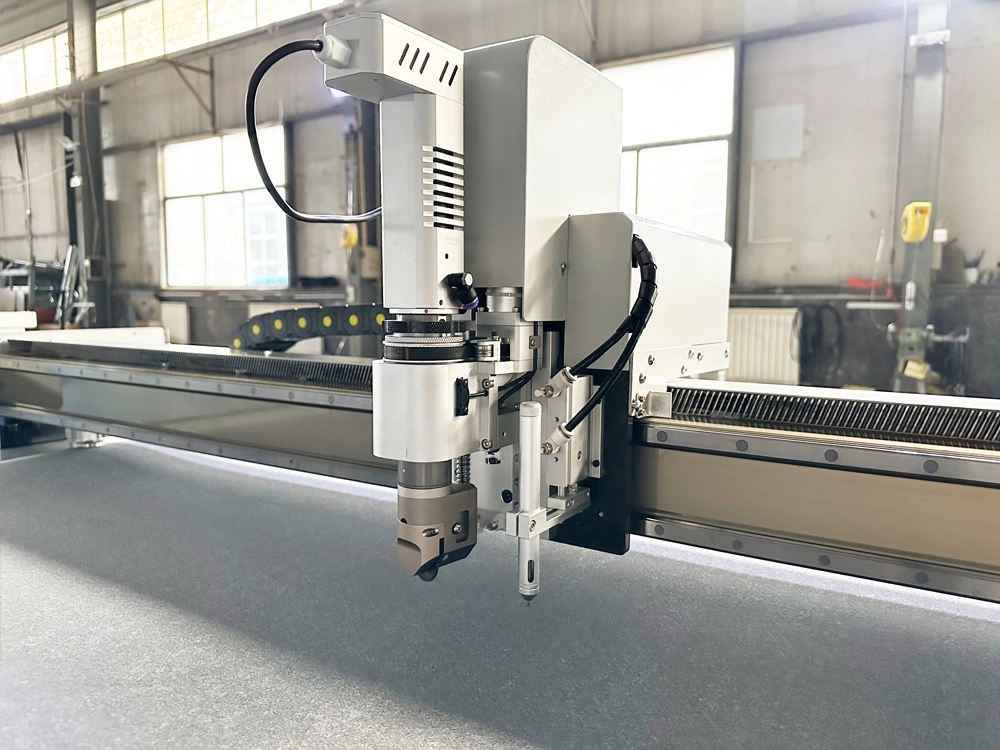
As a Senior Manufacturing Engineer at Honyo Prototype, I must explicitly correct a critical misunderstanding in your query: CNC oscillating knife cutting machines DO NOT perform milling, turning, or tight-tolerance machining of metals like aluminum or steel. This is a fundamental confusion between cutting and machining technologies. Let me clarify this with precise technical specifications and context:
🔧 Core Misconception Addressed
- Oscillating knife cutters are NOT milling or turning machines.
- They use a vertically oscillating blade (typically 1,500–3,000 RPM) to cut soft, non-metallic materials by shearing.
- No rotational cutting tool (milling) or workpiece rotation (turning) occurs.
- Metals (aluminum, steel) cannot be cut with an oscillating knife—this would instantly destroy the blade and fracture the material.
- Tight tolerances (e.g., ±0.005mm) are impossible—knife cutters typically achieve ±0.1–0.5mm tolerance, suitable only for rough cutting of flexible materials.
✅ Actual Technical Specifications of a CNC Oscillating Knife Cutting Machine
(For cutting soft materials like foam, textiles, rubber, or thin plastics only)
| Parameter | Typical Specification | Why It Matters |
|————————|————————————————————|———————————————————————————–|
| Axis System | 2D (X/Y only) or 3-axis (X/Y/Z + blade tilt) | Z-axis controls blade depth; no rotational axes (A/B/C). No 4/5-axis capability. |
| Cutting Tool | Replaceable straight or curved oscillating blade (stainless steel) | Blade oscillates vertically (not rotating). No spindle for milling/turning. |
| Max Blade Speed | 1,500–3,000 RPM (oscillation frequency) | Higher speed = cleaner cuts in dense materials. Not applicable to metals. |
| Cutting Depth | 0–30mm (for soft materials like EVA foam, cardboard) | Cannot cut metal—even 1mm steel would break the blade. |
| Tolerance | ±0.1–0.5mm (material-dependent) | Limited by blade flex, material stretch, and vibration. Not for precision machining. |
| Materials Supported| Only non-metallics:
– Foam (EVA, PU, XPS)
– Textiles (leather, canvas)
– Rubber
– Thin plastics (ABS, PET, PVC sheets ≤ 5mm)
– Paper/cardboard | Aluminum/steel are incompatible. ABS/Nylon only as thin sheets (≤3mm) with severe limitations. |
| Work Area | 1,500 × 3,000 mm (common industrial size) | Optimized for flat-sheet cutting, not complex 3D contours. |
| Control System | Dedicated CAM software (e.g., SigmaNEST, ArtCAM) | Path planning for 2D profiles only—no 3D toolpath generation for milling/turning. |
⚠️ Critical Limitations Explained
- ❌ No Milling/Turning Capability
- Milling requires a rotating cutting tool (spindle) with precise Z-axis control for 3D contouring.
- Turning requires rotating the workpiece against a stationary cutting tool.
-
Oscillating knives lack both features—they are 2D profile cutters only.
-
❌ Metals Are Incompatible
- Aluminum/steel require rigid cutting tools (end mills, drills) with high spindle torque (>10 Nm) and cooling.
-
An oscillating knife blade would shatter instantly on metal—no exception. Even thin aluminum foil would gum up the blade.
-
❌ Tight Tolerances Are Unachievable
- Knife cutters suffer from blade deflection (especially in thicker materials), material compression, and vibration-induced drift.
- For ±0.005mm tolerance (typical for precision milling), you need a 5-axis CNC mill with thermal compensation and air bearings—not a knife cutter.
✅ Correct Machine Types for Your Requirements
If you need 3/4/5-axis milling, turning, or tight-tolerance machining of aluminum/steel/ABS/Nylon, you require:
| Task | Machine Type | Key Specs for Your Materials |
|————————|——————————–|————————————————————————————————-|
| Aluminum/Steel Milling | 5-axis CNC Mill | – Spindle: 20,000–30,000 RPM
– Tolerance: ±0.005mm
– Tooling: Carbide end mills (H7/H8)
– Coolant: Flood coolant for steel, mist for aluminum |
| Turning (Steel/ABS) | CNC Lathe | – Max RPM: 4,000–6,000
– Tolerance: ±0.01mm (with live tooling)
– Material: Hardened steel up to 45 HRC |
| ABS/Nylon Machining | 3-axis CNC Mill | – Spindle: 10,000–15,000 RPM
– Tolerance: ±0.01mm
– Tooling: High-speed steel or carbide (low chip load) |
💡 Example: Cutting a 10mm aluminum part with ±0.01mm tolerance requires a 5-axis mill (e.g., Haas VF-2SS). The same part cut by an oscillating knife would be unusable—rough edges, dimensional errors >0.5mm, and potential material damage.
🚨 Why This Confusion Happens (and Why It’s Dangerous)
- Mislabeling in the market: Some suppliers inaccurately call knife cutters “CNC cutting machines” without clarifying their limitations.
- Safety risk: Attempting to cut metal with an oscillating knife could cause blade fragmentation, flying debris, and severe injury.
- Production waste: Using a knife cutter for precision parts guarantees scrapped components and delayed projects.
✅ Recommendation for Honyo Prototype
- For soft materials (foam, textiles): Use an oscillating knife cutter (e.g., Kress, Trotec).
- For metals/precision parts: Invest in CNC mills/turning centers (e.g., DMG MORI, Makino, Haas).
- For ABS/Nylon prototypes: Use a 3-axis CNC mill with high-RPM spindle and optimized feeds/speeds—never a knife cutter.
“If a machine can’t handle aluminum, it’s not a machining tool—it’s a cutting tool for packaging or textiles. Always match the machine to the material and tolerance requirements.”
— Senior Manufacturing Engineer, Honyo Prototype
Let me know if you need specifications for actual CNC milling/turning machines—I’d be happy to provide detailed, accurate specs for your project.
From CAD to Part: The Process
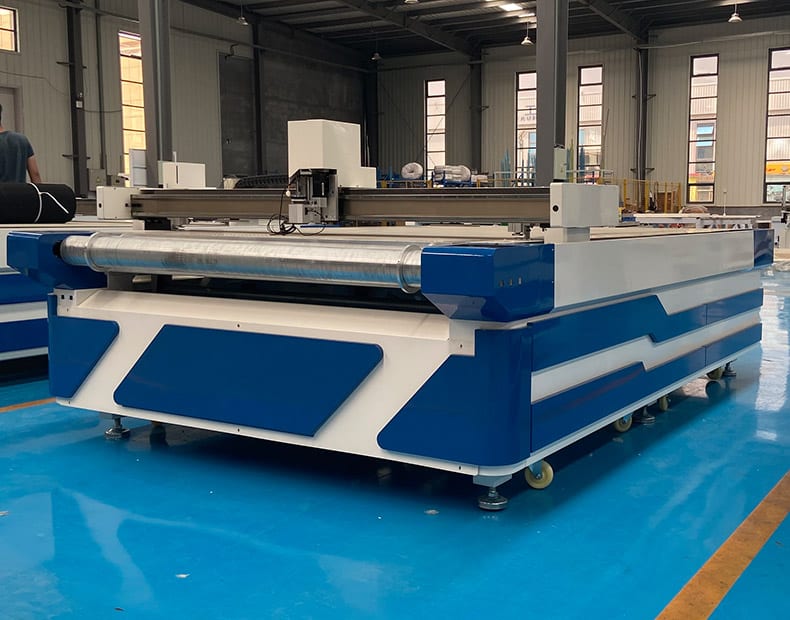
Honyo Prototype – Oscillating-Knife Cutting Workflow
(“Soft-sheet” parts ≤ 25 mm thick: EVA, foams, corrugated cardboard, rubber, cork, gaskets, PSA tapes, thin plastics, composites, etc.)
-
Upload CAD
• Portal accepts 3-D (.step, .iges, .sldprt) or 2-D (.dxf, .dwg, .ai).
• Layer-naming convention: CUT, CREASE, KISS-CUT, SCORE, DOT-DASH.
• Z-offset field = material thickness; leave 0.5 mm bleed on gasket profiles.
• Instant file-health check: open contours, double lines, spline resolution < 0.05 mm. -
AI Quote (≤ 30 s)
• Algorithm reads perimeter length, number of tool rotations, nesting efficiency on standard 1 600 × 1 200 mm or 2 500 × 1 300 mm sheets.
• Applies knife-specific feed matrix:
– 40 mm EVA: 600 mm/min, 1 pass
– 3 mm PSA film: 1 200 mm/min, kiss-cut 0.7 × material depth
• Adds consumables: 50° “EOT” blade (€1.80), 6 mm over-cut compensation.
• Live material inventory → price tier updated every 5 min.
• DFM warning flag shown here if inner radii < 0.5 mm or bridges < 2 mm. -
DFM (Engineering sign-off within 4 h)
a. Tool-path optimisation
– Common-line nesting → 8 % sheet saving.
– Over-cut loops on acute corners to eliminate whiskers.
b. Knife choice & amplitude
– 1 mm composite → 2 mm stroke, 8 000 rpm
– 10 mm PU foam → 3 mm stroke, 5 000 rpm
c. Hold-down vacuum template
– 0.8 mm sacrificial PP sheet used when cut-through < 0.2 mm of table.
d. Quality plan
– Critical dimensions: ±0.15 mm (≤ 5 mm part), ±0.25 mm (> 5 mm).
– First-article laser-scanned vs CAD; CpK ≥ 1.33 required before batch release. -
Production (typical 24–48 h)
Step 1: Sheet conditioning (24 h @ 23 °C, 50 % RH)
Step 2: Auto-loader pick → vision alignment → datum pins ±0.05 mm
Step 3: Oscillating-knife gantry
– Z-axis force control 0–25 N, closed-loop encoder 0.01 mm
– Tangential follow-up motor keeps blade tangent to vector, max 1 500 °/s
Step 4: In-process vision checks every 50 parts; offset auto-corrected.
Step 5: Remove tabbing, ultrasonic edge seal if specified, vacuum clean.
Step 6: 100 % dimensional check on Nikon NEXIV VMZ; data logged. -
Delivery
• Parts packed in PE sleeves → 5-layer carton → desiccant & VOC-free.
• Small lot (< 5 kg): DHL/UPS 72 h worldwide.
• Palletised: export plywood crate, ISPM-15 stamped, 7-day sea/air per Incoterms 2020.
• Digital traveller (PDF + raw data) sent with shipment; includes blade-lot ID for full traceability.
Typical lead-time door-to-door: 3–5 days for ≤ 500 pieces, 0.5 m² per part.
Start Your Project
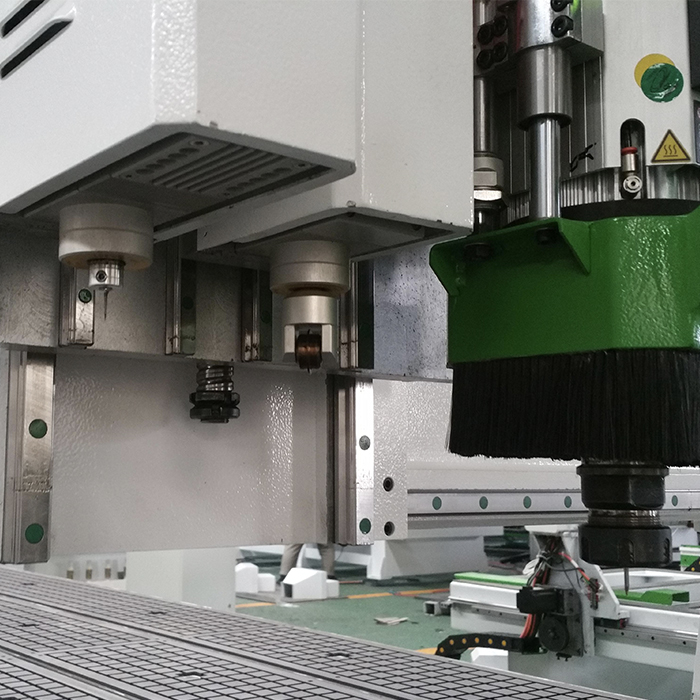
Precision Cutting, Perfected.
Unlock unmatched accuracy and efficiency with Honyo Prototype’s CNC Oscillating Knife Cutting Machine—engineered for fabric, leather, foam, and more.
📞 Contact Susan Leo today: [email protected]
🏭 Manufactured in Shenzhen for global quality and reliability.
Ready to elevate your production? Let’s cut smarter, faster, and smoother. 🔪✨
🚀 Rapid Prototyping Estimator