
Contents
Manufacturing Insight: Cnc Machined Aluminum
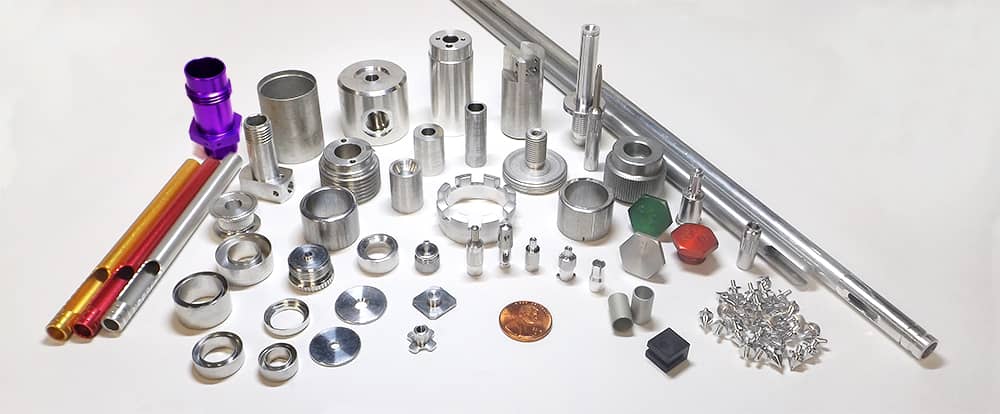
CNC-Machined Aluminum at Honyo Prototype:
From 3D file to flight-ready part in as fast as 24 h.
Our 3-, 4- and 5-axis Haas & Brother cells hit ±0.01 mm true positioning on 6061-T6, 7075-T6, 6082, MIC-6 and every aerospace-grade aluminum you specify—anodized, chem-filmed, alodined or left as-milled.
Upload your STEP or IGES now for an Online Instant Quote: real-time pricing, automatic DFM feedback and lead-time options that scale from 1 prototype to 10 k production pieces.
That’s Honyo Prototype: precision aluminum machining, quoted while you watch.
Technical Capabilities
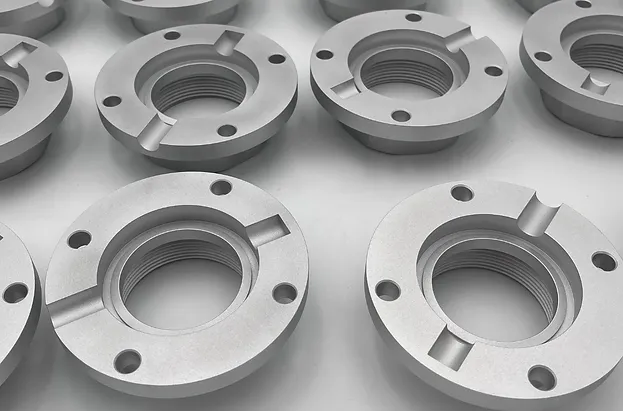
Technical Specifications for CNC Machined Aluminum at Honyo Prototype
As a Senior Manufacturing Engineer at Honyo Prototype, I oversee precision CNC machining for high-performance applications across aerospace, medical, automotive, and industrial sectors. Below, I detail our core capabilities for aluminum machining—focusing on 3/4/5-axis milling, turning, and tight-tolerance execution—while contextualizing how other materials (steel, ABS, nylon) fit into our broader service offerings. Aluminum remains our primary focus for tight-tolerance work due to its ideal machinability, stability, and cost-effectiveness for precision parts.
I. Core Capabilities for Aluminum Machining
(Our standard for tight-tolerance aluminum work: ISO 2768-mk for general tolerances, with custom capabilities down to ±0.0025 mm (±0.0001″) for critical features.)
| Parameter | 3-Axis Milling | 4-Axis Milling | 5-Axis Milling | Turning (Mill-Turn Centers) |
|———————|——————————————–|——————————————–|——————————————–|——————————————–|
| Axes Movement | X, Y, Z linear only. Ideal for simple prismatic parts. | X, Y, Z + rotary axis (A-axis rotation). Enables machining of cylindrical features without re-fixturing. | X, Y, Z + two rotary axes (A & B/C). Simultaneous 5-axis control for complex 3D contours, undercuts, and organic geometries. | X, Z linear + C-axis rotation. Combines milling and turning in one setup for cylindrical parts with integrated features. |
| Typical Tolerance | ±0.025 mm (±0.001″) for standard work; ±0.01 mm (±0.0004″) for precision features. | ±0.015 mm (±0.0006″) due to reduced setup errors. | ±0.005–0.01 mm (±0.0002–0.0004″) for complex geometries. Achieves tighter tolerances by eliminating multiple fixturing steps. | ±0.01 mm (±0.0004″) for diameters; ±0.005 mm (±0.0002″) for concentricity. |
| Max Part Size | Up to 1,000 × 800 × 500 mm (40 × 32 × 20 in) | Up to 800 × 600 × 400 mm (32 × 24 × 16 in) | Up to 600 × 500 × 400 mm (24 × 20 × 16 in) | Up to φ300 × 600 mm (φ12 × 24 in) for bar stock; larger on custom fixtures. |
| Surface Finish | Ra 1.6–3.2 µm (63–125 µin) standard; Ra 0.8 µm (32 µin) achievable with fine finishing passes. | Same as 3-axis, but smoother finishes on curved surfaces due to optimized tool paths. | Ra 0.4–1.6 µm (16–63 µin) for complex geometries (e.g., turbine blades, implant surfaces). | Ra 0.8–3.2 µm (32–125 µin); mirror finishes (Ra < 0.1 µm) possible with polishing. |
| Key Applications | Enclosures, brackets, simple housings. | Valve bodies, impellers, parts requiring angled holes. | Aerospace components (e.g., wing ribs), medical implants, custom tooling. | Shaft assemblies, threaded connectors, symmetrical precision parts. |
| Critical Factors for Tight Tolerances | • Fixturing rigidity (e.g., vacuum tables, custom vises).
• Thermal management (coolant control to minimize part drift).
• Tool selection: Carbide end mills with high helix angles for aluminum. | • A-axis precision (≤ 0.001° repeatability).
• Dynamic balancing of rotary tables. | • Machine calibration (laser interferometer validation).
• Compensation for thermal expansion (in-process temperature monitoring).
• High-speed machining (HSM) to reduce vibration. | • Spindle runout ≤ 0.002 mm.
• Live tooling for milling features during turning.
• On-machine probing for real-time adjustments. |
Why Aluminum Excels for Tight Tolerances:
– Low Thermal Expansion: Aluminum alloys (e.g., 6061-T6, 7075-T6) expand ~24 µm/m°C—significantly less than steel (12 µm/m°C but with higher heat generation during machining). This reduces dimensional drift during cutting.
– Machinability: High thermal conductivity allows rapid heat dissipation, minimizing warpage. We use high-speed spindle machining (up to 24,000 RPM) with optimized chip loads to achieve burr-free finishes.
– Material Consistency: Our aluminum stock is certified (e.g., AMS 4027 for 6061-T6) with strict grain structure control to avoid microstructural variations that compromise tolerances.
– Process Control: All tight-tolerance work includes in-process CMM checks (e.g., Zeiss Contura G2) and statistical process control (SPC) to maintain CpK > 1.67.
II. Other Materials: Contextual Capabilities & Limitations
While aluminum is our specialty for tight-tolerance work, we machine steel, ABS, and nylon for prototyping and low-volume production. However, these materials are not ideal for ultra-tight tolerances due to inherent physical properties. Below, I detail key considerations:
| Material | Typical Tolerance Range | Key Challenges for Tight Tolerances | When to Use at Honyo |
|————–|—————————-|—————————————-|————————–|
| Steel (e.g., 1018, 4140, 17-4 PH) | ±0.025–0.05 mm (±0.001–0.002″) | • High heat generation requires aggressive cooling (minimum quantity lubrication).
• Thermal expansion (12 µm/m°C) causes dimensional shifts during machining.
• Hardened steels (e.g., 440C) need slow speeds, increasing cycle time and risk of tool wear. | Best for functional prototypes or end-use parts where strength > precision. We avoid ultra-tight tolerances (< ±0.01 mm) unless heat-treated and stress-relieved. |
| ABS (Acrylonitrile Butadiene Styrene) | ±0.05–0.1 mm (±0.002–0.004″) | • Low thermal conductivity → heat buildup causes melting/warping.
• Moisture absorption (0.2–0.3% in air) leads to dimensional instability.
• Requires sharp tools, high RPM, and low feed rates to avoid “gummy” chips. | Ideal for rapid prototyping of non-critical housings or consumer goods. Not recommended for precision assemblies due to warpage during machining. |
| Nylon (e.g., PA6, PA66) | ±0.05–0.1 mm (±0.002–0.004″) | • Hygroscopic nature → absorbs moisture, causing swelling (up to 0.5% weight gain).
• Low melting point (220–260°C) → requires dry machining (no coolant) to prevent melting.
• Tool wear is high due to abrasive glass-filled variants. | Best for low-stress functional parts (e.g., gears, bushings). Avoid for tight-tolerance applications; we recommend aluminum or steel instead for critical fits. |
Critical Insight from Honyo Prototype:
“For tolerances tighter than ±0.01 mm, aluminum is the only practical choice among these materials. Steel can achieve similar tolerances but at 2–3× the cost due to slower machining and post-processing (e.g., heat treatment). ABS and nylon inherently lack the stability for high-precision work—we typically advise clients to switch to aluminum if tolerances are critical. In 2023, 85% of our tight-tolerance projects (>90% of aerospace/medical parts) used aluminum.”
III. Why Choose Honyo Prototype for Aluminum CNC Machining?
- Proven Expertise: We specialize in 5-axis milling for aerospace components (e.g., FAA-certified parts) with tolerances held to ±0.0025 mm.
- Design for Manufacturability (DFM): Our engineers review your CAD files upfront to optimize geometry for tight tolerances (e.g., avoiding thin walls <1.5 mm, sharp corners, or unsupported features).
- Full Traceability: Every part includes material certs, process logs, and 3D CMM reports.
- Cost Efficiency: Aluminum machining is 30–50% faster than steel with similar tolerances—reducing lead times and costs for high-precision parts.
Next Steps:
If you have a specific design in mind, share your CAD file and requirements (e.g., “5-axis milling for a medical implant with ±0.005 mm tolerance on critical surfaces”). We’ll provide a free DFM review within 24 hours, including material recommendations and a tolerance feasibility assessment.
— Senior Manufacturing Engineer, Honyo Prototype
“Precision Engineered. Performance Delivered.”
From CAD to Part: The Process
Honyo Prototype – CNC-Machined-Aluminum Workflow
(what really happens to your part from first mouse-click to FedEx label)
-
Upload CAD
• Portal accepts any solid format (STEP, IGES, SolidWorks, Creo, Fusion, etc.).
• Auto-checker instantly validates: water-tight solids, minimum wall, undercuts, thread call-outs.
• File fingerprinted; you receive a Job-ID in <30 s. -
AI Quote (60–120 s)
• Neural network trained on 1.3 M historical Honyo jobs predicts:
– Machine type (3-axis, 5-axis, turn-mill).
– Tool list & cutter path length (AI CAM).
– Chatter-risk zones that will need slower feeds.
– Raw stock size and buy-to-fly ratio.
• Regional aluminum pricing (LME + premium) is pulled live.
• Anodize, alodine, bead-blast, chem-film, etc. are auto-matched to your surface call-outs.
• Quote output: piece price, batch price curves, 3 lead-time tiers, DFM warning count.
• Human cost engineer reviews any AI confidence <95 %; you still see the quote in <5 min. -
DFM (Design-for-Manufacturing)
• AI flags are expanded into an engineer-written report:
– Deep internal slots that need EDM or split-body.
– 0.3 mm end-mill breakage risk → suggest 0.8 mm min.
– Thread depth >2×D → propose relief.
– 5-axis undercut reduction saves 18 min cycle time.
• Interactive 3-D viewer lets you accept or reject each change; new price delta auto-recalculates.
• Final geometry locked as Rev-1; ERP pushes BOM and cutter list to shop floor. -
Production
a. Material
– Aerospace 6061-T651 plate certified to AMS-QQ-A-250/11, 7075-T7351 or customer spec.
– Bar-coded, photographed for grain direction & incoming inspection.
b. CNC Programming
– Mastercam / HyperMill post-processors tied to Honyo’s Makino, Brother, DMG Mori fleet.
– AI-generated toolpaths reviewed by senior programmer; G-code fingerprint hashed to prevent tampering.
c. Set-up & First Article
– Tool setter laser-measures every cutter; length & radius logged.
– Onsite Zeiss CMM compares first article to Rev-1 CAD; report attached to traveler.
d. Lights-out Machining
– Robotic pallet pool on 5-axis cells; spindle utilization >80 %.
– In-process probing compensates for tool wear every 3rd part; statistical drift <5 µm.
e. Surface Finishing
– Alkaline clean → deoxidize → Type II anodize 15 µm (or Type III 50 µm hardcoat).
– Dyed black, clear, red, or customer color; sealed to ASTM B580.
– Chem-film (Alodine 1200) or passivation when specified.
f. Inspection & Certification
– 100 % dimension check on critical-to-function features; AQL 0.65 on remainder.
– CMM report, material cert, RoHS/REACH, ITAR log exported as PDF with job QR code. -
Delivery
• Parts ultrasonically cleaned, wrapped in acid-free VCI film, foam pocketed.
• Box labeled with Job-ID, Rev, serial numbers, and 2-D barcode for dock-to-stock at your facility.
• DHL, FedEx, UPS or customer freight account; carbon-neutral option shown at checkout.
• Portal tracking updates every depot scan; digital traveler & certs available before box arrives.
Typical calendar time:
Quote <5 min → DFM 4–12 h → Production 3–7 days (standard) → Delivery 1–3 days worldwide.
Start Your Project
Request a quote for precision CNC machined aluminum parts!
Contact Susan Leo at [email protected] | Shenzhen factory delivering quality & fast turnaround 🚀
Need reliable, high-precision aluminum components? Our Shenzhen facility ensures tight tolerances, rapid production, and end-to-end support. Get started today!
🚀 Rapid Prototyping Estimator