
Contents
Manufacturing Insight: Cnc Machine Okuma
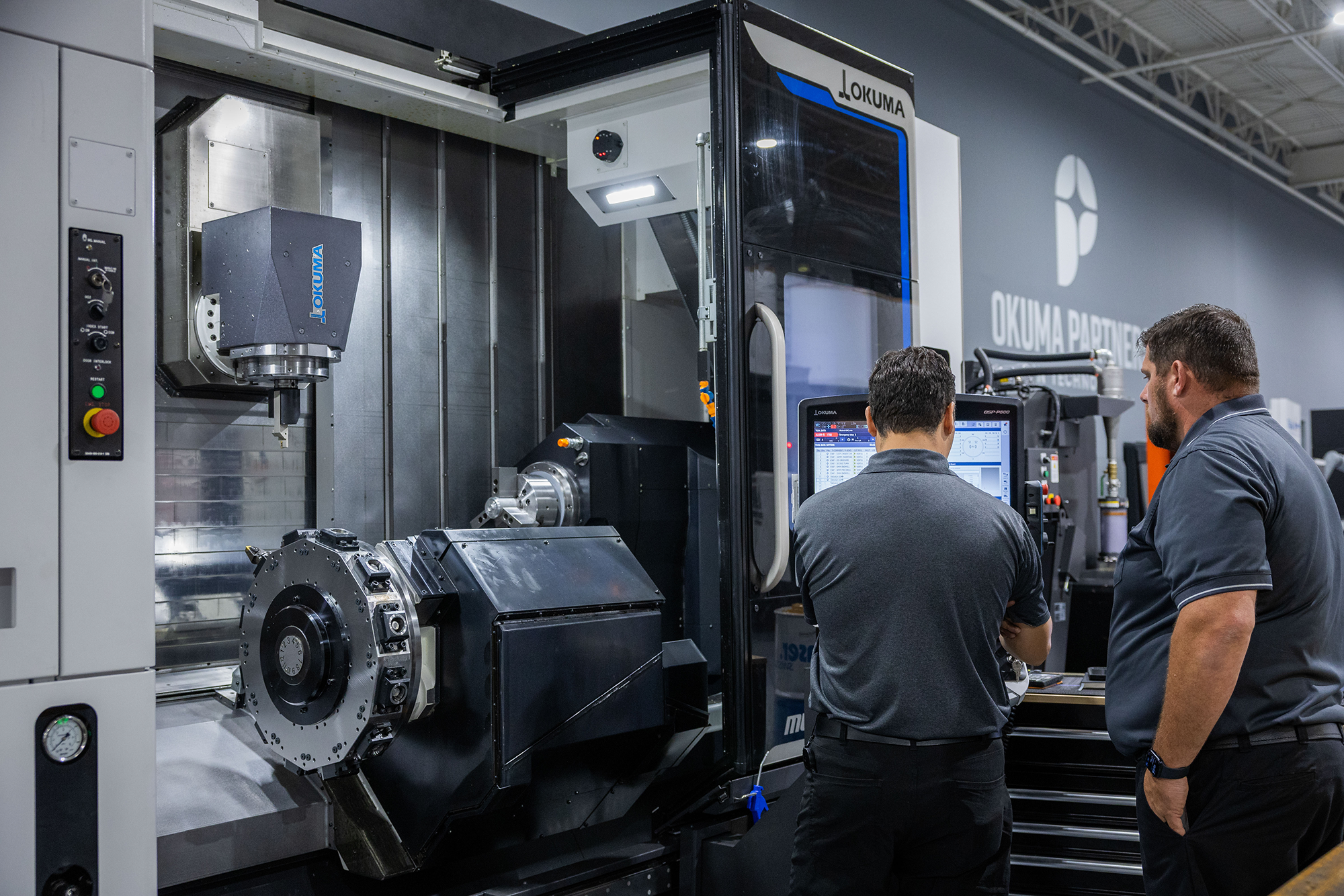
Precision CNC Machining Excellence with Honyo Prototype: Leveraging Okuma Technology
Honyo Prototype delivers industry-leading CNC machining services engineered for complex, high-precision components across aerospace, medical, and industrial sectors. At the core of our production capability lies our strategic deployment of Okuma CNC machines, renowned globally for exceptional rigidity, thermal stability, and micron-level accuracy. These advanced platforms—featuring Okuma’sOSP control systems and integrated automation—enable us to consistently achieve tight tolerances (±0.0002″), superior surface finishes, and accelerated cycle times for both prototyping and low-to-mid volume production runs.
Our Okuma fleet supports multi-axis milling, turning, and mill-turn operations across diverse materials including titanium, Inconel, aluminum alloys, and engineering plastics. Every machine undergoes rigorous calibration and is monitored via real-time process analytics, ensuring dimensional integrity from first article to final batch. This commitment to machine excellence is amplified by Honyo’s end-to-end quality management system, incorporating CMM validation, SPC methodologies, and AS9100-compliant documentation.
Accelerate your project timeline with Honyo’s Online Instant Quote platform. Upload CAD files (STEP, IGES, Parasolid) and receive a detailed, transparent cost estimate within minutes—not days—factoring in material utilization, machine selection, and secondary operations. This seamless integration of Okuma’s precision engineering with our digital quoting infrastructure eliminates traditional RFQ bottlenecks, empowering faster decision-making and time-to-market for your critical components.
Partner with Honyo Prototype to transform design intent into flawless physical reality, backed by the reliability of Okuma technology and the agility of modern digital manufacturing.
| Key Capability | Honyo Implementation with Okuma CNC |
|---|---|
| Tolerance Range | ±0.0002″ (5µm) standard |
| Material Expertise | Titanium, Inconel 718, 17-4PH, PEEK, Aluminum 7075-T6 |
| Process Control | Real-time thermal compensation, in-process probing |
| Lead Time Reduction | Online Instant Quote cuts quoting from 3-5 days to <15 min |
Technical Capabilities
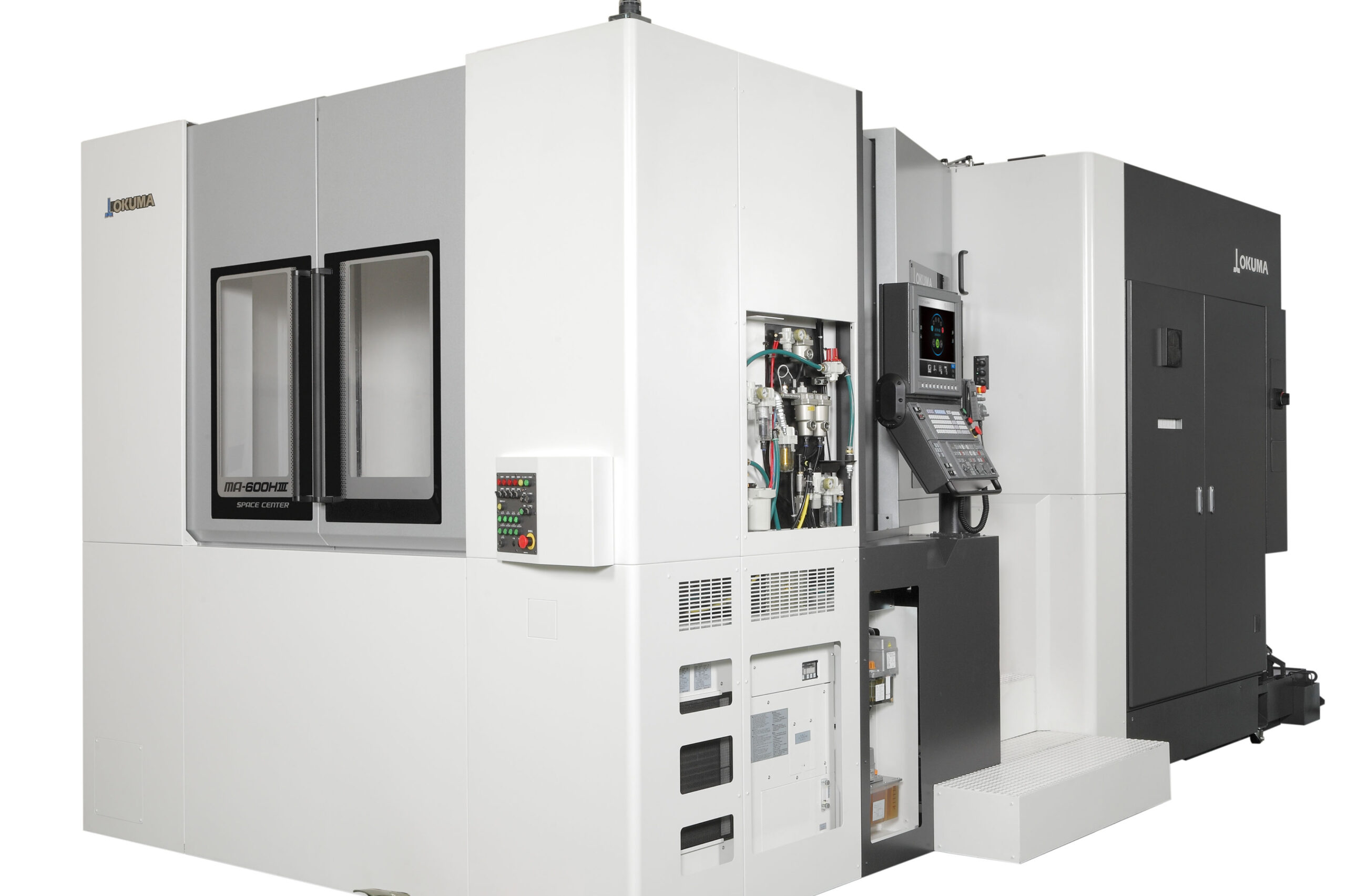
Technical Specifications for OKUMA CNC Machines – 3/4/5-Axis Milling & Turning – High Precision Applications
OKUMA CNC machines are engineered for high-precision machining across a broad range of materials including aluminum, steel, ABS, and nylon. Renowned for their thermal stability, rigidity, and advanced control systems, OKUMA’s 3-axis, 4-axis, and 5-axis milling and turning centers deliver tight tolerances down to ±0.0001″ (2.5 µm) in production environments. These machines are ideal for aerospace, medical, and automotive sectors requiring complex geometries and repeatable accuracy.
| Feature Category | Specification Detail |
|---|---|
| Machine Types | 3-Axis, 4-Axis, 5-Axis Vertical Machining Centers (e.g., MU-4000V, MU-6300V), Multi-Tasking Turning Centers (e.g., MULTUS U3000, LB3000 EX) |
| Control System | OKUMA THINC-OSP-P300/P500 with 3D simulation, collision avoidance, and AI thermal compensation |
| Spindle Speed Range | Up to 20,000 RPM (standard); optional high-speed spindles up to 30,000 RPM for aluminum and plastics |
| Positioning Accuracy | ±0.00008″ (2 µm) per axis with laser interferometer calibration |
| Repeatability | ±0.00004″ (1 µm) across all axes |
| Axis Travel (Typical 5-Axis) | X: 27.6″ (700 mm), Y: 23.6″ (600 mm), Z: 23.6″ (600 mm), B-axis: ±110°, A-axis: ±120° |
| Tool Changer Capacity | 30–80 tools (standard), up to 160 with automatic pallet changer (APC) integration |
| Rapid Traverse Rates | 1,968 in/min (50 m/min) on linear axes; 2,362 in/min (60 m/min) optional |
| Materials Processed | Aluminum (6061, 7075), Steel (4140, 1018, Stainless 304/316), Engineering Plastics (ABS, Nylon 6/66, PEEK) |
| Tolerance Capability | ±0.0002″ (5 µm) typical; ±0.0001″ (2.5 µm) achievable under controlled conditions with in-process probing |
| Surface Finish | <32 µin Ra (typical), down to 8–16 µin Ra with fine finishing tools and optimized parameters |
| Coolant System | High-pressure through-spindle coolant (up to 1,000 psi) for steel and deep-pocket milling; optional mist coolant for nylon and ABS |
| Thermal Compensation | OKUMA Thermal Shield II – real-time adjustment for spindle and column expansion |
| Vibration Damping | Mineral cast machine base (granite-filled polymer concrete) for damping and stability |
| Programming Interface | 3D CAD/CAM integration via THINC-OSP, support for EIA/ISO, and G-code with graphical verification |
These specifications reflect standard configurations for high-precision OKUMA platforms. Customization options include extended travels, dual pallet systems, in-machine probing (touch and laser), and automation-ready interfaces (e.g., FMS integration). OKUMA’s commitment to thermal and structural integrity ensures consistent performance across material types, especially critical when maintaining tight tolerances in both conductive metals (aluminum, steel) and low-melting-point polymers (ABS, nylon).
From CAD to Part: The Process
Honyo Prototype CNC Machining Process for Okuma Machines
Honyo Prototype utilizes a streamlined, technology-driven workflow for CNC machining projects executed on our Okuma dual-spindle multitasking centers and vertical machining centers. This process ensures precision, efficiency, and seamless integration from initial design to final delivery, specifically leveraging Okuma’s advanced capabilities such as thermal displacement compensation, rigid tapping, andOSP control systems.
CAD File Upload and Initial Processing
Clients submit 3D CAD models (STEP, IGES, or native formats) via our secure online portal. Our system immediately performs automated geometry validation to check for file integrity, unit consistency, and manufacturability flags. Okuma-specific constraints—such as maximum envelope dimensions (e.g., 500mm x 400mm x 300mm for LB EX series lathes) or minimum feature sizes—are cross-referenced against the design. Any detected anomalies trigger an immediate notification to the client for resolution prior to quoting.
AI-Powered Quoting with Engineering Oversight
Proprietary AI algorithms analyze the validated CAD geometry, material selection, and surface finish requirements to generate a preliminary quote within 2 hours. The AI factors in Okuma machine-specific parameters:
Toolpath complexity adjusted for Okuma’s MAZATROL SmoothX controller efficiency
Material waste calculations using Okuma’s high-precision bar feeders
Setup time estimates based on Okuma’s twin-turret configurations
A Senior Manufacturing Engineer then validates the AI output, incorporating secondary operations (e.g., milling on turning centers) and applying industry-standard allowances for titanium or Inconel alloys. Clients receive a formal quote with breakdowns for machine hours, material costs, and critical tolerances.
Engineering-Driven DFM Analysis
Upon quote acceptance, our DFM team conducts a rigorous review focused on Okuma machine optimization:
Converting undercuts or complex contours into viable Okuma multitasking sequences (e.g., simultaneous turning/milling on LB3000 EX-II)
Recommending feature modifications to leverage Okuma’s sub-spindle capabilities for complete machining in one setup
Adjusting tolerances to match achievable Okuma performance (e.g., ±0.005mm positional accuracy on GENOS series mills)
Flagging thin-wall sections requiring Okuma’s adaptive control to prevent chatter
A detailed DFM report with annotated CAD markups is shared within 24 hours, including specific Okuma machine assignments and process validation evidence.
Okuma-Centric Production Execution
Approved designs move to our climate-controlled Okuma production cell. Key practices include:
Pre-production validation using Okuma’s Virtual Machine simulation to eliminate collisions
In-process gaging via Okuma’s touch-probe systems for first-article inspection
Real-time thermal drift correction via Thermo-Friendly Concept technology
Material-specific parameter optimization (e.g., high-feed milling strategies for aluminum on VMCs)
All operations adhere to ISO 9001 protocols, with full traceability of tooling (Okuma-standard BT40/CAT40), coolant conditions, and machine health data from the OSP-P300M controller.
Quality-Controlled Delivery
Final inspection employs CMM and optical comparators calibrated to NIST standards, with reports mapping actual measurements against CAD nominal values. For critical aerospace or medical parts, we provide Okuma machine log data (spindle load, vibration analysis) as supplementary evidence. Parts ship with:
Material certification (e.g., AMS 4928 for Ti-6Al-4V)
Dimensional report showing conformance to specified tolerances
Lot traceability documentation
Standard lead time is 72 hours for prototypes; express options leverage Okuma’s quick-change pallet systems for 24-hour turnaround.
Tolerance Capabilities on Okuma Platforms
| Feature Type | Standard Tolerance | Tight Tolerance (Additional Cost) |
|——————–|——————–|———————————|
| Linear Dimensions | ±0.05 mm | ±0.005 mm |
| Hole Position | ±0.03 mm | ±0.01 mm |
| Surface Finish (Ra)| 3.2 µm | 0.8 µm |
| Concentricity | 0.02 mm | 0.005 mm |
This integrated approach ensures clients receive precision-machined components that fully exploit Okuma’s engineering excellence, with zero surprises in cost, lead time, or quality. Contact Honyo’s engineering team for Okuma-specific process validation data or material capability sheets.
Start Your Project
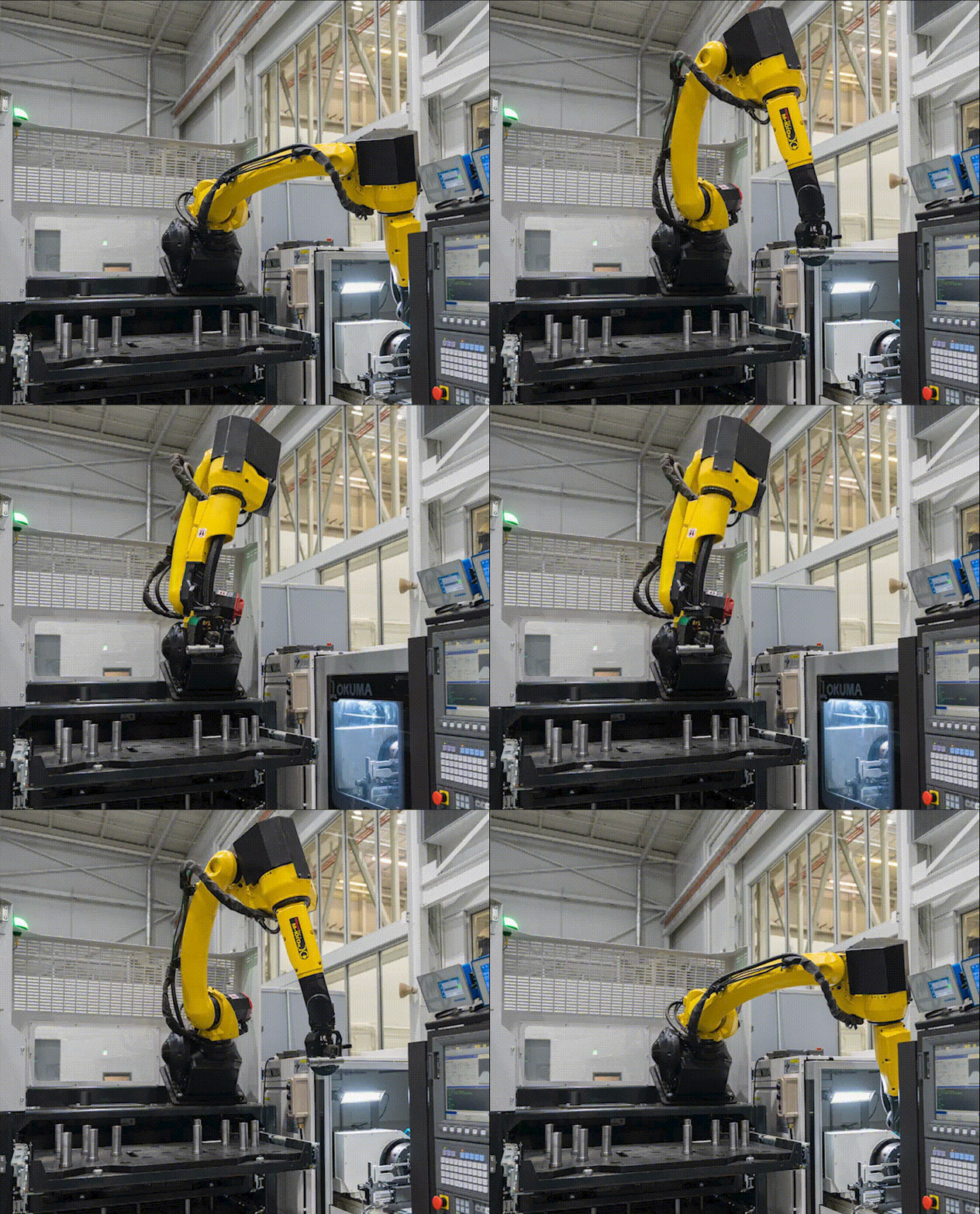
Looking for high-precision CNC machining with advanced Okuma equipment? Honyo Prototype delivers superior manufacturing solutions from our state-of-the-art factory in Shenzhen. Trust in our Okuma CNC machines for accuracy, speed, and consistent quality in every production run.
Contact Susan Leo today to discuss your project requirements.
Email: [email protected]
Leverage our expertise in precision engineering and fast turnaround times—ideal for prototypes and low-volume production.
🚀 Rapid Prototyping Estimator
Estimate rough cost index based on volume.