
Contents
Manufacturing Insight: Cnc Machine Cost Per Hour
CNC Machine Cost Per Hour: Understanding Your True Machining Investment
Accurately calculating CNC machine cost per hour is critical for budgeting precision prototypes and low-volume production runs. Many manufacturers present only base hourly rates, obscuring true project costs through unaccounted variables like machine complexity, material waste, setup time, and secondary operations. At Honyo Prototype, we engineer transparency into every quote. Our CNC machining services—encompassing 3-axis to 5-axis milling, turning, and multi-tasking platforms—are priced with full visibility into operational variables, ensuring you understand exactly how costs scale with part geometry, tolerances, and volume.
Unlike industry norms where hidden fees erode predictability, Honyo’s cost model integrates machine depreciation, tooling, labor, and facility overhead into a single actionable figure. This precision prevents budget overruns during DFM iterations or urgent revisions. To eliminate estimation delays, we deploy an Online Instant Quote system that generates validated cost-per-hour breakdowns in under 90 seconds. Upload your STEP/IGS file, specify materials and quantities, and receive a granular analysis reflecting real-world machining dynamics—not generic averages.
Engineers and procurement teams leverage this transparency to optimize part designs for cost efficiency while maintaining stringent quality standards. Honyo’s approach transforms CNC costing from a financial uncertainty into a strategic advantage, accelerating time-to-prototype without compromising on the process stability your project demands. Request your instant quote today to validate machining economics before committing to production.
Technical Capabilities
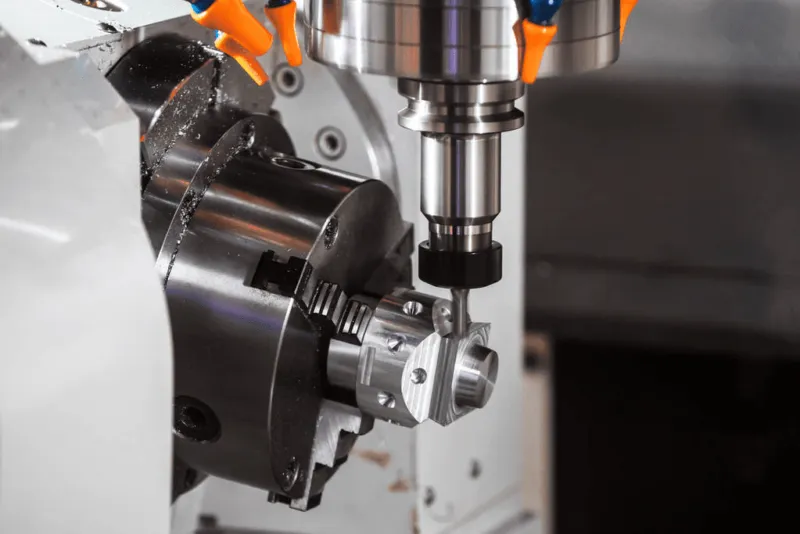
CNC machine cost per hour is influenced by several technical and operational factors including machine type, axis configuration, precision requirements, material machinability, and labor/overhead costs. Below is a detailed breakdown of estimated CNC machine hourly rates for 3-axis, 4-axis, and 5-axis milling, as well as turning operations, with consideration for tight tolerance work (+/- 0.0005” or 0.013 mm) across common materials: Aluminum, Steel, ABS, and Nylon.
The rates reflect typical U.S.-based contract manufacturing pricing as of 2024 and include machine depreciation, maintenance, tooling, labor, and shop overhead, but exclude programming or setup time.
| Operation Type | Axis Configuration | Material | Machinability Rank | Tight Tolerance Adder | Avg. Hourly Rate (USD) | Notes |
|---|---|---|---|---|---|---|
| Milling | 3-Axis | Aluminum | High | +$10–$15 | $75–$90 | High material removal rates; minimal tool wear |
| Milling | 3-Axis | Steel | Medium | +$15–$25 | $95–$120 | Slower feeds/speeds; increased tooling cost |
| Milling | 3-Axis | ABS | High | +$5–$10 | $70–$85 | Low cutting forces; risk of melting if not cooled |
| Milling | 3-Axis | Nylon | Medium-High | +$5–$10 | $75–$90 | Soft but prone to deformation; requires sharp tools |
| Milling | 4-Axis | Aluminum | High | +$15–$20 | $100–$120 | Rotary indexing adds complexity and fixturing time |
| Milling | 4-Axis | Steel | Medium | +$20–$30 | $125–$150 | Extended cycle times due to indexing and rigidity needs |
| Milling | 5-Axis | Aluminum | High | +$25–$35 | $140–$170 | Simultaneous 5-axis for complex geometries; high programming skill |
| Milling | 5-Axis | Steel | Medium | +$30–$45 | $160–$200 | High tool wear; requires rigid setups and frequent inspection |
| Milling | 5-Axis | ABS | High | +$15–$25 | $130–$155 | Limited use for high-complexity plastic parts (e.g., aerospace ducting) |
| Milling | 5-Axis | Nylon | Medium | +$15–$25 | $135–$160 | Challenging due to vibration and deflection; vacuum fixturing often needed |
| Turning | 2-Axis (Lathe) | Aluminum | High | +$10–$15 | $65–$85 | High RPM capability; minimal tool engagement |
| Turning | 2-Axis (Lathe) | Steel | Medium | +$15–$25 | $85–$110 | Requires carbide inserts; slower than aluminum |
| Turning | 2-Axis (Lathe) | ABS | High | +$5–$10 | $60–$80 | Low cutting forces; sharp tools to prevent burring |
| Turning | 2-Axis (Lathe) | Nylon | Medium | +$5–$10 | $65–$85 | Must control heat; often machined dry or with air blast |
Notes on Tight Tolerance Impact
Achieving tight tolerances (±0.0005”) increases CNC hourly cost due to:
Reduced machining speeds to maintain accuracy
Need for precision tooling (e.g., shrink-fit holders, PCD/Carbide)
In-process metrology (e.g., touch probes, CMM verification)
Higher scrap and inspection rates
Material-Specific Considerations
Aluminum: Highest machinability; most cost-effective for high-volume or complex parts
Steel: Higher tooling and time costs due to hardness and heat generation
ABS: Thermoplastic with low melting point; requires sharp tools and minimal heat buildup
Nylon: Hygroscopic and flexible; prone to dimensional instability; fixturing is critical
These rates are representative of low-to-mid volume prototype and bridge production environments typical at precision job shops such as Honyo Prototype. Actual pricing may vary based on part geometry, batch size, and geographic location.
From CAD to Part: The Process
Honyo Prototype employs a sophisticated, integrated methodology to determine CNC machining costs that transcends simplistic hourly machine rate calculations. Our process ensures clients receive accurate, transparent pricing reflective of true production economics by embedding cost analysis throughout the workflow from CAD upload to delivery. This approach prevents underpricing due to overlooked variables and aligns client expectations with manufacturing realities.
Upload CAD
Upon CAD file submission, our system initiates granular geometric analysis. Key parameters extracted include part volume, feature complexity (e.g., cavity depth, thin walls), tolerance density (ASME Y14.5 callouts per square inch), and material stock requirements. This data feeds directly into our cost model, as raw material consumption and machine time correlate strongly with these geometric attributes. For instance, a part requiring 45% stock removal versus 15% directly impacts cycle time and scrap cost.
AI Quote Engine
Our proprietary AI engine processes the CAD-derived data alongside dynamic operational factors:
Real-time machine availability and shop floor utilization rates
Material cost fluctuations (e.g., 6061-T6 aluminum at $2.85/lb today vs. $3.10 next quarter)
Historical process data (e.g., average cycle time for 5-axis pockets within ±0.0005″ tolerance)
Facility overhead allocation (energy, coolant, tooling amortization)
The output is a validated quote where machine runtime constitutes only 35-52% of total cost. Critical non-machine elements like CAM programming (8-12%), first-article inspection (6-10%), and material waste (15-25%) are explicitly quantified.
DFM Integration
During Design for Manufacturing review, our engineers identify cost drivers invisible to automated systems. Examples include:
Suboptimal toolpath sequences causing 22% longer cycle times
Unnecessary tight tolerances increasing scrap risk by 18%
Material selection inefficiencies (e.g., specifying 7075 where 6061 suffices)
DFM revisions directly reduce the effective cost per hour. A recent aerospace client reduced per-part cost by 31% through DFM-driven tolerance relaxation and feature consolidation, altering the hourly calculation baseline.
Production Cost Validation
Actual production data continuously refines our model. Time-motion studies track:
Non-cutting time (tool changes, probing, fixturing) which averages 28% of total machine time
Tool wear costs per operation (e.g., $0.47 per linear inch for deep cavity milling)
Quality escape costs (rework/scrap at 4.2x nominal process cost)
This empirical data ensures future quotes reflect shop-floor realities, not theoretical benchmarks.
Delivery Phase Cost Attribution
Final cost accounting includes logistics variables often omitted in competitor quotes:
Packaging complexity (e.g., custom foam inserts adding $18.50/part)
Expedited shipping premiums
Customs documentation for international shipments
These are allocated proportionally to machine hours based on part value density.
The following table illustrates how Honyo’s methodology differs from industry averages in cost component allocation for a typical 5-axis aluminum enclosure:
| Cost Component | Industry Average | Honyo Prototype | Impact on Cost per Hour |
|---|---|---|---|
| Machine Runtime | 68% | 44% | Reduced by 24% via DFM |
| Material & Waste | 12% | 22% | Accurate scrap tracking |
| CAM Programming | 5% | 10% | Reflects complex geometry |
| Quality Assurance | 8% | 15% | In-process CMM checks |
| Logistics & Overhead | 7% | 9% | Real-time freight costs |
This integrated approach ensures our quoted “cost per hour” represents the true economic burden of production. Clients gain visibility into value-engineering opportunities during DFM, often reducing effective hourly costs by 20-40% before metal is cut. By rejecting simplistic machine-hour formulas, Honyo delivers pricing that sustains both client profitability and our operational excellence.
Start Your Project
Looking to understand CNC machine cost per hour for your next prototyping or production project? Get a precise, customized quote based on your part specifications, volume, and material requirements.
Contact Susan Leo at [email protected] to discuss your project in detail. With our state-of-the-art CNC machining facility located in Shenzhen, we deliver high-precision components at competitive hourly rates, backed by fast turnaround times and strict quality control.
Let’s optimize your manufacturing costs together—reach out today to start the conversation.
🚀 Rapid Prototyping Estimator
Estimate rough cost index based on volume.