
Contents
Manufacturing Insight: Cnc Keyboard Case
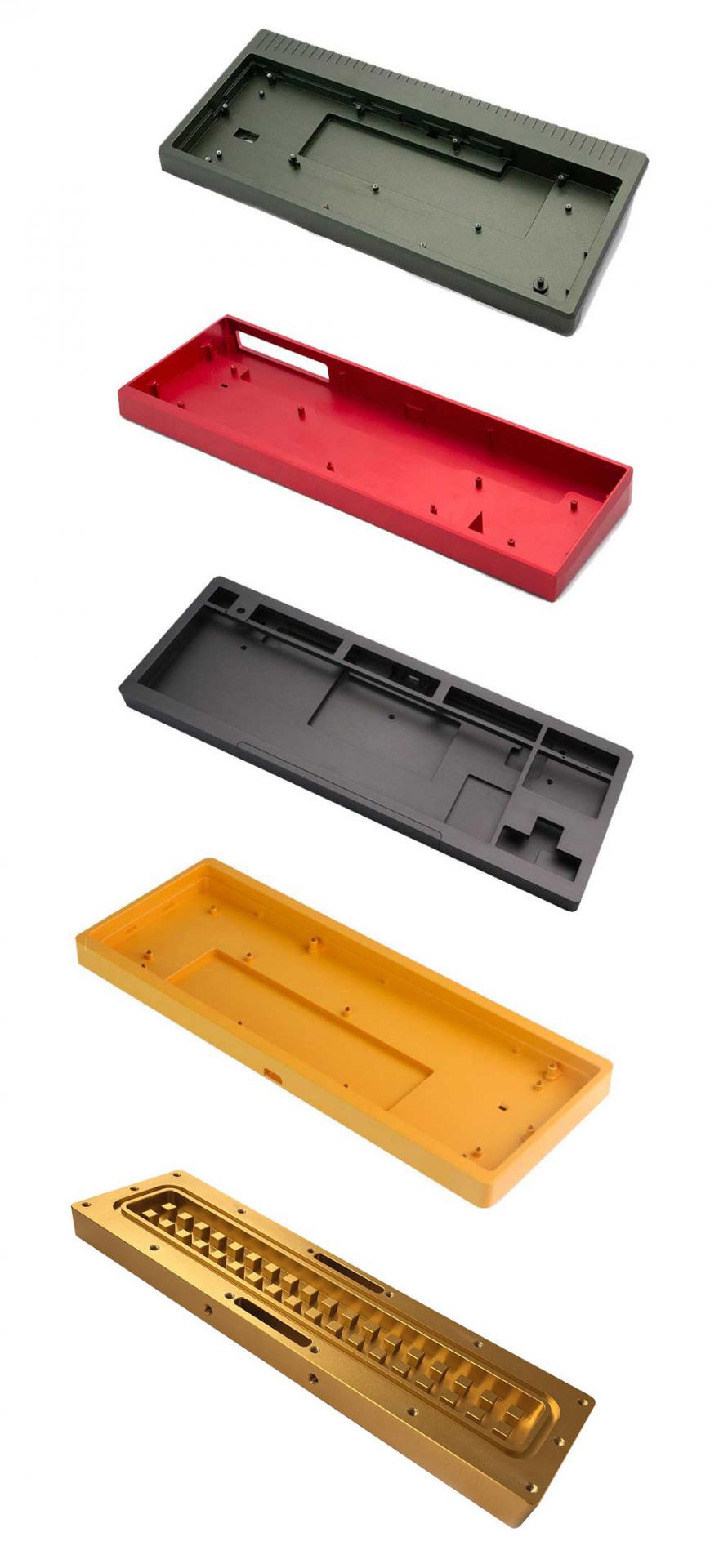
Precision CNC Keyboard Cases: Engineered Excellence from Honyo Prototype
For discerning mechanical keyboard manufacturers and custom builders demanding uncompromising quality, the foundation of a premium typing experience begins with the case. Honyo Prototype leverages advanced 5-axis CNC machining capabilities to deliver keyboard enclosures that meet the exacting standards of today’s high-performance peripherals. Our process transforms raw billets of aerospace-grade aluminum, brass, or premium polymers into meticulously crafted components characterized by exceptional dimensional accuracy, superior structural integrity, and flawless surface finishes down to sub-micron levels. We consistently achieve tight tolerances of ±0.005mm, critical for precise PCB and stabilizer mounting, seamless plate integration, and the satisfying, rattle-free assembly users expect in高端 builds.
Why Honyo for CNC Keyboard Cases?
Our dedicated manufacturing cell for small, complex enclosures ensures optimized workflows and stringent quality control at every stage. Expertise in multi-axis milling allows us to produce intricate internal geometries, complex undercuts for cable routing, and consistent anodization-ready surfaces without secondary operations. We understand the unique thermal management, acoustic dampening, and aesthetic requirements inherent in keyboard design, translating engineering intent into tangible, high-reliability products. Material selection guidance, from lightweight 6061-T6 to dense brass for weight optimization, is provided based on your specific performance goals and cost targets.
Accelerate your development cycle with Honyo’s Online Instant Quote system. Upload your 3D CAD model directly to our platform and receive a detailed, binding manufacturing quote within minutes – not days. This transparent, real-time pricing includes comprehensive breakdowns for material, machining complexity, surface treatment options like Type II anodizing, and lead times, enabling rapid design iteration and informed sourcing decisions. Eliminate procurement delays and move confidently from concept to certified production-ready CNC keyboard cases. Visit Honyo Prototype online to experience seamless quoting and discover how our precision machining expertise elevates your next keyboard project.
Technical Capabilities
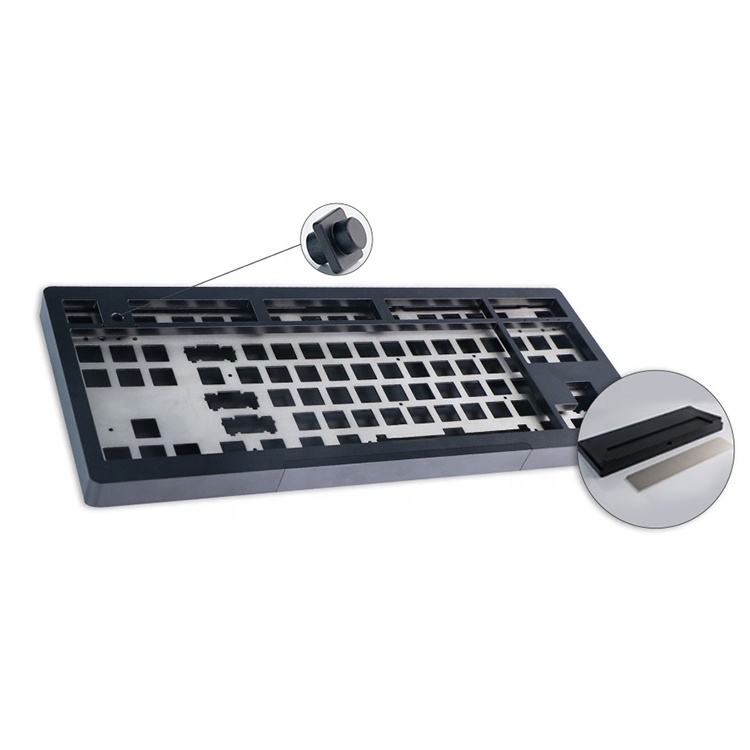
CNC machining of keyboard cases requires high precision and consistency, particularly when producing complex ergonomic shapes or integrated mounting structures. These components are typically manufactured using 3-axis, 4-axis, or 5-axis milling for detailed cavity and surface work, with tight tolerance requirements to ensure compatibility with PCBs, switches, and stabilizers. Some designs may also incorporate secondary turning operations for threaded standoffs or metallic inserts. Below are the technical specifications relevant to CNC machining of keyboard cases across different processes and materials.
| Parameter | 3-Axis Milling | 4-Axis Milling | 5-Axis Milling | CNC Turning (Secondary) |
|---|---|---|---|---|
| Typical Use Case | Flat or shallow 2.5D profiles, basic engraving | Rotary indexing for side features (e.g. angled USB ports) | Full 3D contoured surfaces, undercuts, sculpted ergonomics | Threaded inserts, custom feet, shafts |
| Positioning Accuracy | ±0.005 mm | ±0.005 mm | ±0.003 mm | ±0.002 mm |
| Repeatability | ±0.003 mm | ±0.003 mm | ±0.002 mm | ±0.001 mm |
| Surface Finish (Typical) | 0.8–3.2 µm Ra | 0.8–2.0 µm Ra | 0.4–1.6 µm Ra | 0.4–1.6 µm Ra |
| Minimum Feature Size | 0.5 mm (end mill limited) | 0.5 mm | 0.3 mm (with micro tools) | 0.1 mm (diameter) |
| Maximum Work Envelope (Typical) | 600 x 400 x 300 mm | 500 x 400 x 300 mm (with rotary) | 400 x 300 x 250 mm | Ø 50 mm x 200 mm length |
| Common Tooling | Flat/sphere nose end mills | Indexable rotary table + end mills | High-precision ball nose, taper tools | Carbide inserts, parting tools |
| Lead Time (Per Unit) | 1.5–3 hours | 2–4 hours | 3–6 hours | 0.5–1.5 hours (per feature) |
| Material Compatibility | Aluminum, Steel, ABS, Nylon | Aluminum, Steel, ABS | Aluminum, Steel | Aluminum, Steel, Brass |
Material-Specific Notes:
Aluminum (e.g., 6061-T6, 7075-T6): Most common for premium CNC keyboard cases. Offers excellent machinability, high strength-to-weight ratio, and good thermal stability. Achieves tight tolerances of ±0.025 mm consistently. Anodizing compatible for surface protection and aesthetics.
Steel (e.g., 303, 1018): Used for rugged or industrial-grade cases. Requires slower cutting speeds and rigid setups. Tolerances achievable down to ±0.01 mm. Higher tool wear; coolant recommended.
ABS: Thermoplastic used in hybrid manufacturing (e.g., metal-plastic composites). Machined for prototypes or low-volume custom cases. Tolerances up to ±0.05 mm. Low melting point requires light cuts and high RPM.
Nylon (e.g., PA6, PA66): Occasionally used for soft-touch or shock-absorbing internal frames. Prone to deflection; requires sharp tools and proper fixturing. Tolerance range ±0.05–0.1 mm. Hygroscopic—must be dried before machining.
Tight tolerance features commonly include switch mounting holes (±0.02 mm), PCB alignment pins, and underplate screw bosses. 5-axis CNC is preferred for monolithic aluminum cases with compound angles and sculpted wrist rests, minimizing setup changes and ensuring dimensional consistency.
From CAD to Part: The Process
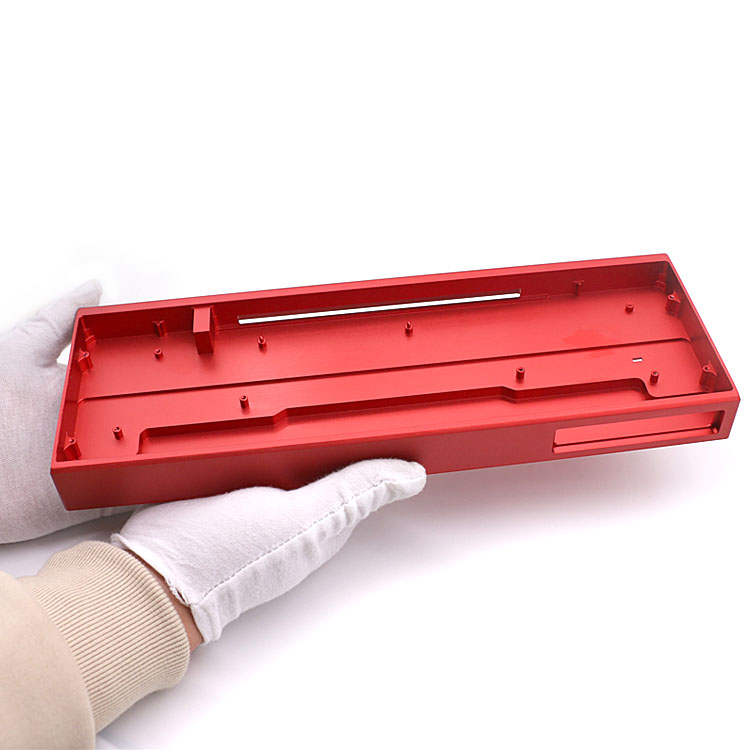
Honyo Prototype executes CNC keyboard case manufacturing through a rigorously defined five-stage workflow designed for precision, speed, and engineering collaboration. This process ensures optimal outcomes for complex metal enclosures demanding tight tolerances and aesthetic finishes.
Upload CAD
Customers initiate the process by uploading native 3D CAD files (STEP, IGES, or native SOLIDWORKS formats preferred) via our secure client portal. We require fully dimensioned models with critical tolerances and surface finish specifications annotated per ISO 2768 or custom requirements. Material selection must be explicitly defined—typically 6061-T6 or 7075-T6 aluminum for anodized cases, or brass for weighted variants—with notes on grain direction for visible surfaces. Incomplete submissions trigger automated validation checks before progressing.
AI Quote Generation
Uploaded geometry undergoes immediate analysis by our proprietary AI quoting engine trained on 12,000+ historical CNC projects. The system calculates machine time based on feature complexity (e.g., internal undercuts, thin wall sections <1.2mm), material removal volume, and fixture requirements. It cross-references real-time shop floor data including spindle utilization rates and material costs, generating a formal quote within 90 minutes. Quotes explicitly detail cost drivers such as secondary operations (tapping M1.4 screw holes, laser engraving), anodizing color codes (e.g., Type II sulfuric anodize per MIL-A-8625), and tolerance-critical zones requiring slow finishing passes.
DFM Engineering Review
Upon quote acceptance, our manufacturing engineering team conducts a formal Design for Manufacturability assessment. This phase identifies high-risk features specific to keyboard cases: potential chatter on thin sidewalls during pocketing, stress concentrations at switch plate cutouts, or anodizing bleed risks near tight-tolerance alignment pins. We provide actionable feedback within 24 hours via marked-up 3D PDFs with suggested modifications—such as increasing radii at internal corners from 0.3mm to 0.5mm to prevent tool breakage. Clients approve revisions through our portal before toolpath programming begins, ensuring zero production surprises.
CNC Production Execution
Approved designs enter our climate-controlled machining cell where 5-axis DMG MORI machines perform all operations in a single setup where feasible. Raw billets undergo stress-relieving annealing prior to roughing. Precision features like USB-C cutouts achieve ±0.05mm tolerances through in-process probing verification. All cases receive bead blasting to a consistent 150-180 grit finish before anodizing. We implement first-article inspection reports (FAIR) with CMM data for critical datums, including switch plate flatness verification to 0.1mm across the entire surface.
Quality-Controlled Delivery
Final assemblies undergo functional testing with standard PCBs to validate fitment before packaging. Cases ship in custom anti-static foam inserts within 7–10 business days from DFM sign-off, with lead times dependent on material and finish complexity. Every shipment includes material certification, anodizing process reports, and dimensional conformance documentation. We utilize DDP shipping terms with real-time logistics tracking, ensuring global delivery while meeting keyboard industry-specific requirements for cosmetic defect tolerance (e.g., zero visible anodize streaks on visible surfaces).
Start Your Project
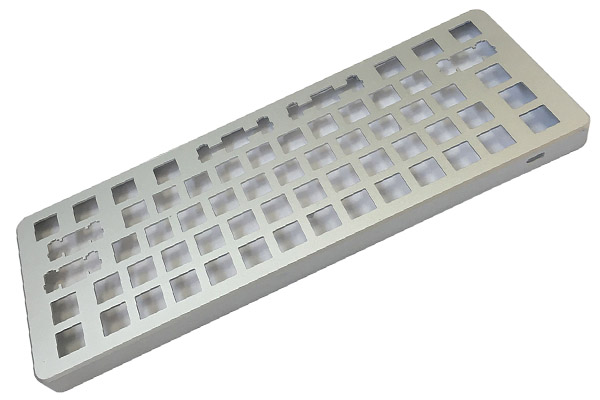
Looking for a high-precision CNC-machined keyboard case? Partner with Honyo Prototype for expert manufacturing and flawless execution.
Our state-of-the-art facility in Shenzhen ensures tight tolerances, superior surface finishes, and fast turnaround for custom mechanical keyboard enclosures.
Contact Susan Leo at [email protected] to discuss your design, request a quote, or receive material recommendations.
| Detail | Information |
|---|---|
| Service | CNC Machining for Keyboard Cases |
| Location | Shenzhen, China |
| Contact | Susan Leo |
| [email protected] | |
| Capabilities | 3-axis, 4-axis, and 5-axis CNC milling, anodizing, bead blasting, laser engraving |
Let’s bring your custom keyboard project to life with industrial-grade precision. Reach out today.
🚀 Rapid Prototyping Estimator
Estimate rough cost index based on volume.