
Contents
Manufacturing Insight: Cnc Host
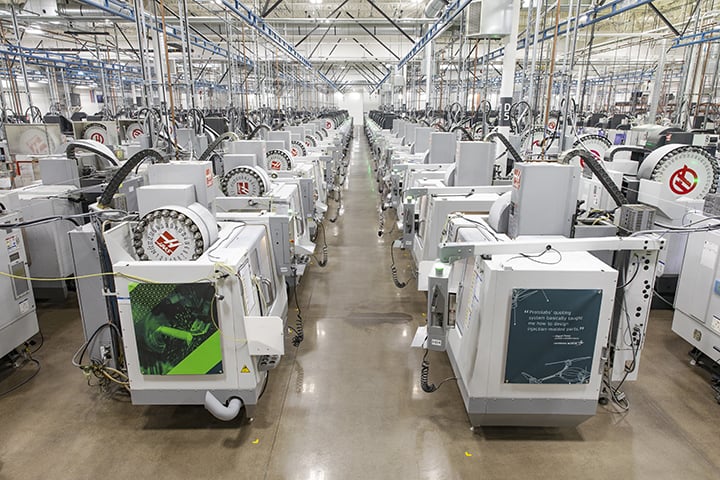
Precision CNC Machining Engineered for Your Prototyping Success
At Honyo Prototype, we transform complex engineering designs into high-accuracy physical components through advanced CNC machining services tailored for rapid prototyping and low-volume production. Our ISO-certified facility leverages state-of-the-art 3-, 4-, and 5-axis milling and turning centers to achieve tolerances as tight as ±0.0002 inches across aerospace-grade aluminum, stainless steel, titanium, brass, and engineering plastics. Every process—from material selection to final inspection—is optimized for repeatability, surface integrity, and adherence to your geometric and functional requirements.
Accelerate Development with Instant Quoting
Eliminate traditional quoting delays with Honyo’s Online Instant Quote system. Upload your STEP, IGES, or native CAD file, specify materials and quantities, and receive a detailed manufacturing assessment within seconds—not days. This seamless integration of engineering validation and cost transparency empowers design teams to iterate faster, reduce time-to-test by up to 70%, and maintain momentum from concept to functional prototype.
Partner with Honyo Prototype for CNC machining where precision, speed, and technical collaboration converge to de-risk your product development lifecycle. Initiate your next project with confidence through our instant digital workflow.
Technical Capabilities
CNC Host Technical Specifications for 3/4/5-Axis Milling and Turning – Focus on Tight Tolerance Applications
The CNC host refers to the core machine system including the bed, spindle, control unit, drive system, and feedback mechanisms. For precision applications involving 3, 4, and 5-axis milling as well as turning operations, the host must deliver high rigidity, thermal stability, dynamic accuracy, and advanced motion control to achieve tight tolerances (typically ±0.005 mm or tighter). Below are the key technical specifications relevant to high-precision CNC hosts used in prototyping and low-volume production at Honyo Prototype.
| Parameter | Specification Description |
|---|---|
| Axis Configuration | Supports 3-axis (XYZ), 4-axis (XYZ + A or B), and 5-axis simultaneous (XYZ + AB, AC, or BC) with rotary-tilting tables or spindle attachments for complex geometry machining |
| Positioning Accuracy | ±0.002 mm (X, Y, Z axes); verified via laser interferometer calibration |
| Repeatability | ±0.001 mm across all axes under continuous operation and thermal equilibrium |
| Spindle Speed Range | 8,000 – 24,000 RPM (high-frequency spindles for aluminum and plastics); lower range 5,000 – 12,000 RPM for hardened steel applications |
| Spindle Taper | BT30 or HSK-63 for rigidity and precision; automatic tool changer (ATC) compatible |
| Maximum Traverse Speed | 30 m/min (X, Y, Z); rotary axes up to 30 rpm with continuous contouring capability |
| Control System | Fanuc 31i-B5, Siemens 840D, or Heidenhain TNC7 with 5-axis interpolation, look-ahead, and adaptive feed control |
| Linear Guides | Preloaded hardened roller or box-type linear guides with zero backlash for high load capacity and precision |
| Ball Screws | Pre-tensioned, C3-grade ball screws with dual-nut preload; direct or belt-driven with encoder feedback |
| Thermal Compensation | Active spindle and machine bed thermal compensation system to maintain dimensional stability |
| Tooling Capacity (ATC) | 12–30 tool stations; tool length and diameter measurement via laser or touch probe |
| Work Envelope (Typical) | 500 x 400 x 300 mm (X, Y, Z); customizable for larger or smaller precision zones |
| Rapid Positioning Accuracy | ISO 230-2 compliant; tested under full load and acceleration conditions |
| Surface Finish Capability | Achieves Ra < 0.8 µm on steel and aluminum; Ra < 1.6 µm on ABS and nylon with fine finishing tools |
| Materials Processed | Aluminum (6061, 7075), Steel (1018, 4140, Stainless 303/316), Engineering Plastics (ABS, Nylon 6/66) |
| Tolerance Capability | ±0.005 mm for milling and turning operations; ±0.002 mm achievable with process optimization and metrology feedback |
| Coolant & Chip Management | High-pressure through-spindle coolant (up to 70 bar); enclosed chip conveyor and mist extractor |
| Probing System | Integrated Renishaw or Blum touch probe for in-process measurement, tool setting, and workpiece alignment |
| Machine Frame Construction | Mineral casting or Meehanite M4000 cast iron for superior damping and long-term geometric stability |
These specifications ensure that the CNC host maintains dimensional integrity across diverse materials and complex geometries, meeting the stringent requirements of aerospace, medical, and high-end industrial prototyping sectors. All machines undergo periodic calibration per ISO 230-2 and ASME B89 standards to sustain tight tolerance performance.
From CAD to Part: The Process
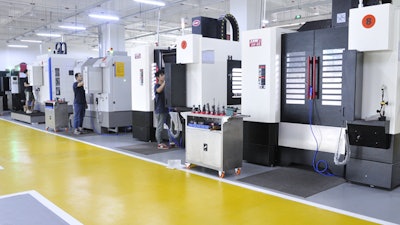
Honyo Prototype CNC Machining Service Process Flow
Our CNC machining service, designated internally as ‘CNC Host’, follows a rigorously defined sequence to ensure precision, efficiency, and client transparency from initial design submission through to final delivery. This integrated workflow leverages both advanced automation and expert engineering oversight.
CAD File Upload and Validation
Clients initiate the process by uploading native or neutral CAD file formats (STEP, IGES, Parasolid, SolidWorks, DXF/DWG) via our secure customer portal. The system performs immediate automated validation checks for file integrity, unit consistency, and geometric completeness. Unsupported formats or files exhibiting critical errors trigger an instant notification to the client with specific remediation instructions. Validated files proceed directly to the quoting engine, eliminating manual handling delays.
AI-Powered Quoting Engine
Validated CAD data feeds into our proprietary AI quoting system. This engine analyzes geometric complexity, feature density, material requirements, tolerance specifications, and surface finish criteria derived directly from the 3D model. It cross-references real-time machine availability, current shop floor workload, material costs, and historical process data from thousands of prior CNC projects. The output is a detailed, binding quote within minutes, including itemized cost breakdowns for machining operations, material, secondary processes, and estimated lead time. Critical tolerance callouts or ambiguous features identified by the AI trigger an automatic flag for immediate engineering review before quote finalization.
Engineering-Driven DFM Analysis
Upon client acceptance of the quote, the project enters the mandatory Design for Manufacturability phase. Our system combines AI-generated manufacturability insights with direct review by assigned Senior CNC Manufacturing Engineers. The AI flags potential issues like non-standard tool access, excessive thin walls, or inefficient setups. The human engineer then conducts a comprehensive review, focusing on optimizing toolpaths, fixture strategy, material utilization, and process sequencing. Client collaboration is standard; we provide specific, actionable DFM feedback with suggested modifications to reduce cost or lead time without compromising function. Typical DFM feedback categories and resolution paths are summarized below.
| DFM Feedback Category | Typical Issue Examples | Resolution Path |
|---|---|---|
| Geometric Feasibility | Undercuts without clearance, impossible radii | Suggest fillet adjustments, feature relocation |
| Tolerance Optimization | Unrealistic GD&T, inconsistent tolerance stacks | Propose relaxed tolerances on non-critical dims |
| Setup & Fixturing | Features requiring excessive setups | Recommend design changes for single-setup machining |
| Material & Process Suitability | Thin walls prone to chatter, poor chip evacuation | Suggest alternative materials or feature redesigns |
Precision CNC Production Execution
Approved designs move to production on our network of monitored CNC equipment. Milling occurs on DMG MORI, Haas, and Makino 3-axis to 5-axis vertical machining centers with sub-micron repeatability. Turning utilizes Citizen Swiss-type and Okuma multi-tasking lathes. Each job receives a unique digital work order triggering automated generation of optimized G-code (via Mastercam), tooling lists, and inspection plans. In-process quality checks using Renishaw probes and on-machine laser tool setters ensure dimensional accuracy. All critical features undergo final verification on calibrated CMMs or optical comparators against the original CAD model, with full inspection reports available to the client.
Quality-Controlled Delivery Logistics
Following successful first-article inspection and final part cleaning/deburring, parts undergo final packaging per client specifications (static-safe, VCI, custom crating). Our integrated logistics system generates real-time shipping documentation and tracking. Standard deliveries include comprehensive quality documentation: FAI reports, material certs (including mill test reports), CMM inspection data, and process validation records accessible via the client portal. We maintain strict adherence to quoted lead times, with expedited options available for qualifying projects. All deliveries include a digital project summary detailing actual machining parameters and quality metrics for future reference.
Start Your Project
Interested in our CNC machining services? Contact Susan Leo today at [email protected] to discuss your project requirements. With our state-of-the-art facility located in Shenzhen, we deliver precision prototypes and production parts with fast turnaround times. Let Honyo Prototype be your trusted manufacturing partner.
🚀 Rapid Prototyping Estimator
Estimate rough cost index based on volume.