
Contents
Manufacturing Insight: Cnc Esthetics
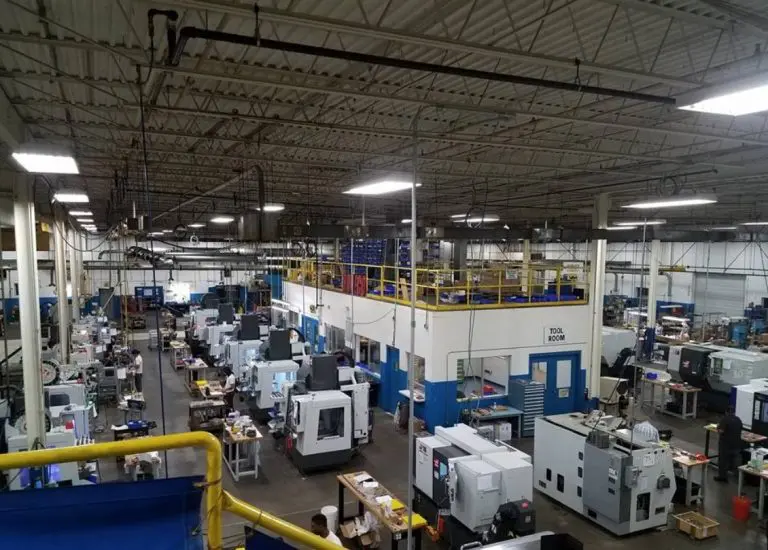
Elevating Precision with CNC Esthetics at Honyo Prototype
At Honyo Prototype, we redefine CNC machining by integrating uncompromising precision with meticulous surface aesthetics. Our advanced CNC services transcend standard dimensional accuracy, focusing on the critical interplay between functional performance and visual refinement. For industries where appearance impacts user perception and market success—such as medical devices, consumer electronics, and luxury goods—we optimize every aspect of surface finish, edge quality, and material consistency. This ensures parts not only meet stringent engineering tolerances but also achieve the flawless visual standards demanded by discerning clients.
Our proprietary processes address inherent challenges in CNC esthetics, including burr minimization, micro-roughness control, and grain alignment for metals and polymers. By leveraging multi-axis capabilities, specialized toolpath strategies, and rigorous in-process inspections, we deliver components with uniform finishes, sharp geometric definition, and zero visual defects. This commitment eliminates costly post-processing steps while accelerating time-to-market for prototypes and low-volume production runs.
Accelerate your project timeline with Honyo’s Online Instant Quote platform. Upload CAD files to receive detailed, transparent pricing and manufacturability feedback within hours—not days—enabling rapid iteration for both functional and aesthetic requirements. Partner with us to transform precision-engineered concepts into visually superior, production-ready components.
Technical Capabilities

CNC esthetics refers to the precision, surface finish, and dimensional accuracy achieved in machined components through advanced CNC machining processes. This encompasses 3, 4, and 5-axis milling as well as turning operations, with an emphasis on tight tolerance manufacturing for high-performance applications across industries such as aerospace, medical, and automotive. The choice of material significantly influences achievable tolerances, surface quality, and overall part aesthetics.
| Parameter | 3-Axis Milling | 4-Axis Milling | 5-Axis Milling | CNC Turning | Tight Tolerance Capability |
|---|---|---|---|---|---|
| Typical Tolerance Range | ±0.005 mm to ±0.025 mm | ±0.005 mm to ±0.025 mm | ±0.005 mm to ±0.01 mm | ±0.005 mm to ±0.02 mm | Down to ±0.002 mm (with precision setup) |
| Surface Finish (Ra) | 0.8 – 3.2 µm | 0.8 – 2.5 µm | 0.4 – 1.6 µm | 0.8 – 1.6 µm | As low as 0.2 µm (polished finishes) |
| Feature Complexity | Moderate; planar features, pockets | High; angled features via rotary axis | Very High; complex contours, undercuts | Cylindrical symmetry, threading, grooves | High (with multi-axis coordination) |
| Tool Access & Setup | Single setup, limited undercuts | Single rotary axis, improved access | Full multi-directional tool access | Single setup for rotational geometry | Multi-setup common for micron-level tol |
| Materials – Aluminum | Excellent: high MRR, fine finish | Excellent: complex shapes achievable | Superior: aerospace-grade contours | Excellent: high precision shafts, hubs | Achievable with proper fixturing |
| Materials – Steel | Good: slower MRR, harder on tools | Good: for hardened components | High precision for molds, tooling | Excellent: high-strength shafts, pins | Achievable with thermal compensation |
| Materials – ABS | Good: low melting point, smooth finish | Good: for prototypes, enclosures | Very Good: complex enclosures | Limited: soft, poor chip control | Possible with sharp tools, low feed |
| Materials – Nylon | Fair: prone to deflection, hygroscopic | Fair: requires stabilization | Fair: for low-friction components | Good: bushings, gears (semi-precision) | Challenging due to material movement |
| Common Applications | Brackets, housings, flat components | Indexing parts, turbine blades | Aerospace manifolds, impellers | Pins, shafts, threaded components | Metrology parts, optical mounts, gauges |
Notes:
5-axis milling enables superior esthetics due to reduced tool step-overs and minimized part repositioning, resulting in consistent surface quality and tighter tolerances.
CNC turning achieves excellent roundness, concentricity, and surface finish critical for rotating components.
Tight tolerance machining requires environmental control, high-precision tooling, in-process probing, and often post-process inspection (e.g., CMM).
Material behavior must be accounted for: Aluminum and steel are dimensionally stable, while ABS and Nylon require moisture conditioning and careful fixturing to maintain tolerance.
From CAD to Part: The Process

Honyo Prototype employs a rigorously defined workflow for delivering precision CNC-machined components with exceptional cosmetic surface finishes, termed internally as Cosmetic Surface Finishing Execution. This structured process ensures aesthetic quality meets functional requirements while minimizing lead time and cost. Below is the technical breakdown of our integrated workflow:
CAD Upload and Initial Processing
Clients initiate the process by uploading native or neutral CAD formats (STEP, IGES, Parasolid) via our secure customer portal. Our system performs automated geometry validation, confirming watertight models and identifying potential topology errors. Critical aesthetic zones—such as visible faces, edges, or light-refractive surfaces—are flagged for enhanced scrutiny during subsequent stages. This phase establishes baseline dimensional and surface integrity parameters.
AI-Powered Quoting with Finishability Assessment
Our proprietary AI engine analyzes the CAD geometry against 12,000+ historical manufacturing datasets to generate an instant quote within 90 minutes. Beyond cost and lead time estimation, the AI evaluates cosmetic feasibility:
Predicting surface roughness outcomes based on material, toolpath complexity, and feature accessibility
Flagging high-risk zones prone to chatter marks, tool witness lines, or burring
Recommending optimal stock allowances for post-machining polishing
The output includes a Finishability Score (1-10) and actionable suggestions to enhance aesthetic yield without design compromise.
Engineering-Driven DFM with Aesthetic Optimization
All projects undergo mandatory Design for Manufacturing review by senior CNC engineers. For cosmetic-critical parts, we implement our Aesthetic DFM Protocol:
Redefining toolpaths to eliminate step-overs on Class A surfaces
Specifying vibration-dampened tooling for chatter-sensitive geometries
Integrating automated deburring sequences to prevent edge micro-fractures
Validating fixturing solutions that avoid clamp marks on visible surfaces
This phase typically reduces post-processing labor by 35% through preemptive geometric adjustments, documented in a collaborative markup report.
Precision Production with Finish-Centric Controls
Machining occurs in climate-controlled cells using Haas and DMG MORI 5-axis centers with sub-micron repeatability. Cosmetic production adheres to these protocols:
Dedicated tooling sets for finishing operations (no shared roughing tools)
In-process surface roughness verification via non-contact profilometry at critical stages
Real-time coolant pressure monitoring to prevent micro-scratching
Sequential polishing stages (from 180-grit to diamond paste) for mirror finishes
All aesthetic parameters are traceable to ISO 25178 surface texture standards, with Ra values validated against client-specified thresholds.
Delivery with Aesthetic Certification
Components undergo final inspection using Zeiss CONTURA CMMs and Keyence VR-3200 3D optical profilers. Delivery includes:
Aesthetic Compliance Dossier with Ra/Rz measurements mapped to CAD surfaces
High-resolution macro photography of critical zones under controlled lighting
Process validation records for all finishing operations
Standard lead time for cosmetic-critical parts is 7-10 business days from CAD approval, with expedited 72-hour options for qualified geometries.
Critical Performance Metrics
Our process consistently achieves these benchmarks for aesthetic-focused orders:
| Parameter | Standard Tolerance | Premium Cosmetic Tier |
|---|---|---|
| Surface Roughness (Ra) | ≤1.6 μm | ≤0.4 μm (mirror) |
| Edge Radius Consistency | ±0.05 mm | ±0.01 mm |
| Visual Defect Rate | <5% of inspected area | <0.5% of inspected area |
| First-Time Aesthetic Pass Rate | 88% | 97% |
This integrated approach eliminates aesthetic rework through predictive engineering, ensuring components arrive production-ready for high-visibility applications in medical, aerospace, and luxury consumer sectors. All process data is accessible via client dashboards for full supply chain transparency.
Start Your Project
Elevate your product with precision CNC aesthetics designed for both form and function. At Honyo Prototype, we specialize in high-precision CNC machining services tailored to deliver exceptional surface finishes, tight tolerances, and flawless visual appeal for prototypes and low-volume production.
Our state-of-the-art facility in Shenzhen ensures rapid turnaround and consistent quality, leveraging advanced equipment and expert craftsmanship to meet the most demanding design specifications.
For inquiries or project consultation, contact Susan Leo at [email protected]. Let’s bring your vision to life with engineering excellence and aesthetic precision.
🚀 Rapid Prototyping Estimator
Estimate rough cost index based on volume.