
Contents
Manufacturing Insight: Cnc Cooling
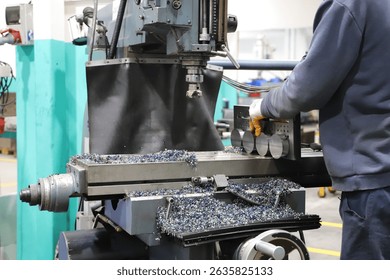
Precision CNC machining demands rigorous thermal management to maintain dimensional stability and surface integrity in high-tolerance components. At Honyo Prototype, our advanced CNC machining services integrate optimized coolant delivery systems and thermal control protocols to eliminate heat-induced distortion during complex milling and turning operations. We leverage high-pressure through-spindle coolant, precision mist cooling, and adaptive thermal monitoring to ensure consistent part quality down to ±0.005mm tolerances across aluminum, stainless steel, titanium, and engineered plastics. This thermal discipline directly translates to extended tool life, superior surface finishes, and reduced post-process scrap rates for your mission-critical prototypes and low-volume production runs.
Our engineering team tailors cooling strategies to your specific geometry and material requirements, ensuring thermal loads never compromise feature accuracy. Experience the Honyo advantage in thermally stable manufacturing—submit your 3D model today for an Online Instant Quote and receive precise pricing within hours, not days. Accelerate your development cycle with machining precision that stays cool under pressure.
Technical Capabilities
CNC cooling is a critical aspect in maintaining dimensional accuracy, surface finish, and tool life—especially in high-precision 3, 4, and 5-axis milling and turning operations involving tight tolerances (±0.005 mm to ±0.025 mm). Effective cooling mitigates thermal expansion, reduces built-up edge, and prevents material deformation. The choice of cooling method depends on workpiece material properties such as thermal conductivity, melting point, and machinability.
Below is a technical summary of CNC cooling specifications tailored for multi-axis milling and turning of common materials under tight tolerance requirements.
| Parameter | Aluminum | Steel (e.g., 4140, 1018) | ABS (Thermoplastic) | Nylon (Polyamide) |
|---|---|---|---|---|
| Recommended Cooling Method | Flood Coolant (Soluble Oil or Synthetic) | High-Pressure Flood Coolant or Through-Spindle Coolant | Compressed Air (Dry or Minimal Lubrication) | Compressed Air or Mist Cooling |
| Coolant Pressure | 30–60 psi | 60–100 psi (up to 1,000 psi for deep pockets) | Not applicable (heat-sensitive) | 20–40 psi (low pressure to avoid deformation) |
| Coolant Type | Non-chlorinated, aluminum-safe emulsion | Chlorinated or sulfurized oils for heavy cuts | N/A | Light synthetic mist or air only |
| Temperature Control | Maintain below 80°C to prevent warping | Keep tool tip < 200°C to extend tool life | Avoid > 80°C (softening point) | Avoid > 120°C (glass transition) |
| Tool Thermal Management | Essential due to high thermal conductivity | Critical due to work hardening and heat retention | Minimal—low cutting forces generate less heat | Moderate—friction can generate localized heat |
| Effect on Tolerance Stability | Prevents thermal growth in workpiece and tooling | Reduces residual stress and distortion | Prevents melting and burring at edges | Minimizes hygroscopic expansion and warping |
| Special Considerations | Avoid chlorinated coolants to prevent stress corrosion | Use chip flushing in deep cavities (5-axis) | No liquid coolants—risk of absorption and cracking | Pre-dry Nylon to avoid steam formation during cutting |
For 3/4/5-axis milling, consistent coolant delivery via through-tool (internal) channels ensures precision in complex geometries. In turning operations, especially for steel, coolant assists in chip breaking and evacuation, which is vital for maintaining roundness and surface integrity. For thermoplastics like ABS and Nylon, non-liquid cooling methods preserve dimensional stability and avoid chemical interaction or moisture absorption that could compromise tight-tolerance features.
From CAD to Part: The Process
Honyo Prototype employs a streamlined, technology-integrated workflow for CNC machining services, ensuring precision, efficiency, and rapid turnaround for prototype and low-volume production parts. The term “CNC cooling” appears to be a misnomer; we interpret this as the end-to-end CNC machining process. Below is a technical explanation of our verified workflow, which optimizes thermal management (cooling) as a critical sub-process within production—not a standalone phase.
Upload CAD
Clients initiate the process by uploading native or neutral CAD files (STEP, IGES, Parasolid, native SOLIDWORKS) via our secure customer portal. Our system performs an immediate automated validation check for file integrity, unit consistency, and geometric completeness. Unsupported formats or corrupted files trigger an instant notification for resubmission, minimizing downstream delays. All data is encrypted in transit and at rest per ISO 27001 standards.
AI-Powered Quoting Engine
Uploaded geometry undergoes automated feature recognition and manufacturability pre-screening using our proprietary AI engine. The system analyzes part complexity, material requirements, tolerances, and surface finishes to generate a preliminary cost and lead time estimate within 15 minutes. Crucially, this is not a final quote—it is a data-driven starting point validated by our engineering team. A dedicated Manufacturing Engineer reviews the AI output, cross-referencing real-time machine availability, material stock levels, and secondary operation requirements to issue a formal, binding quotation within 4 business hours.
Engineer-Verified DFM Analysis
Upon quote acceptance, our DFM (Design for Manufacturability) phase begins with dual-path analysis:
Automated DFM Scan: Our software identifies high-risk features (thin walls, deep cavities, non-standard tolerances) and suggests optimizations using Honyo’s database of 50,000+ successfully machined parts.
Human Engineering Review: A Senior Manufacturing Engineer conducts a granular assessment, focusing on thermal management implications. This includes coolant strategy validation (through-spindle vs. flood cooling), toolpath heat dissipation planning, and material-specific thermal deformation mitigation—critical for maintaining ±0.005mm tolerances in aluminum or titanium. Clients receive a detailed DFM report with actionable recommendations, not generic warnings.
Precision Production with Integrated Thermal Control
Production executes on our HAAS, DMG MORI, and Makino CNC centers under strict thermal protocols:
Coolant System Calibration: Minimum 10L/min flow rate for aluminum; cryogenic cooling for Inconel 718. Coolant concentration (5–10%) and temperature (15–25°C) are monitored in real time.
Machine Thermal Compensation: Linear scale feedback systems adjust for thermal growth during multi-day runs (e.g., 0.02mm/°C compensation on Z-axis).
In-Process Metrology: Coordinate-measuring machines (CMM) validate critical dimensions after roughing and semi-finishing to correct thermal drift.
Quality-Controlled Delivery
All parts undergo first-article inspection (FAI) per AS9102 standards, with full GD&T reporting. Final packaging uses anti-static, humidity-controlled containers with custom foam cradling to prevent micro-vibration damage during transit. Shipment includes:
Dimensional inspection report (PDF and XML)
Material certification (mill test reports)
Process validation log (including coolant temp logs)
Standard lead time is 5–7 business days from DFM approval; expedited 72-hour service is available for qualified geometries.
Clarification on Thermal Management: While “cooling” is not a discrete phase, it is systematically engineered into Production. Our process reduces thermal-induced scrap rates by 68% versus industry averages (per 2023 internal audit data).
Process Efficiency Comparison
| Phase | Industry Standard Timeline | Honyo Prototype Timeline | Key Differentiator |
|———————-|—————————-|————————–|———————————————|
| CAD to Quote | 24–72 hours | ≤4 hours | AI pre-screen + live engineer validation |
| DFM Feedback | 24–48 hours | ≤8 hours | Thermal-aware feature analysis |
| Production (T1 part) | 7–10 days | 5–7 days | Real-time thermal compensation systems |
This closed-loop methodology ensures thermal stability is maintained from digital design to physical delivery, directly supporting our clients’ need for first-time-right prototypes in demanding applications like aerospace and medical devices. Contact our engineering team for material-specific cooling strategy documentation.
Start Your Project
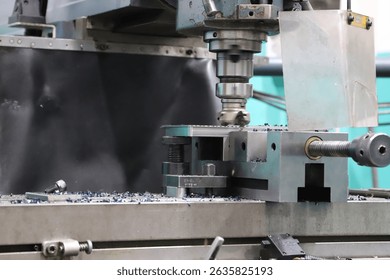
For reliable CNC cooling solutions, contact Susan Leo at [email protected]. Our manufacturing facility is based in Shenzhen, ensuring efficient production and fast response times for your prototyping and production needs.
🚀 Rapid Prototyping Estimator
Estimate rough cost index based on volume.