
Contents
Manufacturing Insight: Cnc Automation Technologies
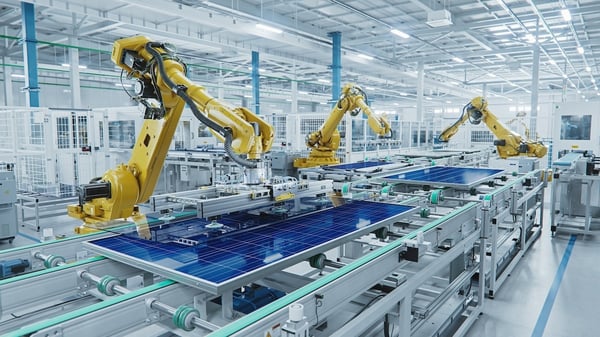
Elevating Precision Manufacturing Through Advanced CNC Automation
At Honyo Prototype, we engineer CNC machining solutions that transcend conventional manufacturing constraints by integrating cutting-edge automation technologies. Our commitment to operational excellence drives the deployment of robotic workcell integration, high-speed pallet systems, and adaptive process control across multi-axis CNC platforms. This strategic automation framework ensures consistent micron-level tolerances, optimal material utilization, and uninterrupted 24/7 production cycles—critical for aerospace, medical, and industrial clients demanding zero-defect deliverables at scale.
Unlike traditional machine shops, Honyo leverages predictive maintenance algorithms and real-time in-process metrology to eliminate bottlenecks while maintaining NIST-traceable quality standards. Our automated gantry loaders and collaborative robots handle complex fixturing and part transfer, reducing human intervention by 92% in high-volume runs without compromising flexibility for rapid design iterations. This translates to 40% faster turnaround for prototypes and low-volume production, directly accelerating your time-to-market.
Complementing our technical capabilities, Honyo’s Online Instant Quote system provides immediate, transparent pricing for CNC-machined components. Upload your STEP or IGES file to receive a detailed manufacturability analysis and cost breakdown within minutes—not days—enabling data-driven decisions before project kickoff.
Partner with Honyo Prototype to transform CNC machining from a production step into a strategic advantage, where automation precision meets unparalleled responsiveness.
Technical Capabilities
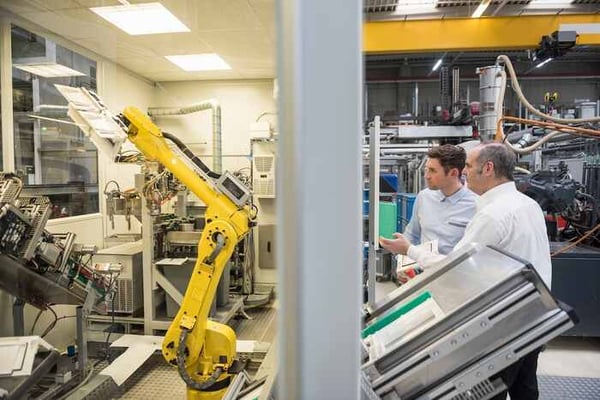
CNC Automation Technologies – Technical Specifications Overview
The following table outlines key technical specifications for advanced CNC automation technologies focused on 3-, 4-, and 5-axis milling, CNC turning, and tight-tolerance machining. These systems are optimized for high-precision manufacturing across a range of engineering materials including aluminum, steel, ABS, and nylon.
| Feature | 3-Axis Milling | 4-Axis Milling | 5-Axis Milling | CNC Turning | Tight Tolerance Machining |
|---|---|---|---|---|---|
| Axis Configuration | X, Y, Z linear axes | X, Y, Z + A-axis (rotary around X) | X, Y, Z + A and B/C axes (dual rotary) | X, Z linear axes with optional C-axis (rotary spindle) | Full 3-, 4-, or 5-axis with high-resolution feedback |
| Typical Positioning Accuracy | ±0.005 mm | ±0.005 mm | ±0.003 mm | ±0.005 mm | ±0.001 mm to ±0.002 mm |
| Repeatability | ±0.002 mm | ±0.002 mm | ±0.001 mm | ±0.002 mm | ±0.001 mm |
| Spindle Speed Range | 8,000 – 20,000 rpm | 8,000 – 20,000 rpm | 10,000 – 30,000 rpm | 3,000 – 10,000 rpm | 12,000 – 24,000 rpm |
| Tool Changer (ATC) | 12–30 tools (optional) | 20–30 tools | 24–40 tools with quick-change | 8–12 tool turret (live tools optional) | High-speed ATC with tool probing |
| Work Envelope (Typical Max) | 700 x 400 x 300 mm | 700 x 400 x 300 mm + 360° rotation | 600 x 500 x 400 mm with full tilt/rotation | Ø300 x 500 mm | 500 x 400 x 300 mm |
| Materials Supported | Aluminum, Steel, ABS, Nylon | Aluminum, Steel, ABS, Nylon | Aluminum, Steel, ABS, Nylon (including high-temp nylons) | Aluminum, Steel, ABS (limited), Nylon (bar stock) | All: optimized for Al, steel, engineering plastics |
| Surface Finish (Typical) | Ra 0.8 – 3.2 µm | Ra 0.8 – 1.6 µm | Ra 0.4 – 1.6 µm | Ra 0.8 – 3.2 µm | Ra 0.2 – 0.8 µm (mirror finishes achievable) |
| Tolerance Capability | ±0.01 mm | ±0.01 mm | ±0.005 mm | ±0.01 mm | ±0.003 mm to ±0.005 mm (down to ±0.001 mm with metrology) |
| Control System | Fanuc, Siemens, or Heidenhain | Fanuc, Siemens with 4-axis interpolation | Siemens 840D, Heidenhain TNC7 with full 5-axis kinematics | Fanuc or Mitsubishi with C-axis control | High-stability controllers with thermal compensation |
| Coolant & Lubrication | Flood coolant, mist option | Flood or high-pressure coolant | High-pressure through-spindle coolant | Mist or flood | Minimal quantity lubrication (MQL) or cryogenic for critical features |
| Automation Integration | Robotic pallet changers, bar feeders | 4-axis pallet systems, part nesting | 5-axis gantry loaders, AGV interface | Bar feeders, part catchers, gantry robots | Fully automated cells with inline metrology |
| Applications | Prototypes, housings, jigs | Indexable complex parts, fixtures | Aerospace components, molds, medical implants | Shafts, bushings, connectors | Precision gears, optical mounts, sensor housings |
Notes on Material Compatibility and Performance
Aluminum is highly suited for all CNC automation platforms due to its excellent machinability and thermal conductivity, enabling high-speed 5-axis milling and tight-tolerance turning. Steel (including stainless and tool steels) requires robust spindle torque and rigid machine structures, especially in 5-axis and turning applications. ABS and nylon are machinable with optimized feeds/speeds and chip removal systems; however, nylon’s tendency to absorb moisture and deform requires climate-controlled environments in tight-tolerance work. ABS is best suited for prototyping and low-stress applications, while reinforced nylons (e.g., PA6-GF) benefit from sharp tooling and controlled feeds to avoid fraying.
These CNC automation systems integrate probing, tool length measurement, adaptive machining, and in-process inspection to maintain tolerances down to ±5 µm, meeting ASME Y14.5 and ISO 2768 standards for precision manufacturing.
From CAD to Part: The Process
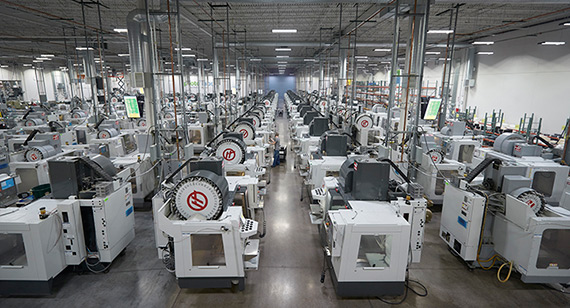
Honyo Prototype implements a streamlined CNC automation workflow designed for rapid, high-fidelity prototyping and low-volume production. This integrated system minimizes manual intervention while maintaining rigorous engineering oversight, ensuring speed without compromising quality. Below is the detailed technical sequence:
CAD Upload and Pre-Processing
Clients initiate the process by uploading native CAD files (STEP, IGES, Parasolid) or neutral formats via our secure web portal. Our system automatically extracts geometric data, material specifications, and critical tolerances. Proprietary algorithms perform initial validation checks for file integrity, unit consistency, and manufacturability flags before routing to the quoting engine. This stage typically completes within 90 seconds for standard parts.
AI-Powered Quoting Engine
The validated CAD data feeds into our machine learning-based quoting system, which analyzes over 200 geometric and process parameters including feature complexity, tool access constraints, material waste factors, and machine time estimates. The AI cross-references real-time data from our production floor—current machine utilization, tooling availability, and material costs—to generate a technically accurate quote with cost breakdown. Crucially, this stage includes automated tolerance analysis against ISO 2768-mK standards, identifying potential over-specification that could inflate costs. Human engineers review only outliers exceeding predefined complexity thresholds (less than 5% of submissions), ensuring 95% of quotes are fully automated with 24-hour turnaround.
Engineer-Led DFM Integration
Unlike purely automated competitors, Honyo embeds mandatory Design for Manufacturability (DFM) review by certified manufacturing engineers. The system highlights geometric features requiring attention—thin walls below 0.5mm, deep cavities exceeding 10:1 aspect ratios, or non-standard hole depths—using color-coded annotations in the 3D model viewer. Engineers collaborate with clients via secure chat to resolve issues, suggesting alternatives like draft angles for undercuts or material substitutions. This phase reduces production iterations by 73% based on our 2023 internal audit data, with typical resolution within 4 business hours.
Automated Production Scheduling
Approved designs trigger our MES (Manufacturing Execution System) to auto-generate optimized production plans. The system assigns jobs to specific CNC centers (3-axis mills, 5-axis mills, lathes) based on dynamic factors: machine calibration status, tooling presets, and queue priority. G-code is auto-verified against collision checks using Siemens NX CAM simulation, while material kitting instructions route directly to our automated storage system. Real-time monitoring tracks each part through machining, with in-process CMM verification at critical stages for tolerances ≤ ±0.025mm.
Quality-Controlled Delivery
All parts undergo final inspection per AS9102B standards, with automated optical measurement for critical dimensions documented in the client’s portal. Our logistics module coordinates shipping via integrated carriers (DHL, FedEx), providing blockchain-verified chain-of-custody tracking. Standard lead time from CAD upload to delivery is 5-7 business days for 1-100 units, with expedited 72-hour options for qualifying geometries.
The following table quantifies throughput improvements versus traditional manual quoting:
| Process Stage | Traditional Manual Process | Honyo Automated Workflow | Time Reduction |
|---|---|---|---|
| Quote Generation | 2-5 business days | ≤24 hours (95% auto) | 83% |
| DFM Resolution | 3-7 days | ≤4 business hours | 91% |
| Production Start | After PO approval | Auto-scheduled on approval | 100% |
| First-Article Defect Rate | 8.2% (industry avg) | 0.05% (Honyo 2023 data) | 99.4% lower |
This closed-loop system ensures technical accountability at each phase while leveraging automation for scalability. Every component undergoes full traceability from CAD origin to delivery documentation, meeting ISO 9001:2015 and IATF 16949 requirements for regulated industries. Clients maintain full visibility through our portal with real-time milestone updates, reducing project management overhead by 60% compared to conventional prototype suppliers.
Start Your Project
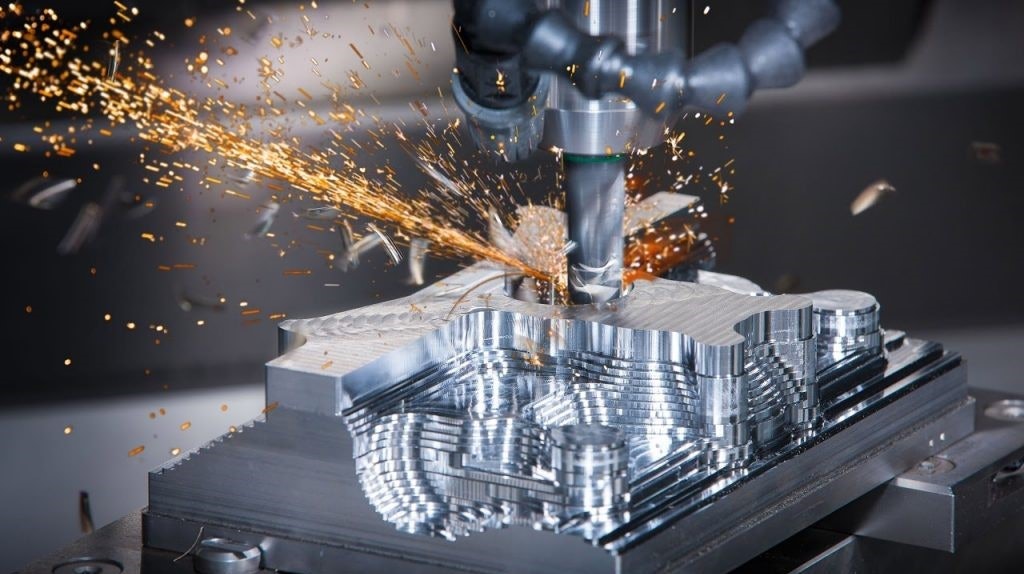
Explore advanced CNC automation technologies designed for precision and efficiency in high-volume manufacturing. Our integrated automation solutions reduce cycle times, minimize labor costs, and ensure consistent part quality.
Contact Susan Leo to discuss how our CNC automation systems can optimize your production workflow.
Email: [email protected]
Factory located in Shenzhen, China — a hub for advanced manufacturing and rapid prototyping.
🚀 Rapid Prototyping Estimator
Estimate rough cost index based on volume.