
Contents
Manufacturing Insight: Chromium Molybdenum Steel

Chromium Molybdenum Steel: Precision Machining for Demanding Applications
Chromium molybdenum (Cr-Mo) alloys, such as grades 4130 and 4140 conforming to ASTM A387 and ASME specifications, are critical engineering materials where exceptional strength, high-temperature resistance, and fracture toughness are non-negotiable. These properties make Cr-Mo steel indispensable for demanding components in aerospace actuators, oil and gas downhole tools, pressure vessels, and high-stress structural applications. However, achieving tight tolerances and superior surface finishes in these hardenable alloys presents significant machining challenges, including managing work hardening, controlling heat generation, and maintaining dimensional stability.
Honyo Prototype excels in the precision CNC machining of complex Cr-Mo steel components. Our engineered approach leverages optimized toolpaths, specialized cutting parameters, and rigorous in-process inspection protocols specifically developed for these high-integrity materials. We ensure consistent part quality that meets stringent industry standards while minimizing lead times and material waste. For immediate project evaluation, utilize our Online Instant Quote system to receive a detailed, accurate machining cost assessment for your Cr-Mo steel prototype or production run within minutes.
Technical Capabilities
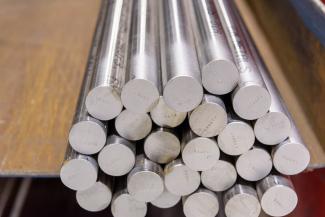
Chromium molybdenum steel, commonly referred to as Cr-Mo steel (e.g., AISI 4130 or 4140), is a low-alloy steel known for high strength, toughness, and excellent fatigue resistance. It is widely used in aerospace, automotive, and oil & gas industries where tight-tolerance components are required under high stress. In precision CNC machining—particularly 3, 4, and 5-axis milling and turning—Cr-Mo steel presents unique challenges due to its hardness and work-hardening characteristics. Below is a comparison of technical considerations when machining Cr-Mo steel versus other common materials under tight-tolerance conditions (±0.005 mm to ±0.025 mm).
| Material | Hardness (HRC) | Tensile Strength (MPa) | Machinability Rating | Recommended Tooling | Max Spindle Speed (RPM) | Coolant Requirement | Typical Surface Finish (Ra, µm) | Notes for Tight-Tolerance Machining |
|---|---|---|---|---|---|---|---|---|
| Chromium Molybdenum Steel (AISI 4140) | 25–35 (annealed) | 950–1200 | 65% (Fair) | Carbide or CBN inserts; PVD-coated end mills | 4000–8000 | Mandatory (flood or high-pressure) | 0.8–1.6 | High thermal stability needed; minimal tool deflection critical; pre-heat treatment recommended for stability; stress relief essential prior to final machining |
| Steel (Mild, AISI 1018) | 12–15 | 440 | 70% (Fair-Good) | Carbide or HSS | 6000–10000 | Recommended | 1.6–3.2 | Lower cutting forces; easier to hold tolerances; less prone to thermal distortion |
| Aluminum (6061-T6) | 30–35 (Brinell) | 310 | 90% (Excellent) | Polished carbide, 3–6 flute end mills | 12000–20000+ | Optional (air blast often sufficient) | 0.4–0.8 | High MRR possible; excellent for 5-axis complexity; thermal expansion must be accounted for in fixturing |
| ABS (Thermoplastic) | Shore D 72 | 40 | 100% (Excellent) | Sharp carbide, high rake angles | 8000–15000 | Not required (avoid excessive heat) | 1.6–3.2 | Low melting point; prone to melting or burring; vacuum fixturing advised; minimal clamping force |
| Nylon (PA6/PA66) | Shore D 70–80 | 70–80 | 85% (Very Good) | Carbide with polished flutes | 6000–10000 | Not required | 1.6–3.2 | Hygroscopic; must be dried prior to machining; prone to dimensional drift if moisture content varies |
Notes on 3/4/5-Axis Machining of Cr-Mo Steel:
Chromium molybdenum steel requires rigid setups and thermally stable CNC platforms to maintain tight tolerances across multi-axis operations. Due to its tendency to generate high cutting temperatures and residual stresses, step-over depth, feed rates, and toolpath strategies (e.g., trochoidal milling) must be optimized to minimize tool wear and part distortion. In 5-axis applications, where undercuts and complex geometries are common, tool reach and deflection become critical—especially with long tools. Pre-machining heat treatment (annealing or normalizing) is strongly recommended, followed by final stress-relief or tempering before precision finishing passes.
For comparison, aluminum allows faster cycle times and finer finishes, making it ideal for rapid prototyping and complex contours. However, Cr-Mo steel remains the material of choice when structural integrity, wear resistance, and performance at elevated temperatures are required. ABS and nylon are suitable for non-structural prototypes or jigs but lack the dimensional stability and mechanical properties needed for high-precision end-use parts under load.
At Honyo Prototype, Cr-Mo steel components are machined on high-torque, high-accuracy 5-axis platforms with real-time tool monitoring and in-process metrology to ensure conformance to tight GD&T specifications.
From CAD to Part: The Process
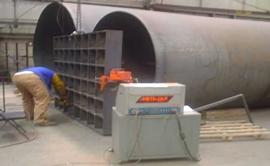
Honyo Prototype employs a rigorously defined workflow for chromium molybdenum (CrMo) steel components, ensuring material integrity and process precision from initial design to final shipment. This specialized alloy requires enhanced controls due to its critical applications in high-stress environments like aerospace actuators and hydraulic manifolds. Our integrated process eliminates traditional handoffs through digital continuity.
CAD Upload and Material Specification
Clients submit 3D CAD models via our secure portal with explicit material designation to ASTM A387 Grade 11 Class 2 or equivalent CrMo specification. Our system immediately validates geometric feasibility against CrMo’s unique machining characteristics, including thermal sensitivity during milling. Material certification requirements are auto-populated based on end-use application data provided in the RFQ.
AI-Powered Quoting with Material Intelligence
Our proprietary quoting engine cross-references CrMo-specific parameters: current alloy surcharge rates from approved mills, pre-heat cycle duration (mandated per ASME Section IX), and secondary operation costs like stress-relief annealing. The AI model incorporates real-time scrap rate data for CrMo (historically 8-12% higher than 4140 steel) and flags geometry risks such as thin-wall sections prone to distortion during heat treatment. Quotes include mandatory NDT method recommendations (typically VT+MT per ASTM E709).
DFM Analysis with Metallurgical Validation
Engineers conduct dual-path DFM: standard geometric analysis plus CrMo-specific material science review. Key checkpoints include:
Weld preparation geometry verification against AWS D1.1 structural welding code
Machining tolerance assessment considering CrMo’s 22-28 HRC post-heat treat state
Heat treatment fixture design validation to prevent quench distortion
Hydrogen embrittlement risk scoring for threaded features
This phase requires client sign-off on any deviations from ideal CrMo processing parameters before proceeding.
Production Execution with Traceability
All CrMo lots undergo full material traceability from melt number through final inspection. Production sequence:
1. Raw material verification via OES spectrography against EN 10204 3.1 certs
2. Stress-relief annealing at 600-650°C with controlled cooling rate
3. CNC machining with reduced SFM (65-75% of 4140 rates) to manage work hardening
4. Final heat treatment per AMS 6415 with dual quench monitoring
5. 100% dimensional inspection plus hardness mapping at critical sections
Delivery with Compliance Documentation
Shipments include:
Material test reports with actual Cr/Mo/V content percentages
Heat treatment process logs with time-temperature curves
NDT certification with indication maps
Dimensional report showing as-machined vs. as-heat-treated deviations
Our CrMo steel process maintains sub-0.05mm distortion control on critical features through integrated thermal compensation algorithms. All deliverables comply with NADCAP AC7102 audit requirements for special processes, providing clients with auditable quality evidence for mission-critical applications.
Typical CrMo Steel Processing Parameters at Honyo
| Parameter | Value Range | Control Method |
|---|---|---|
| Pre-heat Temperature | 200-250°C | Infrared pyrometry logging |
| Interpass Temperature | <300°C | Thermocouple monitoring |
| Quench Rate | 15-25°C/sec | Agitated oil bath with flow sensors |
| Final Hardness Target | 24-28 HRC | 5-point Rockwell verification |
| Residual Stress Limit | <150 MPa | X-ray diffraction at critical zones |
Start Your Project

For high-performance applications requiring durable and heat-resistant materials, consider chromium molybdenum steel for your next project. Widely used in aerospace, automotive, and industrial equipment manufacturing, this alloy offers excellent strength-to-weight ratio and corrosion resistance.
To discuss material specifications, prototyping, or production capabilities, contact Susan Leo at [email protected]. Our manufacturing facility is located in Shenzhen, providing efficient processing, precision machining, and scalable production runs tailored to your engineering requirements.
🚀 Rapid Prototyping Estimator
Estimate rough cost index based on volume.